

 Надіслати
 Поділитися
 Деталі
 Посібник

 Завантажити
 Схожі предмети колекціонування
 Слайд-шоу
 Статистика переглядів
Vault painting


 Читати далі
Гікле / Художній принт
Музейна якість друку جيкле або на полотні з оперативним виготовленням та різноманітними варіантами фінішної обробки. ( Купити картину ручної роботи Перейти до цифрових зображень)




































Обирайте з наших стандартних розмірів, що відповідають оригінальним пропорціям твору мистецтва.

Ви можете вказати власні розміри, щоб репродукція ідеально підійшла до конкретної рами або інтер'єру. Якщо обраний вами розмір не відповідає пропорціям оригіналу, ми або обріжемо полотно, або розширимо зображення за допомогою дзеркального відображення чи суцільної заливки країв. Перед початком виробництва вам буде надіслано цифровий макет для затвердження.
Будь ласка, зверніть увагу, що попередній перегляд на екрані не відображає фактичне обрізання або розширення. Тільки макет точно покаже фінальну композицію.
Хоча можливість замовлення індивідуальних розмірів доступна, ми рекомендуємо обирати формат із попередньо визначеного списку, щоб зберегти оригінальні пропорції.
Доставка по всьому світу () за 2 тижні замість стандартних 4/5 тижнів. (25 Вересень)

Безкоштовна експрес-доставка по всьому світу

Високоякісне лляне полотно

Повне страхове покриття доставки

Гарантія повернення митних зборів

Гарантія точного відтворення кольорів

Політика повернення протягом 100 днів (лише у разі виявлення дефектів)

Гарантія повернення 100% коштів

Знижка на оптові замовлення
 Скляний варіант доступний лише для розмірів до 110 см

Vault painting
Гікле / Художній принт
Розмір репродукції
-


Загальна вартість
$ 80
The Celestial Drama of Baroque Fresco
To gaze upon this vault painting is to be enveloped by an atmosphere of divine spectacle. It is not merely decoration; it is an architectural manifestation of heavenly glory, executed with the breathtaking ambition characteristic of the High Baroque period. The composition immediately draws the eye inward toward a radiant central medallion, suggesting a source of ultimate enlightenment or divine presence. Surrounding this core vision, Pietro da Cortona has woven a tapestry of celestial beings—angels and cherubs—whose forms seem to float weightlessly against the painted plaster. The entire scene pulses with an orchestrated sense of movement, guiding the viewer's gaze in a grand, radial sweep that mirrors the very curvature of the ceiling upon which it resides.
Mastery in Pigment and Plaster: Technique and Craft
The sheer technical prowess required for such a work cannot be overstated. Executed using the demanding buon fresco technique—where pigments are applied to wet lime plaster, allowing them to chemically bond with the wall itself—this painting speaks volumes about the artist's mastery over materials. The palette is one of sublime restraint, dominated by creamy whites, pale greens, and warm beiges, punctuated by strategic, luminous accents of gold that catch the light even centuries later. Cortona’s ability to create such depth on a seemingly flat, curved surface is miraculous; while the perspective remains somewhat flattened due to the ceiling's geometry, the illusion of overlapping foliage, swirling drapery, and receding figures gives an astonishing sense of spatial recession.
Symbolism of Ascent and Grace
The subject matter is deeply rooted in religious iconography, yet its emotional resonance transcends mere doctrine. The central figure, holding what appears to be a sunburst or medallion, symbolizes divine power—a moment of revelation captured forever. The surrounding angels are not static portraits; they are embodiments of heavenly grace, their gestures and flowing drapery suggesting an eternal ascent toward the sublime. For the modern admirer, this piece offers a profound sense of spiritual upliftment. It speaks to humanity's enduring yearning for transcendence, transforming a mere architectural surface into a portal to the divine.
A Touch of Roman Grandeur for Your Space
For those seeking to infuse a grand hall, library, or reception area with unparalleled artistic gravitas, this reproduction offers an unmatched opportunity. The opulent drama and meticulous detail inherent in Cortona’s style—a hallmark of the Roman Baroque zenith—provide instant historical weight and breathtaking visual richness. Whether you are designing a space meant for quiet contemplation or one intended to impress with sheer magnificence, the interplay between the fluid curves of the scrolls and the solid structure of the vault elements promises an enduring focal point. Owning this piece is not just acquiring art; it is curating an atmosphere steeped in history, drama, and eternal beauty.
Біографія митця
A Tuscan Sun in the Roman Baroque
Pietro Berrettini, known to history as Pietro da Cortona, emerged from the rolling hills of Tuscany in 1596 to become a defining figure of the Italian Baroque. Born in the town that would lend him his more familiar name, Cortona possessed an innate artistic sensibility nurtured early on by training under Andrea Commodi in Florence. However, it was Rome – the pulsating heart of artistic innovation – that truly ignited his genius. Arriving around 1612/3, he entered the studio of Baccio Ciarpi, immersing himself in a world where illusion and drama were rapidly reshaping the visual landscape. Cortona wasn’t merely absorbing techniques; he was poised to become a master of creating breathtaking spectacles for both church and palace. His early work already hinted at the grandeur that would characterize his mature style, demonstrating a keen understanding of composition and a growing confidence in translating complex narratives onto canvas and fresco. He quickly established himself as a sought-after artist, securing commissions that allowed him to hone his skills and develop his distinctive voice.The Rise of an Illusionist
Cortona’s ascent was swift, fueled by talent and strategic patronage. The frescoes he executed in the church of Santa Bibiana (1624-1626), undertaken under the watchful eye of Gian Lorenzo Bernini, were pivotal. These works showcased not only his technical prowess but also a burgeoning ability to integrate architecture and painting into a unified, immersive experience. His style was already diverging from traditional approaches; he wasn’t simply decorating spaces, he was transforming them. The influence of earlier masters was evident – the rich color palettes of Titian and Paolo Veronese resonated in his work, while Raphael's compositional grace provided a foundation for his own dynamic arrangements. However, Cortona didn’t merely imitate; he synthesized these influences into something uniquely his own, characterized by a dramatic use of perspective and an increasing mastery of trompe-l'œil, the art of deceiving the eye. Early commissions for the Sacchetti family – including “The Sacrifice of Polyxena,” “The Triumph of Bacchus,” and “The Rape of the Sabine” (1626) – further solidified his reputation, demonstrating a flair for theatricality and narrative complexity. These early successes weren’t merely displays of skill; they were statements of intent, foreshadowing the monumental projects that would define his career.Palazzo Barberini: A Monumental Achievement
The year 1633 marked a turning point with the commission to decorate the Palazzo Barberini for Cardinal Francesco Barberini, nephew of Pope Urban VIII. This project wasn’t just another assignment; it was an opportunity to create a monumental statement of Baroque art and papal power. The *Allegory of Divine Providence and Barberini Power* that adorns the palace’s grand salon is arguably his most celebrated achievement. Here, Cortona unleashed the full force of his illusionistic skills. He created a swirling vortex of figures, gods, and allegorical representations, all seemingly suspended in mid-air, extending the architectural space beyond its physical limits. The ceiling isn't merely painted; it is the space, an expansive realm where earthly power is legitimized by divine sanction. The dynamism, the vibrant colors, and the sheer scale of this work established Cortona as a leading figure of the Roman Baroque, rivaling even Bernini and Borromini in influence and acclaim. It became a model for subsequent ceiling decorations throughout Europe, inspiring generations of artists to push the boundaries of illusionistic painting. The Palazzo Barberini commission wasn’t simply about artistic execution; it was about crafting an ideology, visually representing the power and legitimacy of the Barberini family through masterful manipulation of space and form.Beyond Frescoes: Architecture and Lasting Legacy
While celebrated primarily as a painter, Cortona was also a gifted architect, though fewer of his architectural designs were actually realized. His distinctive approach favored inventive forms and a harmonious integration with decorative elements. He continued to receive prestigious commissions throughout his career, including work at the churches of Santa Maria in Vallicella and San Nicola da Tolentino in Rome. These later projects demonstrate a refinement of his style, characterized by an even greater emphasis on dramatic lighting and emotional intensity. He returned to Florence in 1640 and again in 1647, leaving his mark on the Pitti Palace with frescoes representing the Four Ages of Man. Pietro da Cortona passed away in Rome in 1669, leaving behind a legacy that continues to resonate today. His innovative use of trompe-l'œil, his masterful command of composition and color, and his ability to create immersive, emotionally charged environments cemented his place as one of the most important artists of the Baroque period. He didn’t just paint or build; he conjured worlds, inviting viewers to step into a realm where art and reality blurred, and the divine seemed within reach.Influences and Artistic Kinship
- Early Influences: Cortona's formative years were shaped by Florentine masters like Andrea Commodi, instilling in him a foundation of draftsmanship and compositional principles.
- Roman Baroque Masters: His arrival in Rome exposed him to the revolutionary work of artists such as Annibale Carracci, Caravaggio, and later, Bernini and Borromini. He absorbed their dramatic use of light and shadow, dynamic compositions, and emotional intensity.
- Venetian Colorism: The rich color palettes and atmospheric effects of Venetian painters like Titian and Veronese profoundly influenced Cortona’s approach to painting, adding a sensual quality to his works.
- Pietro Paolo Ubaldini: A faithful follower who carried on the traditions established by Cortona, demonstrating the artist's lasting impact on subsequent generations of painters.

П’єтро да Кортона
1596 - 1669 , Італія
Довідкова інформація
- Artistic Movement Or Style: Бароко
- Artists Or Movements Influenced By This Artist: ['Іспанські художники']
- Artists Who Influenced This Artist:
- Тіціан
- Паоло Веронезе
- Date Of Birth: 1596
- Date Of Death: 1669
- Full Name: П'єтро Берреттіні да Кортона
- Nationality: Італійський
- Notable Artworks:
- Алегорія Божественного Провидіння
- Священний Ангел
- Place Of Birth: Кортона, Італія
Схожі статті
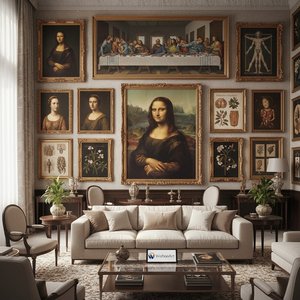
Леонардо да Вінчі: 25 шедеврів для вашого дому – мистецтво, історія та декор від OriginalUniqueArt
Відкрийте 25 шедеврів Леонардо да Вінчі! Історія, техніка та значення культових картин Відродження. Репродукції високої якості для вашого дому від OriginalUniqueArt.com – мистецтво, що надихає.
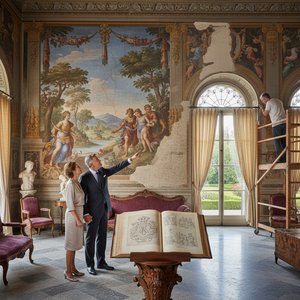
Фреска як сімейна спадщина: Збереження родинної історії через настінне мистецтво
Дізнайтеся все про фрески: історію, техніки, замовлення та догляд. Створіть унікальну сімейну спадщину з нашими професійними художниками! Якість гарантовано.
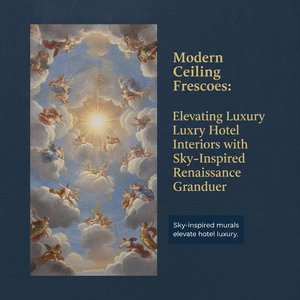
Сучасне стельове фреско: Мистецтво Ренесансу в інтер'єрі XXI століття
Відкрийте для себе мистецтво стельового фреско! Ексклюзивний дизайн інтер'єру готелів та приватних просторів від професійних художників. Замовте розпис стелі у !

Pietro da Cortona: Baroque Grandeur & the Synthesis of Roman Painting
Explore the life & masterpieces of Pietro da Cortona, a defining figure of the Italian Baroque. Discover his stunning frescoes at Palazzo Barberini and lasting influence on Roman art history. Learn more with OriginalUniqueArt.
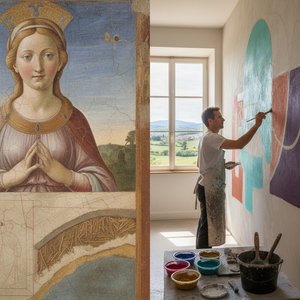
The Enduring Legacy of Fresco Painting: Techniques, History & Contemporary Relevance
Explore the rich history & enduring artistry of fresco painting – from Giotto to Michelangelo! Discover techniques, conservation efforts, & modern applications. Learn how OriginalUniqueArt brings this timeless art form to your home.