

 Переглянути в інтер'єрі
 Надіслати
 Поділитися
 Деталі
 Посібник

 Завантажити
 Схожі предмети колекціонування
 Рентгенівське дослідження
 Слайд-шоу
 Статистика переглядів
Cello


 Читати далі
Мистецький твір, представлений на цій сторінці, захищений законом про авторське право, що унеможливлює легальне створення або продаж його ідентичної репродукції. Цей захист забезпечується відповідно до міжнародних угод, таких як Бернська конвенція та національним законодавством, зокрема положеннями, що викладені в Законодавство США про авторське право — Розділ 17. Всі права захищені. Будь-яке використання без дозволу заборонено.
Як шанобливу та законну альтернативу, ми пропонуємо унікальні картини ручної роботи, створені натхненням від оригіналу. Наші досвідчені професійні художники ретельно вивчають стиль, настрій та художню сутність оригіналу, щоб створити новий, неповторний твір, який викликає ті ж почуття, — залишаючись при цьому самобутнім творінням.
Цей метод повністю відповідає нормам авторського права, оскільки він не передбачає копіювання чи дублювання захищеного твору мистецтва. Натомість це творче переосмислення — створення нового малюнка під впливом оригіналу, який не є його точним відтворенням.
Олійная репродукція ручної роботи
Написана вручну олією на полотні у вашому розмірі та рамі, виготовлена на замовлення нашими художниками. ( Перейти до друку Перейти до цифрових зображень)




P118B ₴10

P118H ₴10

P118W ₴10

P438Z ₴10

P508JH ₴12

P508YH ₴12

P805H ₴10

P805Z ₴10

P919BZ ₴10

P919G ₴10

P919XJ ₴10

P959ZH ₴10

P968JZ ₴12

W106C ₴8

W218G ₴10

W218JH ₴8

W218Y ₴10

W307PJ ₴10

W316G ₴10

W316PJ ₴8

W316Y ₴10

W398PJ ₴8

W4111J ₴10

W500HY ₴15

W500JH ₴15

W692G ₴12

W849H ₴8

W940BG ₴15

W953PJ ₴8




Обирайте з наших стандартних розмірів, що відповідають оригінальним пропорціям твору мистецтва.

Введіть необхідну ширину та висоту, щоб картина підійшла до вашої рами або стіни. Оскільки це ручний розпис, для розміру іншої форми художник може написати трохи більше навколо картини або трохи обрізати її — вибір за вами. Перед початком роботи ми надішлемо вам цифровий макет для затвердження. Зображення, показане на цій сторінці, не є реальним результатом — лише макет відображає майбутній вигляд.
Після оформлення замовлення команда OriginalUniqueArt.com зв'яжеться з клієнтом електронною поштою для отримання інструкцій та надасть попередній макет
Доставка по всьому світу () за 3–4 тижні замість стандартних 5 тижнів. (22 Жовтень). Без жодних компромісів у якості.

Безкоштовна експрес-доставка по всьому світу

Високоякісне лляне полотно

Повне страхове покриття доставки

Гарантія повернення митних зборів

Гарантія точного відтворення кольорів

Політика повернення протягом 100 днів (лише у разі виявлення дефектів)

Гарантія повернення 100% коштів

Знижка на оптові замовлення
 Скляний варіант доступний лише для розмірів до 110 см

Cello
Техніка репродукції
Розмір репродукції
-


Загальна вартість
₴ 13445
A Testament to Craftsmanship: Piero Parravicini’s Cello – A Reflection of Italian Violin Making Tradition
The cello, an instrument steeped in history and revered for its soulful resonance, stands as a testament to the enduring legacy of Italian violin making. This particular cello, crafted by Piero Parravicini in 1922, embodies the meticulous artistry that flourished during the early 20th century – a period marked by both artistic innovation and unwavering adherence to established techniques. Examining its construction reveals not only exceptional craftsmanship but also a profound connection to the traditions of Cremona, Italy, where violin making has been practiced for centuries.- Material Composition: The instrument’s body is constructed primarily from maple, chosen for its density and tonal qualities. Complementing this core material are spruce boards – two carefully selected pieces – forming the soundboard. Spruce, renowned for its stiffness and ability to transmit vibrations efficiently, remains a cornerstone of violin construction globally.
- Purfling & Decoration: Adding visual elegance and structural integrity is white maple and black walnut purfling—thin strips inlaid around the edges of the cello’s body and neck. Purfling serves not only as decorative embellishment but also protects the wood from cracking during handling and contributes to the instrument's overall acoustic performance.
- Historical Context: Piero Parravicini operated within a vibrant artistic milieu, influenced by figures like Romeo Antoniazzi, who himself studied under Giuseppe Stradivari—the undisputed master of violin making. This lineage underscores the importance of preserving traditional methods and honoring the legacy of legendary craftsmen.
Artist Biography: Piero Parravicini – A Maestro Rooted in Tradition
Born in Bovisa, Italy, in 1889, Piero Parravicini was more than just a violin maker; he was an educator and innovator who championed the revival of classical violin making. He honed his skills at Monzino, Milan, absorbing knowledge from Romeo Antoniazzi (1862-1925), whose own approach to instrument construction drew inspiration from Stradivari’s groundbreaking methods.
Parravicini's dedication extended beyond production; he established a workshop where he imparted his expertise to aspiring artisans. His instruments garnered recognition at prestigious competitions—the National Lute-Making Competition in Rome (1925 & 1929), the International Contemporary Lute-Making Competition in Cremona (1949), and the National Exhibition in Florence (1951)—demonstrating his commitment to upholding the highest standards of craftsmanship.
The Instrument’s Aesthetic Appeal: Visual Elements & Sonic Character
The cello's appearance speaks volumes about its maker’s vision. Its maple body exudes warmth and stability, while the spruce soundboard radiates luminosity—a characteristic achieved through meticulous polishing and varnish application. The white maple and black walnut purfling adds subtle textural contrast, enhancing both visual beauty and acoustic projection.
Beyond its physical form, the cello possesses a distinctive sonic character – a rich, resonant timbre capable of conveying profound emotion. This quality is attributable to Parravicini’s careful selection of materials and his meticulous attention to detail during construction—a testament to the enduring power of tradition in shaping artistic expression.
Symbolism & Emotional Resonance
Like all great instruments, the cello transcends mere functionality; it embodies a deeper symbolic significance. Its elongated shape evokes contemplation and introspection – qualities that align perfectly with its expressive capabilities. When played skillfully, it can evoke feelings of melancholy, joy, and spiritual transcendence—connecting musicians and listeners alike to universal human experiences.
Concluding Remarks: A Legacy Preserved
Piero Parravicini’s cello stands as a beacon of Italian violin making tradition – a symbol of unwavering dedication to craftsmanship and artistic excellence. Its enduring beauty and sonic power continue to inspire musicians and collectors worldwide, ensuring that the legacy of this remarkable instrument—and its maker—will endure for generations to come.
Запитання та відповіді
До якого художнього напряму належить «Cello» Piero Parravicini?
Мистецький напрям, до якого належить «Cello» Piero Parravicini, — це Contemporary Realism. Така класифікація дозволяє розмістити цей твір у контексті суміжних художників та творів мистецтва.
Чи є інформаційний лист про «Cello» Piero Parravicini для студентів?
Для «Cello» Piero Parravicini доступна сторінка Посібник: друкований інформаційний лист про витвір мистецтва, розроблений для студентів та використання в навчальному процесі.
Наскільки гармонійними є кольори у творі «Cello» Piero Parravicini?
Кольори твору «Cello» Piero Parravicini демонструють Strong Color Unity гармонію. Гармонія описує взаємозв'язок кольорів між собою.
Схожі статті

10 Iconic Masterpieces That Capture the Soul of Italy
Journey through Italy's soul with 10 iconic masterpieces. From Renaissance legends to romantic landscapes, explore the stories behind these timeless works. Find museum-quality art reproductions and curated decor inspiration at OriginalUniqueArt.com. Discover all masterpieces online.

10 Iconic Artworks That Capture the Magic of Italy
Journey through Italy via its most iconic masterpieces. From Renaissance classics to romantic landscapes, explore the stories behind these timeless works. Find museum-quality art reproductions and curated decor inspiration at OriginalUniqueArt.com. Discover all masterpieces online.
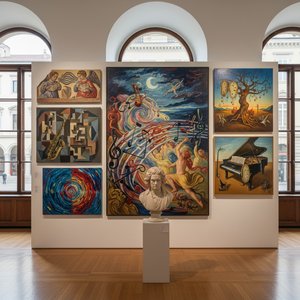
Harmonies on Canvas: Exploring the Visual Representation of Music in Art History
Explore the fascinating history of music's visual representation in art! From ancient symbolism to modern abstraction, discover how artists have captured sound and emotion on canvas. Expert insights & stunning examples.

The Symphony of Canvas: Capturing the Timeless Resonance of Musical Instruments in Fine Art Masterpieces
Explore the profound connection between music and fine art. From ancient iconography to Impressionist masterpieces, discover how legendary instruments are captured on canvas with unparalleled artistry and historical depth for the discerning collector.

10 Iconic Masterpieces That Capture the Magic of Italy
Journey through Italy's soul with 10 iconic masterpieces. From Renaissance classics to romantic landscapes, explore the stories behind these timeless works and find museum-quality art reproductions for your decor. Discover all masterpieces on OriginalUniqueArt.com.