

 Переглянути в інтер'єрі
 Надіслати як листівку
 Поділитися
 Деталі витвору
 Посібник

 Завантажити
 Схожі екземпляри
 Рентгенівське дослідження
 Слайд-шоу
 Статистика
Young Bull
 Dutch Golden Age Painting
 1647
1647 236.0 x 339.0 cm
 Маурітшгайс
 Розгорнути текст
Гікле / Художній принт
Друк جيкле або на полотні музейної якості з оперативним виготовленням та різноманітними варіантами фінішної обробки. ( Замовити картину ручної роботи Перейти до цифрових зображень)




P118B ₴10

P118H ₴10

P118W ₴10

P438Z ₴10

P508JH ₴12

P508YH ₴12

P805H ₴10

P805Z ₴10

P919BZ ₴10

P919G ₴10

P919XJ ₴10

P959ZH ₴10

P968JZ ₴12

W106C ₴8

W218G ₴10

W218JH ₴8

W218Y ₴10

W307PJ ₴10

W316G ₴10

W316PJ ₴8

W316Y ₴10

W398PJ ₴8

W4111J ₴10

W500HY ₴15

W500JH ₴15

W692G ₴12

W849H ₴8

W940BG ₴15

W953PJ ₴8




Обирайте з наших стандартних розмірів, що відповідають оригінальним пропорціям твору мистецтва.

Введіть необхідну ширину та висоту, щоб принт ідеально підійшов до вашої рами або стіни. Принт можна лише обрізати, але не можна зробити більшим за оригінал, тому при зміні пропорцій частина зображення буде втрачена. Перед друком ми надсилаємо вам цифровий макет для затвердження. Зображення на цій сторінці не відображає реальну обрізку — її можна побачити лише на макеті.
Доставка по всьому світу () за 2 тижні замість стандартних 4/5 тижнів. (25 Жовтень)

Безкоштовна експрес-доставка по всьому світу

Високоякісне лляне полотно

Повне страхове покриття доставки

Гарантія повернення митних зборів

Гарантія точного відтворення кольорів

Політика повернення протягом 100 днів (лише у разі виявлення дефектів)

Гарантія повернення 100% коштів

Пропозиція на оптові замовлення
 Скляний варіант доступний лише для розмірів до 110 см

Young Bull
Гікле / Художній принт
Розмір репродукції
-


Підсумкова вартість
₴ 3591
The Majesty of the Bull: Paulus Potter’s Monumental Vision
Paulus Potter's *The Young Bull*, painted in 1647 during the height of the Dutch Golden Age, isn’t merely a depiction of an animal; it’s a profound statement about nature, power, and the burgeoning Romantic sensibility taking root within the artistic landscape. This monumental canvas, now residing in the Mauritshuis in The Hague, immediately commands attention with its sheer scale – measuring nearly 240 by 340 centimeters – a deliberate choice that elevates the humble bull to an almost heroic status, challenging the established hierarchies of genre painting and demanding a new level of engagement from the viewer. Potter, a remarkably short-lived artist born in Enkhuizen, possessed a singular ability to capture the essence of his subjects with breathtaking realism and a deep understanding of animal anatomy, a skill honed through meticulous observation and an almost obsessive dedication to detail.
The painting’s genesis lies in Potter's commitment to portraying animals as they truly are – not as idealized figures within a pastoral setting, but as complex, vital beings. Unlike many of his contemporaries who utilized animals primarily as decorative elements or background scenery, Potter focused intently on their physicality, rendering the textures of their fur, the sheen of their hides, and the subtle nuances of their expressions with astonishing accuracy. The artist’s technique is characterized by a masterful use of impasto – thick, textured brushstrokes that build up layers of paint to create a palpable sense of volume and weight. This tactile quality invites us to almost feel the rough hide of the bull beneath our fingertips, grounding the image in a tangible reality.
A Study in Light and Shadow: Composition and Technique
The composition itself is remarkably sophisticated. Potter masterfully employs chiaroscuro – the dramatic contrast between light and shadow – to sculpt the form of the bull and create a sense of depth within the scene. The strong directional lighting, originating from an unseen source, highlights the muscular contours of the animal’s body, emphasizing its power and vitality. Notice how the sunlight catches the dewlap, illuminating the intricate folds of skin with exquisite detail, while simultaneously casting deep shadows across the surrounding meadow. This interplay of light and dark not only enhances the realism of the painting but also imbues it with a dramatic intensity.
Interestingly, Potter’s approach was revolutionary for his time. He began by creating numerous preparatory drawings from life, meticulously studying the bull's anatomy and behavior before committing them to canvas. This process is evident in the painting’s remarkable accuracy – every muscle, vein, and wrinkle is rendered with painstaking detail. Furthermore, Potter expanded the original composition significantly, adding extra panels on all sides of the canvas, a bold move that further emphasized the scale of his subject and underscored its importance within the overall narrative. This enlargement was not simply an aesthetic choice; it reflected Potter’s desire to create a truly monumental work of art, one worthy of commanding attention and inspiring awe.
Symbolism and Context: The Bull in Dutch Culture
The bull held significant symbolic weight within 17th-century Dutch culture. It represented prosperity, fertility, and strength – qualities highly valued by a nation rapidly expanding its wealth and influence through maritime trade. Potter’s decision to portray this powerful animal on such a grand scale was therefore not merely an artistic choice but also a reflection of the prevailing cultural values of his time. The inclusion of the surrounding landscape—a rolling meadow dotted with wildflowers and framed by distant trees—further reinforces this symbolism, suggesting that the bull's strength is inextricably linked to the bounty of the land.
The painting’s popularity during the 18th and 19th centuries speaks volumes about its impact on the artistic consciousness. Critics like Eugène Fromentin famously declared it one of the three greatest paintings in the Netherlands, alongside Rembrandt's *The Night Watch* and Jan Steen’s *The Feast of Saint Nicholas*. This recognition highlights Potter’s pioneering role in elevating animal painting to a position of prominence within the art world, paving the way for future generations of artists who sought to capture the beauty and complexity of the natural world.
A Legacy of Realism: The Young Bull Today
Today, *The Young Bull* remains a captivating masterpiece – a testament to Paulus Potter’s extraordinary talent and his profound understanding of nature. Its monumental scale, masterful technique, and evocative symbolism continue to resonate with viewers centuries after its creation. Whether viewed in person at the Mauritshuis or reproduced as a high-quality print, this painting offers a glimpse into the artistic spirit of the Dutch Golden Age – a period defined by innovation, realism, and an unwavering appreciation for the beauty of the natural world.
Питання та відповіді
Чи можна переглянути «Young Bull» роботи Павло Поттер у форматі слайд-шоу?
«Young Bull» роботи Павло Поттер можна переглянути у форматі слайд-шоу на сторінці Слайд-шоу цього твору.
Хто створив "Young Bull" і в якому році?
«Young Bull» було створено Павло Поттер у 1647 році.
Хто є автором "Young Bull" і до якого художнього напряму він належить?
Павло Поттер створив(ла) «Young Bull» у межах течії Dutch Golden Age Painting.
Біографія митця
A Brief Life Illuminated: The World of Paulus Potter
Paulus Potter, a name inextricably linked to the heart of the Dutch Golden Age, lived a life tragically short yet profoundly impactful on the world of art. Born in Enkhuizen on November 20, 1625, and baptized that very same day, his artistic journey began within a family already steeped in creative tradition. His father, Pieter Symonsz Potter, was a highly respected painter specializing in the intricate craft of gilded leather hangings and charming genre scenes – capturing everyday life with remarkable detail and warmth. His mother, Aaltje Paulusdr Bartsius, held a significant place in Dutch artistic history as the sister of Willem Bartsius, a renowned painter whose works graced the halls of prominent families. This familial legacy, combined with an environment that nurtured creativity, undoubtedly provided young Paulus with the foundational skills and inspiration he would later hone into his distinctive style. The family’s relocation first to Leiden in 1628, and then to the bustling metropolis of Amsterdam in 1631, proved pivotal, offering him access to a wider world of artistic influence and opportunity – a vibrant hub where new ideas and techniques constantly flowed. It was in Amsterdam that he began his formal training under his father’s guidance, though some scholars suggest potential influences from the masterful Claes Moeyaert, whose landscapes were highly sought after at the time.From Delft Guilds to Hague Landscapes
Paulus Potter's ambition quickly propelled him towards recognition within the established artistic community. He joined the prestigious Guild of Saint Luke in Delft, a crucial step for any aspiring artist seeking legitimacy and professional standing in the Dutch Republic. However, his true artistic path began to unfold when he moved to The Hague around 1649. Establishing himself near the renowned landscape painter Jan van Goyen proved incredibly influential; Van Goyen’s mastery of atmospheric effects – the subtle shifts of light and shadow that gave depth and realism to his scenes – would subtly permeate Potter's own style, creating a harmonious blend of influences. This period also marked a significant turning point in Potter’s personal life. In July 1650, he married Adriana van Balckeneynde, a union that opened doors to influential circles thanks to her father, a prominent building contractor and respected figure within the city's elite. Through this connection, Potter found himself introduced to members of Dutch high society, including the esteemed Amalia of Solms-Braunfels, who would become a patron of his work, commissioning several paintings from him. A brief return to Amsterdam in May 1652, at the invitation of physician and art enthusiast Nicolaes Tulp – who owned a number of Potter’s paintings – offered further recognition and solidified his position within the artistic landscape. Sadly, this period of burgeoning success was tragically cut short by illness; Paulus Potter succumbed to tuberculosis on January 17, 1654, at the young age of twenty-eight, leaving behind a legacy of breathtaking beauty and profound emotional resonance.The Pastoral Vision: Style and Major Works
Paulus Potter carved a unique niche for himself within the vibrant landscape of Dutch Golden Age painting – he became celebrated for his captivating depictions of animals – particularly cattle – seamlessly integrated into expansive, meticulously rendered landscapes. His compositions are often characterized by a strikingly low vantage point, an artistic choice that dramatically emphasizes the scale and grandeur of nature, dwarfing even the majestic beasts he portrayed. The Young Bull, created around 1647, remains his most iconic work, now housed in the Mauritshuis in The Hague – a masterpiece that captures both the physical strength and youthful vulnerability of the animal with remarkable sensitivity. Initially met with some critical reservation, it later gained widespread acclaim as a pioneering example of Romanticism’s nascent sensibility – a profound emotional connection to the natural world. Beyond this masterpiece, Potter produced other notable paintings such as Figures with Horses by a Stable (1647), depicting a group of figures interacting with horses in a rustic setting; Punishment of a Hunter (circa 1647), a dramatic scene illustrating the consequences of unchecked aggression against nature; Two Pigs in a Sty (1649), a charming and intimate portrayal of domestic animals; and Wolf-hound (approximately 1650–1652), showcasing the animal’s watchful gaze and powerful presence. He also demonstrated his versatility through numerous etchings, often focusing on the detailed portrayal of cattle and other animals – capturing their textures, movements, and expressions with astonishing precision.Influences and Artistic Techniques
Potter's artistic development was shaped by a confluence of influences. The meticulous realism of his father, Pieter Symonsz Potter, undoubtedly instilled in him a deep appreciation for detail and observation. However, the most significant influence came from Jan van Goyen, whose mastery of atmospheric effects – the subtle shifts of light and shadow that created depth and realism – profoundly impacted Potter’s own approach to landscape painting. Potter's use of *chiaroscuro*—the dramatic contrast between light and dark—was particularly effective in conveying a sense of drama and emotion within his scenes. He skillfully employed a muted color palette dominated by earth tones, reflecting the natural hues of the Dutch countryside and creating a harmonious and understated aesthetic. Furthermore, Potter’s consistent use of low horizon lines – placing the viewer close to the ground – dramatically emphasized the scale and grandeur of the landscape, fostering a sense of awe and wonder in the face of nature's immensity.Legacy and Lasting Influence
Despite his tragically brief life, Paulus Potter’s artistic legacy endures as a testament to his exceptional talent and unique vision. His work stands as a powerful example of the Romantic movement’s nascent influence on Dutch art – a profound emotional connection to the natural world. The influence of Jan van Goyen is readily apparent in Potter's landscapes, particularly in the subtle atmospheric effects and commitment to realistic representation. However, Potter transcended mere imitation; he infused his scenes with an emotional depth that resonated deeply with viewers then, and continues to do so today. He is now recognized as a precursor to Romanticism, anticipating its emphasis on the sublime power of nature and the emotional response it evokes. His paintings continue to inspire admiration for their beauty, realism, and profound sense of connection to the natural world – a timeless reminder of the enduring power of art to capture and convey the essence of our shared experience with the environment.
Павло Поттер
1625 - 1654 , Нідерланди
Короткі факти
- Artistic Movement Or Style: Романтизм
- Artists Or Movements Influenced By This Artist: ['Романтизм']
- Artists Who Influenced This Artist: ['Ян ван Гойєн']
- Date Of Birth: 20 листопада 1625
- Date Of Death: 17 січня 1654
- Full Name: Paulus Potter
- Nationality: Німецький
- Notable Artworks:
- The Young Bull
- Figures з конями
- Покарання мисливця
- Дві свинки в годівниці
- Вовк-поні
- Place Of Birth: Енхюйзен, Нідерланди
Пов'язані статті

Illuminating Innovation: Exploring the Dutch Golden Age of Painting
Explore the Dutch Golden Age of painting with OriginalUniqueArt. Discover Rembrandt, Vermeer & other Masters. Learn about key characteristics, iconic artworks, and lasting influence. Expert insights for collectors & enthusiasts.
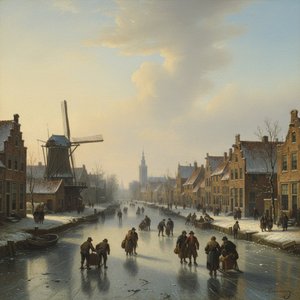
Charles Leickert: Capturing the Dutch Golden Age Light – A Comprehensive Study of Technique, Context, and Legacy
Explore the captivating winter landscapes of Charles Leickert, a master of Dutch Golden Age light & atmosphere. Discover his techniques, symbolism, and lasting legacy – a comprehensive study for art enthusiasts and collectors.

Топ-10 шедеврів Золотої доби нідерландського мистецтва | OriginalUniqueArt.com
Відкрийте для себе 10 шедеврів Золотої доби нідерландського мистецтва! Рембрандт, Вермеєр та інші майстри. Історія створення, унікальні техніки та натхнення для вашого інтер'єру. Репродукції картин високої якості – OriginalUniqueArt.com
Illuminating Realism: Exploring the Dutch Golden Age of Painting (1600-1700)
Explore the Dutch Golden Age of painting (1600-1700) with OriginalUniqueArt. Discover Rembrandt, Vermeer & other masters. Learn about techniques, history & find museum-quality reproductions.

Golden Age Reflections: Dutch Baroque Painting & Cultural Innovation
Explore the Dutch Golden Age of painting! Discover key artists like Vermeer & ter Borch, their innovative techniques, and the rich cultural context behind these Baroque masterpieces. Learn about collecting & appreciating this iconic art period.

