Перейти до друку
 Розгорнути текст







































 Для творів мистецтва або репродукцій, розмір яких перевищує 105 см (приблизно 41 дюйм) з будь-якого боку, рама доставляється у вигляді розібраного комплекту. Такий метод гарантує безпечну доставку та запобігає пошкодженням під час транспортування.


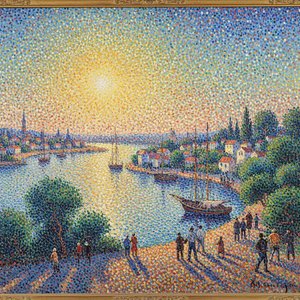
A Symphony of Light and Color: The Luminous Vision of Capo di Noli
In the pantheon of Neo-Impressionist masterpieces, few works capture the ethereal dance between science and soul quite like Paul Signac’s 1898 triumph, Capo di Noli. This breathtaking canvas is far more than a mere coastal landscape; it is a profound meditation on the Mediterranean spirit, rendered through a lens of meticulous optical precision. As the viewer’s gaze meets the sun-drenched shores of the Italian Riviera, they are immediately transported to a tranquil vista overlooking Genoa. The scene unfolds with a rhythmic grace, where a solitary woman wanders along a path lined with lush, vibrant vegetation, her silhouette poised against the expansive, shimmering blue of the sea. Small boats dot the water like scattered jewels, while the subtle presence of another figure and a resting dog adds a layer of pastoral intimacy, grounding the vastness of the horizon in a moment of quiet, everyday serenity.
To behold Capo di Noli is to witness the revolutionary power of Pointillism. Moving beyond the spontaneous, fleeting brushstrokes of his Impressionist predecessors, Signac embraced a more systematic and scientific approach to color. He utilized tiny, distinct dots of pure, unblended pigment—often employing complementary hues—that do not merge on the physical canvas but rather interact within the viewer's own eye. This technique, known as Divisionism, creates an unparalleled sense of luminosity; the light does not simply sit upon the surface of the painting but seems to radiate from within it. For the discerning collector or interior designer, this creates a dynamic visual experience where the artwork breathes with a life of its own, constantly shifting in intensity as one moves through the room.
Historical Resonance and Aesthetic Elegance
The historical significance of this work lies in Signac’s role as a pioneer who bridged the gap between the sensory freedom of Monet and the structured modernism of the twentieth century. Painted during a period of intense fascination with optical physics, Capo di Noli embodies the artist's desire to push the boundaries of color to their absolute extreme. Every dot of paint was a deliberate choice, a calculated step toward capturing the true essence of light as it strikes the Mediterranean coast. This dedication to accuracy and atmosphere makes the piece a cornerstone of art history, representing a moment when the artist became an explorer of both nature and the mechanics of human perception.
For those seeking to infuse a space with sophistication and calm, this painting offers an unparalleled emotional impact. Its palette—a harmonious blend of azure, emerald, and sun-kissed earth tones—evokes a sense of timelessness and peace. Whether placed in a grand gallery setting or as a focal point in a contemporary living space, a high-quality reproduction of Capo di Noli serves as a window to another world. It invites contemplation, offering a sanctuary of color and light that can transform the atmosphere of any interior, turning a room into a curated experience of beauty and historical depth.
Питання та відповіді
Який домінуючий колір у «Capo de Noli» роботи Пол Сінак?
Найбільш виразним кольором у творі «Capo de Noli» є Сіро-бежевий (#c5beb1). Домінантний колір допомагає підібрати витвір мистецтва до інтер'єру.
Кольори у творі "Capo de Noli" виглядають насиченими чи ніжними?
Насиченість кольорів у творі «Capo de Noli» — Насичені. Насиченість описує, наскільки яскравими та виразними є кольори.
Чи є «Capo de Noli» роботи Пол Сінак суспільним надбанням?
Статус авторського права для «Capo de Noli» роботи Пол Сінак: цей твір є є суспільним надбанням — термін дії авторського права закінчився. Це визначає, чи можна вільно створювати репродукції зображення.
 Переглянути в інтер'єрі
 Надіслати як листівку
 Поділитися
 Деталі витвору
 Посібник

 Завантажити
 Схожі екземпляри
 Рентгенівське дослідження
 Слайд-шоу
 Питання та відповіді
 Статистика