Переглянути в інтер'єрі
 Надіслати як листівку
 Поділитися
 Деталі витвору
 Посібник

 Завантажити
 Схожі екземпляри
 Рентгенівське дослідження
 Слайд-шоу
 Статистика
The Grammar


 Розгорнути текст
Гікле / Художній принт
Друк جيкле або на полотні музейної якості з оперативним виготовленням та різноманітними варіантами фінішної обробки. ( Замовити картину ручної роботи Перейти до цифрових зображень)




P118B ₴10

P118H ₴10

P118W ₴10

P438Z ₴10

P508JH ₴12

P508YH ₴12

P805H ₴10

P805Z ₴10

P919BZ ₴10

P919G ₴10

P919XJ ₴10

P959ZH ₴10

P968JZ ₴12

W106C ₴8

W218G ₴10

W218JH ₴8

W218Y ₴10

W307PJ ₴10

W316G ₴10

W316PJ ₴8

W316Y ₴10

W398PJ ₴8

W4111J ₴10

W500HY ₴15

W500JH ₴15

W692G ₴12

W849H ₴8

W940BG ₴15

W953PJ ₴8




Обирайте з наших стандартних розмірів, що відповідають оригінальним пропорціям твору мистецтва.

Введіть необхідну ширину та висоту, щоб принт ідеально підійшов до вашої рами або стіни. Принт можна лише обрізати, але не можна зробити більшим за оригінал, тому при зміні пропорцій частина зображення буде втрачена. Перед друком ми надсилаємо вам цифровий макет для затвердження. Зображення на цій сторінці не відображає реальну обрізку — її можна побачити лише на макеті.
Доставка по всьому світу () за 2 тижні замість стандартних 4/5 тижнів. (26 Жовтень)

Безкоштовна експрес-доставка по всьому світу

Високоякісне лляне полотно

Повне страхове покриття доставки

Гарантія повернення митних зборів

Гарантія точного відтворення кольорів

Політика повернення протягом 100 днів (лише у разі виявлення дефектів)

Гарантія повернення 100% коштів

Пропозиція на оптові замовлення
 Скляний варіант доступний лише для розмірів до 110 см

The Grammar
Гікле / Художній принт
Розмір репродукції
-


Підсумкова вартість
₴ 3588
The Grammar: A Pioneering Exploration of Abstraction
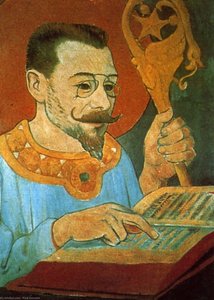
Paul Sérusier’s “Grammar,” painted in 1892, stands as a pivotal work not just within the artist's oeuvre but also as a foundational piece in the development of modern art. More than simply a portrait, it’s an intensely personal and experimental exploration of color, form, and the very nature of representation – a bold step towards abstraction that profoundly influenced generations of artists to come. The painting depicts a woman seated on the ground, absorbed in reading a book, a scene rendered with remarkable intimacy and a deliberate departure from traditional academic styles.
Sérusier’s artistic journey was deeply intertwined with the burgeoning Nabis movement, a group of Symbolist painters who sought to move beyond mere imitation of nature towards expressing inner emotions and spiritual truths. He initially studied at the Académie Julian, but it was his summer sojourn in Pont-Aven, Brittany, that proved transformative. There, under the tutelage of Paul Gauguin – a figure whose influence extended far beyond technique – Sérusier encountered the revolutionary approach of Cloisonnism, championed by Gauguin himself. This style, characterized by sharply defined outlines and areas of flat color applied in small, separate strokes, aimed to mimic the appearance of stained glass, creating a sense of luminous clarity and symbolic resonance.
Cloisonnism and the Language of Color
“Grammar” exemplifies this Cloisonnism technique with striking precision. The woman’s figure is not rendered through subtle gradations of tone but rather defined by bold, distinct outlines – a deliberate simplification that prioritizes color and form over meticulous detail. Sérusier employs a vibrant palette, dominated by deep blues, greens, and ochres, creating an atmosphere both serene and slightly melancholic. The colors aren’t blended; instead, they are applied in small, separate strokes, building up layers of hue and texture. This technique, combined with the flattened perspective, creates a sense of immediacy and directness, as if the painting is capturing a fleeting moment of contemplation.
Crucially, Sérusier’s use of color isn't merely descriptive; it carries symbolic weight. The blues evoke a sense of introspection and mystery, while the greens suggest connection to nature – a key theme in Symbolist art. The muted ochres contribute to the painting’s overall feeling of quietude and contemplation. The deliberate choice of colors, rather than realistic representation, is central to the work's expressive power.
A Study in Form and Abstraction
Beyond its technical mastery, “Grammar” represents a significant shift towards abstraction. While not entirely devoid of recognizable forms – the woman’s figure, the book, the surrounding objects – the painting prioritizes the exploration of color and form over strict representation. The simplified shapes, flattened perspective, and emphasis on pure color anticipate later developments in abstract art, foreshadowing the work of artists like Kandinsky and Mondrian. It's a deliberate move away from photographic realism towards a more subjective and expressive approach to visual language.
The painting’s title, “Grammar,” is particularly intriguing. It suggests that Sérusier was not simply depicting a scene but rather exploring the fundamental building blocks of artistic expression – the elements of color, line, and form – in a way that transcends traditional representation. The book itself becomes a symbol of knowledge and contemplation, inviting the viewer to engage with the painting on a deeper level.
Legacy and Inspiration
“Grammar” remains a vital work in the history of modern art, demonstrating Sérusier’s pioneering spirit and his profound influence on subsequent generations. It's a testament to the power of abstraction to convey emotion, ideas, and spiritual truths. Reproductions of this evocative painting continue to inspire artists and collectors alike, offering a glimpse into the heart of artistic innovation and the enduring quest for new forms of visual expression.
Питання та відповіді
Коли було створено та до якого стилю належить твір «The Grammar» роботи Пол Серусьєр?
«The Grammar» роботи Пол Серусьєр датований 1892 роком і належить до Cloisonnism / Nabis.
До якого художнього напряму належить «The Grammar» роботи Пол Серусьєр?
Мистецький напрям, до якого належить «The Grammar» роботи Пол Серусьєр, — це Cloisonnism / Nabis. Така класифікація дозволяє розмістити цей твір у контексті суміжних митців та творів мистецтва.
Як можна використати «The Grammar» роботи Пол Серусьєр в інтер'єрі дому?
«The Grammar» чудово підійде для Reflective, а найкращим місцем для його розміщення стане Living Room.
Біографія митця
Early Life and Artistic Beginnings
Paul Sérusier, a pivotal figure in the evolution of modern art, was born on November 9th, 1864, in the heart of Paris. His early life, steeped in the cultural richness of the capital, laid the foundation for his unique artistic vision. He hailed from a family of considerable means, affording him access to a privileged education that included studies at the Lycée Condorcet, a renowned institution known for its emphasis on philosophy and classical learning. This academic grounding, combined with a keen observation of the world around him, would profoundly shape his approach to art. Sérusier’s father, a successful businessman involved in the perfume industry, initially envisioned a career for his son within commerce, but Paul's passionate desire to pursue painting quickly led him to enroll at the Académie Julian in 1885. This institution, offering an alternative to the more rigid structure of the École des Beaux-Arts, proved instrumental in nurturing his talent and introducing him to a vibrant community of artists. It was during this period that he encountered figures like Maurice Denis, who would become a lifelong friend and influential mentor, shaping Sérusier’s understanding of artistic principles and inspiring his experimentation with color and form.The Pont-Aven Years: Cloisonnism and the Nabis
The summer of 1888 marked a transformative period in Sérusier's artistic development – his sojourn to Pont-Aven, a picturesque village nestled in Brittany. This location became a hub for artists seeking inspiration amidst the rugged beauty of the landscape and the close-knit community fostered by Paul Gauguin. Under Gauguin’s guidance, Sérusier embarked on a groundbreaking exploration of cloisonnism, a technique characterized by bold, flat forms delineated by dark outlines – essentially painting within compartments or “cloisons.” This approach, radically different from the prevailing Impressionist style, allowed him to distill his observations into their most essential elements. His seminal work, *Bois d’Amour* (1888), exemplifies this innovative technique, capturing the essence of the Breton landscape through simplified shapes and vibrant, unmodulated colors. Crucially, it was during this time that Sérusier encountered Émile Bernard, with whom he engaged in intense discussions about art theory and practice. Together, they formed a core group within the nascent Nabis movement – “The Prophets” – alongside figures like Pierre Bonnard and Maurice Denis. The Nabis sought to move beyond mere representation, aiming instead to express emotions and spiritual truths through color, form, and symbolism.Developing Abstract Vision: Synthetism and Beyond
Building upon the principles of cloisonnism and influenced by Bernard’s explorations of Symbolist ideas, Sérusier continued to refine his artistic language throughout the 1890s. He began experimenting with synthetism, a style that prioritized the use of color as an independent expressive element, often divorced from realistic depiction. This shift towards abstraction was not merely a stylistic choice but reflected a deeper philosophical inquiry into the nature of perception and experience. Sérusier’s paintings during this period—works like *L'Averse* (1893) and *Melancholy* (1890)—demonstrate his increasing willingness to challenge traditional artistic conventions, employing flattened forms, bold color palettes, and a deliberate simplification of subject matter. His later works, such as *The Snake Eaters* (1894), further solidified his position as a pioneer of abstract art, pushing the boundaries of representation and exploring the expressive potential of pure form and color.Legacy and Influence
Paul Sérusier’s impact on the development of modern art is undeniable. His innovative techniques—particularly cloisonnism and synthetism—served as crucial stepping stones for subsequent generations of artists. He played a pivotal role in shaping the Nabis movement, fostering a spirit of experimentation and challenging established artistic norms. Beyond his direct contributions to painting, Sérusier’s influence extended to the realm of art theory, as evidenced by his publication of *ABC de la peinture* (1921), a seminal work that explored fundamental principles of color and composition. He also served as an instructor at the École Ranson, further disseminating his ideas and inspiring a new cohort of artists. Paul Sérusier’s legacy endures not only through his remarkable body of paintings but also through his pioneering spirit and his unwavering commitment to artistic innovation. His work continues to resonate with viewers today, offering a glimpse into the transformative power of abstraction and the enduring quest for expressive truth in art.
Пол Серусьєр
1864 - 1927 , Франція
Короткі факти
- Artistic Movement Or Style: Пост-імпресіонізм
- Artists Or Movements Influenced By This Artist: ['Набиси']
- Artists Who Influenced This Artist:
- Пабло Пікассо
- Вінсент ван Гог
- Date Of Birth: 9 листопада 1864
- Date Of Death: 7 жовтня 1927
- Full Name: Louis-Paul-Henri Sérusier
- Nationality: Француз
- Notable Artworks:
- Л’Аверс (1893)
- Портрет Паула Рансона (1890)
- Меланхолія (1890)
- Змії їдять (1894)
- Place Of Birth: Париж, Франція
Пов'язані статті

Топ-10 шедеврів абстрактного експресіонізму: мистецтво, яке змінила епоху | OriginalUniqueArt.com
Відкрийте для себе 10 шедеврів абстрактного експресіонізму! Дізнайтесь історію Поллока, Ротко та інших геніїв. Репродукції картин преміум-якості для вашого дому від OriginalUniqueArt.com. Дослідіть колекцію онлайн!

Топ-10 шедеврів геометричної абстракції: мистецтво для вашого інтер'єру від OriginalUniqueArt.com
Відкрийте для себе 10 шедеврів геометричної абстракції від Кандинського, Малевича та Мондріана! Історія мистецтва, кольори та форми. Репродукції картин преміум-класу на OriginalUniqueArt.com – ідеальний декор для вашого дому.

25 шедеврів Поля Сезанна: подорож у світ імпресіонізму та натюрморту | OriginalUniqueArt
Відкрийте 25 найвідоміших картин Поля Сезанна! Дослідіть імпресіонізм, натюрморти та пейзажі художника. Купіть високоякісні репродукції та знайдіть ідеальний декор для вашого дому на OriginalUniqueArt.com.
Paul Sérusier: Pioneering Synthetism & The Nabis’ Symbolic Revolution
Discover Paul Sérusier's pivotal role in the Nabis movement & the birth of Synthetism. Explore 'The Talisman,' his influence on modern art, and a deeper understanding of this symbolic revolution. Expert analysis & insights.
Топ-25 шедеврів Пауля Клее: подорож у світ кольору та абстракції | OriginalUniqueArt
Відкрийте для себе 25 шедеврів Пауля Клее – від ранніх робіт до пізнього модернізму. Пориньте у світ абстракції, експресіонізму та унікального стилю художника. Репродукції картин високої якості на OriginalUniqueArt.com! Дослідіть повну колекцію онлайн.