

 Переглянути в інтер'єрі
 Надіслати
 Поділитися
 Деталі
 Посібник

 Завантажити
 Схожі предмети колекціонування
 Рентгенівське дослідження
 Слайд-шоу
 Статистика переглядів
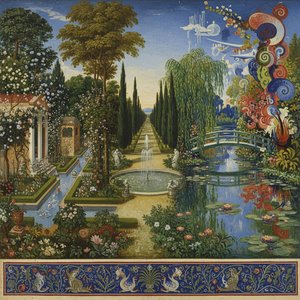
The Garden
 Oil On Canvas
- WallArt
- Surrealism
 1971
1971 140.0 x 190.0 cm
 Читати далі
Мистецький твір, представлений на цій сторінці, захищений законом про авторське право, що унеможливлює легальне створення або продаж його ідентичної репродукції. Цей захист забезпечується відповідно до міжнародних угод, таких як Бернська конвенція та національним законодавством, зокрема положеннями, що викладені в Законодавство США про авторське право — Розділ 17. Всі права захищені. Будь-яке використання без дозволу заборонено.
Цей метод повністю відповідає нормам авторського права, оскільки він не передбачає копіювання чи дублювання захищеного твору мистецтва. Натомість це творче переосмислення — створення нового малюнка під впливом оригіналу, який не є його точним відтворенням.
Гікле / Художній принт
Музейна якість друку جيкле або на полотні з оперативним виготовленням та різноманітними варіантами фінішної обробки. ( Купити картину ручної роботи Перейти до цифрових зображень)




P118B ₴10

P118H ₴10

P118W ₴10

P438Z ₴10

P508JH ₴12

P508YH ₴12

P805H ₴10

P805Z ₴10

P919BZ ₴10

P919G ₴10

P919XJ ₴10

P959ZH ₴10

P968JZ ₴12

W106C ₴8

W218G ₴10

W218JH ₴8

W218Y ₴10

W307PJ ₴10

W316G ₴10

W316PJ ₴8

W316Y ₴10

W398PJ ₴8

W4111J ₴10

W500HY ₴15

W500JH ₴15

W692G ₴12

W849H ₴8

W940BG ₴15

W953PJ ₴8




Обирайте з наших стандартних розмірів, що відповідають оригінальним пропорціям твору мистецтва.

Ви можете вказати власні розміри, щоб репродукція ідеально підійшла до конкретної рами або інтер'єру. Якщо обраний вами розмір не відповідає пропорціям оригіналу, ми або обріжемо полотно, або розширимо зображення за допомогою дзеркального відображення чи суцільної заливки країв. Перед початком виробництва вам буде надіслано цифровий макет для затвердження.
Будь ласка, зверніть увагу, що попередній перегляд на екрані не відображає фактичне обрізання або розширення. Тільки макет точно покаже фінальну композицію.
Хоча можливість замовлення індивідуальних розмірів доступна, ми рекомендуємо обирати формат із попередньо визначеного списку, щоб зберегти оригінальні пропорції.
Доставка по всьому світу () за 2 тижні замість стандартних 4/5 тижнів. (7 Жовтень)

Безкоштовна експрес-доставка по всьому світу

Високоякісне лляне полотно

Повне страхове покриття доставки

Гарантія повернення митних зборів

Гарантія точного відтворення кольорів

Політика повернення протягом 100 днів (лише у разі виявлення дефектів)

Гарантія повернення 100% коштів

Знижка на оптові замовлення
 Скляний варіант доступний лише для розмірів до 110 см

The Garden
Гікле / Художній принт
Розмір репродукції
-


Загальна вартість
₴ 3556
The Ethereal Allure of Delvaux's Garden
To gaze upon Paul Delvaux’s "The Garden" is to step through a veil into a meticulously crafted dreamscape, a place where the boundaries between waking life and subconscious reverie dissolve. This 1971 canvas captures more than just an outdoor gathering; it encapsulates a mood—a languid, almost melancholic serenity that has become synonymous with the master's unique vision. The scene unfolds within a lush, overgrown garden setting, populated by figures caught in moments of intimate repose and gentle interaction. Delvaux’s signature touch is immediately apparent: a blend of classical composition with an undeniable undercurrent of surreal mystery.
A Tapestry of Form and Fantasy
The technique employed here speaks to Delvaux's mastery, allowing him to render the figures and the verdant surroundings with an almost photographic realism, even as the narrative defies logic. The naked women, positioned gracefully upon chairs and benches, seem less like subjects and more like embodiments of timeless myth. They are immersed in a tableau of socializing and quiet contemplation, their poses suggesting narratives untold. Notice the delicate inclusion of nature—the visible bird flitting through the air acts as a poignant counterpoint to the human stillness, reminding us that even within this perfected dream, life continues its natural, untamed course.
Symbolism in the Surreal Landscape
Paul Delvaux’s work has always invited deep symbolic interpretation. The garden itself is a potent archetype—a place of cultivation, yet here it feels slightly overgrown, suggesting both paradise and gentle decay. The presence of multiple figures, often nude or semi-clothed, speaks to themes of vulnerability, idealized femininity, and the human condition stripped bare of modern artifice. It invites the viewer to contemplate intimacy, leisure, and the complex emotional currents that flow beneath the surface of social gathering. It is a space for introspection, where one might find echoes of forgotten desires.
Bringing the Dream Home
For the collector or designer seeking an anchor piece imbued with artistic depth, "The Garden" offers unparalleled atmospheric resonance. Reproducing this work allows one to infuse a room not merely with color and form, but with a palpable sense of dreamlike tranquility. Imagine this canvas anchoring a drawing-room or a sophisticated lounge; it transforms the space into a sanctuary removed from the clamor of the everyday. It is an artwork that does not shout for attention but rather whispers its profound beauty, inviting prolonged study and emotional connection.
Запитання та відповіді
Скільки людей переглядають "The Garden"?
Для «The Garden» існує сторінка Статистика, на якій відображено щомісячну кількість переглядів цього твору та інших робіт митця з розподілом за країнами та мовами.
Хто створив "The Garden"?
«The Garden» було створено Павло Девальв. Інформація на цій сторінці описує оригінальний твір Павло Девальв.
Кому варто подарувати "The Garden" і для якого використання?
«The Garden» рекомендується як подарунок для Anniversary, з огляду на Relaxation.
Де я можу переглянути попередній перегляд "The Garden"?
Сторінка попереднього перегляду «The Garden» (Попередній перегляд) дозволяє ознайомитися з твором перед замовленням.
Скільки років було Павло Девальв, коли було створено «The Garden»?
Павло Девальв було 74 років, коли він створив «The Garden» у 1971 році. Вік обчислено на основі року народження митця, 1897.
У якому році було створено «The Garden» Павло Девальв?
«The Garden» Павло Девальв було створено у 1971 році.
Де я можу купити принт «The Garden» Павло Девальв?
Принт роботи «The Garden» Павло Девальв можна замовити безпосередньо на сторінці ця сторінка: художній принт на бавовняному полотні або архівному канвас-папері.
Біографія митця
A Dream Weaver: The Life and Art of Paul Delvaux
Paul Delvaux, a name synonymous with haunting beauty and unsettling mystery, was born in 1897 in the small Belgian village of Wanze – a place that would forever hold a profound influence on his artistic vision. His early life wasn’t one of grand ambition or privileged circumstance; instead, it was steeped in the contrasting realities of rigorous academic training alongside the fantastical worlds conjured by the literature of Jules Verne and Homer's *Odyssey*. This inherent duality – between order and imagination, discipline and dream – became the very foundation upon which his unique artistic style would be built. Initially steered towards a practical career in architecture by his parents, Delvaux found himself irresistibly drawn to painting, ultimately enrolling at the Académie Royale des Beaux-Arts in Brussels. While he struggled with the demanding mathematical aspects of architecture, the training instilled within him a remarkable mastery of perspective and form – skills that would later serve as the bedrock for the unsettling realism of his surrealist dreamscapes. His early works reflected this academic grounding, primarily landscapes painted in a post-impressionist style, yet even then, subtle hints of the peculiar atmosphere that would define his mature work began to emerge, foreshadowing the extraordinary visions he was destined to create.The Seeds of Surrealism: De Chirico and Early Influences
The pivotal moment in Delvaux’s artistic journey arrived with his encounter with the paintings of Giorgio de Chirico. De Chirico's metaphysical works – stark, enigmatic scenes populated by shadows, classical architecture, and a pervasive sense of loneliness – resonated deeply within Delvaux’s soul, unlocking a new realm of possibilities. These images, imbued with an unsettling blend of beauty and melancholy, seemed to capture the hidden anxieties and desires lurking beneath the surface of reality. He began to populate his canvases with nude figures, often positioned against imposing architectural structures or set within vast, desolate landscapes – a deliberate departure from the traditional depictions of the human form. The influence of Flemish Expressionists like Constant Permeke and Gustave De Smet is also visible in this period, lending a certain somber intensity to his palette and brushwork, creating a mood that was both captivating and unnerving. However, Delvaux quickly moved beyond these influences, forging a style uniquely his own – a masterful synthesis of classical precision and dreamlike irrationality. His paintings began to evoke a sense of unease, a feeling that something unseen and perhaps unsettling lay just beneath the surface of perception.Recurring Motifs and Symbolic Language
Delvaux’s artistic language is rich in symbolism, yet he consistently resisted attempts at straightforward psychoanalytic interpretation. The female nude, a recurring motif throughout his oeuvre, often appears passive or melancholic, embodying both desire and vulnerability – a poignant reflection of the complexities of human emotion. Trains and railway stations frequently appear as symbols of transition, displacement, and the anxieties associated with modernity—a visual representation of journeys both literal and metaphorical. Skeletons, far from being morbid emblems of death, represent a haunting presence, a subtle reminder of mortality that permeates even the most idyllic scenes. Classical architecture provides a backdrop of order and permanence, yet it is often rendered strangely distorted or incomplete, suggesting a fragility beneath its imposing facade. These elements are not merely decorative; they are integral to the emotional and psychological impact of his work, contributing to the overall sense of mystery and unease that characterizes his art. The artist himself explained that his imagery stemmed from deeply personal memories and impressions, particularly those from his youth, rather than conscious attempts to decode the subconscious—a testament to the power of lived experience in shaping artistic vision.A Youthful Palette: Influences and Early Works
Delvaux’s childhood experiences played a crucial role in shaping his artistic style and thematic concerns. His early summers spent at the house shared by his four aunts, each adorned with elaborate lace collars and corsets, provided a rich source of visual inspiration—a world of delicate beauty juxtaposed against the underlying anxieties of societal expectations. The encounter with a grinning skeleton at school, a seemingly insignificant event, became a potent symbol in his later work, representing mortality and the fragility of human existence. Furthermore, his fascination with Homer’s *Odyssey* instilled within him a love for epic narratives and timeless themes—a desire to explore universal human experiences through the lens of myth and legend. These youthful impressions, fixed once and for all in the mind, profoundly influenced his artistic trajectory, shaping his recurring motifs and contributing to the distinctive atmosphere of his paintings.Legacy and Recognition
Throughout his long and distinguished career, Paul Delvaux remained a singular figure in the art world—a master of his own unique style and vision. While briefly associated with the Surrealist movement, he maintained a degree of independence, resisting strict adherence to its tenets. His paintings continue to captivate audiences with their haunting beauty and enigmatic atmosphere, attracting collectors and scholars alike. Major works such as *Night Train*, *Sleeping Venus*, and *Grise City* are held in prominent museums around the world—testaments to his enduring artistic legacy. Delvaux’s influence can be seen in the work of numerous contemporary artists who explore themes of memory, desire, and the subconscious—a testament to the timelessness of his vision. The Paul Delvaux Museum in Saint-Idesbald, Belgium, stands as a poignant reminder of his lasting impact, housing the world's largest collection of his work and offering visitors a unique opportunity to immerse themselves in the captivating realm of his imagination. His art continues to provoke thought, inspire emotion, and remind us of the enduring power of dreams and nightmares.
Павло Девальв
1897 - 1994 , Бельгія
Довідкова інформація
- Artistic Movement Or Style: Сюрреалізм
- Artists Or Movements Influenced By This Artist: ['Нові сюрреалісти']
- Artists Who Influenced This Artist:
- Джордж де Чиріко
- Рене Магритт
- Date Of Birth: 23 вересня 1897
- Date Of Death: 20 липня 1994
- Full Name: Paul Delvaux
- Nationality: Бельгієць
- Notable Artworks:
- Ніч потягу
- Спляча Венера
- Літо
- Сіра місто
- Place Of Birth: Ванзе, Бельгія
Схожі статті

The Enigmatic Realm of Paul Delvaux: Surrealism, Memory & the Poetics of Disquiet
Explore the haunting dreamscapes of Paul Delvaux, a master of Surrealism. Discover his iconic motifs, classical influences & enduring legacy with OriginalUniqueArt.com.

Топ-25 шедеврів Пауля Клее: подорож у світ кольору та абстракції | OriginalUniqueArt
Відкрийте для себе 25 шедеврів Пауля Клее – від ранніх робіт до пізнього модернізму. Пориньте у світ абстракції, експресіонізму та унікального стилю художника. Репродукції картин високої якості на OriginalUniqueArt.com! Дослідіть повну колекцію онлайн.

25 шедеврів Поля Сезанна: подорож у світ імпресіонізму та натюрморту | OriginalUniqueArt
Відкрийте 25 найвідоміших картин Поля Сезанна! Дослідіть імпресіонізм, натюрморти та пейзажі художника. Купіть високоякісні репродукції та знайдіть ідеальний декор для вашого дому на OriginalUniqueArt.com.

Giclée Prints: Archival Quality & Aesthetic Nuances for the Discerning Collector
Explore the world of giclée prints with OriginalUniqueArt. Learn about archival quality, aesthetic nuances & investment potential. Expert guidance for discerning art collectors seeking museum-quality reproductions and lasting value.
Cultivating Paradise: A Historical & Artistic Exploration of Gardens in Painting
Explore the rich history of gardens in painting! Discover masterpieces from Renaissance to Impressionism & beyond. Learn about symbolism, artists like Monet & Klimt, and find your perfect artwork at OriginalUniqueArt.


