

 Переглянути в інтер'єрі
 Надіслати як листівку
 Поділитися
 Детальніше

 Завантажити
 Схожі експонати
 Рентгенівське дослідження
 Слайд-шоу
Wisdom and Strength
 Oil On Canvas
- WallArt
- Baroque Splendor
 1565
1565- Renaissance
 214.0 x 167.0 cm
 Фрінк Коллекшн
 Читати далі
Гікле / Художній принт
Музейна якість друку جيкле або на полотні з оперативним виготовленням та різноманітними варіантами фінішної обробки. ( Замовити репродукцію ручної роботи Купити цифрове зображення)




P118B $10

P118H $10

P118W $10

P438Z $10

P508JH $12

P508YH $12

P805H $10

P805Z $10

P919BZ $10

P919G $10

P919XJ $10

P959ZH $10

P968JZ $12

W106C $8

W218G $10

W218JH $8

W218Y $10

W307PJ $10

W316G $10

W316PJ $8

W316Y $10

W398PJ $8

W4111J $10

W500HY $15

W500JH $15

W692G $12

W849H $8

W940BG $15

W953PJ $8




Обирайте з наших стандартних розмірів, що відповідають оригінальним пропорціям твору мистецтва.

Ви можете вказати власні розміри, щоб репродукція ідеально підійшла до конкретної рами або інтер'єру. Якщо обраний вами розмір не відповідає пропорціям оригіналу, ми або обріжемо полотно, або розширимо зображення за допомогою дзеркального відображення чи суцільної заливки країв. Перед початком виробництва вам буде надіслано цифровий макет для затвердження.
Будь ласка, зверніть увагу, що попередній перегляд на екрані не відображає фактичне обрізання або розширення. Тільки макет точно покаже фінальну композицію.
Хоча можливість замовлення індивідуальних розмірів доступна, ми рекомендуємо обирати формат із попередньо визначеного списку, щоб зберегти оригінальні пропорції.
Доставка по всьому світу () за 2 тижні замість стандартних 4/5 тижнів. (3 Вересень)

Безкоштовна експрес-доставка по всьому світу

Високоякісне лляне полотно

Повне страхове покриття доставки

Гарантія відшкодування митних зборів

Гарантія точного відтворення кольорів

Політика повернення протягом 60 днів (лише у разі виявлення дефектів)

Гарантія повернення 100% коштів

Пропозиція на оптові замовлення
 Скляний варіант доступний лише для розмірів до 110 см

Wisdom and Strength
Гікле / Художній принт
Розмір репродукції
-


Підсумкова вартість
$ 80
A Venetian Masterpiece of Moral Grandeur
In the hallowed halls of The Frick Collection, few works command the room with as much intellectual weight and visual splendor as Paolo Veronese’s Wisdom and Strength. Painted around 1580, this monumental canvas serves as a profound meditation on the human condition, capturing the eternal struggle between our highest aspirations and our most base temptations. As a cornerstone of the Venetian High Renaissance, the work transcends mere decoration; it is a theatrical stage where the soul’s deepest conflicts are played out through the lens of classical allegory. Veronese, a master of the Venetian school, invites the viewer into a world where every brushstroke serves a narrative purpose, blending the grandeur of myth with the palpable reality of 16th-century splendor.
At the heart of this complex composition lies the heroic figure of Hercules, caught in a moment of profound deliberation. This is not merely a display of physical prowess, but a visual manifestation of the choice between Virtue and Vice. Rooted in the humanist teachings of Ecclesiastes, the painting explores the tension between earthly glory and spiritual wisdom. The artist utilizes a masterful application of chiaroscroll—the dramatic interplay of light and shadow—to sculpt the musculature of Hercules and to heighten the emotional stakes of his decision. Surrounding this central struggle is a vibrant, bustling assembly of philosophers, musicians, and rulers, creating a tapestry of human experience that celebrates both the intellectual pursuits of the Renaissance and the social pageantry of Venetian life.
The Luminous Artistry of the Venetian School
To behold a Veronese is to witness the pinnacle of Venetian colorism. The artist’s technique is defined by an extraordinary luminosity, achieved through the meticulous layering of translucent glazes that allow light to penetrate and reflect from within the paint itself. This creates a shimmering, iridescent effect reminiscent of the fine silks and precious jewels worn by the Venetian nobility. His palette is a symphony of rich, saturated hues—deep golds, brilliant crimsons, and ethereal blues—that breathe life into the expansive, idealized landscapes visible in the background. These vistas, bathed in a soft, golden light, provide a serene counterpoint to the intense psychological drama unfolding in the foreground.
For the discerning collector or interior designer, a reproduction of this scale and complexity offers more than just an aesthetic focal point; it provides a window into a vanished era of elegance. The composition’s balance between monumental figures and intricate detail makes it an ideal centerpiece for grand spaces, where its narrative depth can be appreciated from afar and its technical brilliance studied up close. Whether placed in a formal library or a contemporary gallery setting, Wisdom and Strength evokes a sense of timelessness, bringing the sophisticated intellectualism and opulent beauty of the Italian Renaissance into the modern home.
Біографія митця
A Venetian Visionary: The Life and Art of Paolo Veronese
Paolo Caliari, known to the world as Paolo Veronese, emerged from the vibrant artistic landscape of 16th-century Venice as a master of color, composition, and opulent spectacle. Born in Verona in 1528, the son of a stonecutter, his early life was steeped in the visual richness of his surroundings – the classical architecture, sculpted forms, and burgeoning humanist ideals that characterized the region. His initial training under Antonio Badile and Giovanni Francesco Caroto laid a foundation in traditional techniques, but it was his move to Venice in the 1550s that truly ignited his artistic genius. The city itself became his muse, its bustling marketplaces, grand palazzi, and shimmering waterways informing the scale and drama of his work. He quickly absorbed the influences of established Venetian masters like Titian, whose mastery of color profoundly impacted Veronese’s palette, yet he forged a distinct style characterized by an unparalleled sense of theatricality and grandeur.The Painter of Feasts and Grand Narratives
Veronese's reputation rests upon his monumental paintings, particularly those depicting lavish feasts and biblical scenes transformed into dazzling displays of Venetian life. The Wedding at Cana, completed in 1563 for the Benedictine monastery of San Giorgio Maggiore, stands as a testament to his skill. This colossal canvas isn’t merely an illustration of the miracle; it's a vibrant panorama of 16th-century society, teeming with elegantly dressed figures, musicians, and architectural details rendered with breathtaking precision. The painting is not just about what happened at Cana but *how* it would have looked if it had occurred in Venice during Veronese’s time – a remarkable feat of historical imagination. Similarly, The Feast in the House of Levi, originally titled The Last Supper, caused controversy with the Inquisition due to its inclusion of contemporary figures and a seemingly irreverent atmosphere. Veronese defended his artistic license, asserting that painters were entitled to the same creative freedom as poets and jesters – a bold statement reflecting his belief in art’s power to interpret and reimagine sacred narratives. These works weren't simply religious depictions; they were celebrations of life, wealth, and the splendor of Venice itself. He wasn’t interested in austere spirituality but rather in capturing the joy and abundance of existence. His ability to seamlessly blend historical accuracy with imaginative embellishment set him apart from many of his contemporaries.Influences and Artistic Development
While Titian’s influence on Veronese’s colorism is undeniable, his artistic development was a complex interplay of various influences. The architectural precision he brought to his compositions owes much to the classical tradition prevalent in Verona during his formative years, particularly the work of architects like Michele Sanmicheli. He also absorbed elements from Central Italian masters such as Raphael and Parmigianino, evident in the graceful lines and harmonious arrangements within his paintings. However, Veronese didn’t simply imitate these influences; he synthesized them into a uniquely Venetian style characterized by its dramatic use of light, vibrant color palettes, and meticulous attention to detail. He excelled at creating illusions of space and depth, employing perspective techniques to draw viewers into the heart of his elaborate scenes. His mastery of oil painting allowed him to achieve an unparalleled luminosity and richness of texture. He also ran a large workshop, with contributions from his brother Benedetto and sons Gabriele and Carlo (or 'Carletto'), ensuring that his style continued to flourish even after his death in 1588.Major Achievements and Notable Works
Veronese’s career was marked by a succession of ambitious and influential commissions. His decoration of the Venetian church of S. Sebastiano between 1555 and around 1570 is considered one of his most significant achievements, showcasing his mastery of color and composition. The ceiling paintings for the library of S. Marco (1556–57) and the Ducal Palace (early 1550s and 1575–82) further cemented his reputation as a leading Venetian artist. Perhaps most famously, he created the *Feast in the House of Levi* (originally *The Last Supper*) for the Benedictine monastery of San Giorgio Maggiore, a monumental work that pushed the boundaries of artistic convention and sparked controversy with the Inquisition. His depictions of mythological subjects, such as *Venus and Adonis*, also demonstrate his versatility and technical skill. Throughout his career, Veronese consistently produced works of exceptional scale and grandeur, solidifying his place among the most celebrated artists of the Venetian Renaissance.Legacy and Historical Significance
Paolo Veronese’s impact extends far beyond the realm of Renaissance art. His work has resonated through centuries, inspiring artists across various disciplines. His dramatic compositions and vibrant color schemes have been cited as influences on everything from Baroque painting to modern cinema – even finding echoes in the visual aesthetics of Spaghetti Westerns. He was part of the “great trio” of Venetian painters—alongside Titian and Tintoretto—each contributing uniquely to the city’s artistic legacy, yet Veronese often stands apart for his sheer exuberance and celebration of earthly pleasures. His paintings continue to captivate audiences with their grandeur and spectacle, offering a glimpse into the opulent world of 16th-century Venice.- He redefined historical painting by imbuing it with contemporary life.
- His use of color remains influential for artists today.
- His work embodies the spirit of Renaissance humanism and celebration of earthly beauty.

Паоло Веронезе
1528 - 1588 , Італія
Короткі факти
- Artistic Movement Or Style: Ренесанс, Маньєризм
- Artists Or Movements Influenced By This Artist: ['Манерес']
- Artists Who Influenced This Artist: ['Тіціан']
- Date Of Birth: 1528
- Date Of Death: 1588
- Full Name: Паоло Веронезе
- Nationality: Італійський
- Notable Artworks:
- Сніданок при Кана
- Обід у будинку Леві
- Place Of Birth: Верона, Італія
Пов'язані статті
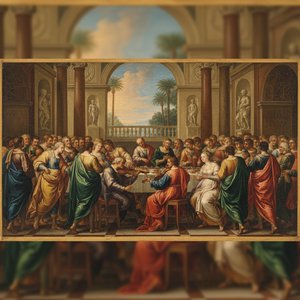
Paolo Veronese: A Renaissance Master of Color, Composition, and Venetian Splendor
Explore the vibrant world of Paolo Veronese, a Renaissance master renowned for his opulent compositions, masterful use of color, and dramatic Venetian scenes. Discover key artworks & legacy.
Якопо Тінторетто: 25 шедеврів венесенського майстра | OriginalUniqueArt
Відкрийте 25 захопливих шедеврів Якопо Тінторетто! Венесенський ренесанс, бароко, емоційні композиції та світлотінь. Купуйте високоякісні репродукції картин на OriginalUniqueArt.com – мистецтво для вашого дому.

Venetian Renaissance: The Mastery of Color, Light, and the Art of Colorito
Explore the luminous mastery of the Venetian Renaissance. Discover how masters like Titian and Giorgione revolutionized art through colorito, light, and atmosphere. An expert guide to the golden age of Italian painting for collectors and enthusiasts.

25 шедеврів Густава Клімта: мистецтво, декор та золотий вік Відня | OriginalUniqueArt
Відкрийте 25 найвідоміших картин Густава Клімта! Мистецтво модерну, віденський сецесіон та золотий вік Відня. Репродукції картин високої якості для вашого дому на OriginalUniqueArt.com. Дослідіть колекцію онлайн!
Топ-25 шедеврів Kunsthistorisches Museum: мистецтво Рафаеля, Рембрандта та Вермеєра для вашого дому
Відкрийте 25 шедеврів Kunsthistorisches Museum у Відні! Рафаель, Рембрандт, Вермеєр та інші майстри. Історія мистецтва, техніки живопису та натхнення для вашого дому. Репродукції картин преміум-класу – OriginalUniqueArt.com



