
 Переглянути в інтер'єрі
 Надіслати як листівку
 Поділитися
 Деталі витвору
 Посібник

 Завантажити
 Схожі екземпляри
 Рентгенівське дослідження
 Слайд-шоу
 Q&A
Q&A Статистика
Muse with Lyre


 Розгорнути текст
Гікле / Художній принт
Друк جيкле або на полотні музейної якості з оперативним виготовленням та різноманітними варіантами фінішної обробки. ( Замовити картину ручної роботи Перейти до цифрових зображень)




P118B ₴10

P118H ₴10

P118W ₴10

P438Z ₴10

P508JH ₴12

P508YH ₴12

P805H ₴10

P805Z ₴10

P919BZ ₴10

P919G ₴10

P919XJ ₴10

P959ZH ₴10

P968JZ ₴12

W106C ₴8

W218G ₴10

W218JH ₴8

W218Y ₴10

W307PJ ₴10

W316G ₴10

W316PJ ₴8

W316Y ₴10

W398PJ ₴8

W4111J ₴10

W500HY ₴15

W500JH ₴15

W692G ₴12

W849H ₴8

W940BG ₴15

W953PJ ₴8




Обирайте з наших стандартних розмірів, що відповідають оригінальним пропорціям твору мистецтва.

Введіть необхідну ширину та висоту, щоб принт ідеально підійшов до вашої рами або стіни. Принт можна лише обрізати, але не можна зробити більшим за оригінал, тому при зміні пропорцій частина зображення буде втрачена. Перед друком ми надсилаємо вам цифровий макет для затвердження. Зображення на цій сторінці не відображає реальну обрізку — її можна побачити лише на макеті.
Доставка по всьому світу () за 2 тижні замість стандартних 4/5 тижнів. (1 Листопад)

Безкоштовна експрес-доставка по всьому світу

Високоякісне лляне полотно

Повне страхове покриття доставки

Гарантія повернення митних зборів

Гарантія точного відтворення кольорів

Політика повернення протягом 100 днів (лише у разі виявлення дефектів)

Гарантія повернення 100% коштів

Пропозиція на оптові замовлення
 Скляний варіант доступний лише для розмірів до 110 см

Muse with Lyre
Гікле / Художній принт
Розмір репродукції
-


Підсумкова вартість
₴ 3596
A Venetian Visionary: The Life and Art of Paolo Veronese
Paolo Caliari, known universally as Paolo Veronese (1528-1588), stands as one of the most celebrated figures in Venetian Renaissance art. Born into a modest stonecutter’s family in Verona, his formative years were steeped in the visual richness of his hometown – a city already brimming with classical influences and humanist ideals. This early exposure undoubtedly nurtured an artistic sensibility that would blossom into unparalleled mastery over color, composition, and theatrical spectacle. His initial training under Antonio Badile and Giovanni Francesco Caroto instilled foundational skills in traditional painting techniques, yet it was his relocation to Venice in the 1550s that irrevocably propelled him toward artistic greatness. The city itself became Veronese’s unwavering muse, its bustling marketplaces, magnificent palaces, and shimmering canals serving as constant inspiration for his ambitious projects. He swiftly absorbed the stylistic currents circulating amongst established Venetian masters like Titian and Tintoretto, whose groundbreaking explorations of light and pigment profoundly impacted Veronese's own palette—though he ultimately forged a distinctive style characterized by an unwavering commitment to grandeur and illusionistic realism.Muse with Lyre: A Symphony of Color and Form
“Muse with Lyre,” completed in 1560-61, exemplifies Veronese’s signature approach to monumental painting. Located within Villa Barbaro in Maser—a villa designed by Andrea Palladio—the fresco occupies a prominent position within the palazzo's decorative scheme, demonstrating Veronese’s dedication to creating immersive environments that captivated viewers. The artwork depicts a woman adorned with opulent jewelry and draped in crimson fabric, holding aloft a lyre – an instrument symbolizing music and divine inspiration. This evocative image transcends mere representation; it embodies Veronese’s masterful manipulation of perspective and color to convey a profound sense of serenity and contemplation.Technique and Style: Illusionistic Realism
Veronese's technique is rooted in the principles of Mannerism, a stylistic movement that prioritized stylized forms and exaggerated proportions over naturalistic accuracy. He achieved breathtaking visual effects through meticulous layering of glazes—thin coats of translucent pigment—creating luminous surfaces that shimmer with reflected light. This painstaking process allowed him to capture not only the physical appearance of his subjects but also their psychological states, imbuing the painting with an emotional resonance that continues to captivate audiences centuries later. The artist’s masterful use of chiaroscuro – dramatic contrasts between light and shadow – further enhances the depth and dimensionality of the scene, guiding the viewer's gaze across the composition and emphasizing key elements.Historical Context: Venetian Patronage and Mythological Narrative
“Muse with Lyre” reflects the prevailing artistic tastes of its time—a period marked by fervent interest in classical mythology and humanist scholarship. Villa Barbaro itself was conceived as a testament to Palladio’s architectural ideals, aiming for harmonious proportions and elegant ornamentation. Veronese's commission underscored the importance of aristocratic patronage within Venice, where artists like him thrived on commissions from wealthy families eager to adorn their homes with masterpieces that proclaimed their status and refined sensibilities. The fresco’s depiction of Apollo—the Greek god of music and poetry—and Daphne—transformed into laurel trees by Apollo’s divine intervention—references prominent myths exploring themes of beauty, transformation, and the pursuit of artistic excellence.Symbolism and Emotional Impact: Beauty and Tranquility
Beyond its formal brilliance, “Muse with Lyre” communicates a powerful emotional message. The woman's serene gaze and graceful posture convey an aura of composure and contemplation—a deliberate contrast to the turbulent political landscape of Venice during Veronese’s lifetime. The lyre itself serves as a potent symbol of artistic creativity and divine grace, reminding viewers of the transformative power of beauty and intellect. Ultimately, Veronese’s masterpiece invites us to savor the sublime – an experience characterized by awe and wonder—and celebrates the enduring legacy of Venetian Renaissance art.Питання та відповіді
Коли було створено "Muse with Lyre" і до якого художнього напряму воно належить?
«Muse with Lyre» роботи Паоло Веронезе датований 1560 роком і належить до Baroque Renaissance Master.
Який це вид твору мистецтва: «Muse with Lyre» роботи Паоло Веронезе?
«Muse with Lyre» роботи Паоло Веронезе класифікується як WallArt. Ця категорія визначає вид художнього твору, яким є оригінал.
Наскільки насиченими є кольори у творі "Muse with Lyre"?
Кольори твору «Muse with Lyre» роботи Паоло Веронезе вирізняються Balanced Soft насиченістю та Balanced інтенсивністю.
Біографія митця
A Venetian Visionary: The Life and Art of Paolo Veronese
Paolo Caliari, known to the world as Paolo Veronese, emerged from the vibrant artistic landscape of 16th-century Venice as a master of color, composition, and opulent spectacle. Born in Verona in 1528, the son of a stonecutter, his early life was steeped in the visual richness of his surroundings – the classical architecture, sculpted forms, and burgeoning humanist ideals that characterized the region. His initial training under Antonio Badile and Giovanni Francesco Caroto laid a foundation in traditional techniques, but it was his move to Venice in the 1550s that truly ignited his artistic genius. The city itself became his muse, its bustling marketplaces, grand palazzi, and shimmering waterways informing the scale and drama of his work. He quickly absorbed the influences of established Venetian masters like Titian, whose mastery of color profoundly impacted Veronese’s palette, yet he forged a distinct style characterized by an unparalleled sense of theatricality and grandeur.The Painter of Feasts and Grand Narratives
Veronese's reputation rests upon his monumental paintings, particularly those depicting lavish feasts and biblical scenes transformed into dazzling displays of Venetian life. The Wedding at Cana, completed in 1563 for the Benedictine monastery of San Giorgio Maggiore, stands as a testament to his skill. This colossal canvas isn’t merely an illustration of the miracle; it's a vibrant panorama of 16th-century society, teeming with elegantly dressed figures, musicians, and architectural details rendered with breathtaking precision. The painting is not just about what happened at Cana but *how* it would have looked if it had occurred in Venice during Veronese’s time – a remarkable feat of historical imagination. Similarly, The Feast in the House of Levi, originally titled The Last Supper, caused controversy with the Inquisition due to its inclusion of contemporary figures and a seemingly irreverent atmosphere. Veronese defended his artistic license, asserting that painters were entitled to the same creative freedom as poets and jesters – a bold statement reflecting his belief in art’s power to interpret and reimagine sacred narratives. These works weren't simply religious depictions; they were celebrations of life, wealth, and the splendor of Venice itself. He wasn’t interested in austere spirituality but rather in capturing the joy and abundance of existence. His ability to seamlessly blend historical accuracy with imaginative embellishment set him apart from many of his contemporaries.Influences and Artistic Development
While Titian’s influence on Veronese’s colorism is undeniable, his artistic development was a complex interplay of various influences. The architectural precision he brought to his compositions owes much to the classical tradition prevalent in Verona during his formative years, particularly the work of architects like Michele Sanmicheli. He also absorbed elements from Central Italian masters such as Raphael and Parmigianino, evident in the graceful lines and harmonious arrangements within his paintings. However, Veronese didn’t simply imitate these influences; he synthesized them into a uniquely Venetian style characterized by its dramatic use of light, vibrant color palettes, and meticulous attention to detail. He excelled at creating illusions of space and depth, employing perspective techniques to draw viewers into the heart of his elaborate scenes. His mastery of oil painting allowed him to achieve an unparalleled luminosity and richness of texture. He also ran a large workshop, with contributions from his brother Benedetto and sons Gabriele and Carlo (or 'Carletto'), ensuring that his style continued to flourish even after his death in 1588.Major Achievements and Notable Works
Veronese’s career was marked by a succession of ambitious and influential commissions. His decoration of the Venetian church of S. Sebastiano between 1555 and around 1570 is considered one of his most significant achievements, showcasing his mastery of color and composition. The ceiling paintings for the library of S. Marco (1556–57) and the Ducal Palace (early 1550s and 1575–82) further cemented his reputation as a leading Venetian artist. Perhaps most famously, he created the *Feast in the House of Levi* (originally *The Last Supper*) for the Benedictine monastery of San Giorgio Maggiore, a monumental work that pushed the boundaries of artistic convention and sparked controversy with the Inquisition. His depictions of mythological subjects, such as *Venus and Adonis*, also demonstrate his versatility and technical skill. Throughout his career, Veronese consistently produced works of exceptional scale and grandeur, solidifying his place among the most celebrated artists of the Venetian Renaissance.Legacy and Historical Significance
Paolo Veronese’s impact extends far beyond the realm of Renaissance art. His work has resonated through centuries, inspiring artists across various disciplines. His dramatic compositions and vibrant color schemes have been cited as influences on everything from Baroque painting to modern cinema – even finding echoes in the visual aesthetics of Spaghetti Westerns. He was part of the “great trio” of Venetian painters—alongside Titian and Tintoretto—each contributing uniquely to the city’s artistic legacy, yet Veronese often stands apart for his sheer exuberance and celebration of earthly pleasures. His paintings continue to captivate audiences with their grandeur and spectacle, offering a glimpse into the opulent world of 16th-century Venice.- He redefined historical painting by imbuing it with contemporary life.
- His use of color remains influential for artists today.
- His work embodies the spirit of Renaissance humanism and celebration of earthly beauty.

Паоло Веронезе
1528 - 1588 , Італія
Короткі факти
- Artistic Movement Or Style: Ренесанс, Маньєризм
- Artists Or Movements Influenced By This Artist: ['Манерес']
- Artists Who Influenced This Artist: ['Тіціан']
- Date Of Birth: 1528
- Date Of Death: 1588
- Full Name: Паоло Веронезе
- Nationality: Італійський
- Notable Artworks:
- Сніданок при Кана
- Обід у будинку Леві
- Place Of Birth: Верона, Італія
Пов'язані статті
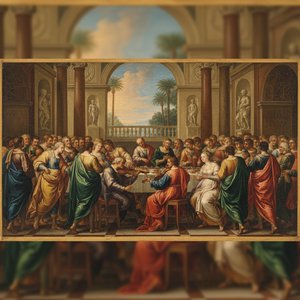
Paolo Veronese: A Renaissance Master of Color, Composition, and Venetian Splendor
Explore the vibrant world of Paolo Veronese, a Renaissance master renowned for his opulent compositions, masterful use of color, and dramatic Venetian scenes. Discover key artworks & legacy.

Venetian Renaissance: The Mastery of Color, Light, and the Art of Colorito
Explore the luminous mastery of the Venetian Renaissance. Discover how masters like Titian and Giorgione revolutionized art through colorito, light, and atmosphere. An expert guide to the golden age of Italian painting for collectors and enthusiasts.
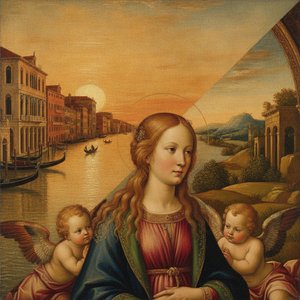
Golden Light & Rich Color: The Timeless Magic of Venetian Renaissance Art
Explore the luminous beauty of Venetian Renaissance art. Discover how masters like Titian used colorito and golden light to redefine painting through texture, emotion, and atmospheric brilliance in a masterclass of historical artistry.

Якопо Тінторетто: 25 шедеврів венесенського майстра | OriginalUniqueArt
Відкрийте 25 захопливих шедеврів Якопо Тінторетто! Венесенський ренесанс, бароко, емоційні композиції та світлотінь. Купуйте високоякісні репродукції картин на OriginalUniqueArt.com – мистецтво для вашого дому.
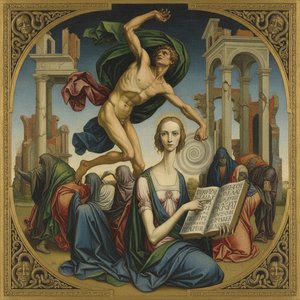
Beyond Perfection: The Dramatic Elegance and Intellectual Tension of Renaissance Mannerism
Explore the captivating world of Renaissance Mannerism. Discover how artists moved beyond High Renaissance harmony into a realm of elegant distortion, psychological tension, and dramatic beauty that bridged the gap to the Baroque era.


