

 Переглянути в інтер'єрі
 Надіслати
 Поділитися
 Деталі
 Посібник

 Завантажити
 Схожі предмети колекціонування
 Рентгенівське дослідження
 Слайд-шоу
 Статистика переглядів
Aristotele


 Читати далі
Олійная репродукція ручної роботи
Написана вручну олією на полотні у вашому розмірі та рамі, виготовлена на замовлення нашими художниками. ( Перейти до друку Перейти до цифрових зображень)




P118B ₴10

P118H ₴10

P118W ₴10

P438Z ₴10

P508JH ₴12

P508YH ₴12

P805H ₴10

P805Z ₴10

P919BZ ₴10

P919G ₴10

P919XJ ₴10

P959ZH ₴10

P968JZ ₴12

W106C ₴8

W218G ₴10

W218JH ₴8

W218Y ₴10

W307PJ ₴10

W316G ₴10

W316PJ ₴8

W316Y ₴10

W398PJ ₴8

W4111J ₴10

W500HY ₴15

W500JH ₴15

W692G ₴12

W849H ₴8

W940BG ₴15

W953PJ ₴8




Обирайте з наших стандартних розмірів, що відповідають оригінальним пропорціям твору мистецтва.

Введіть необхідну ширину та висоту, щоб картина підійшла до вашої рами або стіни. Оскільки це ручний розпис, для розміру іншої форми художник може написати трохи більше навколо картини або трохи обрізати її — вибір за вами. Перед початком роботи ми надішлемо вам цифровий макет для затвердження. Зображення, показане на цій сторінці, не є реальним результатом — лише макет відображає майбутній вигляд.
Після оформлення замовлення команда OriginalUniqueArt.com зв'яжеться з клієнтом електронною поштою для отримання інструкцій та надасть попередній макет
Доставка по всьому світу () за 3–4 тижні замість стандартних 5 тижнів. (23 Жовтень). Без жодних компромісів у якості.

Безкоштовна експрес-доставка по всьому світу

Високоякісне лляне полотно

Повне страхове покриття доставки

Гарантія повернення митних зборів

Гарантія точного відтворення кольорів

Політика повернення протягом 100 днів (лише у разі виявлення дефектів)

Гарантія повернення 100% коштів

Знижка на оптові замовлення
 Скляний варіант доступний лише для розмірів до 110 см

Aristotele
Техніка репродукції
Розмір репродукції
-


Загальна вартість
₴ 13486
A Study in Wisdom: Paolo Veronese’s “Aristotle”
Paolo Veronese's "Aristotle," painted in 1560, isn’t merely a portrait; it’s an invitation into the heart of philosophical contemplation. This remarkable work, now residing within the Biblioteca Marciana in Venice, transcends the conventional boundaries of Renaissance art, offering a glimpse into the intellectual fervor and opulent aesthetic sensibilities of 16th-century Venice. Veronese, a master colorist and orchestrator of grand narratives, crafted this piece not as a simple likeness of the famed Greek philosopher, but as an immersive experience—a carefully constructed tableau designed to evoke a sense of profound learning and serene introspection.
The painting immediately captivates with its masterful use of *trompe-l’œil*, creating an illusionistic space that draws the viewer inward. Aristotle is seated within a richly decorated niche, seemingly lost in thought as he pores over a scroll. The architecture surrounding him—a classical façade adorned with shell motifs and subtle references to Roman design—is not merely decorative; it serves to elevate the scene, suggesting the philosopher’s place within the continuum of Western intellectual tradition. Veronese's meticulous attention to detail extends to every element, from the folds of Aristotle’s robes to the texture of the books at his feet, all rendered with a breathtaking level of realism and precision.
The Palette of Enlightenment
Veronese’s signature style is powerfully evident in “Aristotle.” He eschews the stark contrasts and dramatic lighting favored by some of his contemporaries, opting instead for a harmonious blend of warm earth tones—ochres, siennas, and umbers—interspersed with vibrant splashes of crimson, gold, and turquoise. This carefully calibrated palette isn’t intended to mimic reality but rather to evoke a sense of intellectual warmth and serenity. The light, diffused and gentle, illuminates Aristotle's face, highlighting his thoughtful expression and suggesting an inner radiance. The use of *sfumato*, a technique perfected by Leonardo da Vinci, softens the edges of forms and creates a hazy atmosphere that further enhances the painting’s contemplative mood.
Furthermore, Veronese’s mastery of color is evident in the subtle gradations within each shade—a delicate blush on Aristotle's cheeks, the rich depth of the velvet robe, the luminous sheen of the scroll. These nuances demonstrate a profound understanding of how color interacts with light and shadow to create a sense of volume and realism. The overall effect is one of breathtaking beauty and harmonious balance, reflecting Veronese’s belief that art should not only be visually appealing but also intellectually stimulating.
Symbolism and Philosophical Resonance
Beyond its technical brilliance, “Aristotle” is laden with symbolic meaning. The philosopher's pose—leaning forward, his hand resting on a book—is instantly recognizable as the posture of a scholar deeply engaged in contemplation. The scroll he’s reading likely contains excerpts from Aristotle’s *Nicomachean Ethics*, emphasizing the painting’s central theme: the pursuit of wisdom and virtue. The inclusion of classical architectural elements further reinforces this connection, reminding viewers of the enduring legacy of Greek philosophy.
Interestingly, Veronese's choice to depict Aristotle in a study setting—surrounded by books and scrolls—suggests that knowledge is not simply an abstract concept but a tangible pursuit, requiring diligent study and reflection. The painting serves as a powerful reminder of the importance of intellectual curiosity and the enduring value of philosophical inquiry. The very composition invites us to join Aristotle in his quest for understanding, fostering a sense of shared contemplation and intellectual engagement.
A Legacy of Grandeur
“Aristotle” stands as a testament to Paolo Veronese’s extraordinary talent and his profound understanding of the principles of Renaissance art. It is a masterpiece that seamlessly blends technical skill with symbolic depth, creating an immersive experience for the viewer. Reproductions of this iconic work capture only a fraction of its original impact—the rich colors, the intricate details, and the palpable sense of intellectual serenity. Whether admired in Venice or enjoyed within the walls of a private collection, “Aristotle” continues to inspire awe and wonder, reminding us of the enduring power of art to illuminate the human condition.
Запитання та відповіді
Коли та з яких матеріалів було створено «Aristotele»?
Техніка виконання «Aristotele» Паоло Веронезе — Acrylic On Canvas, а дата створення твору — 1560.
Якому художнику приписують роботу "Aristotele"?
«Aristotele» приписують Паоло Веронезе.
Чи доступна робота "Aristotele" у вигляді художнього принта?
Принт роботи «Aristotele» Паоло Веронезе можна замовити безпосередньо на її сторінці Художній принт: художній принт на бавовняному полотні або архівному канвас-папері.
Біографія митця
A Venetian Visionary: The Life and Art of Paolo Veronese
Paolo Caliari, known to the world as Paolo Veronese, emerged from the vibrant artistic landscape of 16th-century Venice as a master of color, composition, and opulent spectacle. Born in Verona in 1528, the son of a stonecutter, his early life was steeped in the visual richness of his surroundings – the classical architecture, sculpted forms, and burgeoning humanist ideals that characterized the region. His initial training under Antonio Badile and Giovanni Francesco Caroto laid a foundation in traditional techniques, but it was his move to Venice in the 1550s that truly ignited his artistic genius. The city itself became his muse, its bustling marketplaces, grand palazzi, and shimmering waterways informing the scale and drama of his work. He quickly absorbed the influences of established Venetian masters like Titian, whose mastery of color profoundly impacted Veronese’s palette, yet he forged a distinct style characterized by an unparalleled sense of theatricality and grandeur.The Painter of Feasts and Grand Narratives
Veronese's reputation rests upon his monumental paintings, particularly those depicting lavish feasts and biblical scenes transformed into dazzling displays of Venetian life. The Wedding at Cana, completed in 1563 for the Benedictine monastery of San Giorgio Maggiore, stands as a testament to his skill. This colossal canvas isn’t merely an illustration of the miracle; it's a vibrant panorama of 16th-century society, teeming with elegantly dressed figures, musicians, and architectural details rendered with breathtaking precision. The painting is not just about what happened at Cana but *how* it would have looked if it had occurred in Venice during Veronese’s time – a remarkable feat of historical imagination. Similarly, The Feast in the House of Levi, originally titled The Last Supper, caused controversy with the Inquisition due to its inclusion of contemporary figures and a seemingly irreverent atmosphere. Veronese defended his artistic license, asserting that painters were entitled to the same creative freedom as poets and jesters – a bold statement reflecting his belief in art’s power to interpret and reimagine sacred narratives. These works weren't simply religious depictions; they were celebrations of life, wealth, and the splendor of Venice itself. He wasn’t interested in austere spirituality but rather in capturing the joy and abundance of existence. His ability to seamlessly blend historical accuracy with imaginative embellishment set him apart from many of his contemporaries.Influences and Artistic Development
While Titian’s influence on Veronese’s colorism is undeniable, his artistic development was a complex interplay of various influences. The architectural precision he brought to his compositions owes much to the classical tradition prevalent in Verona during his formative years, particularly the work of architects like Michele Sanmicheli. He also absorbed elements from Central Italian masters such as Raphael and Parmigianino, evident in the graceful lines and harmonious arrangements within his paintings. However, Veronese didn’t simply imitate these influences; he synthesized them into a uniquely Venetian style characterized by its dramatic use of light, vibrant color palettes, and meticulous attention to detail. He excelled at creating illusions of space and depth, employing perspective techniques to draw viewers into the heart of his elaborate scenes. His mastery of oil painting allowed him to achieve an unparalleled luminosity and richness of texture. He also ran a large workshop, with contributions from his brother Benedetto and sons Gabriele and Carlo (or 'Carletto'), ensuring that his style continued to flourish even after his death in 1588.Major Achievements and Notable Works
Veronese’s career was marked by a succession of ambitious and influential commissions. His decoration of the Venetian church of S. Sebastiano between 1555 and around 1570 is considered one of his most significant achievements, showcasing his mastery of color and composition. The ceiling paintings for the library of S. Marco (1556–57) and the Ducal Palace (early 1550s and 1575–82) further cemented his reputation as a leading Venetian artist. Perhaps most famously, he created the *Feast in the House of Levi* (originally *The Last Supper*) for the Benedictine monastery of San Giorgio Maggiore, a monumental work that pushed the boundaries of artistic convention and sparked controversy with the Inquisition. His depictions of mythological subjects, such as *Venus and Adonis*, also demonstrate his versatility and technical skill. Throughout his career, Veronese consistently produced works of exceptional scale and grandeur, solidifying his place among the most celebrated artists of the Venetian Renaissance.Legacy and Historical Significance
Paolo Veronese’s impact extends far beyond the realm of Renaissance art. His work has resonated through centuries, inspiring artists across various disciplines. His dramatic compositions and vibrant color schemes have been cited as influences on everything from Baroque painting to modern cinema – even finding echoes in the visual aesthetics of Spaghetti Westerns. He was part of the “great trio” of Venetian painters—alongside Titian and Tintoretto—each contributing uniquely to the city’s artistic legacy, yet Veronese often stands apart for his sheer exuberance and celebration of earthly pleasures. His paintings continue to captivate audiences with their grandeur and spectacle, offering a glimpse into the opulent world of 16th-century Venice.- He redefined historical painting by imbuing it with contemporary life.
- His use of color remains influential for artists today.
- His work embodies the spirit of Renaissance humanism and celebration of earthly beauty.

Паоло Веронезе
1528 - 1588 , Італія
Довідкова інформація
- Artistic Movement Or Style: Ренесанс, Маньєризм
- Artists Or Movements Influenced By This Artist: ['Манерес']
- Artists Who Influenced This Artist: ['Тіціан']
- Date Of Birth: 1528
- Date Of Death: 1588
- Full Name: Паоло Веронезе
- Nationality: Італійський
- Notable Artworks:
- Сніданок при Кана
- Обід у будинку Леві
- Place Of Birth: Верона, Італія
Схожі статті

Elegance & Distortion: A Cultural Reflection on the Captivating World of Northern Mannerism
Embark on a cultural journey through Northern Mannerism. Discover how artists moved from Renaissance harmony to an era of elegant distortion, psychological depth, and exquisite tension in the 16th-century European art landscape.
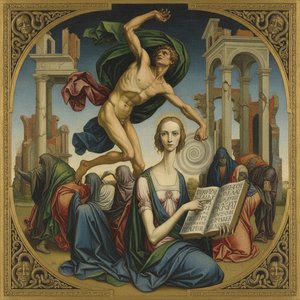
Beyond Perfection: The Dramatic Elegance and Intellectual Tension of Renaissance Mannerism
Explore the captivating world of Renaissance Mannerism. Discover how artists moved beyond High Renaissance harmony into a realm of elegant distortion, psychological tension, and dramatic beauty that bridged the gap to the Baroque era.
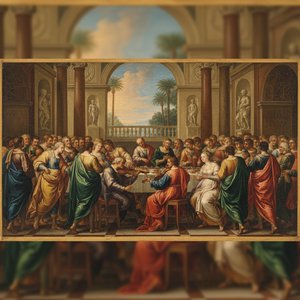
Paolo Veronese: A Renaissance Master of Color, Composition, and Venetian Splendor
Explore the vibrant world of Paolo Veronese, a Renaissance master renowned for his opulent compositions, masterful use of color, and dramatic Venetian scenes. Discover key artworks & legacy.

Northern Mannerism: The Dramatic Evolution of European Art through Elegant Distortion and Tension
Explore the dramatic evolution of Northern Mannerism. Discover how 16th-century artists moved from Renaissance harmony to elegant distortion, tension, and complex symbolism in European art history.

Mannerism: Bridging Renaissance Harmony & Baroque Drama – A Study of Style & Affectation
Explore the fascinating world of Mannerism! Discover its key characteristics, pioneering artists like Pontormo & Bronzino, and its pivotal role in bridging Renaissance harmony to Baroque drama. A comprehensive guide for art enthusiasts.


