

 Переглянути в інтер'єрі
 Надіслати
 Поділитися
 Деталі

 Завантажити
 Схожі предмети колекціонування
 Рентгенівське дослідження
 Слайд-шоу
 Статистика переглядів
The Hunt in the Forest
 Яєчна темпера на дерев'яній панелі
- Настінний декор
- Renaissance Perspective Innovation
 1470
1470- — Відродження
 73.0 x 177.0 cm
 Ашмолеанський музей мистецтва та археології
 Читати далі
Олійная репродукція ручної роботи
Написана вручну олією на полотні у вашому розмірі та рамі, виготовлена на замовлення нашими художниками. ( Перейти до друку Перейти до цифрових зображень)




P118B $10

P118H $10

P118W $10

P438Z $10

P508JH $12

P508YH $12

P805H $10

P805Z $10

P919BZ $10

P919G $10

P919XJ $10

P959ZH $10

P968JZ $12

W106C $8

W218G $10

W218JH $8

W218Y $10

W307PJ $10

W316G $10

W316PJ $8

W316Y $10

W398PJ $8

W4111J $10

W500HY $15

W500JH $15

W692G $12

W849H $8

W940BG $15

W953PJ $8




Обирайте з наших стандартних розмірів, що відповідають оригінальним пропорціям твору мистецтва.

Ви можете вказати власні розміри, щоб репродукція ідеально підійшла до конкретної рами або інтер'єру. Якщо вибраний вами розмір не відповідає пропорціям оригіналу, ми або обріжемо полотно, або доповнимо картину додатковими елементами, промальованими вручну. Цифровий макет буде надіслано вам на затвердження перед початком виробництва.
Зверніть увагу, що попередній перегляд на екрані не відображає фактичне обрізання або розширення зображення. Тільки макет точно покаже остаточну композицію.
Хоча ми можемо виготовити виріб у нестандартному розмірі, для збереження оригінальних пропорцій рекомендуємо обирати варіанти зі встановленого списку.
Після оформлення замовлення команда OriginalUniqueArt.com зв'яжеться з клієнтом електронною поштою для отримання інструкцій та надасть попередній макет
Доставка по всьому світу () за 3–4 тижні замість стандартних 5 тижнів. (19 Вересень). Без жодних компромісів у якості.

Безкоштовна експрес-доставка по всьому світу

Високоякісне лляне полотно

Повне страхове покриття доставки

Гарантія повернення митних зборів

Гарантія точного відтворення кольорів

Політика повернення протягом 100 днів (лише у разі виявлення дефектів)

Гарантія повернення 100% коштів

Знижка на оптові замовлення
 Скляний варіант доступний лише для розмірів до 110 см

The Hunt in the Forest
Техніка репродукції
Розмір репродукції
-


Загальна вартість
$ 300
A Symphony of Shadow and Light: The Magic of Uccello’s Forest
Step into a world where the boundaries between reality and mathematical illusion dissolve. Paolo Uccello’s “The Hunt in the Forest,” painted around 1470, is not merely a depiction of a noble pastime; it is a breathtaking window into the soul of the Early Renaissance. As you gaze upon this masterpiece, you are immediately swept into a nocturnal landscape that feels both dreamlike and intensely structured. The scene captures the exhilarating energy of a hunting party moving through a dense, mysterious woodland, where the flickering light plays across the armor of riders and the muscular tension of horses. It is a visual symphony orchestrated with meticulous precision, designed to pull the viewer deep into the heart of the thicket, making one feel less like an observer and more like a silent participant in the chase.
The atmosphere of the painting is thick with the palpable excitement of the hunt. Uccello masterfully uses light and shadow to create a sense of drama that resonates through the centuries. There is a rhythmic movement to the composition, as figures on foot and riders on horseback weave through the trees, their weapons glinting faintly in the dim light. For the collector or interior designer, this piece offers a profound emotional depth; it possesses a quiet intensity that can anchor a room, providing a focal point that invites long periods of contemplation and discovery.
The Architect of Perspective: Mastering the Illusion of Depth
What truly sets this work apart is Uccello’s obsessive devotion to the science of linear perspective. Often described as a mathematician of the canvas, Uccello was captivated by the challenge of translating a three-dimensional world onto a flat surface. In “The Hunt in the Forest,” he employs converging lines and carefully calculated spatial arrangements to create an unprecedented sense of depth. This was a revolutionary departure from the flatter, more decorative styles of the preceding Gothic era. By utilizing these mathematical advancements, Uccello does not just paint a forest; he constructs a believable reality.
Every element, from the placement of the furthest trees to the foreshortening of the figures in the foreground, serves the greater goal of spatial illusion. This technical brilliance creates a sense of immersion that is rare even in the greatest works of the Renaissance. For those seeking a high-quality reproduction, this structural complexity translates into a stunning visual texture. The way the eye is drawn inward by the geometric arrangement of the landscape provides a dynamic energy that breathes life into any sophisticated interior space, offering a sense of architectural grandeur and intellectual rigor.
A Legacy of Florentine Innovation
To understand the weight of this painting, one must look to the golden age of Florence. Created during an era of immense humanist growth, the work reflects the intellectual curiosity that defined the period. Uccello’s ability to blend the decorative elegance of his predecessors with the new, scientific realism of his contemporaries makes this piece a bridge between two worlds. The painting likely served as a spalliera—a decorative panel intended to be viewed at shoulder height, perhaps as part of a grand chest or the elegant wood paneling of a noble Florentine residence.
Owning a reproduction of such a significant historical artifact is an opportunity to bring a piece of the Renaissance spirit into the modern home. It represents a time when art and science were inextricably linked, and when every brushstroke was an attempt to decode the mysteries of the natural world. Whether placed in a library, a study, or a grand living area, “The Hunt in the Forest” serves as a testament to human ingenuity, offering timeless inspiration through its perfect balance of movement, mathematics, and mystery.
Біографія митця
A Florentine Visionary: The Life and Art of Paolo Uccello
Paolo Uccello, born Paolo di Dono in 1397 amidst the rolling hills near Florence, remains one of the most captivatingly enigmatic figures of the Early Renaissance. His very nickname, “Uccello” – little bird – hints at a whimsical nature and an artistic inclination towards depicting the avian world, yet it belies a mind deeply engaged with the burgeoning intellectual currents of his time. He wasn’t merely a painter; he was a pioneer, a mathematician of the canvas, striving to unlock the secrets of visual space and translate them into breathtaking works of art. His father, Dono di Paolo, practiced the dual profession of barber-surgeon, while his mother, Antonia, hailed from a Florentine noble family – a lineage that perhaps instilled in young Paolo both a practical sensibility and an appreciation for refined aesthetics. From 1412 to 1416, Uccello’s formative years were spent under the tutelage of Lorenzo Ghiberti, whose workshop was a crucible of artistic innovation, focused on the creation of the magnificent bronze doors for Florence's Baptistery. This early exposure steeped him in the prevailing Gothic style, with its emphasis on decorative elegance and narrative clarity, yet also ignited within him a desire to push beyond established boundaries.The Pursuit of Perspective: A Mathematical Mind at Play
Uccello’s artistic development wasn’t simply about mastering technique; it was driven by an insatiable curiosity regarding the underlying principles governing perception. He became consumed with mathematics, particularly geometry and perspective, not as abstract disciplines but as tools to unlock a more truthful representation of reality. While Filippo Brunelleschi is often credited with discovering linear perspective, Uccello was among the first to systematically apply it to painting, meticulously calculating vanishing points and orthogonal lines to create an illusion of depth that had previously been largely absent from art. This wasn’t merely about technical accuracy; for Uccello, perspective became a means of structuring narrative, enhancing drama, and imbuing his compositions with a sense of order and intellectual rigor. His fascination bordered on obsession, as recounted by Giorgio Vasari, who described Uccello staying up late into the night, lost in contemplation of vanishing points and spatial relationships. This dedication, while sometimes perceived as eccentric, ultimately revolutionized painting and paved the way for future generations of artists. He sought to understand how the eye perceives distance and form, translating these observations into a visual language that defied traditional artistic conventions.Masterpieces of Illusion: Key Works and Stylistic Traits
Uccello’s oeuvre, though relatively small, is marked by a distinctive style that blends Gothic elegance with Renaissance innovation. The Battle of San Romano, a series of three panels commissioned to commemorate a Florentine victory, stands as perhaps his most celebrated achievement. These paintings are not simply depictions of warfare; they are dynamic compositions filled with swirling figures, fragmented armor, and dramatically foreshortened lances – all rendered in vibrant colors and arranged according to meticulously calculated perspective. The sheer ambition and technical complexity of this project showcased Uccello’s mastery of linear perspective and his ability to create a sense of overwhelming scale within a relatively small canvas. The Birth of the Virgin, showcases Uccello’s skill at creating an illusion of depth within a shallow space, while his St George and the Dragon presents a striking depiction of the legendary saint, characterized by bold colors and stylized forms. Even in works like *The Flood and the Ark*, part of the San Miniato al Monte frescoes, Uccello’s fascination with architectural detail and complex compositions is readily apparent. His style consistently reveals:- A vibrant palette and a bold use of color.
- An emphasis on linear perspective, often pushed to its limits for dramatic effect.
- Stylized figures and decorative patterns reminiscent of Gothic art.
- A profound fascination with geometric forms and spatial relationships.
Influences and Connections
Uccello’s artistic journey was shaped by a confluence of influences. His early training under Lorenzo Ghiberti exposed him to the rich traditions of Florentine Gothic painting, while his association with Donatello fostered an appreciation for sculptural form and dynamism. He also benefited from contact with other leading artists of the time, including Masaccio and Piero della Francesca, whose innovative use of perspective influenced his own work. Notably, Uccello’s interest in mathematics and optics was fueled by the intellectual ferment of Florence during the Renaissance, a period marked by renewed interest in classical learning and scientific inquiry. His meticulous approach to composition reflects this broader cultural context, demonstrating a desire to understand and represent the world according to rational principles.Legacy and Influence: A Lasting Impact on Art History
Paolo Uccello’s contribution to the Renaissance extends far beyond his individual paintings. His pioneering exploration of perspective fundamentally altered the course of art history, influencing countless artists who followed in his wake. Albrecht Dürer, the renowned German printmaker and painter, was deeply inspired by Uccello's work, dedicating himself to the study of perspective and incorporating its principles into his own artistic practice. While Uccello’s style remained somewhat idiosyncratic throughout his career – a unique blend of Gothic refinement and Renaissance innovation – his groundbreaking approach to space and form secured his place as a pivotal figure in the development of Western art. He died in Florence in 1475, leaving behind a legacy not only of beautiful paintings but also of intellectual curiosity and artistic daring. His work continues to inspire awe and admiration, reminding us that true artistry lies not just in what is seen, but in the understanding of how we see it.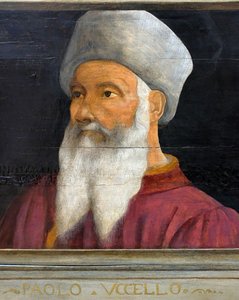
Паоло Учелло
1397 - 1475 , Італія
Довідкова інформація
- Artistic Movement Or Style: Ранній Ренесанс
- Artists Or Movements Influenced By This Artist: ['Альбрехт Дюрер']
- Artists Who Influenced This Artist:
- Лоренцо Гіберті
- Донателло
- Date Of Birth: 1397
- Date Of Death: 1475
- Full Name: Паоло ді Дона
- Nationality: Італійський
- Notable Artworks:
- Битва при Сан-Романо
- Народження Діви
- Святий Георгій та дракон
- Place Of Birth: Пратоветтіо, Італія
Схожі статті

25 шедеврів Поля Сезанна: подорож у світ імпресіонізму та натюрморту | OriginalUniqueArt
Відкрийте 25 найвідоміших картин Поля Сезанна! Дослідіть імпресіонізм, натюрморти та пейзажі художника. Купіть високоякісні репродукції та знайдіть ідеальний декор для вашого дому на OriginalUniqueArt.com.

Топ-25 шедеврів Джона Констебла: пейзажі Англії для вашого дому | OriginalUniqueArt
Відкрийте для себе 25 найкращих шедеврів Джона Констебла! Англійські пейзажі, романтизм та емоційне світло в живописі. Репродукції картин високої якості для вашого дому від OriginalUniqueArt.com. Дослідіть повну колекцію онлайн!
Capturing Stillness: A Curated Exploration of the Most Iconic Lake Landscapes in Art History
Journey through art history's most serene lake landscapes. From Romantic vistas to light-drenched Impressionist waters, discover the stories behind these iconic masterpieces and find museum-quality, hand-painted oil reproductions for your private collection.

Топ-10 шедеврів романтичного пейзажу: мистецтво, що захоплює дух | OriginalUniqueArt
Відкрийте для себе 10 шедеврів романтичного пейзажу! Каспар Давид Фрідріх, Тернер та інші майстри. Історія мистецтва, емоційні кольори природи та ідеї декору з OriginalUniqueArt.com. Дослідіть колекцію онлайн!

Evocations of Place: A Historical Journey Through Landscape Art
Explore the rich history of landscape art with OriginalUniqueArt. Discover renowned artists, movements like Impressionism & Romanticism, and expert guidance for collecting timeless pieces. Find your perfect serene escape today!


