Перейти до друку
 Розгорнути текст







































 Для творів мистецтва або репродукцій, розмір яких перевищує 105 см (приблизно 41 дюйм) з будь-якого боку, рама доставляється у вигляді розібраного комплекту. Такий метод гарантує безпечну доставку та запобігає пошкодженням під час транспортування.


Knight, Page and Monk: A Fragmented Vision of Medieval Ideals
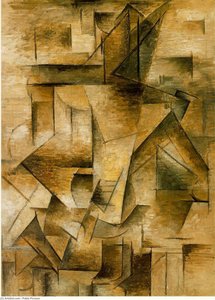
Pablo Picasso’s “Knight, Page and Monk” stands as a cornerstone of Cubist art—a daring departure from traditional representation that continues to fascinate viewers today. Painted sometime between 1946 and 1947, this monochrome masterpiece embodies the spirit of intellectual experimentation characteristic of Picasso's later years, reflecting his profound engagement with philosophical concepts and challenging conventional notions of perspective.
- Subject Matter: The painting depicts a knight, accompanied by a page and a monk, positioned within a stylized architectural space. These figures represent archetypal roles—power, youth, and piety—but Picasso dismantles their solidity through geometric abstraction, presenting them as fractured planes rather than recognizable individuals.
- Style & Technique: Picasso’s masterful application of oil paint on canvas exemplifies the Cubist method. He meticulously breaks down objects into constituent shapes – triangles, squares, rectangles – layering these forms to create a composite image that simultaneously reveals multiple viewpoints. The deliberate flattening of space contributes to an unsettling feeling of disorientation, mirroring the artist's own exploration of existential themes.
- Historical Context: Created during Picasso’s prolific period following World War II, “Knight, Page and Monk” speaks to anxieties about societal upheaval and the questioning of established values. The artwork aligns with Cubism’s broader critique of Western artistic conventions and its embrace of abstraction as a tool for conveying complex ideas.
- Symbolism: The inclusion of skulls in the lower left corner serves as a stark reminder of mortality—a recurring motif throughout Picasso's oeuvre—and underscores the painting’s preoccupation with themes of death and decay alongside notions of honor and faith. Similarly, the bird perched atop the building symbolizes aspiration and freedom, juxtaposed against the rigid geometry of the composition.
- Emotional Impact: “Knight, Page and Monk” evokes a palpable sense of unease and intellectual stimulation. Picasso’s masterful manipulation of light and shadow enhances the dramatic effect, emphasizing the geometric forms while simultaneously conveying an underlying melancholy. It compels viewers to confront questions about identity, perception, and the human condition—a testament to Picasso's enduring ability to provoke contemplation and inspire artistic dialogue.
A reproduction of this iconic artwork offers a captivating glimpse into Picasso’s groundbreaking vision—allowing collectors and interior designers alike to appreciate not only its aesthetic beauty but also its intellectual depth.
Питання та відповіді
Які сюжет та атмосферу поєднує в собі «Knight, Page and Monk» роботи Пабло Пікассо?
«Knight, Page and Monk» роботи Пабло Пікассо поєднує в собі medieval figures, fragmentation, geometric shapes, skull symbolism, darkness, perspective distortion, picasso style із Dramatic атмосферою.
Яке національне походження лежить в основі Cubist твору "Knight, Page and Monk"?
«Knight, Page and Monk» була створена Пабло Пікассо, який народився в Іспанія і працював у межах течії Cubist. Походження митця пов'язує цей твір із напрямом Cubist у тому вигляді, як його представляли художники з Іспанія.
Який рекомендований розмір та орієнтація для друку твору "Knight, Page and Monk"?
Для «Knight, Page and Monk» рекомендовані параметри друку: розмір Large та орієнтація Landscape.
 Переглянути в інтер'єрі
 Надіслати як листівку
 Поділитися
 Деталі витвору
 Посібник

 Завантажити
 Схожі екземпляри
 Рентгенівське дослідження
 Слайд-шоу
 Q&A
Q&A Статистика