Меню

() ·

A painting made for you, by hand

Bacchanale Before a Temple

Олійная репродукція ручної роботи

Написана вручну олією на полотні у вашому розмірі та рамі, виготовлена на замовлення нашими художниками. ( Перейти до друку Перейти до цифрових зображень)

Опис експоната

Біографія митця

Нікола Пуссін | Національний музей мистецтва України

from ·

Chapter 1

How large should it be?

Slide to change the size; the picture on the left shows the frame at its real width. The proportions of the original are kept.

Стандартний розмір
індивідуальний розмір
CM
INCH

Обирайте з наших стандартних розмірів, що відповідають оригінальним пропорціям твору мистецтва.

ширина
висота

Введіть необхідну ширину та висоту, щоб картина підійшла до вашої рами або стіни. Оскільки це ручний розпис, для зміни пропорцій художник може дописати трохи більше по краях або дещо обрізати композицію — вибір за вами. Перед початком роботи ми надішлемо вам цифровий макет для затвердження. Зображення, показане на цій сторінці, не є реальним результатом — лише макет відображає майбутній вигляд.

Chapter 2

How should it arrive?

Choose the edges of the stretched canvas

Choose your frame

Corner sample of the WhiteWrap canvas edge finish, stretched on масив дерева bars
White ₴1
Corner sample of the BlurSideWrap canvas edge finish, stretched on масив дерева bars
Blurside ₴1
Corner sample of the ExtendedWrap canvas edge finish, stretched on масив дерева bars
Extended ₴1
Corner sample of the P118B picture frame: формований полістирол, 5 cm wide and 3 cm thick
P118B ₴10
Corner sample of the P118H picture frame: формований полістирол, 5 cm wide and 3 cm thick
P118H ₴10
Corner sample of the P118W picture frame: формований полістирол, 5 cm wide and 3 cm thick
P118W ₴10
Corner sample of the P438Z picture frame: формований полістирол, 5.5 cm wide and 3.5 cm thick
P438Z ₴10
Corner sample of the P508JH picture frame: формований полістирол, 7 cm wide and 3.5 cm thick
P508JH ₴12
Corner sample of the P508YH picture frame: формований полістирол, 7 cm wide and 3.5 cm thick
P508YH ₴12
Corner sample of the P805H picture frame: формований полістирол, 5 cm wide and 3.5 cm thick
P805H ₴10
Corner sample of the P805Z picture frame: формований полістирол, 5 cm wide and 3.5 cm thick
P805Z ₴10
Corner sample of the P919BZ picture frame: формований полістирол, 7 cm wide and 3.5 cm thick
P919BZ ₴10
Corner sample of the P919G picture frame: формований полістирол, 7 cm wide and 3.5 cm thick
P919G ₴10
Corner sample of the P919XJ picture frame: формований полістирол, 7 cm wide and 3.5 cm thick
P919XJ ₴10
Corner sample of the P959ZH picture frame: формований полістирол, 5 cm wide and 3 cm thick
P959ZH ₴10
Corner sample of the P968JZ picture frame: формований полістирол, 6 cm wide and 4 cm thick
P968JZ ₴12
Corner sample of the W106C picture frame: масив дерева, 5 cm wide and 3 cm thick
W106C ₴8
Corner sample of the W218G picture frame: масив дерева, 5 cm wide and 3 cm thick
W218G ₴10
Corner sample of the W218JH picture frame: масив дерева, 5 cm wide and 3 cm thick
W218JH ₴8
Corner sample of the W218Y picture frame: масив дерева, 5 cm wide and 3 cm thick
W218Y ₴10
Corner sample of the W307PJ picture frame: масив дерева, 6 cm wide and 3 cm thick
W307PJ ₴10
Corner sample of the W316G picture frame: масив дерева, 6 cm wide and 3 cm thick
W316G ₴10
Corner sample of the W316PJ picture frame: масив дерева, 6 cm wide and 3 cm thick
W316PJ ₴8
Corner sample of the W316Y picture frame: масив дерева, 6 cm wide and 3 cm thick
W316Y ₴10
Corner sample of the W398PJ picture frame: масив дерева, 5 cm wide and 3 cm thick
W398PJ ₴8
Corner sample of the W4111J picture frame: масив дерева, 6.5 cm wide and 3.5 cm thick
W4111J ₴10
Corner sample of the W500HY picture frame: масив дерева, 7 cm wide and 5 cm thick
W500HY ₴15
Corner sample of the W500JH picture frame: масив дерева, 7 cm wide and 5 cm thick
W500JH ₴15
Corner sample of the W692G picture frame: масив дерева, 8 cm wide and 4 cm thick
W692G ₴12
Corner sample of the W849H picture frame: масив дерева, 5 cm wide and 3 cm thick
W849H ₴8
Corner sample of the W940BG picture frame: масив дерева, 7.5 cm wide and 4.5 cm thick
W940BG ₴15
Corner sample of the W953PJ picture frame: масив дерева, 6 cm wide and 3.5 cm thick
W953PJ ₴8
Corner sample of the H24-GOLD picture frame: різьблене дерево з левкасом, 10 cm wide and 6 cm thick
H24-GOLD ₴30
Corner sample of the H24-SILVER picture frame: різьблене дерево з левкасом, 10 cm wide and 6 cm thick
H24-SILVER ₴30
Corner sample of the H36-GOLD picture frame: різьблене дерево з левкасом, 15 cm wide and 6.5 cm thick
H36-GOLD ₴45
Corner sample of the H36-SILVER picture frame: різьблене дерево з левкасом, 15 cm wide and 6.5 cm thick
H36-SILVER ₴45

Moulding: . Overall size with the frame: .

Chapter 3

Who paints it, and should anything change?

Examples of what can be changed: Replace face with customer photo; Add pet (e.g., replace cat with dog); Include hidden message in background; Change background landscape or elements.
After order, OriginalUniqueArt.com team will email client for instructions and provide a mockup preview

Доставка по всьому світу () за 3–4 тижні замість стандартних 5 тижнів. (30 Жовтень). Без жодних компромісів у якості.

Chapter 4

The finishing touches

A nameplate, as in a museum?

Деталі гравірування на бронзовій табличці

This elegant plaque features the artist's name and the title of the artwork, finely engraved for a timeless presentation.

It is made from bronze with a refined, elegant finish. The text is precisely laser-engraved for a sharp and permanent result. Measuring 9x2 cm, the plaque is compact yet easy to read. It's built to be durable and scratch-resistant, offering a professional, museum-quality look. Mounting is simple thanks to the included adhesive backing.

Деталі прозорої акрилової таблички

The plaque includes essential engraved details such as the artist's name, the title of the artwork, the date it was created, the type of media used-like oil on canvas or watercolor-a brief description of the piece, and a QR code that links to the complete artwork information.

It is crafted from clear acrylic, offering a sleek, modern appearance. The text is UV-engraved in black to ensure strong visual contrast. With a size of 10x15 cm, it ensures optimal readability. It comes equipped with two metal hooks for secure wall mounting. The plaque is designed to be weather-resistant, making it suitable for various environments, and it includes interactive features that work seamlessly with smartphone scanning.

Деталі чорної акрилової таблички

This elegant plaque includes engraved information such as the artist's name, the title of the artwork, the date it was created, the type of media used (like oil on canvas or watercolor), a short description of the artwork, and a QR code for quick access to more information.

The plaque itself is made from refined black acrylic with a premium finish. The text is laser-engraved in white for high contrast and readability. Its size is 10x15 cm, designed to be easy to read. It comes with two metal hooks for professional mounting. The design is sleek and fits any interior style. It is also weather-resistant and durable, with built-in digital integration for mobile compatibility.

A protective varnish?

When do you need it?

Chapter 5

Your painting, as you ordered it

Bacchanale Before a Temple

Матеріал репродукції

Розмір репродукції

-

Видатний майстер-художник

Більше деталізації, витонченості та додаткового часу на створення твору

-

Рама для репродукції

-

-

Для творів мистецтва або репродукцій, розмір яких перевищує 105 см (приблизно 41 дюйм) з будь-якого боку, рама доставляється у вигляді розібраного комплекту. Такий метод гарантує безпечну доставку та запобігає пошкодженням під час транспортування.

Потребує професійного збирання — це не продукт для самостійного виготовлення (DIY).
Комплект має бути зібраний, а полотно натягнуте досвідченим майстром багетних робіт із використанням клейового дерева (не входить у комплект), щипців для натягування полотна та затискачів, щоб підрамник залишався рівним під час висихання клею. Неправильне збирання або нерівномірне натягування полотна може призвести до незворотного пошкодження твору мистецтва, що не підпадає під дію нашої гарантії.

  • У комплект входять усі бруски з цільного дерева, точно вирізані за розміром.

  • Збирається за допомогою гвинтів, що входять до комплекту, а також клейового розчину для кутових з'єднань, який не входить до комплекту і має бути підготовлений вашим майстром.

  • Потрібні професійні інструменти, які не входять до комплекту: щипці для натягування полотна (натягувач) та затискачі, щоб утримувати рейки рівно під час висихання клею.

Важливо:
Для з'єднання кутів потрібен клей для дерева, перекладини необхідно затиснути струбцинами до повного висихання клею, а для натягування полотна на зібрану раму знадобляться щипці для натягування полотна. Жоден із цих інструментів не входить до комплекту. Будь ласка, проконсультуйтеся з досвідченим майстром багетного оформлення перед замовленням рами такого розміру.

Етикетка експоната

-

-

Захисний лак

Глянцевий лак (підсилює яскравість кольорів, захищає від світла та вологи)

-

Персоналізувати мій витвір

Приклади можливих змін: заміна обличчя на фото клієнта; додавання домашньої тварини (наприклад, заміна кота на собаку); додавання прихованого повідомлення на фоні; зміна пейзажу або елементів фону.

-

Прискорено

Доставка по всьому світу () за 3–4 тижні замість стандартних 5 тижнів. (30 Жовтень). Без компромісів у якості.

-

Експрес-доставка

Доставка по всьому світу () протягом 5 тижнів. (6 Листопад).

Включено в ціну

Підсумкова вартість

₴ 13421

Загальна вартість ₴ 13421

Скляний варіант доступний лише для розмірів до 110 см

Included with every order

  • Безкоштовна експрес-доставка по всьому світу
  • Високоякісне лляне полотно
  • Повне страхове покриття доставки
  • Гарантія повернення митних зборів
  • Гарантія точного відтворення кольорів
  • Політика повернення протягом 100 днів (лише у разі виявлення дефектів)
  • Гарантія повернення 100% коштів
  • Пропозиція на оптові замовлення

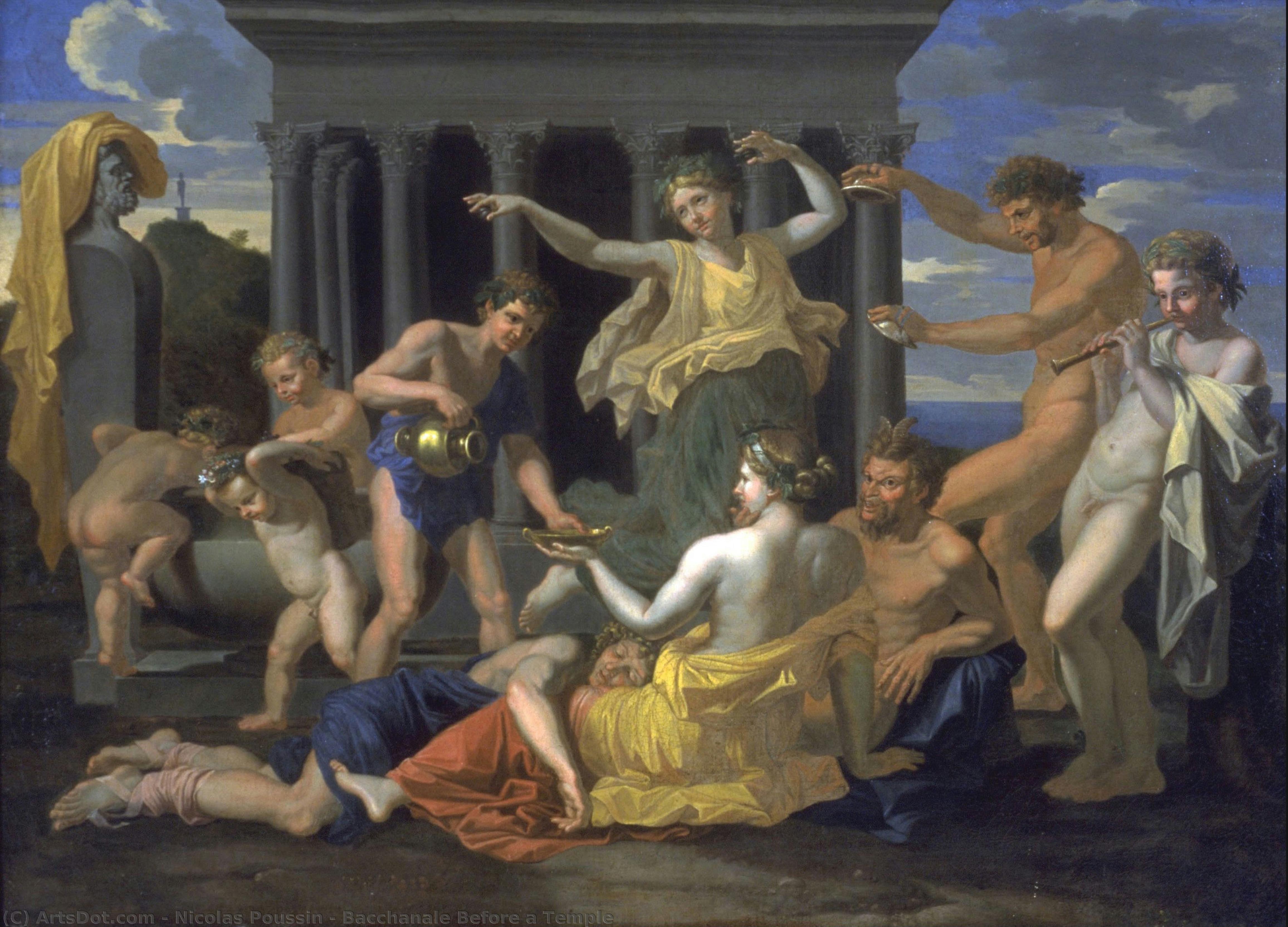
A Symphony of Classical Grace: Exploring Nicolas Poussin’s “Bacchanale Before a Temple”

The painting "Bacchanale Before a Temple," attributed to Nicolas Poussin, stands as a testament to the enduring power of classical ideals within Baroque art. Executed sometime in the mid-17th century—precise dating remains elusive—this monumental canvas transcends mere depiction; it’s an invitation into a meticulously crafted tableau that speaks volumes about humanist philosophy and artistic ambition. Measuring 74 x 101 cm, the artwork immediately commands attention with its expansive scale, reflecting Poussin's masterful command of composition and his unwavering devotion to achieving visual harmony.

The Scene Unfolds: Composition and Narrative

Poussin’s genius lies in his ability to distill complex narratives into deceptively simple arrangements. The painting portrays a gathering of figures – approximately thirteen individuals – positioned before a temple façade bathed in diffused sunlight. These figures are not merely present; they embody a carefully orchestrated drama, hinting at themes of ecstasy, contemplation, and the sublime. Notice how Poussin utilizes diagonal lines to guide the viewer’s gaze across the canvas, creating a dynamic tension that contrasts with the stillness of the temple architecture. The placement of individuals—some gazing upwards towards the heavens, others engaged in animated conversation—suggests an interplay between earthly desires and spiritual aspiration.

Technique: Mastering Illusionism

Poussin's technique is characterized by its unwavering commitment to illusionism – a cornerstone of Baroque painting – yet tempered with a profound respect for disegno, or drawing, which served as the foundation for his artistic process. He employed oil paints on canvas with painstaking precision, layering thin glazes upon thicker underpaintings to achieve remarkable tonal gradations and textural subtleties. The artist’s meticulous attention to detail is evident in every brushstroke, capturing the nuances of light and shadow with breathtaking accuracy. This masterful rendering creates an illusion of depth that transports the viewer into the scene, blurring the boundaries between reality and representation.

Historical Context: Echoes of Antiquity

“Bacchanale Before a Temple” emerged during a period marked by fervent intellectual curiosity and a renewed interest in classical art and literature—the High Renaissance’s legacy continuing to inspire artists across Europe. Poussin himself had spent considerable time studying Roman ruins, absorbing the principles of perspective and idealized beauty championed by artists like Raphael and Michelangelo. The temple itself serves as a symbolic reference to pagan rituals and beliefs, juxtaposed against the Christian faith represented by the figures present. This deliberate contrast underscores Poussin’s desire to elevate human experience beyond materialism, emphasizing the importance of moral contemplation and spiritual enlightenment.

Symbolism: Light, Order, and Transcendence

The pervasive use of light—particularly the radiant glow emanating from above—is arguably the painting's most striking element. Light isn’t merely illuminating the scene; it embodies divine grace and symbolizes transcendence – guiding the viewer’s eye upwards towards a celestial realm. Furthermore, Poussin adheres to strict geometric principles, establishing a sense of order and balance that reflects humanist ideals. The temple façade represents stability and permanence, anchoring the narrative amidst the swirling emotions of the participants. Ultimately, “Bacchanale Before a Temple” invites contemplation on themes of beauty, faith, and humanity’s relationship with the divine—a timeless masterpiece destined to resonate across generations.

Питання та відповіді

Яку емоцію передає «Bacchanale Before a Temple» роботи Нікола Пуссен?

«Bacchanale Before a Temple» асоціюється з Nostalgic настроєм. Емоційний тон передає враження, яке справляє цей твір.

Який розмір репродукції рекомендується для «Bacchanale Before a Temple» роботи Нікола Пуссен?

Рекомендований розмір друку для «Bacchanale Before a Temple» роботи Нікола Пуссен — Large.

До якого художнього напряму та якої епохи належить «Bacchanale Before a Temple» роботи Нікола Пуссен?

«Bacchanale Before a Temple» роботи Нікола Пуссен належить до течії French Baroque, що була створена в епоху — Ранньомодерна епоха свого автора.

More about this painting

Переглянути в інтер'єрі Перегляд в AR Перейти до друку Перейти до цифрових зображень Надіслати як листівку
Деталі витвору Посібник Додати до улюблених Завантажити Схожі екземпляри Рентгенівське дослідження Слайд-шоу Q&A Статистика

In numbers

  • 29frames to choose from
  • standard sizes, in its own proportions
  • 5weeks to paint and deliver it
Нікола Пуссен

Нікола Пуссен

1594 - 1665, Франція

Quick facts about Нікола Пуссен

  • Artistic Movement Or Style: Бароко, Класицизм
  • Artists Or Movements Influenced By This Artist:
    • Жак-Луї Давид
    • П’єр Сезан
  • Artists Who Influenced This Artist:
    • Рафаель
    • Тіціан
  • Date Of Birth: 1594
  • Date Of Death: 1665
  • Full Name: Nicolas Poussin
  • Nationality: Француз
  • Notable Artworks:
    • Зруйновання Єрусалимського Храму
    • Веніс подає зброю Енейсу
    • Хрещення Ісуса Христа
  • Place Of Birth: Ле Havre, Франція

Біографія митця

Nicolas Poussin: A Life Steeped in Classical Reverie

Nicolas Poussin, a name synonymous with the grandeur of French Baroque painting, was nonetheless a soul deeply rooted in Italian soil for much of his artistic life. Born in Le Havre, Normandy, in June 1594, his early years remain somewhat veiled in mystery, yet they undoubtedly laid the foundation for a career that would become pivotal in shaping the classical tradition within French art. Though he briefly studied in Paris during the early 1610s, absorbing influences from lesser-known artists of the time, it was his journey to Rome in 1624 that truly ignited his artistic destiny. This wasn’t merely a geographical relocation; it was an immersion into the heart of antiquity, a pilgrimage to the very source of inspiration that would define his aesthetic vision. Poussin's initial forays into painting were marked by a sensuous quality reminiscent of Venetian masters like Titian, yet even in these early works, a nascent sense of order and intellectual rigor began to emerge—a foreshadowing of the style he would so masterfully refine.

Early Artistic Development & Parisian Influences

Nicolas Poussin’s formative years were spent honing his craft in Le Havre, where he studied with Quentin Varin, a respected artist who instilled in him an appreciation for meticulous observation and skillful execution. His early paintings demonstrated a fascination with Venetian color palettes and techniques—a stylistic echo of the artistic fervor that characterized Venice at the time. However, even amidst this initial exuberance, Poussin’s burgeoning intellect recognized the limitations of purely decorative pursuits. He sought to elevate his art beyond mere visual spectacle, striving for a deeper engagement with philosophical concepts and historical narratives. His Parisian studies provided exposure to emerging trends in artistic thought, fostering connections with fellow artists who championed humanist ideals—a crucial step toward shaping his distinctive worldview.

The Roman Years: Forging a Classical Ideal

Rome proved to be more than just a studio for Poussin; it became his intellectual crucible. He found himself amidst a vibrant circle of scholars, archaeologists, and fellow artists, notably Cassiano dal Pozzo, whose profound understanding of classical antiquity profoundly influenced the artist’s approach. Dal Pozzo's dedication to meticulously documenting ancient remains instilled in Poussin a deep respect for historical accuracy and a desire to imbue his paintings with a sense of timelessness. This period saw Poussin move away from the flamboyant exuberance of some of his contemporaries, instead embracing a style characterized by clarity, balance, and a deliberate emphasis on linear composition. He meticulously studied Raphael’s works, absorbing their harmonious arrangements and graceful forms—a formative experience that would shape his artistic sensibilities for decades to come. Simultaneously, he drew inspiration from ancient sculptures and literary sources like Ovid's *Metamorphoses*, recognizing the power of myth and allegory to convey profound truths about human existence.

A Style Defined by Order & Harmony

Poussin’s distinctive style—a hallmark of French Classicism—was characterized by a remarkable restraint and precision. He eschewed dramatic gestures and emotional displays, favoring instead carefully constructed landscapes populated with idealized figures rendered in luminous colors. His compositions were governed by strict geometric principles—often employing pyramidal structures to convey stability and grandeur—reflecting the influence of Renaissance humanist thought. Unlike many Baroque painters who prioritized spectacle, Poussin sought to capture not merely what he saw but what he believed—a testament to his unwavering commitment to intellectual rigor and artistic integrity. His meticulous attention to detail—particularly in depicting drapery folds and architectural elements—demonstrated an unparalleled mastery of technique.

Legacy & Influence: Shaping French Art

Despite spending the majority of his career abroad, Nicolas Poussin’s impact on French art was undeniable. He briefly returned to Paris in 1640 at the behest of Cardinal Richelieu, appointed as First Painter to the King—a position that afforded him considerable prestige and patronage but also imposed constraints upon his creative freedom. However, he soon retreated to Rome, where he continued to paint until his death in 1665—a final pilgrimage to the birthplace of Western art. His dedication to classical ideals served as a beacon for subsequent generations of French artists—influencing figures like Jacques-Louis David and Paul Cézanne who championed a similar aesthetic vision. Artists recognized Poussin’s profound understanding of humanist philosophy and his unwavering commitment to artistic excellence, securing his place as one of the most revered masters of French Baroque painting and establishing him as an enduring symbol of classical beauty and intellectual contemplation.

Основна інформація

  • Artist: Nicolas Poussin
  • Influences: Italian Renaissance
  • Notable elements or techniques: Classical Composition
  • Title: Bacchanale Before a Temple
  • Medium: Oil on Canvas

Квіз про мистецтво

У кожному запитанні лише одна правильна відповідь.

Запитання 1:
What artistic movement is Nicolas Poussin’s ‘Bacchanale Before a Temple’ primarily associated with?
Запитання 2:
The painting depicts a gathering of people around what architectural structure?
Запитання 3:
Nicolas Poussin spent most of his artistic career in which city, absorbing influences from Italian artists?
Запитання 4:
What is a notable characteristic of Poussin’s style evident in ‘Bacchanale Before a Temple’, reflecting his admiration for classical art?
Запитання 5:
Based on the image description, what is one prominent element contributing to the painting's atmosphere?


































