

 Переглянути в інтер'єрі
 Надіслати як листівку
 Поділитися
 Детальніше

 Завантажити
 Схожі експонати
 Рентгенівське дослідження
 Слайд-шоу
The Wounded Philoctetes
 Acrylic On Canvas
- WallArt
- Neoclassical Style
 1775
1775 175.0 x 123.0 cm
 Національна галерея Данії
 Читати далі
Гікле / Художній принт
Музейна якість друку جيкле або на полотні з оперативним виготовленням та різноманітними варіантами фінішної обробки. ( Замовити репродукцію ручної роботи Купити цифрове зображення)




P118B $10

P118H $10

P118W $10

P438Z $10

P508JH $12

P508YH $12

P805H $10

P805Z $10

P919BZ $10

P919G $10

P919XJ $10

P959ZH $10

P968JZ $12

W106C $8

W218G $10

W218JH $8

W218Y $10

W307PJ $10

W316G $10

W316PJ $8

W316Y $10

W398PJ $8

W4111J $10

W500HY $15

W500JH $15

W692G $12

W849H $8

W940BG $15

W953PJ $8




Обирайте з наших стандартних розмірів, що відповідають оригінальним пропорціям твору мистецтва.

Ви можете вказати власні розміри, щоб репродукція ідеально підійшла до конкретної рами або інтер'єру. Якщо обраний вами розмір не відповідає пропорціям оригіналу, ми або обріжемо полотно, або розширимо зображення за допомогою дзеркального відображення чи суцільної заливки країв. Перед початком виробництва вам буде надіслано цифровий макет для затвердження.
Будь ласка, зверніть увагу, що попередній перегляд на екрані не відображає фактичне обрізання або розширення. Тільки макет точно покаже фінальну композицію.
Хоча можливість замовлення індивідуальних розмірів доступна, ми рекомендуємо обирати формат із попередньо визначеного списку, щоб зберегти оригінальні пропорції.
Доставка по всьому світу () за 2 тижні замість стандартних 4/5 тижнів. (16 Серпень)

Безкоштовна експрес-доставка по всьому світу

Високоякісне лляне полотно

Повне страхове покриття доставки

Гарантія відшкодування митних зборів

Гарантія точного відтворення кольорів

Політика повернення протягом 60 днів (лише у разі виявлення дефектів)

Гарантія повернення 100% коштів

Пропозиція на оптові замовлення
 Скляний варіант доступний лише для розмірів до 110 см

The Wounded Philoctetes
Гікле / Художній принт
Розмір репродукції
-


Підсумкова вартість
$ 80
Опис експоната
A Study in Pain and Classical Influence: Nicolai Abraham Abildgaard’s “The Wounded Philoctetes”
Nicolai Abraham Abildgaard's "The Wounded Philoctetes," completed in 1775, represents a pivotal moment in Romantic art—a defiant assertion of emotion against the prevailing formalism of neoclassicism. More than just a depiction of Homer’s legendary hero, it delves into profound psychological exploration and philosophical contemplation, cementing Abildgaard's place as one of Denmark’s foremost artistic figures. The painting captures not merely what Philoctetes *looks* like but how he *feels*, embodying the burgeoning spirit of “Weltschmerz,” or world-weariness—a pervasive sentiment reflecting the intellectual anxieties of Northern Europe during its formative years.Subject Matter and Narrative Depth
The artwork portrays Philoctetes, exiled on Lemnos Island following Achilles’ deliberate rejection after a dispute over honor, enduring unimaginable suffering. Abildgaard meticulously renders his agony – the hero's contorted posture and strained musculature conveying an overwhelming sense of pain—transforming Homer’s myth into a visceral experience for the viewer. This isn’t simply about portraying physical wounds; it’s about conveying the psychological torment inherent in abandonment and betrayal, themes that resonate powerfully across centuries. The artist skillfully utilizes chiaroscuro – dramatic contrasts between light and shadow – mirroring the influence of Caravaggio to heighten emotional impact and draw attention to Philoctetes' vulnerability.Style & Technique: Embracing Dramatic Expression
Abildgaard’s technique departs radically from neoclassicism’s emphasis on idealized beauty and restraint. Instead, he adopts a bold approach reminiscent of Michelangelo’s Torso Belvedere—a sculptural model celebrated for its anatomical precision and muscular form—to powerfully communicate the physicality of pain. The artist's masterful rendering captures the essence of suffering with remarkable accuracy, demonstrating an understanding of human anatomy that transcends mere imitation; it seeks to evoke empathy and contemplation within the audience. This stylistic choice underscores Abildgaard’s commitment to conveying emotion rather than simply representing reality.Historical Context: Rousseau’s Influence and Romantic Sentiment
Created in the 1770s, “The Wounded Philoctetes” reflects the intellectual fervor of Enlightenment Europe, particularly championed by Jean Jacques Rousseau. Rousseau's advocacy for intuition and feeling over reason profoundly impacted artistic sensibilities—a sentiment vividly embodied in Abildgaard’s exploration of “Weltschmerz.” The painting serves as a visual manifestation of this philosophical shift, prompting viewers to confront existential questions about human experience and resilience. It stands as a testament to the Romantic movement's desire to express inner turmoil and grapple with the complexities of human emotion.Symbolism: Michelangelo’s Legacy and Classical Ideals
The inclusion of Michelangelo’s Torso Belvedere is deliberate—a symbolic gesture that juxtaposes classical ideals of beauty and strength against Philoctetes’ agonizing vulnerability. This juxtaposition compels viewers to consider themes of endurance, honor, and the confrontation with mortality. Abildgaard utilizes this reference not merely as a visual cue but as a conduit for conveying philosophical ideas about human nature and the enduring power of artistic inspiration—a legacy that continues to resonate within the art world today.Concluding Impression: A Masterpiece of Emotional Resonance
“The Wounded Philoctetes” remains an arresting image, capturing the profound psychological depth characteristic of Romantic art. Its masterful technique, coupled with its evocative depiction of suffering and its engagement with philosophical currents, secures Abildgaard’s place as a visionary artist who dared to explore the darker recesses of human emotion—a legacy that continues to inspire artists and collectors alike.Біографія митця
Early Life and Artistic Foundations
Nicolai Abraham Abildgaard, born in Copenhagen on September 11th, 1743, emerged from a family deeply immersed in the world of art and scholarship. His father, Søren Abildgaard, was a respected antiquarian draughtsman, instilling in young Nicolai an early appreciation for classical forms and meticulous observation. This familial influence proved foundational as Abildgaard embarked on his artistic journey, receiving initial training with a local painting master before formally enrolling at the New Royal Danish Academy of Art in 1764. His talent quickly became apparent; from 1764 to 1767, he consistently earned accolades and medallions recognizing his burgeoning skill. These early successes culminated in a travel stipend awarded in 1767 – a pivotal opportunity that would shape the course of his artistic development, though it was five years before he could finally utilize it. During these formative years at the Academy, Abildgaard benefited from the tutelage of Johan Edvard Mandelberg and Johannes Wiedewelt, absorbing their techniques and perspectives while simultaneously forging his own unique path.The Roman Awakening: A Shift in Perspective
In 1772, Nicolai Abildgaard finally realized his long-awaited dream of traveling to Rome. This five-year sojourn proved transformative, marking a crucial turning point in his artistic evolution. Immersed in the heart of classical antiquity, he dedicated himself to studying not only sculpture but also architecture, decoration, and the magnificent frescoes adorning Palazzo Farnese. A visit to Naples in 1776 with fellow artist Jens Juel further broadened his horizons. Rome wasn’t merely a place for technical study; it was an intellectual awakening. Abildgaard delved into history painting, seeking to master its complexities and narrative power. He drew inspiration from the masters – Annibale Carracci, Raphael, Titian, and Michelangelo – absorbing their compositional strategies, dramatic use of light, and profound understanding of human anatomy. However, his exposure wasn’t limited to strict classicism. The influence of artists like Johan Tobias Sergel and Johann Heinrich Füssli began to subtly shift his aesthetic sensibilities, introducing a nascent Romantic sensibility into his work. Simultaneously, Abildgaard cultivated a deep appreciation for literature, finding inspiration in the works of Shakespeare, Homer, and Ossian – narratives that would later permeate his canvases with layers of meaning and emotional resonance.Royal Commissions and National Narratives
Returning to Copenhagen in December 1777, Abildgaard was immediately recognized as a rising star. He swiftly secured a professorship at the Academy in 1778 and soon after, around 1780, ascended to the prestigious position of royal historical painter. This appointment brought with it a monumental commission from the Danish government: to create a series of paintings depicting the history of Denmark for the Knights’ Room (Riddersal) at Christiansborg Palace. This project became the defining undertaking of his career. These weren’t simply historical illustrations; they were carefully constructed narratives designed to glorify the monarchy and instill a sense of national pride. Abildgaard masterfully combined accurate historical depictions with allegorical elements and mythological references, creating visually stunning and intellectually stimulating compositions. He also collaborated with Johan Edvard Mandelberg on decorative schemes for Fredensborg Palace, further solidifying his position as Denmark’s leading artistic figure.A Synthesis of Styles: Neoclassicism and Romanticism
Nicolai Abildgaard's artistic style represents a fascinating synthesis of Neoclassical rigor and emerging Romantic sensibilities. While grounded in the principles of classical composition, clarity, and anatomical accuracy, his works are infused with dramatic lighting, rich color palettes, and meticulous attention to detail that hint at a deeper emotional undercurrent. Notable paintings such as “Christian I Elevates Holstein to a Duchy in 1474” exemplify this blend – a stately historical scene rendered with classical precision yet imbued with a sense of grandeur and theatricality. Other works, like the haunting “The Nightmare,” demonstrate his willingness to explore darker psychological themes, foreshadowing the full-blown Romanticism that would soon dominate European art. His exploration extended beyond history painting; "Culmin's Ghost Appears to his Mother" showcases his skill in portraying supernatural events with dramatic intensity, while pieces like “The Wounded Philoctetes” reveal a sensitivity to human suffering and vulnerability. He wasn’t merely replicating historical or mythological scenes; he was interpreting them through the lens of his own artistic vision, imbuing them with layers of symbolic meaning accessible to a refined audience. His pictorial allegory became a hallmark of his style, using symbols as visual shorthand for complex ideas and emotions.Legacy and Enduring Influence
Abildgaard served as director of the Academy during 1789–1791 and again from 1801 until his death in Copenhagen on November 14th, 1809. Throughout his career, he nurtured a generation of talented artists, including Asmus Jacob Carstens, Bertel Thorvaldsen, J. L. Lund, and perhaps most significantly, Christoffer Wilhelm Eckersberg. Eckersberg, often hailed as the “father of Danish painting,” would lay the foundation for the Golden Age of Danish Painting, building upon the principles Abildgaard had instilled in him. Abildgaard’s influence extended beyond his direct students; he fundamentally shaped the artistic landscape of Denmark, bridging the gap between Neoclassicism and Romanticism. His work not only reflected the cultural values of his time but also anticipated future artistic trends, contributing significantly to the development of Nordic Romanticism and leaving an indelible mark on Danish art history. He remains a pivotal figure in understanding the transition from Enlightenment ideals to the emotional intensity of the 19th century.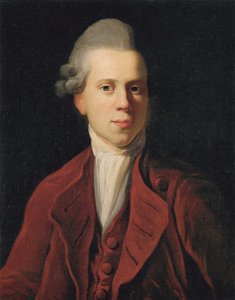
Ніколаї Абрахам Більдгорф
1743 - 1809 , Данія
Короткі факти
- Artistic Movement Or Style: Ньокласицизм і Романтизм
- Artists Or Movements Influenced By This Artist:
- Асмус Якоб Карстенс
- Бертель Торвальдсен
- Ніордський Романтизм
- Artists Who Influenced This Artist:
- Аннібале Караккі
- Рафаель
- Тіціан
- Мікеланджело
- Date Of Birth: Сенвбр 11, 1743
- Date Of Death: Лив 14, 1809
- Full Name: Nicolai Abraham Abildgaard
- Nationality: Данію
- Notable Artworks:
- ХрІстіан І Підвищує Холстен до Духетствя у 1474
- Страх
- Дух Нічi
- Сцени Нільса Кліметса
- Уражений Філоктет
- Place Of Birth: Копенгаген, Данія
Пов'язані статті
Baroque Classicism: The Grandeur of Order and Drama in 17th-Century Art History
Explore the profound elegance of Baroque Classicism. Discover how 17th-century masters synthesized dramatic emotion with classical order through the lens of the Counter-Reformation and the works of legends like Carlo Maratta and Andrea Sacchi.
Baroque Classicism: Reconciling Drama & Order in 17th-Century Art
Explore the captivating world of Baroque Classicism! Discover its history, key artists like Caravaggio & Rubens, and defining characteristics. Expert insights & high-quality reproductions at OriginalUniqueArt.
Baroque Dynamism: The Mastery of Motion, Drama, and Chiaroscuro in Classical Art
Explore the breathtaking power of Baroque art. Delve into the dramatic interplay of light, shadow, and motion through the works of masters like Caravaggio. Discover how the era's intense emotional realism continues to inspire collectors and connoisseurs of classical grandeur.

Топ-10 шедеврів бароко: картини, що змінили мистецтво | OriginalUniqueArt.com
Відкрийте для себе 10 шедеврів бароко від Караваджо, Рембрандта та Рубенса! Історія мистецтва, техніки живопису та натхнення для вашого інтер'єру. Репродукції картин високої якості – OriginalUniqueArt.com

The Visceral Stage: Exploring Dramatic Narratives & Emotional Intensity in Baroque Art
Explore the dramatic world of Baroque art! Discover iconic masters like Caravaggio & Rembrandt, their techniques, and the movement's lasting impact. Expert insights for collectors & enthusiasts at OriginalUniqueArt.

