
 Переглянути в інтер'єрі
 Надіслати як листівку
 Поділитися
 Детальніше

 Завантажити
 Схожі експонати
 Рентгенівське дослідження
 Слайд-шоу
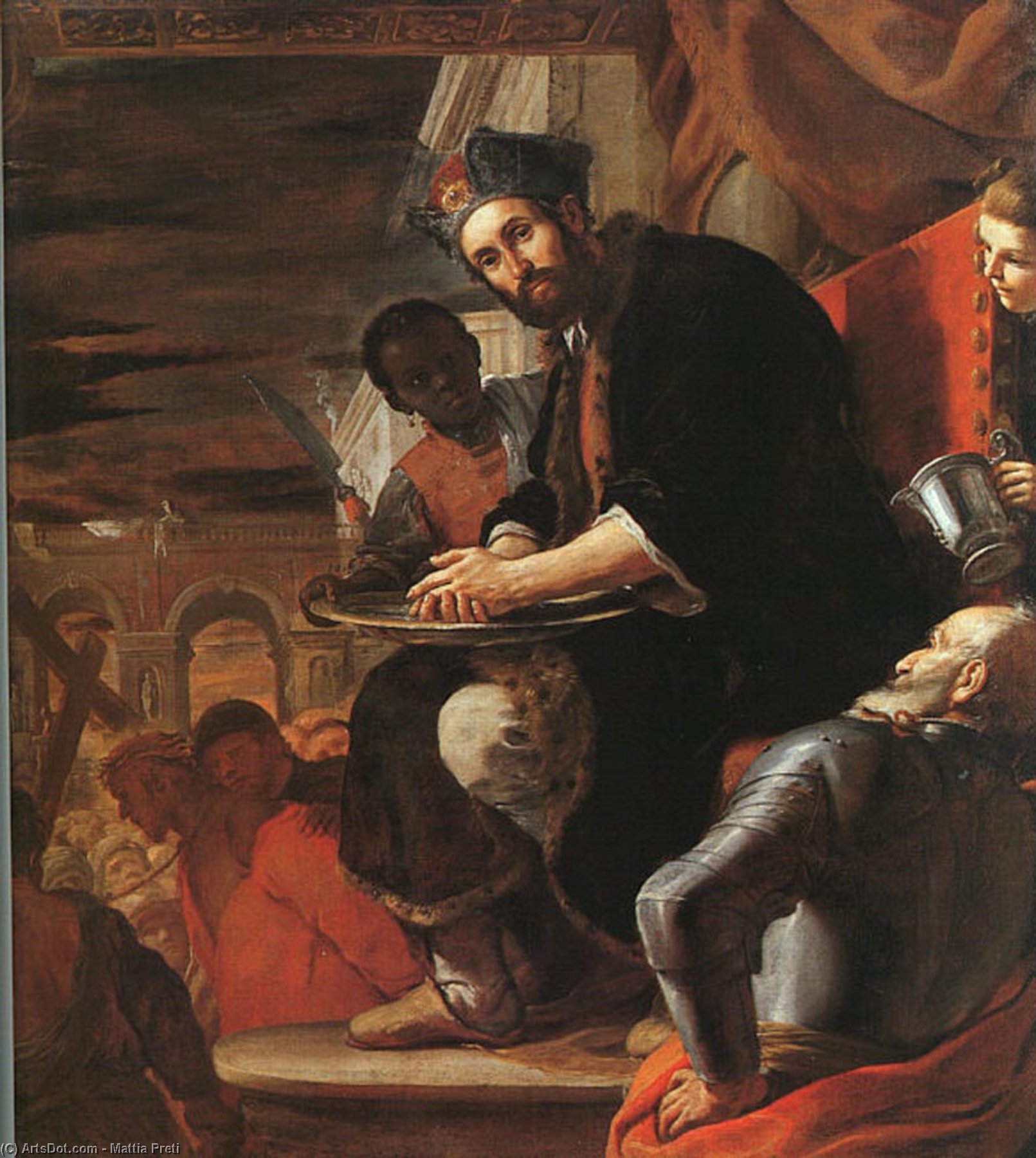
Pilate Washing his Hands
 Oil On Canvas
- WallArt
- Italian Baroque
 1663
1663 206.0 x 185.0 cm
 Музей Метрополітен
 Читати далі
Гікле / Художній принт
Музейна якість друку جيкле або на полотні з оперативним виготовленням та різноманітними варіантами фінішної обробки. ( Замовити репродукцію ручної роботи Купити цифрове зображення)




P118B $10

P118H $10

P118W $10

P438Z $10

P508JH $12

P508YH $12

P805H $10

P805Z $10

P919BZ $10

P919G $10

P919XJ $10

P959ZH $10

P968JZ $12

W106C $8

W218G $10

W218JH $8

W218Y $10

W307PJ $10

W316G $10

W316PJ $8

W316Y $10

W398PJ $8

W4111J $10

W500HY $15

W500JH $15

W692G $12

W849H $8

W940BG $15

W953PJ $8




Обирайте з наших стандартних розмірів, що відповідають оригінальним пропорціям твору мистецтва.

Ви можете вказати власні розміри, щоб репродукція ідеально підійшла до конкретної рами або інтер'єру. Якщо обраний вами розмір не відповідає пропорціям оригіналу, ми або обріжемо полотно, або розширимо зображення за допомогою дзеркального відображення чи суцільної заливки країв. Перед початком виробництва вам буде надіслано цифровий макет для затвердження.
Будь ласка, зверніть увагу, що попередній перегляд на екрані не відображає фактичне обрізання або розширення. Тільки макет точно покаже фінальну композицію.
Хоча можливість замовлення індивідуальних розмірів доступна, ми рекомендуємо обирати формат із попередньо визначеного списку, щоб зберегти оригінальні пропорції.
Доставка по всьому світу () за 2 тижні замість стандартних 4/5 тижнів. (18 Серпень)

Безкоштовна експрес-доставка по всьому світу

Високоякісне лляне полотно

Повне страхове покриття доставки

Гарантія відшкодування митних зборів

Гарантія точного відтворення кольорів

Політика повернення протягом 60 днів (лише у разі виявлення дефектів)

Гарантія повернення 100% коштів

Пропозиція на оптові замовлення
 Скляний варіант доступний лише для розмірів до 110 см

Pilate Washing his Hands
Гікле / Художній принт
Розмір репродукції
-


Підсумкова вартість
$ 80
Опис експоната
Pilate Washing His Hands: A Study in Dramatic Repression
Mattia Preti’s “Pilate Washing His Hands,” painted in 1663, is not merely a depiction of a biblical scene; it's a profound meditation on guilt, responsibility, and the corrosive nature of power. This arresting work, now housed within OriginalUniqueArt’s meticulously crafted hand-painted reproductions, offers a glimpse into the turbulent world of Baroque Malta, where Preti served as a Knight of the Order of St. John. The painting immediately commands attention with its masterful use of chiaroscuro – the dramatic interplay of light and shadow – a technique deeply rooted in Caravaggio's legacy, yet imbued by Preti with his own intensely personal expression.
At the heart of the composition stands Pontius Pilate, a figure rendered not as a triumphant Roman governor, but as a man consumed by anxiety and self-deception. Dressed in a somber black robe, he sits upon a simple chair, his hands clasped before him as he symbolically washes away the imagined stain of Christ’s blood. The gesture is both meticulous and futile, conveying a desperate attempt to absolve himself of an unbearable burden. Preti's attention to detail – the subtle wrinkles around Pilate’s eyes, the downward tilt of his head – reveals a deep understanding of human psychology, capturing not just the outward appearance but also the internal turmoil of this pivotal figure.
A Baroque Tableau: Composition and Symbolism
The painting's composition is carefully orchestrated to heighten its dramatic impact. Christ, depicted in the middle ground, is led towards his impending fate by a young African attendant – a detail that was remarkably progressive for its time. Preti’s decision to place this figure at the center of the scene, imbuing him with an air of solemn importance, subtly challenges conventional representations of biblical narratives and speaks to the artist's awareness of social dynamics within his environment. The inclusion of other figures – a book-carrying scholar, a soldier wielding a sword, and attendants observing from the periphery – creates a sense of immediacy and invites the viewer to become a witness to this momentous event.
The use of color is equally significant. The dominant tones are dark browns and blacks, reflecting the gravity of the scene and the moral ambiguity surrounding Pilate’s actions. However, strategically placed splashes of red – in the folds of Pilate's robe, the bloodstains on Christ’s hands – draw the eye and emphasize the central theme of sacrifice and guilt. The crimson sky serves as a backdrop, amplifying the painting’s emotional intensity and suggesting an impending doom.
Technique and Context: Preti’s Maltese Masterpiece
Mattia Preti's style in “Pilate Washing His Hands” is characterized by its dynamism, emotional depth, and masterful handling of paint. He employed a loose, expressive brushstroke, creating a sense of movement and immediacy that was characteristic of the Baroque period. The artist’s training under Caravaggio is evident in his dramatic use of light and shadow, but Preti developed his own distinct style, incorporating elements of Italian Renaissance painting and drawing inspiration from his time spent in Malta.
The painting was created during a period of significant political and social change in Malta. The island had recently been liberated from Ottoman rule and was undergoing a process of transformation as it transitioned into a center of trade and culture. Preti’s work reflects this dynamic environment, blending elements of religious piety with an awareness of the complexities of human relationships and power dynamics. His decision to depict Pilate – a figure often associated with imperial authority – in such a vulnerable and introspective manner suggests a critical engagement with the political realities of his time.
Collecting a Masterpiece: OriginalUniqueArt’s Reproduction
OriginalUniqueArt is proud to offer meticulously crafted hand-painted reproductions of “Pilate Washing His Hands,” capturing the essence of Preti's original masterpiece. Each reproduction is created by skilled artisans using traditional techniques and archival-quality materials, ensuring that it faithfully replicates the painting’s rich colors, dramatic lighting, and emotional depth. Whether you are an art collector, interior designer seeking a statement piece, or simply an admirer of Baroque art, OriginalUniqueArt's reproduction provides a beautiful and authentic way to experience this iconic work.
Explore our high-resolution images and detailed descriptions to bring the drama and symbolism of “Pilate Washing His Hands” into your home or studio. Discover the legacy of Mattia Preti through the timeless beauty of OriginalUniqueArt’s exceptional reproductions.
Біографія митця
Mattia Preti: A Calabrian Knight of the Baroque
Mattia Preti, known as *Il Cavalier Calabrese* – the Calabrian Knight – stands as a pivotal figure in 17th-century Italian Baroque painting. Born in Taverna, Calabria, on February 24, 1613, his artistic journey was one of dynamic evolution, absorbing diverse influences and culminating in a uniquely expressive style that left an indelible mark on the art world, particularly in Malta where he would spend much of his later life. Preti’s early training began under Giovanni Battista Caracciolo, a painter deeply rooted in the Caravaggist movement. This foundational exposure instilled within him a profound understanding of dramatic chiaroscuro – the intense interplay of light and shadow – and a commitment to realistic depiction that would remain hallmarks of his work throughout his career. Before 1630, he joined his brother Gregorio in Rome, immersing himself in the artistic ferment of the city and studying the masters who defined the era: Caravaggio, Guercino, Rubens, Guido Reni, and Giovanni Lanfranco. This period was crucial, shaping not only his technical skills but also his aesthetic sensibilities.Early Influences and Roman Development
Preti’s early artistic development wasn't merely imitation; it was a synthesis of influences, skillfully woven into a style distinctly his own. While initially steeped in Caravaggism – particularly the dramatic use of tenebrism and dynamic figures – he gradually moved beyond its strict confines, embracing the dynamism and emotional intensity that characterized the High Baroque. His time in Rome allowed him to study not only Caravaggio’s techniques but also those of other masters who shaped the artistic landscape of the era. He absorbed elements from Guercino's expressive brushwork, Rubens’ opulent color palettes, and Reni’s graceful compositions. This period was marked by a growing confidence and experimentation, as Preti began to develop his own unique visual language. He wasn’t simply copying his predecessors; he was learning from them, adapting their techniques to suit his own artistic vision. His early works in Rome, such as frescoes in the churches of Sant’Andrea della Valle and San Carlo ai Catinari, demonstrated an aptitude for large-scale decorative painting and a willingness to push the boundaries of traditional Baroque style.A Style Forged in Naples
Forging a Dynamic Style Preti’s artistic development wasn't merely imitation; it was a synthesis of influences, skillfully woven into a style distinctly his own. While initially steeped in Caravaggism, he gradually moved beyond its strict confines, embracing the dynamism and emotional intensity that characterized the High Baroque. His time in Naples further refined this evolution, exposing him to the vibrant work of Luca Giordano. This period saw Preti’s canvases swell with energetic movement, complex compositions, and a heightened sense of drama. He masterfully employed dramatic contrasts of light and shadow, inherited from Caravaggio, not simply as a technical device but as a means of intensifying emotional impact and guiding the viewer's eye. His figures are imbued with palpable emotion, conveyed through expressive faces and dynamic body language. This ability to evoke powerful feelings – piety, anguish, ecstasy – became a defining characteristic of his oeuvre. He wasn’t content merely to depict scenes; he sought to *animate* them, breathing life into biblical narratives and religious iconography.Major Works and Commissions
Throughout his career, Preti received numerous commissions that showcased his versatility and artistic skill. He created impressive fresco cycles for Roman churches, demonstrating an aptitude for large-scale decorative painting. Some of his most ambitious – though sadly lost – works were the frescoes he painted on seven city gates in Naples depicting the Virgin or saints delivering people from the plague. Though only sketches remain today, they testify to the scale and impact of these monumental creations. These commissions weren’t simply about fulfilling a patron's request; they were opportunities for Preti to engage with the religious and cultural life of the communities he served, imbuing his art with meaning and purpose. His work at St. John’s Co-Cathedral in Valletta, however, stands as his most significant achievement – a testament to his artistic genius and unwavering dedication to the Baroque aesthetic.The Maltese Zenith: St. John’s Co-Cathedral
It was in Malta, however, that Mattia Preti reached the pinnacle of his artistic achievement. Appointed a Knight of the Order of Saint John in 1660, he embarked on a transformative project: the complete redecoration of the interior of St. John’s Co-Cathedral in Valletta. This undertaking – arguably his most significant legacy – involved an astonishing series of paintings depicting the life and martyrdom of Saint John the Baptist. The sheer scale of the project is breathtaking; Preti essentially created a visual narrative that enveloped the viewer, immersing them in the story of the saint. The opulent Baroque setting provided the perfect canvas for his dramatic style, and the resulting artwork cemented his reputation as one of Europe’s leading painters. His work at St. John's wasn't merely decorative; it was an act of devotion, a testament to his faith, and a powerful expression of the Order’s religious identity.A Lasting Legacy
Mattia Preti continued to receive commissions from across Europe following his success in Malta, solidifying his position as a leading figure in Italian Baroque art. He died in 1699, leaving behind a rich artistic legacy that continues to inspire and captivate audiences today. His masterful use of light and shadow, dynamic compositions, and ability to convey intense emotion remain hallmarks of his style. His contributions are preserved in museums such as the Capodimonte Museum in Naples, and through reproductions made available by platforms like OriginalUniqueArt.com, ensuring that his art continues to reach new generations. The enduring impact of Preti’s work is perhaps most vividly felt within the walls of St. John's Co-Cathedral, a breathtaking testament to his artistic genius and unwavering dedication to the Baroque aesthetic. *Il Cavalier Calabrese* truly earned his title, not only as a knight but as a master painter who illuminated the world with his vision.Useful Links
- Mattia Preti - Wikipedia: https://en.wikipedia.org/wiki/Mattia_Preti
- Mattia Preti (Il Cavalier Calabrese) - Saint John the Baptist Preaching: https://www.metmuseum.org/art/collection/search/438824
Useful Content
- Mattia Preti - Wikipedia: (See link above)
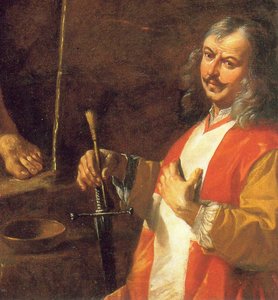
Маттіа Преті
1613 - 1699 , Італія
Короткі факти
- Artistic Movement Or Style: Бароко
- Artists Or Movements Influenced By This Artist:
- Карвавхізм
- Бароко
- Artists Who Influenced This Artist:
- Караваджо
- Гуерчіно
- Рубенс
- Date Of Birth: 24 лютий 1613
- Date Of Death: 3 січня 1699
- Full Name: Mattia Preti
- Nationality: Італійський
- Notable Artworks:
- Тributo di Dio
- Giuditta e Oloferne
- San Giovanni Battista
- Place Of Birth: Тaverна, Італія
Пов'язані статті

Baroque Classicism: The Grandeur of Order and Drama in 17th-Century Art History
Explore the profound elegance of Baroque Classicism. Discover how 17th-century masters synthesized dramatic emotion with classical order through the lens of the Counter-Reformation and the works of legends like Carlo Maratta and Andrea Sacchi.

Барокова драма: мистецтво, що привносить велич у дім
Відкрийте для себе велич бароко! Дізнайтесь про історію стилю, особливості українського бароко та як створити розкішний інтер'єр. Ексклюзивні репродукції картин від .

The Dramatic Flourish: Exploring the Baroque Movement's Enduring Legacy in Art History
Explore the dramatic world of Baroque art! Discover iconic artists like Caravaggio & Rubens, defining techniques, and its lasting impact on art history. Expert insights for collectors & enthusiasts at OriginalUniqueArt.

Топ-10 шедеврів бароко: картини, що змінили мистецтво | OriginalUniqueArt.com
Відкрийте для себе 10 шедеврів бароко від Караваджо, Рембрандта та Рубенса! Історія мистецтва, техніки живопису та натхнення для вашого інтер'єру. Репродукції картин високої якості – OriginalUniqueArt.com
Drama and Light: Discover the Captivating Grandeur of Baroque Art
Immerse yourself in the dramatic splendor of Baroque art. Explore the profound impact of light, shadow, and the Counter-Reformation through an expert historical lens, celebrating the masters who defined an era of unparalleled grandeur and emotional intensity.



