 Перейти до друку
 Розгорнути текст







































 Для творів мистецтва або репродукцій, розмір яких перевищує 105 см (приблизно 41 дюйм) з будь-якого боку, рама доставляється у вигляді розібраного комплекту. Такий метод гарантує безпечну доставку та запобігає пошкодженням під час транспортування.


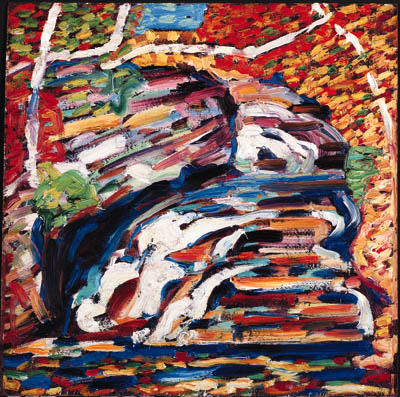
Autumn Cascade I by Marsden Hartley
Marsden Hartley’s “Autumn Cascade I” isn't merely a depiction of a waterfall; it’s an embodiment of the artist’s profound engagement with the spirit of modernism and his yearning for expressive freedom. Completed circa 1910, this painting stands as a testament to Hartley’s pioneering approach to abstraction—a deliberate rejection of representational art in favor of conveying emotion and inner experience through bold visual language. Examining it reveals layers of artistic intention and stylistic influences that continue to resonate with viewers today.Composition and Technique: Embracing Dynamic Energy
The painting's central focus is a cascade of water plunging down a rocky terrain, rendered with masterful impasto technique—thickly applied paint creating palpable textural surfaces. Hartley eschewed traditional perspective, opting instead for a flattened picture plane that prioritizes visual dynamism over spatial accuracy. Angular rocks dominate the composition, layered and textured to convey a sense of ruggedness and geological force. The foliage on the left side contrasts sharply with the expansive sky above, establishing a compositional balance that simultaneously suggests stability and movement. Hartley’s deliberate use of overlapping forms contributes to a complex interplay of visual elements—a hallmark of Cubist sensibilities subtly interwoven into his artistic vision.Color Palette: A Symphony of Autumnal Fire
“Autumn Cascade I” explodes with color—primarily warm hues dominated by reds, oranges, yellows, and browns—interspersed with cooler blues and greens. Hartley’s palette isn't merely descriptive; it’s emotionally charged, mirroring the vibrancy and intensity of autumnal foliage. The thick, unblended brushstrokes create a mosaic-like effect, intensifying the colors and amplifying their expressive power. This deliberate chromatic choice underscores Hartley’s desire to transcend mere visual representation and tap into deeper psychological associations—a core principle of Expressionist art.Symbolism and Emotional Resonance: Beyond Representation
More than just capturing a natural scene, Hartley transforms the waterfall into a conduit for conveying inner feelings. The angular rocks symbolize resilience and resistance against forces beyond control, mirroring Hartley’s own contemplative spirit. The expansive sky represents openness and aspiration—a visual metaphor for Hartley's quest for spiritual enlightenment. Ultimately, “Autumn Cascade I” invites viewers to contemplate themes of solitude, contemplation, and the sublime beauty of nature—elements that resonate powerfully with Hartley’s artistic philosophy.Historical Context: Modernism's Bold Experimentation
Hartley’s work emerged during a pivotal moment in art history—the dawn of modernism—characterized by experimentation and a rejection of academic conventions. Influenced by Henri Matisse and Max Weber, Hartley embraced the stylistic innovations of Cubism and Expressionism, forging a distinctive artistic path that challenged established norms. “Autumn Cascade I” exemplifies this spirit of innovation, demonstrating Hartley’s unwavering commitment to pursuing artistic truth through subjective expression—a legacy that continues to inspire artists and collectors alike.Питання та відповіді
Де я можу переглянути попередній перегляд "Autumn Cascade I"?
Щоб переглянути репродукцію «Autumn Cascade I» роботи Марсден Харлі, відкрийте сторінку попереднього перегляду Перегляд у інтер'єрі цього твору.
До якої епохи належить "Autumn Cascade I"?
«Autumn Cascade I» роботи Марсден Харлі датується Early Modern періодом. Ця епоха створює історичний контекст твору.
Який настрій передає «Autumn Cascade I» роботи Марсден Харлі?
Загальний настрій «Autumn Cascade I» роботи Марсден Харлі — Dramatic. Цей настрій передає загальну атмосферу твору.
 Переглянути в інтер'єрі
 Надіслати як листівку
 Поділитися
 Деталі витвору
 Посібник

 Завантажити
 Схожі екземпляри
 Рентгенівське дослідження
 Слайд-шоу
 Q&A
Q&A Статистика