

 Переглянути в інтер'єрі
 Надіслати як листівку
 Поділитися
 Деталі витвору
 Посібник

 Завантажити
 Схожі екземпляри
 Рентгенівське дослідження
 Слайд-шоу
 Статистика
The student


 Розгорнути текст
Мистецький твір, представлений на цій сторінці, захищений законом про авторське право, що унеможливлює легальне створення або продаж його ідентичної репродукції. Цей захист забезпечується відповідно до міжнародних угод, таких як Бернська конвенція та національним законодавством, зокрема положеннями, що викладені в Законодавство США про авторське право — Розділ 17. Всі права захищені. Будь-яке використання без дозволу заборонено.
Цей метод повністю відповідає нормам авторського права, оскільки він не передбачає копіювання чи дублювання захищеного твору мистецтва. Натомість це творче переосмислення — створення нового малюнка під впливом оригіналу, який не є його точним відтворенням.
Гікле / Художній принт
Друк جيкле або на полотні музейної якості з оперативним виготовленням та різноманітними варіантами фінішної обробки. ( Замовити картину ручної роботи Перейти до цифрових зображень)




P118B ₴10

P118H ₴10

P118W ₴10

P438Z ₴10

P508JH ₴12

P508YH ₴12

P805H ₴10

P805Z ₴10

P919BZ ₴10

P919G ₴10

P919XJ ₴10

P959ZH ₴10

P968JZ ₴12

W106C ₴8

W218G ₴10

W218JH ₴8

W218Y ₴10

W307PJ ₴10

W316G ₴10

W316PJ ₴8

W316Y ₴10

W398PJ ₴8

W4111J ₴10

W500HY ₴15

W500JH ₴15

W692G ₴12

W849H ₴8

W940BG ₴15

W953PJ ₴8




Обирайте з наших стандартних розмірів, що відповідають оригінальним пропорціям твору мистецтва.

Введіть необхідну ширину та висоту, щоб принт ідеально підійшов до вашої рами або стіни. Принт можна лише обрізати, але не можна зробити більшим за оригінал, тому при зміні пропорцій частина зображення буде втрачена. Перед друком ми надсилаємо вам цифровий макет для затвердження. Зображення на цій сторінці не відображає реальну обрізку — її можна побачити лише на макеті.
Доставка по всьому світу () за 2 тижні замість стандартних 4/5 тижнів. (26 Жовтень)

Безкоштовна експрес-доставка по всьому світу

Високоякісне лляне полотно

Повне страхове покриття доставки

Гарантія повернення митних зборів

Гарантія точного відтворення кольорів

Політика повернення протягом 100 днів (лише у разі виявлення дефектів)

Гарантія повернення 100% коштів

Пропозиція на оптові замовлення
 Скляний варіант доступний лише для розмірів до 110 см

The student
Гікле / Художній принт
Розмір репродукції
-


Підсумкова вартість
₴ 3591
A Quiet Introspection: The Soul of Mario Sironi’s The Student
In the quiet corners of art history, certain works possess the power to halt time, inviting the viewer into a sanctuary of thought and stillness. The Student, a masterful creation by the Italian maestro Mario Sironi, is one such masterpiece. This evocative portrait captures a woman lost in a moment of profound introspection, seated at a table that serves as an altar to intellect and solitude. Clad in somber black attire, her dark hair framing a face of contemplative depth, she sits before a mirror—a classic symbol of self-reflection and the duality of identity. The scene is not merely a depiction of a person, but an invitation into a private, cerebral world where the boundaries between the physical room and the internal mind begin to blur.
The composition is rich with an atmosphere of scholarly elegance. Surrounding the central figure is a curated landscape of artistic and intellectual artifacts: statues that stand like silent sentin Riens, vases that anchor the space with classical grace, and a single book resting near her hand, suggesting a life dedicated to the pursuit of knowledge. The presence of these objects transforms the setting from a simple room into an atelier of the soul. For the discerning collector or interior designer, this painting offers more than just visual beauty; it provides a focal point of sophisticated gravity, making it an ideal centerpiece for spaces dedicated to study, libraries, or refined living areas where conversation and thought are encouraged.
Technique and the Luminosity of Divisionism
To understand the emotional weight of The Student, one must look closely at Sironi’s early mastery of Divisionism. Before his later shifts toward more monumental and architectural styles, Sironi utilized this technique to breathe life into his subjects through a delicate interplay of light. Rather than blending colors on the palette, he applied small, distinct strokes of pigment that, when viewed from a distance, coalesce in the eye of the beholder to create a shimmering, luminous effect. This method allows the shadows in the woman's black clothing to feel deep and velvety, while simultaneously capturing the subtle glints of light reflecting off the porcelain vases and the smooth surfaces of the surrounding sculptures.
This meticulous approach to color and light creates a sense of vibrating stillness. The technique lends a dreamlike quality to the scene, where the air itself feels heavy with the scent of old paper and the quiet dust of a sunlit studio. For those seeking a high-quality reproduction, this complexity of texture is what makes a hand-painted version so captivating; the physical layering of paint recreates the rhythmic energy of Sironi’s brushwork, ensuring that the light seems to dance across the canvas just as it does in the original work.
A Legacy of Intellectual Elegance
Mario Sironi’s journey from a student of engineering to a titan of modern Italian art is reflected in the structural integrity of this piece. There is an architectural precision to how he places the statues and objects within the frame, creating a balanced, harmonious environment that feels both grounded and ethereal. The Student serves as a bridge between the classical traditions of his heritage and the burgeoning modernism of the early 20th century. It captures a moment of transition—much like the subject herself—between the external world of objects and the internal world of ideas.
Integrating a reproduction of this caliber into a contemporary interior allows for a profound connection to the history of European modernism. It is a piece that speaks to the timelessness of human curiosity and the beauty found in solitude. Whether placed in a sun-drenched gallery or a moody, dark-toned study, The Student brings with it an aura of prestige and a deep, resonant emotional intelligence that continues to inspire art lovers and decorators across the globe.
Питання та відповіді
Кольори «The student» роботи Маріо Сіроні яскраві чи приглушені?
Кольори твору «The student» роботи Маріо Сіроні вирізняються Muted насиченістю та Monochromatic інтенсивністю.
Як мені завантажити зображення «The student» роботи Маріо Сіроні?
Для твору «The student» доступне завантаження: на сторінці Завантажити цифрове зображення ви можете завантаження цифрового зображення високої роздільної здатності.
Які сюжет та атмосферу поєднує в собі «The student» роботи Маріо Сіроні?
«The student» змальовує woman, black clothing, mirror, statues, vases, book, table, а його емоційний настрій можна описати як Classic.
Біографія митця
Маріо Сіроні: Життя в епоху італійського модернізму
Ранні роки та освіта
- Народився 12 травня 1885 року в місті Сассарі, Сардинія, Італія.
- Його батько був інженером, а дідуб по материнській лінії, Ігнаціо Вілла, був шанованим архітекктором і скульптором, що забезпечило художнику раннє знайомство зі світом мистецтва.
- Спочатку він вивчав інженерну справу в Римському університеті, але зрікся цієї професії у 1903 році після нервового зриву. Ця подія стала переломним моментом на шляху до живопису.
- Свою офіційну художню підготовку він розпочав у Scuola Libera del Nudo при престижній Римській академії краси (Accademia di Belle Arti di Roma), де зустрів свого першого значущого вчителя — Джакомо Балла.
Художня еволюція та впливи
- Ранні роботи художника перебували під сильним впливом дивізіонізму — техніки, що використовує розділені мазки кольору для створення ефекту сяйва, що яскраво проявилося в таких творах, як «Учень».
- Близько 1914 року він коротко експериментував із футуризмом, виставляючись у Галереї Спровієрі в Римі. Проте невдовзі він вийшов за межі цього стилю, відмовившись від його фокусу на швидкості та динамізмі.
- Після Першої світової війни відбувся докорінний зсув: сформувався стиль, що характеризується масивними, нерухомими формами та геометричними фігурами. На це вплинули його досвід війни та зростаюче відчуття ізоляції.
- Ключовими джерелами натхнення для нього стали Джакомо Балла (рання освіта), Джорджо де Кіріко та Карло Карра (вплив метафізичного живопису на форму), а також елементи неокласицизму та примітивістського класицизму.
Novecento Italiano та зрілий стиль
- У 1922 році Сіроні став одним із засновників руху Novecento Italiano — напряму, що проголошував «повернення до порядку» в післявоєнному європейському мистецтві, акцентуючи увагу на ясності та традиціях.
- Його зрілий стиль вирізняється такими рисами:
- Акцент на геометричних формах та спрощених силуетах.
- Навмисно важка, дещо незграбна естетика в пізніх роботах.
- Тематика самотності, відчуження та людського буття.
- Дослідження індустріальних ландшафтів та життя робітничого класу.
- Визначними творами цього періоду є «Венера» (1921–1923) та «Самотність» (1925).
Політичні зв'язки та пізні роки
- Сіроні був прихильником Беніто Муссоліні та зробив значний внесок у фашистські публікації, створивши понад 1700 карикатур.
- Він вірив у нерозривний зв'язок мистецтва та архітектури, прагнучи створювати монументальні роботи для громадських просторів, що відображало ідеологію фашистського режиму.
- Після Другої світової війни його зв'язки з фашизмом призвели до занепаду популярності та втрати визнання критиків.
- Він значною мірою відійшов від суспільного життя, продовжуючи писати картини у відносній ізоляції аж до самої смерті.
Головні досягнення та історичне значення
- Творчість Сіроні є вагомим внеском в італійський модернізм, ставши містком між футуризмом та подальшим розвитком мистецтва.
- Його дослідження таких тем, як самотність та відчуження, глибоко резонували з тривогами людини XX століття.
- Попри суперечливість його політичних поглядів, його мистецтво представлене на великих міжнародних виставках, зокрема в Центрі Помпіду (1981) та Королівській академії в Лондоні (1989).
- Помер 13 серпня 1961 року в Мілані.
- Його спадщина полягає в унікальному стилістичному синтезі та потужних образах людської долі у світі, що стрімко змінюється.

Маріо Сіроні
1885 - 1961 , Італія
Короткі факти
- Artistic Movement Or Style: Новеченто італійський, футуризм
- Artists Or Movements Influenced By This Artist: ['Карло Карра']
- Artists Who Influenced This Artist: ['Джакомо Балла']
- Date Of Birth: 12 травня 1885
- Date Of Death: 13 серпня 1961
- Full Name: Mario Sironi
- Nationality: Італійський
- Notable Artworks:
- Венера
- Солодінь
- Place Of Birth: Сассарі, Італія
Пов'язані статті
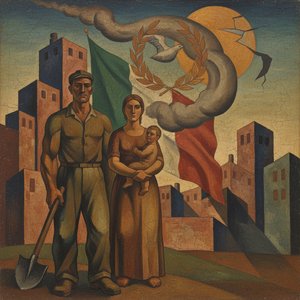
Mario Sironi: A Poetic of Modern Italian Identity Through Symbolism & Social Commentary
Explore the profound works of Mario Sironi, a key figure in Italian Modernism. Discover his evolution from Futurism to Metaphysical painting and his powerful social commentary. Learn about his legacy at OriginalUniqueArt.
Reflections of Reality: Exploring the Metaphysical Power of Mirror Images in Fine Art
Explore the profound symbolism of mirror images in fine art. From Surrealist distortions to classical self-portraits, discover how masters use reflections to explore reality, identity, and the infinite through a sophisticated art-historical lens.
Reflections of Reality: The Metaphysical Power of Mirrors in Fine Art History
Explore the profound symbolism of mirrors in fine art history. From Surrealist distortions to Vanitas themes, discover how masters use reflections to capture reality and the metaphysical soul.
The Mirror Stage of Art History: Exploring Reflection & Identity in Painting
Explore the captivating history of reflection in art! Discover symbolism, technique & psychological depth in masterpieces from Renaissance self-portraits to modern works. Expert insights for discerning collectors.

Mirroring the Soul: A Curated Exploration of Reflection and Self-Perception in Art History
Embark on a sophisticated journey through art history's most captivating masterpieces of reflection. Explore how legendary artists used mirrors to explore identity, surrealism, and the soul through expert art historical analysis.
