

 Переглянути в інтер'єрі
 Надіслати як листівку
 Поділитися
 Деталі витвору
 Посібник

 Завантажити
 Схожі екземпляри
 Рентгенівське дослідження
 Слайд-шоу
 Q&A
Q&A Статистика
St Jerome
 Oil On Panel
- WallArt
- Northern Renaissance
 1547
1547- Renaissance
 80.0 x 108.0 cm
 Музей Прадо
 Розгорнути текст
Отримайте файл, готовий до друку, якість якого значно перевищує якість веб-попереднього перегляду. Кожне цифрове зображення, яке ми продаємо, створене на основі високої роздільної здатності з нашої бази даних — зазвичай від 5 000 до 15 000 пікселів по ширині — тому ви можете впевнено друкувати у великому форматі, робити щільну обрізку або відтворювати найдрібніші деталі.
Жоден файл не залишається в нашій студії без уваги. Експерт із цифрової обробки звіряє кольори з оригінальною картиною та за потреби коригує їх, після чого покращує чіткість і деталізацію за допомогою професійних інструментів ретушування — завжди зберігаючи вірність мазкам пензля та стилю художника. Результатом є зображення, яке виглядає як справжня картина, а не як відскановане фото з накладеними фільтрами.
Ви затверджуєте результат перед завершенням замовлення: протягом 72 годин наш експерт надішле зображення електронною поштою для вашого перегляду. Не задоволені результатом? Ви можете попросити про внесення змін чи виправлень або отримати відшкодування, якщо якість не відповідає вашим очікуванням.
Саме на таку якість покладаються видавництва, дизайн-студії, галереї та друкарні.
Цифрове зображення
Завантажте файл високої роздільної здатності для особистого використання, друку та творчих проєктів. ( Перейти до друку Замовити картину ручної роботи)
Переваги кожного замовлення цифрових зображень
Експертна цифрова доставка з гарантією якості
Обираючи OriginalUniqueArt.com, ви отримуєте не просто зображення — ви отримуєте професійно вдосконалений цифровий витвір мистецтва, створений з надзвичайною точністю та підкріплений гарантією задоволення. Ось усе, що автоматично додається до вашого замовлення:

Швидка доставка на email
Ваш цифровий файл із зображенням високої роздільної здатності буде надісланий вам електронною поштою протягом 72 годин після оформлення замовлення — він буде готовий до негайного використання.

Цифровий файл із покращенням ШІ
Ваш витвір мистецтва професійно оптимізовано за допомогою передових інструментів штучного інтелекту та ручної корекції, що забезпечує максимальну деталізацію, чіткість і точність передачі кольорів.

Безкоштовне повторне завантаження назавжди
Випадково видалили або втратили файл? Не хвилюйтеся — ми надішлемо його вам повторно в будь-який час безкоштовно.

Без митних зборів — завжди
Насолоджуйтесь вашим витвором мистецтва миттєво без жодних мит, зборів або плати за доставку — цифрові завантаження завжди не оподатковуються.

Гарантія точності кольорів
Ми гарантуємо максимально точне відтворення оригінальних кольорів на вашому цифровому зображенні завдяки використанню професійних інструментів та систем управління кольором.

100-денна гарантія задоволення
Якщо ви не задоволені придбаним цифровим зображенням, ми внесемо правки або повернемо 100% вартості протягом 100 днів — без зайвих запитань.

Гарантія повернення 100% коштів
Незадоволені покупкою? Отримайте повне повернення коштів протягом 100 днів після отримання цифрового файлу — без зайвих запитань.

Знижки на оптові замовлення
Купуйте 3 зображення — заощаджуйте 10% — Купуйте 5 — заощаджуйте 15% — Купуйте 10+ — заощаджуйте 20%. Чудово підходить для творчих проєктів, галерей та агентств.
A Sanctuary of Silent Wisdom
In the quiet, contemplative depths of Marinus van Reymerswaele’s St Jerome, we are invited into a world where the pursuit of divine knowledge meets the heavy reality of human existence. Completed around 1547, this oil-on-panel masterpiece serves as a profound window into the Northern Renaissance—a period defined by an almost obsessive devotion to detail and a deep-seated fascination with the symbolic language of everyday objects. The painting captures the saint not merely as a historical figure, but as an emblem of intellectual piety, embodying the humanist ideals that were reshaping Europe during the Reformation era.
The scene is anchored by the central figure of St Jerome, an elderly scholar whose weathered face and long, flowing beard speak of decades spent in rigorous study. Draped in a richly textured crimson robe—a hue that signifies his ecclesiastical dignity as a cardinal or bishop—he sits at a desk that serves as a stage for profound theological reflection. The atmosphere is one of heavy, scholarly stillness, where the only movement is the soft stream of natural light entering from an upper corner, casting gentle shadows that heighten the sense of tranquil isolation.
The Language of Symbols and Mortality
Every object meticulously placed upon the desk by Reymerswaele serves as a silent narrator, contributing to a complex tapestry of meaning. At the heart of the composition lies an open book, its illuminated text hinting at Jerome’s monumental task: the translation of the Bible into Latin. This act of scholarship was pivotal in shaping Christian theology, and the artist renders the parchment with such tactile accuracy that one can almost feel the weight of the history contained within those pages.
Yet, amidst this celebration of intellect, a somber reminder of our shared fate rests near the book: a skull. This memento mori—a classic Renaissance motif—serves as a poignant counterpoint to the scholarly pursuits, reminding the viewer of the ephemeral nature of earthly life and the inevitability of death. Other carefully positioned tools, such as a pair of compasses symbolizing the navigation toward divine truth and a quill pen representing the power of intellectual discourse, further enrich the scene. Through these symbols, Reymerswaele transforms a simple study into a profound meditation on the balance between worldly learning and spiritual preparation.
A Masterpiece for the Discerning Collector
Technically, the painting is a triumph of Northern Renaissance realism. Reymerswaele’s ability to capture the varied textures of heavy fabric, aged wood, and cold bone is nothing short of remarkable. His expressive brushwork, blended with a subdued palette of earth tones, creates a solemn and immersive atmosphere that draws the viewer into the saint's private sanctuary. The subtle modeling of forms and the interplay of light and shadow provide a depth that makes the composition feel remarkably alive.
For the art lover or interior designer, a high-quality reproduction of St Jerome offers more than just aesthetic beauty; it brings a sense of historical gravity and intellectual depth to any space. Whether placed in a private library, a study, or a sophisticated living area, this artwork acts as a focal point for contemplation. It is a piece that invites conversation, offering a window into a time when faith and reason were inextricably intertwined, making it an enduring choice for those seeking to surround themselves with art that possesses both soul and substance.
Питання та відповіді
Який це вид твору мистецтва: «St Jerome» роботи Марінус Ван Реймерсвеле?
«St Jerome» роботи Марінус Ван Реймерсвеле класифікується як WallArt. Ця категорія визначає вид художнього твору, яким є оригінал.
Яка насиченість кольорів у «St Jerome» роботи Марінус Ван Реймерсвеле?
Кольори твору «St Jerome» роботи Марінус Ван Реймерсвеле мають Subtle Color насиченість. Насиченість визначає, наскільки яскравими або приглушеними є кольори.
Які розміри оригінального твору «St Jerome» роботи Марінус Ван Реймерсвеле?
Розміри оригіналу «St Jerome» роботи Марінус Ван Реймерсвеле становлять 80 x 108 cm. Репродукції можна замовити в інших розмірах із збереженням тих самих пропорцій.
Біографія митця
The Enigmatic Master of Antwerp's Shadows
In the bustling, mercantile heart of the sixteenth-century Low Countries, a painter emerged whose brush captured the profound tension between spiritual devotion and worldly greed. Marinus van Reymerswaele, an artist whose very name evokes the coastal town of Reimerswaal where he was born, remains one of the most fascinating enigmas of the Dutch Renaissance. His life followed the typical trajectory of a skilled craftsman; after studying in Leuven, he found professional footing within the prestigious Antwerp Guild of Saint Luke. Registered as a pupil of the glass painter Symon van Daele, Reymerswaele possessed an eye for detail and light that would later define his mastery of texture and atmosphere.
As he established himself in Antwerp, the epicenter of European trade, his work began to mirror the city's own complex identity. He operated a prolific workshop, a bustling studio capable of producing numerous versions of his most celebrated themes. This industriousness allowed his specific visual language—a blend of meticulous realism and biting social commentary—to permeate the collections of the era. His paintings did not merely depict scenes; they staged moral dramas that reflected the anxieties of an era caught between medieval piety and the rising tide of capitalism.
A Gallery of Greed and Grace
To look upon a work attributed to Reymerswaele is to enter a space where the sacred and the profane collide. He was a master of a very specific, recurring iconography that captured the imagination of the sixteenth-century public. His compositions often centered on four pivotal themes that explored the human condition through various lenses:
- The intense study of St. Jerome, representing scholarly devotion and religious contemplation.
- The bustling activity of tax collectors, serving as a satirical commentary on greed and corruption.
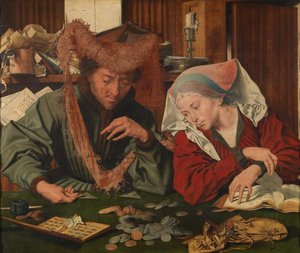
- A money changer and his wife, capturing the intersection of domestic life and commerce.
- The legal world, such as a lawyer in his office, reflecting the growing complexity of civic bureaucracy.
His masterpiece, Two Tax Gatherers, stands as a striking example of Northern Renaissance art. Through the use of oil on oak wood, he achieved a sense of depth and texture that brought his subjects to life. The painting serves as a vivid commentary on the corruption of tax officials, using the detailed depiction of clothing and surroundings to ground his satire in a recognizable reality. In these works, the heavy, old-fashioned garments of his characters add a layer of social critique, reminding the viewer of the era's shifting moral landscape.
Legacy and Artistic Influence
The stylistic development of Marinus van Reymerswaele shows the profound influence of the Antwerp painter Quentin Matsys. This connection helped shape his ability to blend elements of realism with a sharp, often caricatural sense of humor. His work is characterized by an attention to detail that allows the viewer to witness the minute textures of manuscripts, legal documents, and coins, all of which serve as symbols of the era's preoccupation with wealth and law.
While he worked extensively in Antwerp, his journey eventually led him back to the Northern Netherlands. After working in Antwerp until at least 1540, he moved to Goes, where his life reached its conclusion. Though many of his panels are known through attribution rather than signature, his impact on the genre scene remains undeniable. He left behind a visual legacy that continues to captivate, offering a profound glimpse into the mind of an artist grappling with faith, scholarship, and the ever-present shadows of human avarice.
Марінус Ван Реймерсвеле
1490 - 1546 , Нідерланди