

 Переглянути в інтер'єрі
 Надіслати
 Поділитися
 Деталі
 Посібник

 Завантажити
 Схожі предмети колекціонування
 Рентгенівське дослідження
 Слайд-шоу
 Статистика переглядів
Chocolate Grinder


 Читати далі
Придбайте цифрову копію високої роздільної здатності з покращеною якістю, що значно перевершує онлайн-перегляд.
Кожен файл ретельно підготовлений нашими фахівцями за допомогою сучасних інструментів та професійної ручної ретуші. Ми гарантуємо виняткову чіткість, точну передачу кольору та високу деталізацію кожного зображення.
Фінальний файл надсилається електронною поштою протягом 72 годин і оптимізований для негайного використання у професійних виданнях та друкованих матеріалах. Таку якість обирають провідні дизайнерські студії, видавництва та галереї.
Цифрове зображення
Завантажте файл високої роздільної здатності для особистого використання, друку та творчих проєктів. ( Перейти до друку Купити картину ручної роботи)
Що входить у кожне замовлення цифрових зображень
Експертна цифрова доставка з гарантією якості
Обираючи OriginalUniqueArt.com, ви отримуєте не просто зображення — ви отримуєте професійно вдосконалений цифровий витвір мистецтва, створений з надзвичайною точністю та підкріплений гарантією задоволення. Ось усе, що автоматично додається до вашого замовлення:

Швидка доставка на email
Ваш цифровий файл із зображенням високої роздільної здатності буде надісланий вам електронною поштою протягом 72 годин після оформлення замовлення — він буде готовий до негайного використання.

Цифровий файл із покращенням ШІ
Ваш витвір мистецтва професійно оптимізовано за допомогою передових інструментів штучного інтелекту та ручної корекції, що забезпечує максимальну деталізацію, чіткість і точність передачі кольорів.

Безкоштовне повторне завантаження назавжди
Випадково видалили або втратили файл? Не хвилюйтеся — ми надішлемо його вам повторно в будь-який час безкоштовно.

Без митних зборів — завжди
Насолоджуйтесь вашим витвором мистецтва миттєво без жодних мит, зборів або плати за доставку — цифрові завантаження завжди не оподатковуються.

Гарантія точності кольорів
Ми гарантуємо максимально точне відтворення оригінальних кольорів на вашому цифровому зображенні завдяки використанню професійних інструментів та систем управління кольором.

100-денна гарантія задоволення клієнта
Якщо ви не задоволені придбаним цифровим зображенням, ми внесемо правки або повернемо 100% вартості протягом 100 днів — без зайвих запитань.

Гарантія повернення 100% коштів
Незадоволені покупкою? Отримайте повне повернення коштів протягом 100 днів після отримання цифрового файлу — без зайвих запитань.

Знижки на оптові замовлення
Купуйте 3 зображення — заощаджуйте 10% — Купуйте 5 — заощаджуйте 15% — Купуйте 10+ — заощаджуйте 20%. Чудово підходить для творчих проєктів, галерей та агентств.
A Mechanical Dream: Marcel Duchamp’s *Chocolate Grinder* (1914)
Marcel Duchamp's *Chocolate Grinder*, created in 1914, is a fascinating and enigmatic work that exemplifies the artist’s burgeoning departure from traditional painting towards conceptual art. This isn’t a realistic depiction of an industrial machine; it’s a stylized, almost abstracted vision – a premonition of the mechanical age filtered through a surreal lens.Deconstructing the Industrial Form
The artwork presents a flattened perspective of a chocolate mill, reduced to its essential geometric components: cylinders and basket-like structures. Duchamp deliberately avoids realistic representation, instead opting for simplified forms and angular lines. The composition feels rigidly structured, emphasizing the mechanical nature of the subject matter. While seemingly depicting an object of production, it’s presented with a deliberate lack of detail – we aren't seeing *how* chocolate is made, but rather an *idea* of the process.Style and Technique: A Bridge Between Worlds
The style leans heavily towards both Surrealism and Constructivism. The geometric abstraction echoes the principles of Constructivism, with its emphasis on industrial forms and simplified shapes. However, the dreamlike quality and distortion of reality firmly place it within the emerging Surrealist movement. Duchamp employs a primarily linear technique, using straight lines to define the machine’s components, complemented by subtle shading to suggest volume without fully realizing it. The likely medium – oil or acrylic on canvas – contributes to the work's smooth, almost clinical surface.Historical Context: On the Cusp of Change
Created on the eve of World War I, *Chocolate Grinder* reflects a period of rapid industrialization and societal upheaval. Duchamp, along with other avant-garde artists, was questioning traditional artistic values and exploring new ways to represent the modern world. This work foreshadows his later rejection of “retinal art” – art meant solely for aesthetic pleasure – in favor of works that engaged the intellect. It’s a pivotal piece marking his transition away from purely visual concerns towards conceptual exploration.Symbolism and Interpretation
The chocolate grinder itself is symbolic, representing industrial production and the mechanization of everyday life. However, Duchamp doesn't present it as a celebration of progress. Instead, its abstracted form and dreamlike quality suggest a sense of alienation or detachment from the manufacturing process. The work invites contemplation on the relationship between humans and machines, and the impact of technology on society. It’s not simply *about* a chocolate grinder; it’s about what that machine represents in the modern world.Emotional Impact & Aesthetic Appeal
Despite its mechanical subject matter, *Chocolate Grinder* evokes a surprisingly whimsical feeling. The simplified forms and muted color palette create a sense of calm contemplation. It's an artwork that rewards close viewing, inviting viewers to decipher its hidden meanings and appreciate Duchamp’s innovative approach to representation. Its unique aesthetic – a blend of precision and abstraction – makes it a compelling addition to any collection or interior space.- For Art Lovers: A key example of Duchamp's early experimentation, showcasing his move towards conceptual art.
- For Collectors: A rare opportunity to own a piece that represents a turning point in 20th-century art history.
- For Interior Designers: Its geometric forms and muted palette make it versatile, complementing modern or minimalist interiors. The artwork’s intellectual depth adds a layer of sophistication to any space.
Запитання та відповіді
Чи є роботи, схожі на "Chocolate Grinder"?
Схожі твори мистецтва зібрані на сторінці Схожі твори для роботи «Chocolate Grinder» Марсель Дюшан.
Наскільки яскраво відбивають світло кольори у творі "Chocolate Grinder"?
Зафіксована яскравість для «Chocolate Grinder» Марсель Дюшан становить М'яка тінь.
Як можна використати «Chocolate Grinder» Марсель Дюшан в інтер'єрі дому?
«Chocolate Grinder» Марсель Дюшан рекомендується для Маніфест, ідеально — у Вітальня. Поєднання способу використання та простору допоможе визначити, де саме пасуватиме репродукція.
Біографія митця
Дух революціонера: Життя та мистецтво Марселя Дюшана
Марсель Дюшан, який народився під іменем Анрі-Робер-Марсель Дюшан у 1887 році в Блейнвіль-сюр-Мер, Нормандія, був не просто художником; він був філософським провокатором, що докорінно змінив хід розвитку сучасного мистецтва. Його ранні роки, хоча й здавалися звичайними — він виріс у родині, де цінували мистецьку експресію, а обидва його брати побудували успішні кар'єри митців — вже тоді приховували ознаки майбутнього іконоборства. Спочатку Дюшан проходив класичну підготовку, опановуючи традиційні техніки та експериментуючи з постімпресіоністськими стилями. Однак цей академічний фундамент став не самоціллю, а трампліном для переосмислення самої природи мистецтва, його мети та визначення. Він не бажав просто відтворювати світ; він прагнув кинути виклик тому, як ми його сприймаємо, і що саме створює художню цінність. Ця невпинна інтелектуальна допитливість стала визначальною рисою його плідної творчості.Від кубізму до дадаїзму: Відмова від умовностей
Мистецький шлях Дюшана позначений постійною еволюцією, свідомим позбавленням усталених норм. Його перше залучення до кубізму, що проявилося в таких роботах, як Портрет гравців у шахи (1911), продемонструвало інтерес до фрагментованих форм і множинних перспектив — відхід від традиційної репрезентації. Проте він швидко вийшов за межі суто естетичних турбот, усвідомивши, що простого перерозподілу візуальних елементів недостатньо для вирішення глибинних питань, що вирували в його душі. Жахи Першої світової війни підживили це невдоволення, змусивши Дюшана прийняти дадаїзм — рух, народжений із розчарування та відмови від логіки, розуму й традиційних художніх цінностей. Саме в межах дадаїзму Дюшан по-справжньому почав демонтувати загальноприйняті уявлення про мистецтво. Його не цікавило створення красивих об'єктів; він прагнув провокувати думку, кидати виклик припущенням і викривати довільність естетичного судження. Цей період став часом народження його найбільш радикальної інновації: «ready-made» (готового речі).Ready-mades та підрив основ мистецтва
Впровадження ready-mades — звичайних промислових об'єктів, обраних і представлених як мистецтво — стало найважливішим внеском Дюшана у XX століття. Це не були просто знайдені предмети; це були навмисні акти художнього підриву. Взявши повсякденну річ, таку як пісуар (Фонтан, 1917), підписавши його «R. Mutt» і подавши на мистецьку виставку, Дюшан кинув виклик самому визначенню художньої майстерності та авторства. Чи була це рука художника, що створила твір, чи це була ідея художника? Це питання стало центральним у його практиці та заклало фундамент для концептуалізму. Інші відомі ready-mades, як-от L.H.O.O.Q. (1919) — репродукція листівки з Мона Лізою, на якій з'явилися вуса та еспаньйолка — були грайливою, але гострою критикою історії мистецтва та встановлених культурних ікон. Ці роботи не призначалися для милування їхніми естетичними якостями; вони мали провокувати дискусії та змушувати глядачів переглянути свої упередження про те, що є мистецтвом. Дюшан вірив, що мистецтво має жити в розумі, а не лише в очах.Спадщина та безсмертний вплив
Вплив Марселя Дюшана на наступні покоління митців є безмірним. Він фундаментально змінив наше розуміння мистецтва, проклавши шлях таким напрямам, як концептуалізм, мінімалізм, поп-арт та багатьом іншим. Його акцент на ідеї художника — концепції, що стоїть за твором — над його естетичними якостями продовжує надихати митців і сьогодні.- Кубізм: ранні дослідження роздроблених форм та просторової репрезентації.
- Дадаїзм: відмова від логіки, розуму та традиційних художніх цінностей у відповідь на Першу світову війну.
- Концептуальне мистецтво: акцент на ідеї художнього твору, а не на його естетичних характеристиках.
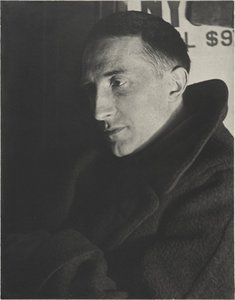
Марсель Дюшан
1887 - 1968 , Франція
Коротко про автора
- Artistic Movement Or Style:
- Кубізм
- Дадаїзм
- Концептуальне мистецтво
- Artists Or Movements Influenced By This Artist:
- Концептуальне мистецтво
- Поп арт
- Мінімалізм
- Date Of Birth: 28 липня 1887 р.
- Date Of Death: 2 жовтня 1968 р.
- Full Name: Marcel Duchamp
- Nationality: Французький
- Notable Artworks:
- Фонтан
- Л.Х.О.О.К.
- Велике скло
- Боîte-en-valise
- Place Of Birth: Блейнвіль-сюр-Мер, Франція