
 Переглянути в інтер'єрі
 Надіслати як листівку
 Поділитися
 Детальніше

 Завантажити
 Схожі експонати
 Рентгенівське дослідження
 Слайд-шоу
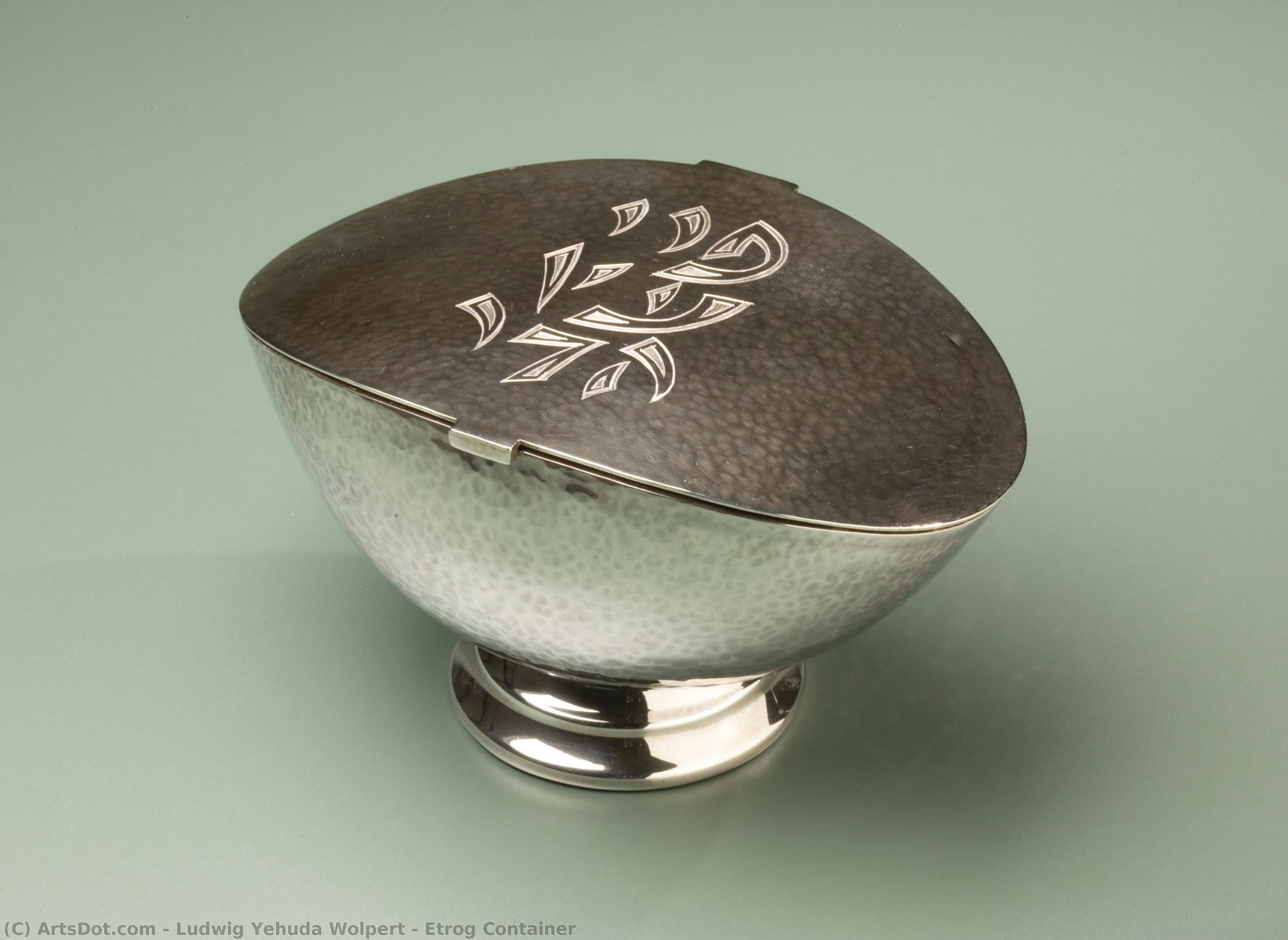
Etrog Container
 1960
1960 16.0 x 17.0 cm
 Derfner Judaica Museum + The Art Collection
 Читати далі
Придбайте цифрову копію високої роздільної здатності з покращеною якістю, що значно перевершує онлайн-перегляд.
Кожен файл ретельно підготовлений нашими фахівцями за допомогою сучасних інструментів та професійної ручної ретуші. Ми гарантуємо виняткову чіткість, точну передачу кольору та високу деталізацію кожного зображення.
Фінальний файл надсилається електронною поштою протягом 72 годин і оптимізований для негайного використання у професійних виданнях та друкованих матеріалах. Таку якість обирають провідні дизайнерські студії, видавництва та галереї.
Цифрове зображення
Завантажте файл високої роздільної здатності для особистого використання, друку та творчих проєктів. ( Замовити принт Замовити репродукцію ручної роботи)
Переваги кожного замовлення цифрових зображень
Експертна цифрова доставка з гарантією якості
Обираючи OriginalUniqueArt.com, ви отримуєте не просто зображення — ви отримуєте професійно вдосконалений цифровий витвір мистецтва, створений з надзвичайною точністю та підкріплений гарантією задоволення. Ось усе, що автоматично додається до вашого замовлення:

Швидка доставка на email
Ваш цифровий файл із зображенням високої роздільної здатності буде надісланий вам електронною поштою протягом 72 годин після оформлення замовлення — він буде готовий до негайного використання.

Цифровий файл із покращенням ШІ
Ваш витвір мистецтва професійно оптимізовано за допомогою передових інструментів штучного інтелекту та ручної корекції, що забезпечує максимальну деталізацію, чіткість і точність передачі кольорів.

Безкоштовне повторне завантаження назавжди
Випадково видалили або втратили файл? Не хвилюйтеся — ми надішлемо його вам повторно в будь-який час безкоштовно.

Без митних зборів — ніколи
Насолоджуйтесь вашим витвором мистецтва миттєво без жодних мит, зборів або плати за доставку — цифрові завантаження завжди не оподатковуються.

Гарантія точності кольорів
Ми гарантуємо максимально точне відтворення оригінальних кольорів на вашому цифровому зображенні завдяки використанню професійних інструментів та систем управління кольором.

Гарантія задоволення протягом 60 днів
Якщо ви не задоволені придбаним цифровим зображенням, ми відкоригуємо його або повернемо 100% вартості протягом 60 днів — без жодних запитань.

Гарантія повернення 100% коштів
Не задоволені покупкою? Отримайте повне повернення коштів протягом 60 днів після отримання цифрового файлу — без жодних запитань.

Знижки на оптові замовлення
Купуйте 3 зображення — заощаджуйте 10% — Купуйте 5 — заощаджуйте 15% — Купуйте 10+ — заощаджуйте 20%. Чудово підходить для творчих проєктів, галерей та агентств.
Біографія митця
Ludwig Yehuda Wolpert: The Architect of Modern Judaica
Ludwig Yehuda Wolpert, born in Berlin in 1900 and tragically passing away in 1981, stands as a pivotal figure in the evolution of Jewish ceremonial art. More than just a goldsmith, he was a visionary who dared to break from tradition and forge a distinctly modern aesthetic for Judaica – objects imbued with religious significance – transforming them into works of both beauty and profound symbolism. His journey, marked by displacement, artistic exploration, and a deep commitment to his craft, ultimately established him as the first artist widely recognized for designing Judaica in styles that were radically innovative for their time. Wolpert’s legacy resides not just in the exquisite objects he created but also in his pioneering spirit and his ability to bridge the gap between ancient rituals and contemporary design sensibilities.Early Life and Influences: A German Jewish Childhood
Ludwig Yehuda Wolpert's early life was shaped by both privilege and hardship. Born into a Lithuanian Jewish family of modest means in Hildesheim, Germany, he experienced the sting of antisemitism from an early age. This experience, coupled with a cleft lip that caused him considerable social isolation during his childhood, instilled within him a deep sense of identity and a desire to express himself through art. His artistic training began at the Frankfurt School of Art in 1916, where he initially focused on sculpture. However, it was his studies in goldsmithing from 1925-1928 that truly ignited his passion and would ultimately define his career. The Bauhaus movement, with its emphasis on geometric forms, functional design, and the integration of art and craft, exerted a profound influence on Wolpert’s work, shaping his approach to both form and content. The principles of simplification, clarity, and the rejection of superfluous ornamentation became cornerstones of his artistic philosophy.Breaking with Tradition: Modern Judaica Takes Shape
Following the rise of Nazism in 1933, Wolpert, along with his family, sought refuge in Palestine (then Mandatory British Palestine). He initially worked as a craftsman for Bernhard Friedländer, honing his skills and further developing his unique vision. It was during this period that he began to experiment with creating Judaica – ceremonial objects used in Jewish religious practices – but rejecting the ornate, heavily decorated styles prevalent at the time. Instead, Wolpert embraced clean lines, geometric shapes, and a minimalist aesthetic, drawing inspiration from the Bauhaus principles and incorporating Hebrew calligraphy into his designs. His 1939 exhibition at the New York World’s Fair showcased this groundbreaking approach, introducing modern Judaica to an international audience and establishing him as a leading innovator in the field. His work deliberately avoided traditional religious iconography, opting instead for abstract forms that conveyed spiritual meaning through their inherent beauty and balance.Key Works and Notable Designs
Wolpert’s impact is most vividly demonstrated through his iconic designs, including the “Honey Dish” (1960), a stunning silver ceremonial platter showcasing Bauhaus-inspired Judaica & geometric design – a rare piece of modern art that exemplifies his commitment to simplicity and elegance. The "Kiddush Cup" (1957) further solidifies this legacy, a masterpiece reflecting Bauhaus design and Jewish ritual, demonstrating polished realism meeting ceremonial art. His Passover Seder set with plates, dishes, and wine cup (1953), featuring stainless steel & glass, is another significant example of his ability to translate religious symbolism into contemporary materials and forms. These pieces, along with numerous other designs for Hanukkah lamps, Kiddush cups, and menorahs, represent a radical departure from traditional Judaica while retaining its spiritual essence.Legacy and Recognition
Ludwig Yehuda Wolpert’s contributions to the world of Jewish art are undeniable. He was recognized as the first artist to design Judaica in modern styles, paving the way for subsequent generations of artists who sought to reinterpret traditional rituals through a contemporary lens. His work has been exhibited extensively throughout his career, including retrospectives at the Jewish Museum of New York and Chicago’s Spertus Institute. He received numerous accolades, including an honorary doctorate from the Spertus Institute in 1976, recognizing his profound impact on Jewish culture and art. Wolpert's influence continues to resonate today, as his designs are still admired for their beauty, innovation, and enduring relevance. His work is preserved and celebrated at institutions like the Israel Museum in Jerusalem, ensuring that his pioneering spirit and artistic vision will continue to inspire for years to come.
ludwig yehuda wolpert
1900 - 1981

