

 Переглянути в інтер'єрі
 Надіслати як листівку
 Поділитися
 Деталі витвору
 Посібник

 Завантажити
 Схожі екземпляри
 Рентгенівське дослідження
 Слайд-шоу
 Статистика
Processional Cross
 Яєчна темпера на дерев'яній панелі
- Настінний декор
- Late Medieval Art
 1392
1392- — Пізнє Середньовіччя
 57.0 x 28.0 cm
 Художній інститут Чикаго
 Розгорнути текст
Гікле / Художній принт
Друк جيкле або на полотні музейної якості з оперативним виготовленням та різноманітними варіантами фінішної обробки. ( Замовити картину ручної роботи Перейти до цифрових зображень)




P118B ₴10

P118H ₴10

P118W ₴10

P438Z ₴10

P508JH ₴12

P508YH ₴12

P805H ₴10

P805Z ₴10

P919BZ ₴10

P919G ₴10

P919XJ ₴10

P959ZH ₴10

P968JZ ₴12

W106C ₴8

W218G ₴10

W218JH ₴8

W218Y ₴10

W307PJ ₴10

W316G ₴10

W316PJ ₴8

W316Y ₴10

W398PJ ₴8

W4111J ₴10

W500HY ₴15

W500JH ₴15

W692G ₴12

W849H ₴8

W940BG ₴15

W953PJ ₴8




Обирайте з наших стандартних розмірів, що відповідають оригінальним пропорціям твору мистецтва.

Введіть необхідну ширину та висоту, щоб принт ідеально підійшов до вашої рами або стіни. Принт можна лише обрізати, але не можна зробити більшим за оригінал, тому при зміні пропорцій частина зображення буде втрачена. Перед друком ми надсилаємо вам цифровий макет для затвердження. Зображення на цій сторінці не відображає реальну обрізку — її можна побачити лише на макеті.
Доставка по всьому світу () за 2 тижні замість стандартних 4/5 тижнів. (28 Жовтень)

Безкоштовна експрес-доставка по всьому світу

Високоякісне лляне полотно

Повне страхове покриття доставки

Гарантія повернення митних зборів

Гарантія точного відтворення кольорів

Політика повернення протягом 100 днів (лише у разі виявлення дефектів)

Гарантія повернення 100% коштів

Пропозиція на оптові замовлення
 Скляний варіант доступний лише для розмірів до 110 см

Processional Cross
Гікле / Художній принт
Розмір репродукції
-


Підсумкова вартість
₴ 3589
A Divine Radiance: The Spiritual Majesty of Lorenzo Monaco
In the quiet transition between the late Middle Ages and the dawn of the Renaissance, few works capture the ethereal tension of faith as poignantly as Lorenzo Monaco’s Processional Cross. Created in 1392, this exquisite tempera panel is far more than a mere religious artifact; it is a window into a world where the boundaries between the earthly and the divine were intentionally blurred through light and gold. As one gazes upon the central figure of Christ, the viewer is immediately enveloped by a shimmering, celestial atmosphere. The painting serves as a profound emblem of late medieval Italian devotion, acting as a bridge between the structured narrative traditions of Giotto and the burgeoning emotional complexity that would soon define the Quattrocento.
The composition is a masterclass in sacred geometry, where the verticality of the cross directs the soul upward. Monaco utilizes a sophisticated interplay of rectangles, triangles, and soft curves to guide the eye through a landscape of profound sorrow and divine hope. Below the crucified Christ, figures of mourning—including a woman draped in a rich, crimson robe—anchor the scene in human empathy, while an ascending angel offers a heavenly benediction from above. This careful arrangement ensures that the viewer does not merely observe the Crucifixion but participates in its liturgical rhythm, much like the faithful who would have once carried this very panel through the hallowed aisles of a cathedral during solemn processions.
The Alchemy of Gold and Tempera
To behold this masterpiece is to witness the pinnacle of fresco secco and gilding techniques. Monaco’s use of gold leaf is nothing short of transformative; it does not merely decorate the background but creates a luminous, infinite space that defies the flatness of the wooden panel. This heavy application of gold catches the light with every movement, simulating a divine presence that fluctuates between shadow and brilliance. The technique of tempera allows for an incredible precision in detail, seen in the delicate drapery folds and the meticulous rendering of facial expressions that convey a spectrum of grief and grace.
For the discerning collector or interior designer, the texture of this work offers unparalleled tactile richness. The layering of pigments over gold creates a sense of depth and sculptural weight, making the artwork feel alive within its frame. The interplay of light on the gilded surfaces provides a sophisticated focal point that can anchor a room with an air of historical grandeur and contemplative stillness. It is a piece that demands attention not through loud colors, but through a quiet, commanding elegance that speaks to the enduring power of classical craftsmanship.
A Legacy of Devotion and Design
Beyond its aesthetic brilliance, the Processional Cross carries a heavy symbolic weight. Every element—from the rocky outcrops of the stylized landscape to the symbolic presence of the angel—is a verse in a visual hymn of redemption. The cross itself stands as the ultimate symbol of sacrifice, yet the surrounding ornamentation and the radiant background suggest that death is not an end, but a transition into light. This duality makes the piece an incredibly versatile inspiration for those looking to infuse their spaces with themes of resilience, peace, and timelessness.
Owning a high-quality reproduction of such a significant work allows one to bring this piece of Florentine history into a modern context. Whether placed in a curated gallery setting or as a centerpiece in a thoughtfully designed study, the Processional Cross offers a sense of continuity with the masters of the past. It remains a testament to Lorenzo Monaco’s unique ability to marry the monastic discipline of his life as a Camaldolese monk with an unparalleled artistic vision, creating a work that continues to inspire awe and reverence centuries after its creation.
Питання та відповіді
Чи не захищений твір "Processional Cross" авторським правом?
Статус авторського права для «Processional Cross» роботи Лоренцо Монакко: цей твір є є суспільним надбанням — термін дії авторського права закінчився. Це визначає, чи можна вільно створювати репродукції зображення.
Яке історичне місце посідає «Processional Cross»?
Історично «Processional Cross» є твором у стилі Late Medieval Art, що належить до ширшої епохи — Пізнє Середньовіччя.
Чи можу я детальніше розглянути "Processional Cross"?
Рентгенівський зріз «Processional Cross» роботи Лоренцо Монакко представлений на сторінці Рентгенівське дослідження твору: це інтерактивне дослідження зображення крізь одинадцять оптичних шарів.
Біографія митця
Lorenzo Monaco, c.1370–1425 | Art UK
Lorenzo Monaco (c.1370–1425) stands as a singular figure in the artistic landscape of late Gothic Florence—a beacon illuminating the twilight years before the full blaze of the Renaissance. Despite the scarcity of biographical data, his oeuvre speaks volumes about an artist deeply rooted in tradition yet subtly attuned to emerging stylistic currents, securing him a place among the most revered masters of his era. His journey began in Siena, where he was born around 1370—a birthplace that would later become synonymous with artistic excellence and innovation. Precise details regarding his upbringing remain elusive, but scholarly consensus points to Florence as his formative environment, where he absorbed the lessons imparted by luminaries like Giotto, Spinello Aretino, and Agnolo Gaddi – artists who established a bedrock of narrative clarity and emotional resonance that would define Monaco’s artistic trajectory.Early Training and Influences: The Gothic Legacy
Lorenzo Monaco's formative years were spent honing his craft in the *bottega* of Agnolo Gaddi—a workshop renowned for its patronage of Giottoesque painting and its commitment to upholding the stylistic conventions of the International Gothic style. This exposure undoubtedly instilled in him a profound appreciation for meticulous detail, elegant linearism, and restrained chromatic palettes—characteristics that would permeate his early works. The influence of Giotto is palpable in Monaco’s approach to portraying human figures, particularly in his depiction of drapery folds and facial expressions—a stylistic hallmark that distinguishes him from many of his contemporaries. Furthermore, he absorbed insights from Ghiberti and Starnina, artists who championed sophisticated compositional techniques and a heightened awareness of visual space—elements that would contribute to the distinctive aesthetic of his artistic output. The International Gothic style itself—characterized by shimmering gold leaf, elongated figures draped in flowing garments, and an ethereal luminescence—provided Monaco with a framework for exploring themes of piety and transcendence.The Camaldolese Order and Artistic Transformation
A pivotal moment in Lorenzo Monaco’s life occurred in 1390 when he embraced monastic vows at Santa Maria degli Angeli in Florence—joining the Camaldolese order, a movement dedicated to contemplative prayer and scholarly pursuits. This decision profoundly shaped his artistic identity, imbuing it with an introspective quality and directing him toward subjects of spiritual significance. The monastery’s scriptorium became his studio, where he diligently illuminated manuscripts—a practice that demanded precision, patience, and a mastery of color and texture—further refining his technical skills and deepening his understanding of visual symbolism. It was during this period that Monaco adopted the name Lorenzo Monaco—a moniker signifying “Lawrence the Monk”—reflecting his unwavering devotion to God and his commitment to upholding monastic traditions. This dedication would become an enduring hallmark of his artistic vision, distinguishing him from many artists of his time who prioritized worldly pursuits over spiritual contemplation.Stylistic Evolution: From Gothic Grace to Renaissance Light
As Monaco’s artistic career progressed, he subtly adapted the stylistic conventions of the International Gothic style—embracing elongated figures draped in sinuous garments and favoring sharp edges and brilliant colors—particularly gold leaf and lapis lazuli—to convey emotion and spiritual depth. However, unlike many artists of his era who wholeheartedly embraced Renaissance humanism—characterized by anatomical accuracy and perspectival illusion—Monaco remained steadfastly committed to the expressive power of Gothic tradition. His later works demonstrate a remarkable sensitivity to light—a technique that anticipates the innovations championed by Masaccio and Filippo Brunelleschi—creating an ethereal luminescence that elevates his paintings beyond mere representation, transforming them into vehicles for conveying profound theological ideas. The *Pietà*, housed in Florence’s Galleria dell'Accademia, exemplifies this stylistic evolution—capturing the sorrowful dignity of Mary mourning Jesus with a nervous energy in its lines and a palpable sense of emotional tension. Similarly, *The Coronation of the Virgin*—now gracing the Uffizi Gallery—displays Monaco’s masterful command of color and composition—creating a vibrant tapestry of saints rendered with sinuous forms and dazzling hues.Legacy: A Singular Voice Amidst Changing Times
Lorenzo Monaco's artistic legacy endures as a testament to his singular vision—a synthesis of Gothic elegance and nascent Renaissance sensibilities that distinguishes him from many of his contemporaries. Giorgio Vasari, writing in *Lives of the Artists*, acknowledged Monaco’s talent while noting his untimely death around 1425—a loss that deprived Florence of one of its most distinguished painters. Despite the brevity of his life, Monaco left an indelible mark on art history—establishing himself as the final significant exponent of Giotto's style and paving the way for subsequent generations of artists who embraced Renaissance humanism. His paintings continue to inspire admiration for their refined technique, spiritual depth, and evocative beauty—serving as enduring reminders of a pivotal moment in Florentine artistic culture—a time when tradition and innovation converged to produce masterpieces that resonate with viewers centuries later.
Лоренцо Монакко
1370 - 1425 , Італія
Короткі факти
- Artistic Movement Or Style: Пізня готична / Ранній ренесанс
- Artists Or Movements Influenced By This Artist:
- Фра Анжеліко
- Мазаччо
- Artists Who Influenced This Artist:
- Джото
- Спіньоло Аретіно
- Агноло Гадді
- Date Of Birth: Сiena, Італія (бл. 1370)
- Date Of Death: Італія (бл. 1425)
- Full Name: Lorenzo Monaco
- Nationality: Італійський
- Notable Artworks:
- П'єта
- Коронація Діви Марії
- Поклоніння Magi
- Place Of Birth: Сiena
Пов'язані статті
Illuminating History: A Comprehensive Exploration of Tempera Painting Techniques & Artistic Legacy
Explore the rich history & techniques of tempera painting! Discover Renaissance masters like Botticelli & Fra Angelico, conservation insights, and the enduring legacy of this captivating art form.
Late Gothic Art: The Divine Transition from Medieval Symbolism to Renaissance Naturalism
Explore the profound transition of Late Gothic art from medieval symbolism to Renaissance naturalism. Discover the elegance of International Gothic, the legacy of Master Theodoric, and the evolution of European courtly masterpieces through an expert art-historical lens.
High Medieval Art: 10 Masterpieces That Shaped an Era | OriginalUniqueArt
Journey through High Medieval Art! Explore 10 iconic masterpieces – from Giotto's frescoes to stunning Gothic cathedrals. Discover the stories behind these timeless paintings, sculptures & illuminated manuscripts. Find museum-quality art reproductions at OriginalUniqueArt.com.
Illuminating Surfaces: A Comprehensive Exploration of Tempera on Panel Painting Techniques & Historical Significance
Explore the rich history & techniques of tempera painting! Discover Renaissance masters like Botticelli & Fra Angelico, conservation insights, and the enduring legacy of this captivating art form. Learn more now!
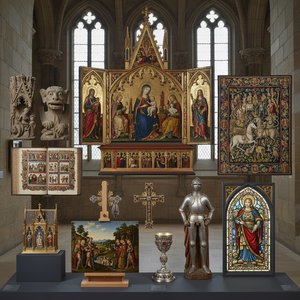
Late Medieval Masterpieces: 10 Artworks That Defined an Era | OriginalUniqueArt
Journey through 10 defining Late Medieval masterpieces – from Giotto's frescoes to Jan van Eyck’s realism. Explore the stories, techniques & vibrant colors of Gothic art. Find museum-quality reproductions and elevate your home decor with OriginalUniqueArt.com! Discover all masterpieces on OriginalUniqueArt.com


