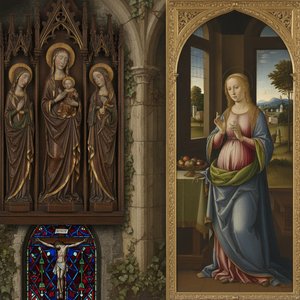
Nativity
Oil On Panel
Early Renaissance
1414
Renaissance
32.0 x 53.0 cm
Галерея Уффіці
Олійная репродукція ручної роботи
Написана вручну олією на полотні у вашому розмірі та рамі, виготовлена на замовлення нашими художниками.
P118B $10
P118H $10
P118W $10
P438Z $10
P508JH $12
P508YH $12
P805H $10
P805Z $10
P919BZ $10
P919G $10
P919XJ $10
P959ZH $10
P968JZ $12
W106C $8
W218G $10
W218JH $8
W218Y $10
W307PJ $10
W316G $10
W316PJ $8
W316Y $10
W398PJ $8
W4111J $10
W500HY $15
W500JH $15
W692G $12
W849H $8
W940BG $15
W953PJ $8
Обирайте з наших стандартних розмірів, що відповідають оригінальним пропорціям твору мистецтва.
Ви можете вказати власні розміри, щоб репродукція підійшла до конкретної рами або інтер'єру. Якщо вибраний вами розмір не відповідає пропорціям оригіналу, ми або обріжемо полотно, або доповнимо картину додатковими елементами, промальованими вручну. Цифровий макет буде надіслано вам на затвердження перед початком виробництва.
Зверніть увагу, що попередній перегляд на екрані не відображає фактичне обрізання або розширення зображення. Тільки макет точно покаже остаточну композицію.
Хоча ми можемо виготовити виріб у нестандартному розмірі, для збереження оригінальних пропорцій рекомендуємо обирати варіанти зі встановленого списку.
Після оформлення замовлення команда OriginalUniqueArt.com зв'яжеться з клієнтом електронною поштою для отримання інструкцій та надасть попередній макет
Доставка по всьому світу () за 3–4 тижні замість стандартних 5 тижнів. (22 Липень). Без жодних компромісів у якості.
Безкоштовна експрес-доставка по всьому світу
Високоякісне лляне полотно
Повне страхове покриття доставки
Гарантія відшкодування митних зборів
Гарантія точного відтворення кольорів
Політика повернення протягом 60 днів (лише у разі виявлення дефектів)
Гарантія повернення 100% коштів
Знижка на багатоелементні замовлення
Nativity
Матеріал репродукції
Розмір репродукції
-
Підсумкова ціна
-
Опис твору
Lorenzo Monaco’s ‘The Nativity’: A Synthesis of Gothic Tradition and Renaissance Spirituality
Lorenzo Monaco (c. 1370-1425), a Florentine monk whose artistic vision stands as a pivotal bridge between the solemn grandeur of the Trecento and the burgeoning optimism of the Quattrocento, remains an artist shrouded in intriguing biographical obscurity. Yet, his oeuvre speaks volumes about his profound engagement with faith and his masterful assimilation of stylistic influences—a testament to the dynamism of Renaissance art’s formative years.
Monaco's artistic journey began in Florence, where he honed his skills under luminaries like Giotto, Spinello Aretino, and Agnolo Gaddi – masters who established a bedrock of narrative clarity and emotional resonance. These influences are palpable in Monaco’s early works, particularly tempera panels depicting biblical scenes, demonstrating a commitment to conveying spiritual truths with meticulous detail and expressive color palettes.
A Gothic Echoes Renaissance Innovation
However, Monaco's true breakthrough arrived with his embrace of monastic life at Santa Maria degli Angeli in 1390. This contemplative existence instilled within him an ethos that permeated his artistic endeavors—a characteristic marked by introspection and a subtle shift toward the humanist ideals gaining traction across Europe. Unlike the stylized figures of Gothic art, Monaco’s depictions prioritize naturalism, albeit imbued with symbolic significance.
Detailed Technique and Material Considerations
The Nativity itself exemplifies Monaco's distinctive approach. Executed in oil paint on panel around 1405, it showcases a remarkable command of technique—particularly the layering of glazes to achieve luminous color effects and create depth. The artist’s meticulous attention to detail extends beyond mere representation; he incorporates gold leaf extensively, reflecting the prestige associated with religious iconography and enhancing the overall visual splendor.
Symbolism and Narrative Resonance
Beyond its technical prowess, ‘The Nativity’ resonates deeply with theological themes. Set against a rocky landscape reminiscent of Umbrian panoramas—a stylistic choice mirroring the artistic explorations of Giovanni Battista della Porta—the scene depicts Mary kneeling in prayer before Joseph, cradling the infant Jesus within a manger adorned with symbolic representations of Paradise and humility. The inclusion of two birds – one positioned prominently at the upper left corner and another nestled near the lower right – adds layers of meaning, referencing Old Testament prophecies concerning divine providence and redemption.
A Legacy Enduring Through Reproduction
The Staatliche Museen Gemäldegalerie Alte Meister in Berlin houses a stunning replica of Monaco’s masterpiece—a testament to its enduring appeal. Its serene composition, masterful use of color, and profound spiritual contemplation continue to inspire artists and collectors alike. OriginalUniqueArt offers exceptional reproductions that allow you to experience the beauty and artistry of Lorenzo Monaco's ‘The Nativity’ firsthand.
Біографія митця
Lorenzo Monaco, c.1370–1425 | Art UK
Lorenzo Monaco (c.1370–1425) stands as a singular figure in the artistic landscape of late Gothic Florence—a beacon illuminating the twilight years before the full blaze of the Renaissance. Despite the scarcity of biographical data, his oeuvre speaks volumes about an artist deeply rooted in tradition yet subtly attuned to emerging stylistic currents, securing him a place among the most revered masters of his era. His journey began in Siena, where he was born around 1370—a birthplace that would later become synonymous with artistic excellence and innovation. Precise details regarding his upbringing remain elusive, but scholarly consensus points to Florence as his formative environment, where he absorbed the lessons imparted by luminaries like Giotto, Spinello Aretino, and Agnolo Gaddi – artists who established a bedrock of narrative clarity and emotional resonance that would define Monaco’s artistic trajectory.Early Training and Influences: The Gothic Legacy
Lorenzo Monaco's formative years were spent honing his craft in the *bottega* of Agnolo Gaddi—a workshop renowned for its patronage of Giottoesque painting and its commitment to upholding the stylistic conventions of the International Gothic style. This exposure undoubtedly instilled in him a profound appreciation for meticulous detail, elegant linearism, and restrained chromatic palettes—characteristics that would permeate his early works. The influence of Giotto is palpable in Monaco’s approach to portraying human figures, particularly in his depiction of drapery folds and facial expressions—a stylistic hallmark that distinguishes him from many of his contemporaries. Furthermore, he absorbed insights from Ghiberti and Starnina, artists who championed sophisticated compositional techniques and a heightened awareness of visual space—elements that would contribute to the distinctive aesthetic of his artistic output. The International Gothic style itself—characterized by shimmering gold leaf, elongated figures draped in flowing garments, and an ethereal luminescence—provided Monaco with a framework for exploring themes of piety and transcendence.The Camaldolese Order and Artistic Transformation
A pivotal moment in Lorenzo Monaco’s life occurred in 1390 when he embraced monastic vows at Santa Maria degli Angeli in Florence—joining the Camaldolese order, a movement dedicated to contemplative prayer and scholarly pursuits. This decision profoundly shaped his artistic identity, imbuing it with an introspective quality and directing him toward subjects of spiritual significance. The monastery’s scriptorium became his studio, where he diligently illuminated manuscripts—a practice that demanded precision, patience, and a mastery of color and texture—further refining his technical skills and deepening his understanding of visual symbolism. It was during this period that Monaco adopted the name Lorenzo Monaco—a moniker signifying “Lawrence the Monk”—reflecting his unwavering devotion to God and his commitment to upholding monastic traditions. This dedication would become an enduring hallmark of his artistic vision, distinguishing him from many artists of his time who prioritized worldly pursuits over spiritual contemplation.Stylistic Evolution: From Gothic Grace to Renaissance Light
As Monaco’s artistic career progressed, he subtly adapted the stylistic conventions of the International Gothic style—embracing elongated figures draped in sinuous garments and favoring sharp edges and brilliant colors—particularly gold leaf and lapis lazuli—to convey emotion and spiritual depth. However, unlike many artists of his era who wholeheartedly embraced Renaissance humanism—characterized by anatomical accuracy and perspectival illusion—Monaco remained steadfastly committed to the expressive power of Gothic tradition. His later works demonstrate a remarkable sensitivity to light—a technique that anticipates the innovations championed by Masaccio and Filippo Brunelleschi—creating an ethereal luminescence that elevates his paintings beyond mere representation, transforming them into vehicles for conveying profound theological ideas. The *Pietà*, housed in Florence’s Galleria dell'Accademia, exemplifies this stylistic evolution—capturing the sorrowful dignity of Mary mourning Jesus with a nervous energy in its lines and a palpable sense of emotional tension. Similarly, *The Coronation of the Virgin*—now gracing the Uffizi Gallery—displays Monaco’s masterful command of color and composition—creating a vibrant tapestry of saints rendered with sinuous forms and dazzling hues.Legacy: A Singular Voice Amidst Changing Times
Lorenzo Monaco's artistic legacy endures as a testament to his singular vision—a synthesis of Gothic elegance and nascent Renaissance sensibilities that distinguishes him from many of his contemporaries. Giorgio Vasari, writing in *Lives of the Artists*, acknowledged Monaco’s talent while noting his untimely death around 1425—a loss that deprived Florence of one of its most distinguished painters. Despite the brevity of his life, Monaco left an indelible mark on art history—establishing himself as the final significant exponent of Giotto's style and paving the way for subsequent generations of artists who embraced Renaissance humanism. His paintings continue to inspire admiration for their refined technique, spiritual depth, and evocative beauty—serving as enduring reminders of a pivotal moment in Florentine artistic culture—a time when tradition and innovation converged to produce masterpieces that resonate with viewers centuries later.Лоренцо Монакко
1370 - 1425 , Італія
Короткі факти
- Artistic Movement Or Style: Пізня готична / Ранній ренесанс
- Artists Or Movements Influenced By This Artist:
- Фра Анжеліко
- Мазаччо
- Artists Who Influenced This Artist:
- Джото
- Спіньоло Аретіно
- Агноло Гадді
- Date Of Birth: Сiena, Італія (бл. 1370)
- Date Of Death: Італія (бл. 1425)
- Full Name: Lorenzo Monaco
- Nationality: Італійський
- Notable Artworks:
- П'єта
- Коронація Діви Марії
- Поклоніння Magi
- Place Of Birth: Сiena

Скляний варіант доступний лише для розмірів до 110 см