

 Переглянути в інтер'єрі
 Надіслати
 Поділитися
 Деталі
 Посібник

 Завантажити
 Схожі предмети колекціонування
 Рентгенівське дослідження
 Слайд-шоу
 Статистика переглядів
Initiation, Liberia
 Acrylic On Canvas
- WallArt
- Harlem Renaissance
 1983
1983 89.0 x 59.0 cm
 Смитсонівський музей американського мистецтва
 Читати далі
Мистецький твір, представлений на цій сторінці, захищений законом про авторське право, що унеможливлює легальне створення або продаж його ідентичної репродукції. Цей захист забезпечується відповідно до міжнародних угод, таких як Бернська конвенція та національним законодавством, зокрема положеннями, що викладені в Законодавство США про авторське право — Розділ 17. Всі права захищені. Будь-яке використання без дозволу заборонено.
Цей метод повністю відповідає нормам авторського права, оскільки він не передбачає копіювання чи дублювання захищеного твору мистецтва. Натомість це творче переосмислення — створення нового малюнка під впливом оригіналу, який не є його точним відтворенням.
Гікле / Художній принт
Музейна якість друку جيкле або на полотні з оперативним виготовленням та різноманітними варіантами фінішної обробки. ( Купити картину ручної роботи Перейти до цифрових зображень)




P118B ₴10

P118H ₴10

P118W ₴10

P438Z ₴10

P508JH ₴12

P508YH ₴12

P805H ₴10

P805Z ₴10

P919BZ ₴10

P919G ₴10

P919XJ ₴10

P959ZH ₴10

P968JZ ₴12

W106C ₴8

W218G ₴10

W218JH ₴8

W218Y ₴10

W307PJ ₴10

W316G ₴10

W316PJ ₴8

W316Y ₴10

W398PJ ₴8

W4111J ₴10

W500HY ₴15

W500JH ₴15

W692G ₴12

W849H ₴8

W940BG ₴15

W953PJ ₴8




Обирайте з наших стандартних розмірів, що відповідають оригінальним пропорціям твору мистецтва.

Введіть необхідну ширину та висоту, щоб принт ідеально підійшов до вашої рами або стіни. Принт можна лише обрізати, але не можна зробити більшим за оригінал, тому при зміні пропорцій частина зображення буде втрачена. Перед друком ми надсилаємо вам цифровий макет для затвердження. Зображення на цій сторінці не відображає реальну обрізку — її можна побачити лише на макеті.
Доставка по всьому світу () за 2 тижні замість стандартних 4/5 тижнів. (22 Жовтень)

Безкоштовна експрес-доставка по всьому світу

Високоякісне лляне полотно

Повне страхове покриття доставки

Гарантія повернення митних зборів

Гарантія точного відтворення кольорів

Політика повернення протягом 100 днів (лише у разі виявлення дефектів)

Гарантія повернення 100% коштів

Знижка на оптові замовлення
 Скляний варіант доступний лише для розмірів до 110 см

Initiation, Liberia
Гікле / Художній принт
Розмір репродукції
-


Загальна вартість
₴ 3589
A Vision of Ritual and Resilience: Exploring “Initiation, Liberia”
Lois Mailou Jones’s 1983 painting, "Initiation, Liberia," is more than a depiction of a single event; it's a vibrant tapestry woven from African heritage, American identity, and the profound symbolism of initiation rituals. The work immediately captivates with its bold color palette – a riot of blues, reds, yellows, greens, and oranges—a deliberate homage to the rich hues found in West Africa, particularly Liberia’s landscape and culture. Yet, within this exuberant vibrancy lies a quiet intensity, centered around a young woman whose veiled eyes hold both vulnerability and unwavering strength.
At first glance, the painting presents a seemingly simple portrait. However, closer inspection reveals layers of meaning deeply rooted in the Sande society initiation ceremony practiced by women in Liberia. The white cloth draped across her face isn’t merely a covering; it represents the temporary severance from the outside world, a symbolic passage into womanhood and leadership. The receding profiles at the left of her head suggest continuity – a lineage of women who have undergone this transformative ritual before her, connecting her to generations past.
The Artist's Context: Mailou Jones and the Harlem Renaissance
To fully appreciate “Initiation, Liberia,” it’s crucial to understand Lois Mailou Jones’s artistic journey. Born in Boston in 1905, she was deeply influenced by her parents—a lawyer and a cosmetologist—who instilled in her a love for creativity and an appreciation for diverse cultural traditions. Her early years on Martha's Vineyard exposed her to the vibrant art scene of New England, fostering connections with influential figures like Meta Warrick Fuller and Dorothy West. Jones’s work is inextricably linked to the Harlem Renaissance, a period of immense artistic flourishing in the 1920s and 30s. She embraced this movement’s spirit of celebrating African American identity and heritage while simultaneously drawing inspiration from her own experiences as an artist navigating racial prejudice.
Jones's travels throughout Africa and the Caribbean profoundly shaped her style, leading her to incorporate traditional African motifs – particularly mask imagery – into her paintings. She meticulously studied these masks, not merely copying their forms but understanding their symbolic significance within the context of initiation rites and spiritual beliefs. “Initiation, Liberia” is a testament to this deep engagement with African culture, reflecting Jones’s desire to honor and preserve its rich artistic traditions.
Technique and Composition: A Dance of Color and Form
Jones employed a dynamic, expressive technique characterized by bold brushstrokes and layered application of paint. The composition is carefully balanced, drawing the viewer's eye directly to the central figure while simultaneously engaging with the surrounding background. The use of color isn’t arbitrary; it’s deliberately chosen to evoke specific emotions and associations. The vibrant hues create a sense of energy and vitality, mirroring the dynamism of the initiation ritual itself. Note the subtle gradations in tone – the way she builds up layers of paint to create depth and texture—a testament to her mastery of color theory.
The painting’s surface is rich with visual detail, from the intricate patterns in the background to the delicate rendering of the woman's braided hair. Jones skillfully used contrasting textures – smooth areas of color juxtaposed against rougher brushstrokes – to create a sense of movement and dynamism. The overall effect is one of both immediacy and timelessness, capturing a fleeting moment while simultaneously conveying a profound sense of cultural significance.
A Legacy of Representation: Symbolism and Emotional Resonance
“Initiation, Liberia” transcends its subject matter to become a powerful statement about female empowerment, cultural heritage, and the enduring strength of African traditions. The veiled eyes of the young woman invite contemplation – are they filled with fear, anticipation, or perhaps a quiet determination? The painting serves as a reminder of the vital role women have played in shaping societies throughout history, often operating behind the scenes while upholding ancient rituals and customs. It’s a work that continues to resonate today, prompting viewers to reflect on themes of identity, belonging, and the importance of preserving cultural memory.
Запитання та відповіді
З яких матеріалів створено "Initiation, Liberia" та в якому стилі?
«Initiation, Liberia» Лois Mailou Jones поєднує в собі техніку Acrylic On Canvas зі стилем Harlem Renaissance. Техніка та напрям описують спосіб створення та стилістику твору.
Для якої кімнати рекомендується «Initiation, Liberia» Лois Mailou Jones, враховуючи її кольорову гаму?
Завдяки своїй палітрі Earthy, роботу «Initiation, Liberia» Лois Mailou Jones рекомендується розміщувати в Living Room. Саме кольори є однією з причин такої поради.
Який розмір друку «Initiation, Liberia» Лois Mailou Jones підійде для рекомендованої кімнати?
Для Living Room рекомендується друк «Initiation, Liberia» у розмірі Medium.
Біографія митця
A Life Immersed in Color and Culture
Lois Mailou Jones, a name synonymous with groundbreaking artistry and unwavering dedication to African American representation, was born in Boston, Massachusetts, on November 3, 1905. From her earliest years, she was nurtured in an environment that valued creativity; her parents, Thomas Vreeland Jones, a lawyer, and Carolyn Adams Jones, a cosmetologist, encouraged her innate talent for drawing and painting, particularly with the fluid grace of watercolors. Summers spent on Martha's Vineyard proved formative, introducing young Lois to a constellation of influential figures – sculptor Meta Warrick Fuller, composer Harry T. Burleigh, and novelist Dorothy West – who would subtly shape her artistic sensibilities. This early exposure instilled in her not only an appreciation for art but also a sense of cultural pride and the importance of mentorship, values she would carry throughout her life. Her formal education began at the High School of Practical Arts in Boston (1919-1923), followed by night classes at the Boston Museum of Fine Arts, secured through a hard-earned scholarship. A pivotal apprenticeship with costume designer Grace Ripley further broadened her artistic horizons, sparking an early fascination with African masks and their potential for symbolic expression. Even as a teenager, Jones demonstrated remarkable ambition, holding her first solo exhibition on Martha’s Vineyard at the age of seventeen. She continued to hone her skills at the School of the Museum of Fine Arts in Boston (1923-1927), consistently winning the Susan Minot Lane Scholarship, and supplemented her studies with courses at the Boston Normal Art School, culminating in a graduate degree in design from the Design Art School of Boston in 1928.From Textile Design to Artistic Independence
Jones’s initial professional path led her into the world of textile design, working for both F. A. Foster Company in Boston and Schumacher Company in New York City. However, a transformative summer at Harvard University in 1928 ignited a deeper desire – to fully dedicate herself to painting. This decision coincided with the burgeoning Harlem Renaissance, an intellectual and artistic movement that profoundly impacted her work. The influence of artist Aaron Douglas became particularly significant; his stylized depictions of African American life and incorporation of African motifs resonated deeply with Jones’s own emerging aesthetic vision. Her seminal work, The Ascent of Ethiopia, stands as a testament to this period, reflecting both Douglas's stylistic influence and her growing commitment to celebrating African heritage. She bravely confronted societal prejudices that attempted to limit opportunities for Black artists during her time, demonstrating resilience and determination. Her marriage to Haitian graphic designer Louis Vergniaud Pierre-Noël in 1953 further enriched her artistic vocabulary, introducing the bold patterns and luminous hues characteristic of Haitian art into her compositions. From 1928 she joined the faculty of Howard University in Washington, D.C., under the guidance of James Vernon Herring, where she would remain as Professor of Design and Watercolor Painting until her retirement in 1977. At Howard, Jones fostered a vibrant artistic community, nurturing young talent and advocating for inclusivity within the art world. Her unwavering belief in the transformative power of art fueled her dedication to educating future generations.A Pioneer’s Artistic Style
Jones's artistic style evolved over time, reflecting her extensive travels and encounters with diverse cultures. Initially influenced by Impressionism, she gradually incorporated Cubist elements and abstraction into her paintings, creating compositions that were both visually striking and emotionally resonant. Her palette was characterized by vibrant colors—particularly reds, yellows, and blues—which she skillfully blended to convey mood and atmosphere. She frequently employed bold patterns and textures, drawing inspiration from African textiles and Haitian art. Recurring motifs included stylized figures of Black women, symbolizing strength, resilience, and dignity. These images were often rendered in a luminous style that captured the essence of movement and vitality. Her meticulous attention to detail—particularly in capturing the nuances of light and shadow—demonstrated her mastery of technique.Major Achievements and Recognition
Lois Mailou Jones achieved considerable acclaim throughout her career as an artist and educator. She was awarded numerous grants and fellowships, enabling her to pursue her artistic research and expand her creative horizons. Her paintings were exhibited in prestigious museums across the United States and internationally, cementing her place among the most important figures of American art history. Notably, she received the MacArthur Fellowship in 1978, recognizing her contributions to visual arts and her unwavering commitment to fostering creativity within underserved communities. Her work continues to inspire artists and scholars alike, serving as a powerful reminder of the importance of artistic expression and cultural heritage.Legacy and Enduring Influence
Lois Mailou Jones’s legacy extends far beyond her individual artworks. She championed the cause of Black artists and educators, advocating for greater access to resources and opportunities within the art world. Her unwavering belief in the transformative power of art—and her dedication to nurturing young talent—left an indelible mark on Howard University and countless aspiring artists. Her paintings remain a testament to her artistic vision and her profound understanding of human experience. She bravely challenged societal prejudices that attempted to limit opportunities for Black artists during her time, demonstrating resilience and determination. Lois Mailou Jones passed away in Washington, D.C., on June 9, 1998, leaving behind a rich artistic legacy that continues to inspire and challenge audiences today. Her paintings are not merely representations of the world; they are vibrant celebrations of life, culture, and the enduring power of the human spirit.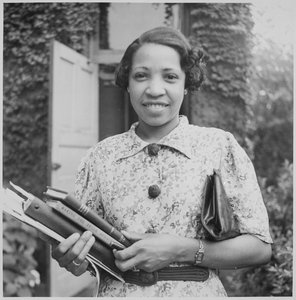
Лois Mailou Jones
1905 - 1998 , США
Довідкова інформація
- Artistic Movement Or Style: Імпресіонізм; Харемський ренесанс
- Artists Or Movements Influenced By This Artist: ['Аарон Доглас']
- Artists Who Influenced This Artist:
- Декан художніх наук
- Мета Варрік Фуллер
- Date Of Birth: 3 листопада 1905 р.
- Date Of Death: 9 червня 1998 р.
- Full Name: Lois Mailou Jones
- Nationality: Американка
- Notable Artworks:
- Молода француженка
- Фетиші
- Ініціація, Ліберія
- Підйом Ефіопії
- Place Of Birth: Бостон, США
Схожі статті

Grant Wood & American Regionalism: Identity, Myth & the Rural Landscape
Explore the world of Grant Wood & American Regionalism with OriginalUniqueArt. Discover the symbolism behind 'American Gothic', recurring themes, and the movement's lasting impact on art history. High-quality reproductions available.

Топ-10 шедеврів американського реалізму: мистецтво правдивого відображення життя | OriginalUniqueArt
Відкрийте для себе 10 шедеврів американського реалізму! Дослідіть історії Ендрю Уайєта, Хопера та інших видатних художників. Купіть репродукції картин преміум-якості для вашого дому на OriginalUniqueArt.com.
William H. Johnson: A Life Painted in Bold Strokes – Race, Identity & Modernism
Explore the powerful life & art of William H. Johnson – a pivotal American painter who captured African American experiences with bold expressionism and folk art style. Discover his legacy at OriginalUniqueArt.

Jacob Lawrence: Narratives of Struggle, Resilience & Modernist Innovation
Explore the powerful narratives of Jacob Lawrence, a pivotal African American artist of the Harlem Renaissance. Discover his iconic 'Migration Series,' dynamic cubism style, and lasting impact on American art history.

Henry Ossawa Tanner: Pioneering African American Representation in 19th-Century Art
Explore the life and groundbreaking work of Henry Ossawa Tanner, a pioneering African American artist who achieved international acclaim with his deeply spiritual and realistic paintings. Discover his legacy at OriginalUniqueArt.