Переглянути в інтер'єрі
 Надіслати
 Поділитися
 Деталі
 Посібник

 Завантажити
 Схожі предмети колекціонування
 Рентгенівське дослідження
 Слайд-шоу
 Статистика переглядів
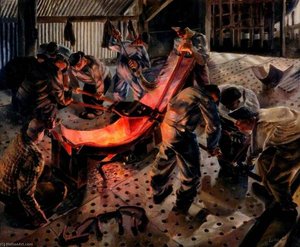
Ground Operational Exercise
 1943
1943 51.0 x 71.0 cm
 Читати далі
Гікле / Художній принт
Музейна якість друку جيкле або на полотні з оперативним виготовленням та різноманітними варіантами фінішної обробки. ( Купити картину ручної роботи Перейти до цифрових зображень)




































Обирайте з наших стандартних розмірів, що відповідають оригінальним пропорціям твору мистецтва.

Ви можете вказати власні розміри, щоб репродукція ідеально підійшла до конкретної рами або інтер'єру. Якщо обраний вами розмір не відповідає пропорціям оригіналу, ми або обріжемо полотно, або розширимо зображення за допомогою дзеркального відображення чи суцільної заливки країв. Перед початком виробництва вам буде надіслано цифровий макет для затвердження.
Будь ласка, зверніть увагу, що попередній перегляд на екрані не відображає фактичне обрізання або розширення. Тільки макет точно покаже фінальну композицію.
Хоча можливість замовлення індивідуальних розмірів доступна, ми рекомендуємо обирати формат із попередньо визначеного списку, щоб зберегти оригінальні пропорції.
Доставка по всьому світу () за 2 тижні замість стандартних 4/5 тижнів. (6 Жовтень)

Безкоштовна експрес-доставка по всьому світу

Високоякісне лляне полотно

Повне страхове покриття доставки

Гарантія повернення митних зборів

Гарантія точного відтворення кольорів

Політика повернення протягом 100 днів (лише у разі виявлення дефектів)

Гарантія повернення 100% коштів

Знижка на оптові замовлення
 Скляний варіант доступний лише для розмірів до 110 см

Ground Operational Exercise
Гікле / Художній принт
Розмір репродукції
-


Загальна вартість
₴ 3565
Біографія митця
Leslie Cole (1910–1976): British War Artist Documenting WWII’s Realities
Leslie James Cole, born in Swindon, United Kingdom, in 1910, was an artist whose life became inextricably linked with the tumultuous events of the Second World War. Though his name may not be as instantly recognizable as some of his contemporaries, Cole’s contribution to documenting the realities of conflict – and its devastating aftermath – is profoundly significant. His work stands as a powerful testament to human resilience in the face of unimaginable horror, offering a visual record that continues to resonate with viewers today. Cole's artistic journey began with formal training at Swindon Art School from 1927 to 1932, followed by studies at Birmingham College of Art and culminating in a diploma from the Royal College of Art in 1937, where he specialized in mural decoration, fabric painting, and lithography. This diverse foundation equipped him with a versatile skillset that would prove invaluable during his time as an official war artist. Even before the outbreak of war, Cole demonstrated a commitment to both artistic practice and education, beginning his teaching career at Hull College of Art – a dedication he would continue throughout his life.Early Life & Artistic Foundations
Cole’s formative years were marked by a passion for visual arts instilled early on through Swindon School of Art. He honed his skills in lithography and mural decoration, techniques that would later serve him well during his wartime commissions. Birmingham College of Art further broadened his artistic horizons, while the Royal College of Art cemented his specialization in fabric painting and solidified his understanding of artistic principles. Notably, Cole’s involvement with the Senefelder Club—a prominent lithographic group—exposed him to innovative printing methods and fostered a collaborative spirit that would influence his subsequent work. His early exhibitions showcased his talent and established him as a promising artist within the burgeoning British art scene. He began teaching at Hull College of Art in 1937, nurturing young talents and shaping the future generation of artists.A Soldier’s Brush: The Second World War Years
The eruption of World War II irrevocably altered Cole's artistic trajectory. Initially disheartened by his RAF discharge due to medical concerns—a setback he bravely overcame—he persevered in pursuing a role documenting the conflict. Despite initial rejection from Sir Kenneth Clark and the War Artists’ Advisory Committee (WAAC), Cole demonstrated unwavering determination, embarking on independent missions accompanying trawlers involved in minesweeping and serving aboard destroyers. These self-initiated projects captivated the WAAC's attention, securing him a full-time commission in 1943—a pivotal moment that launched his extraordinary wartime career. He began by depicting communal kitchens in Hull and the manufacture of military equipment in Swindon, capturing the spirit of national effort with meticulous realism. Cole’s artistic vision extended beyond mere observation; he sought to convey the psychological impact of war on ordinary people.Documenting Conflict: Malta & Beyond
Cole's first WAAC commission brought him to Malta during the siege by Nazi Germany—a harrowing experience that profoundly shaped his artistic perspective. He meticulously documented the suffering endured by civilians amidst the relentless bombardment, capturing the atmosphere of desperation and resilience with remarkable sensitivity. Furthermore, Cole participated in Operation Corkscrew—the Allied effort to liberate Pantelleria—demonstrating his commitment to active engagement alongside military personnel. His subsequent assignments took him to France during the Normandy landings, Cairo, Greece, Germany, Borneo, Burma and Singapore, where he continued to record the unfolding drama of the war with unflinching honesty. Cole’s ability to portray both physical devastation and human emotion—a hallmark of his style—earned him recognition from Clark and solidified his reputation as one of WAAC's most productive artists. He captured scenes of heroism, compassion, and profound sorrow, transforming them into enduring images of wartime experience.Legacy & Artistic Significance
Cole’s magnum opus remains his series of paintings depicting the liberation of Bergen-Belsen concentration camp—a testament to his courage and artistic integrity. His panoramic canvases powerfully conveyed the horrors witnessed by British troops during the liberation effort, capturing the devastation and suffering endured by survivors with uncompromising realism. Cole's work stands as a poignant reminder of the human cost of conflict and serves as an invaluable historical record. He skillfully blended technical precision with emotional depth—qualities that distinguished him from many of his contemporaries. His legacy extends beyond his artistic achievements; he instilled a passion for art and education at Hull College of Art, nurturing future generations of artists. Cole’s paintings continue to inspire contemplation and remembrance, ensuring that his vision endures as a powerful symbol of resilience and compassion in the face of adversity. Leslie Cole's enduring contribution to documenting WWII is cemented by his poignant depictions of human suffering alongside masterful artistic technique—a testament to both his dedication to art and his unwavering commitment to bearing witness to history’s darkest chapters Cole’s paintings are held by numerous public collections across Britain, including the Imperial War Museum. His work exemplifies the power of art to confront difficult truths and honor those who endured unimaginable hardship during World War II.
Леслі Коул
1910 - 1976 , Великобританія
Довідкова інформація
- Artistic Movement Or Style: Реалізм
- Artists Or Movements Influenced By This Artist: ['Сенфеледерський клуб']
- Artists Who Influenced This Artist: ['Harold Dearden']
- Date Of Birth: 1910
- Date Of Death: 1976
- Full Name: Leslie James Cole
- Nationality: Британський
- Notable Artworks:
- Бригадир Иван де ла Бере
- Нічна сцена у вартовому офісі
- Субедар Майор Мусанк Хан
- Place Of Birth: Swindon, UK