

 Переглянути в інтер'єрі
 Надіслати
 Поділитися
 Деталі
 Посібник

 Завантажити
 Схожі предмети колекціонування
 Рентгенівське дослідження
 Слайд-шоу
 Статистика переглядів
cleopatre danse juive


 Читати далі
Придбайте цифрову копію високої роздільної здатності з покращеною якістю, що значно перевершує онлайн-перегляд.
Кожен файл ретельно підготовлений нашими фахівцями за допомогою сучасних інструментів та професійної ручної ретуші. Ми гарантуємо виняткову чіткість, точну передачу кольору та високу деталізацію кожного зображення.
Фінальний файл надсилається електронною поштою протягом 72 годин і оптимізований для негайного використання у професійних виданнях та друкованих матеріалах. Таку якість обирають провідні дизайнерські студії, видавництва та галереї.
Цифрове зображення
Завантажте файл високої роздільної здатності для особистого використання, друку та творчих проєктів. ( Перейти до друку Купити картину ручної роботи)
Що входить у кожне замовлення цифрових зображень
Експертна цифрова доставка з гарантією якості
Обираючи OriginalUniqueArt.com, ви отримуєте не просто зображення — ви отримуєте професійно вдосконалений цифровий витвір мистецтва, створений з надзвичайною точністю та підкріплений гарантією задоволення. Ось усе, що автоматично додається до вашого замовлення:

Швидка доставка на email
Ваш цифровий файл із зображенням високої роздільної здатності буде надісланий вам електронною поштою протягом 72 годин після оформлення замовлення — він буде готовий до негайного використання.

Цифровий файл із покращенням ШІ
Ваш витвір мистецтва професійно оптимізовано за допомогою передових інструментів штучного інтелекту та ручної корекції, що забезпечує максимальну деталізацію, чіткість і точність передачі кольорів.

Безкоштовне повторне завантаження назавжди
Випадково видалили або втратили файл? Не хвилюйтеся — ми надішлемо його вам повторно в будь-який час безкоштовно.

Без митних зборів — завжди
Насолоджуйтесь вашим витвором мистецтва миттєво без жодних мит, зборів або плати за доставку — цифрові завантаження завжди не оподатковуються.

Гарантія точності кольорів
Ми гарантуємо максимально точне відтворення оригінальних кольорів на вашому цифровому зображенні завдяки використанню професійних інструментів та систем управління кольором.

100-денна гарантія задоволення клієнта
Якщо ви не задоволені придбаним цифровим зображенням, ми внесемо правки або повернемо 100% вартості протягом 100 днів — без зайвих запитань.

Гарантія повернення 100% коштів
Незадоволені покупкою? Отримайте повне повернення коштів протягом 100 днів після отримання цифрового файлу — без зайвих запитань.

Знижки на оптові замовлення
Купуйте 3 зображення — заощаджуйте 10% — Купуйте 5 — заощаджуйте 15% — Купуйте 10+ — заощаджуйте 20%. Чудово підходить для творчих проєктів, галерей та агентств.
A Glimpse into Bakst's Exotic World: "Cleopatre danse juive"
This captivating black and white drawing, titled “Cleopatre danse juive” (Cleopatra Dances Jewishly), offers a fascinating glimpse into the artistic world of Léon Bakst, a pivotal figure in the early 20th-century art scene. Created around 1910, this work transcends a simple portrait; it’s an evocative study of costume, movement, and cultural fusion, characteristic of Bakst's distinctive style. The subject, likely intended to portray Cleopatra or another regal Egyptian figure, is depicted in a richly detailed costume – a long flowing dress accentuated by a striking gold sash. She holds a parasol, its intricate design adding further elegance to the composition. A small bird perched nearby introduces an element of natural dynamism into the otherwise poised scene.Style and Technique: The Essence of Modern Orientalism
Bakst was renowned for his contributions to the Ballets Russes, a theatrical company that revolutionized ballet with its lavish productions and innovative artistic collaborations. This drawing reflects that influence, embodying what is often termed "Modern Orientalism." While rooted in European artistic traditions, Bakst infused his work with exotic motifs drawn from Eastern cultures – particularly Russian, Middle Eastern, and Asian aesthetics. The stark black and white palette emphasizes the dramatic interplay of light and shadow, highlighting the textures of the costume and the graceful contours of the figure. His technique demonstrates a mastery of line and form, capturing not just likeness but also an underlying sense of movement and theatricality. The drawing’s fluidity suggests it may have been preparatory work for a larger stage design or costume concept.Historical Context: The Ballets Russes and Artistic Revolution
To fully appreciate "Cleopatre danse juive," understanding its historical context is crucial. Bakst was a key designer for Sergei Diaghilev's Ballets Russes, which debuted in Paris in 1909. This company challenged conventional ballet aesthetics with its groundbreaking choreography, music (often by Debussy and Stravinsky), and most notably, its opulent costumes and stage designs created by artists like Bakst, Erté, and Picasso. The Ballets Russes sparked a sensation, influencing art, fashion, and design across Europe and beyond. "Cleopatre danse juive," likely conceived during this period of intense artistic experimentation, reflects the era's fascination with exoticism and its embrace of modernism. The "juive" (Jewish) element in the title is intriguing; it suggests a possible blending of cultural identities or perhaps a commentary on societal perceptions – further enriching the work’s complexity.Symbolism and Emotional Impact
Beyond its aesthetic appeal, “Cleopatre danse juive” carries layers of symbolic meaning. The parasol, often associated with femininity and protection, adds an air of mystery to the subject. The bird could symbolize freedom or a fleeting moment in time. More broadly, the image evokes themes of power, beauty, and cultural exchange. The drawing’s monochromatic palette contributes to its emotional depth; it creates a sense of timelessness and introspection. Viewers are drawn into a world of elegance and intrigue, experiencing a poignant blend of grace and melancholy. The work's enduring appeal lies in its ability to transport us to a bygone era while simultaneously resonating with contemporary sensibilities regarding beauty, identity, and artistic expression.Запитання та відповіді
Чи має "cleopatre danse juive" виражений світлотіньовий контраст?
Рівень контрасту твору «cleopatre danse juive» Леон Бакст становить Statement.
Яка палітра та домінуючий колір визначають "cleopatre danse juive"?
«cleopatre danse juive» вирізняється Neutrals палітрою, де домінує Rosy Brown (#bfada0).
Яку кольорову гармонію демонструє «cleopatre danse juive» Леон Бакст?
Кольори твору «cleopatre danse juive» Леон Бакст демонструють Balanced Harmony гармонію. Гармонія описує взаємозв'язок кольорів між собою.
У якому році було створено «cleopatre danse juive» Леон Бакст?
«cleopatre danse juive» датована 1910 роком. Ця дата дозволяє визначити місце твору в творчому шляху Леон Бакст та відповідну епоху.
Скільки років було Леон Бакст, коли створювався твір "cleopatre danse juive" у 1910 році?
Леон Бакст було 44 років, коли він створив «cleopatre danse juive» у 1910 році. Вік обчислено на основі року народження митця, 1866.
Як «cleopatre danse juive» Леон Бакст пов’язує Art Nouveau з батьківщиною митця?
«cleopatre danse juive» була створена Леон Бакст, народилася в Білорусь і належить до течії Art Nouveau. Походження митця пов'язує цей твір із напрямом Art Nouveau, як його представляли художники з Білорусь.
Якому художнику приписують роботу "cleopatre danse juive"?
«cleopatre danse juive» було створено Леон Бакст. Інформація на цій сторінці описує оригінальний твір Леон Бакст.
Біографія митця
Early Life and the Seeds of Artistic Rebellion
Léon Bakst, whose true name was Leyb-Khaim Izrailevich Rosenberg, emerged from the heart of Grodno—a city nestled within the Russian Empire’s borders today Belarus—in 1866. His early years were shaped by a confluence of factors: his family's modest but respectable standing within society, their connection to the imperial court through his grandfather’s distinguished tailoring career, and the constraints imposed upon Jewish communities in that era. This complex backdrop instilled in young Leyb a keen awareness of both cultural nuances and the challenges faced by those living on the margins of Russian society. From a remarkably early age—at just twelve years old—Bakst demonstrated an undeniable talent for drawing, winning a local contest that ignited his passion for visual arts. However, this burgeoning artistic inclination initially encountered resistance from his parents, who viewed it as an unconventional and potentially unstable path. Despite their reservations, Bakst persevered, driven by an unwavering determination to pursue his creative aspirations. He began studying at the prestigious St. Petersburg Academy of Arts as a non-credit student—a pragmatic approach that allowed him to continue supplementing his education while simultaneously earning a living through illustration work for magazines and children’s books. This practical necessity not only honed his artistic skills but also provided him with crucial financial independence, enabling him to dedicate himself more fully to his art. A pivotal moment in his early life occurred in 1889 when he adopted the surname “Bakst”—a deliberate choice that reflected both a desire for greater career opportunities and a recognition of the potential prejudice he might face due to his Jewish heritage. It was a strategic decision, born from an understanding of the social realities of the time.The World of Art and Embracing Modernity
Bakst’s artistic development truly blossomed within the vibrant circle of the “World of Art” movement—a collective of artists, critics, and intellectuals who sought to revitalize Russian culture by embracing a diverse range of influences. He quickly became an integral figure within this group, collaborating closely with luminaries such as Sergei Diaghilev and Alexandre Benois, contributing significantly to the movement’s eponymous periodical through his striking graphics and innovative designs. This association brought him widespread recognition and firmly established him as a rising star within Russia's artistic circles—a space where traditional academic styles were being challenged by new ideas and approaches. The “World of Art” was characterized by its eclectic mix of influences, drawing inspiration from Japanese art, Symbolism, Orientalism, and the burgeoning trends of European Modernism. Bakst’s early works reflected this multifaceted aesthetic, showcasing his ability to seamlessly blend Russian artistic traditions with these diverse sources. Portraits he created during this period—of figures such as Filipp Malyavin, Vasily Rozanov, Andrei Bely, and Zinaid Gippius—were not merely representations of physical likeness; they were imbued with a profound understanding of the subjects’ intellectual and emotional lives. Bakst's style was marked by a bold use of color, stylized forms, and a willingness to experiment with new techniques—a testament to his forward-thinking approach and his desire to push the boundaries of artistic expression. He wasn’t simply copying what he saw; he was actively shaping it, imbuing it with his own unique vision.Revolutionizing Ballet with the Ballets Russes
The defining moment in Bakst's career arrived in 1908 when he began collaborating with Sergei Diaghilev’s newly formed Ballets Russes—a revolutionary company that would forever transform the landscape of theatrical design and dance. This partnership proved to be a watershed moment, propelling both artists to international fame and establishing Bakst as one of the most influential figures in the history of stagecraft. The Ballets Russes was not merely a ballet company; it was a Gesamtkunstwerk—a total work of art—that sought to integrate music, dance, visual arts, and costume design into a cohesive and immersive experience for the audience. Bakst’s designs were groundbreaking, moving far beyond traditional theatrical conventions and embracing a radically new aesthetic language. He rejected realistic depictions in favor of stylized forms, vibrant colors, and a sense of opulent fantasy—creating worlds that captivated audiences and elevated the emotional impact of the choreography and music. Productions such as *Cleopatra*, *Scheherazade* (1910), *Carnaval* (1910), *Narcisse* (1911), and particularly *L'Après-midi d’un Faune* (1912) became legendary for their visual splendor, establishing a new standard for theatrical design. Bakst didn’t just create backdrops; he constructed entire universes that transported the audience to another realm. He skillfully blended elements of Orientalism with Western artistic traditions, creating costumes and sets that were both exotic and strikingly modern.Legacy and Enduring Influence
Léon Bakst's legacy extends far beyond his contributions to ballet and theatrical design. He is rightfully considered one of the most important figures in the history of visual culture—a pioneer who profoundly influenced generations of artists, designers, and fashion creators. His designs for the Ballets Russes not only revolutionized stagecraft but also had a significant impact on the development of Art Deco aesthetics—a style characterized by its streamlined forms, rich colors, and exotic motifs. Bakst’s work demonstrated a remarkable ability to synthesize diverse influences—from Russian folk art to Japanese woodblock prints to European Modernism—creating a unique and instantly recognizable visual language. Despite facing some criticism during his lifetime for perceived extravagance, Bakst's artistic vision was widely celebrated, and his funeral in 1924 was attended by a remarkable gathering of prominent artists, poets, musicians, dancers, and critics—a poignant testament to the esteem in which he was held. Today, his artwork continues to inspire through reproductions available on platforms like OriginalUniqueArt.com, ensuring that his innovative spirit and artistic legacy endure for audiences around the globe. Bakst’s ability to transcend stylistic boundaries, embrace experimentation, and create visually stunning worlds cemented his place as a true visionary of the 20th century—a master who forever changed the way we experience art and design.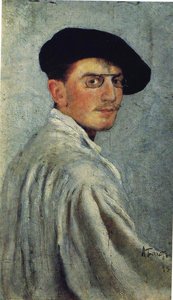
Леон Бакст
1866 - 1924 , Білорусь
Коротко про автора
- Artistic Movement Or Style: Арт-нуво, Орієнталізм
- Artists Or Movements Influenced By This Artist:
- Балет Руссем
- Арт Деко
- Date Of Birth: 8 лютого 1866
- Date Of Death: 27 грудня 1924
- Full Name: Лéon (Lev) Samoylovich Bakst
- Nationality: Російський
- Notable Artworks:
- Шехеразада
- Л’Аpres-midi d’un Faune
- Клеопатра
- Place Of Birth: Гродно, Білорусь