Constructivism/Suprematism · 1923
Small composition (Ласло Мохой-Надь, 1923)
Ласло Мохой-Надь (1895–1946) створив Small composition. Дата створення — 1923. Він належить до напряму Constructivism/Suprematism. Виконано в Acrylic On Canvas. Екземпляр зберігається в Фонд Баухауз Дессау у Дезкау-Россоу, Німеччина. Розмір: 24 × 30 cm
- 1923
- Acrylic On Canvas
- 24 × 30 cm
- Фонд Баухауз Дессау, Дезкау-Россоу

 Переглянути в інтер'єрі

 Картина олією ручної роботи
 Надіслати як листівку
 Поділитися
 Інформаційна картка


 Завантажити
 Схожі екземпляри
 Рентгенівське дослідження
 Слайд-шоу
 Питання та відповіді

 Статистика
Small composition коротко
- Назва
- Small composition
- Художник
- Ласло Мохой-Надь (1895–1946)
- Рік народження митця
- Ба́ць-Каяла, Угорщина
- Дата
- 1923
- Матеріал
- Acrylic On Canvas
- Розміри
- 24 × 30 cm
- Де подивитися
- Фонд Баухауз Дессау, Дезкау-Россоу, Німеччина
- Сюжет
- abstract art, geometric shapes, line composition, modern design, spatial relationships, color harmony
Що зображено на Small composition?
László Moholy-Nagy’s “Small Composition”: A Pioneering Leap into Abstract Form
“Small Composition,” created in 1923 by László Moholy-Nagy, isn't merely a painting; it’s a crystallized moment of artistic revolution. Emerging from the fertile ground of Constructivism and deeply influenced by the radical experimentation of the Bauhaus school, this work represents a pivotal shift in how artists approached representation – moving beyond mimetic accuracy to explore the inherent power of form, line, and color as autonomous elements of visual language. The piece, rendered in watercolor and gouache on paper, immediately captivates with its dynamic geometry, a carefully orchestrated balance between order and chaos that speaks volumes about the artist’s evolving philosophy.
At first glance, “Small Composition” appears strikingly abstract, yet closer inspection reveals a sophisticated system of relationships. A central axis line bisects the canvas, acting as a silent guide to the placement of several key shapes: a vibrant blue crescent moon, a bold yellow circle, and a striking red rectangle. These aren’t simply decorative elements; they are deliberately positioned to create a sense of spatial depth and visual tension. The overlapping forms suggest movement and interaction, inviting the viewer to actively engage with the composition and decipher its underlying structure. The flatness of the medium – watercolor and gouache on paper – further emphasizes this interplay of form, creating an illusion of three-dimensionality through careful layering and line weight.
The Bauhaus Legacy and the Embrace of Technology
To fully appreciate “Small Composition,” it’s crucial to understand its context within the broader artistic landscape of the early 20th century. Moholy-Nagy's time at the Bauhaus in Weimar was transformative, exposing him to a radical new approach to design that sought to integrate art with industry and technology. The Bauhaus championed functionalism, believing that art should serve a purpose beyond mere aesthetics – it should improve people’s lives through innovative design solutions. This ethos is powerfully reflected in “Small Composition,” which can be seen as an exploration of the principles of geometric abstraction, a technique favored by Constructivist artists like Piet Mondrian and Kazimir Malevich.
However, Moholy-Nagy wasn't simply replicating these movements; he was pushing them forward. He recognized the potential of photography – a relatively new medium at the time – to challenge traditional notions of representation. His early experiments with photograms (photographs created without a camera) demonstrated his fascination with chance and accident, suggesting that art could emerge from unexpected combinations of light and shadow. “Small Composition” can be interpreted as an extension of this exploration, utilizing the principles of photography—particularly its ability to capture fleeting moments and manipulate perception—to create a dynamic and visually arresting composition.
Symbolism and Emotional Resonance
While ostensibly abstract, "Small Composition" is rich in subtle symbolism. The dominant blue crescent moon could represent intuition or dreams, while the bold yellow circle might symbolize energy or enlightenment. The red rectangle, often associated with stability and structure, provides a grounding element to the composition. The deliberate use of color—each hue carefully chosen for its emotional impact—further enhances the work’s expressive power. It's not about depicting recognizable objects; it’s about evoking feelings and ideas through pure form and color.
Beyond these specific symbols, “Small Composition” resonates with a sense of dynamism and forward momentum. The intersecting lines and overlapping shapes create a feeling of movement and transformation, suggesting that the artwork is constantly evolving before the viewer's eyes. It’s a testament to Moholy-Nagy’s belief that art should be an active force—capable of stimulating thought, provoking emotion, and ultimately transforming our perception of the world.
A Reproduction Worthy of Display
Reproductions of “Small Composition” offer a remarkable opportunity to bring this pioneering artwork into any interior space. The vibrant colors and dynamic composition will add a touch of modern sophistication while simultaneously evoking the spirit of artistic innovation. Consider framing the reproduction in a minimalist style to allow the artwork’s inherent beauty to shine through, or opt for a bold statement piece that commands attention. “Small Composition” is more than just a print; it's an invitation to engage with the transformative power of abstract art.
У якому музеї зберігається Small composition?
Фонд Баухауз Дессау
Дезкау-Россоу, Німеччина
Заснування та контекст: Від руїн до символу Світло Баугауз у Дезкау – це не просто архітектурний шедевр, а й символ радикальних змін у мистецтві, дизайні та житті. Після закриття школи в 1932 році, яка стала центром новаторських ідей Вальтера Гропіуса та інших мислителів, будівля залишилася покинутою на довгі роки. Лише у 1994 році, завдяки зусиллям німецького уряду та міста Дезкау-Россау, Баугауз знову відкрила свої двері – як Stiftung Bauhaus Dessau (Фонд Баугауз).

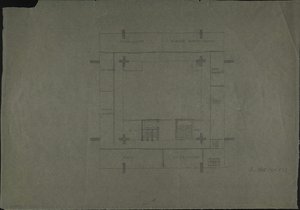

Зображення високої роздільної здатності Small composition

Суспільне надбання: художник помер у 1946 році.
Інші розміри, кадри та цитування →Ласло Мохой-Надь, Small composition (1923), Фонд Баухауз Дессау. Суспільне надбання
Відповіді на запитання про Small composition
У якому музеї зберігається оригінал «Small composition»?
Оригінал твору «Small composition» можна побачити в Фонд Баухауз Дессау, Дезкау-Россоу, Німеччина.
У якому році було створено "Small composition"?
«Small composition» роботи Ласло Мохой-Надь було створено у 1923 році.
Яка техніка використана у творі "Small composition"?
«Small composition» виконано в техніці Acrylic On Canvas.
Які розміри оригіналу "Small composition"?
«Small composition» має розмір 24 x 30 cm в оригіналі. Оригінальні розміри є корисним орієнтиром під час вибору розміру репродукції.
Що зображено на творі «Small composition» роботи Ласло Мохой-Надь?
Сюжетами твору "Small composition" є abstract art, geometric shapes, line composition, modern design, spatial relationships, color harmony, early 20th century, minimalist form.
Чи є «Small composition» роботи Ласло Мохой-Надь суспільним надбанням?
Статус авторського права для «Small composition» роботи Ласло Мохой-Надь: цей твір є є суспільним надбанням — термін дії авторського права закінчився. Це визначає, чи можна вільно створювати репродукції зображення.
Хто є автором твору "Small composition"?
«Small composition» приписують Ласло Мохой-Надь.
До якого стилю належить "Small composition"?
Мистецький напрям, до якого належить «Small composition» роботи Ласло Мохой-Надь, — це Constructivism/Suprematism. Така класифікація дозволяє розмістити цей твір у контексті суміжних митців та творів мистецтва.
Яке місце посідає «Small composition» у творчому шляху Ласло Мохой-Надь?
У межах творчого шляху Ласло Мохой-Надь твір "Small composition" належить до періоду Early Modern. Ця фаза дозволяє порівняти його з іншими роботами митця.
Про художника Ласло Мохой-Надь

1895–1946, Угорщина
Ласло Мохой-Надь
Ласло Мохоль-Ней: Піонер сучасного мистецтва та Баухаусу Народився: Бач-Каяла, Угорщина (1895) Помер: 1946 Ласло Мохоль-Ней був надзвичайно впливовим угорським художником, фотографом, скульптором та дизайнером. Він найбільш відомий своїм вагомим внеском у школу Баухаус та новаторською роботою в галузі конструктивизму, типографіки, фотографії та кінетичного мистецтва. Його мистецька філософія зосереджувалася на інтеграції технологій та промисловості в мистецтво, пропонуючи нове бачення творчості, що охоплює сучасний світ. Ранні роки та впливи Ранні роки та родина: Народившись під іменем Ласло Вайз у єврейській родині в Бачсбороді, Угорщина, він пізніше прийняв прізвище Мохоль-Ней.
Також за участю Ласло Мохой-Надь
 Untitled, Dessau
 Untitled\n\nUntitled1939
 Untitled
 Hilla Rebay1924

Есе до твору Small composition
 Топ-10 шедеврів геометричної абстракції: мистецтво для вашого інтер'єру від OriginalUniqueArt.comВідкрийте для себе 10 шедеврів геометричної абстракції від Кандинського, Малевича та Мондріана! Історія мистецтва, кольори та форми. Репрод…
 De Stijl and Bauhaus: Distinguishing Two Pillars of Modern DesignMaster the distinctions between De Stijl and Bauhaus design. Explore the history of these modern pillars now.
 Geometry with Purpose: Distinguishing Suprematism from ConstructivismMaster the differences between Suprematism and Constructivism with our expert guide. Discover the soul of the Russian avant-garde now.