
 Переглянути в інтер'єрі
 Надіслати як листівку
 Поділитися
 Деталі витвору
 Посібник

 Завантажити
 Схожі екземпляри
 Рентгенівське дослідження
 Слайд-шоу
 Питання та відповіді
 Статистика
Disappearing Province

- 79.0 x 104.0 cm


 Розгорнути текст
Мистецький твір, представлений на цій сторінці, захищений законом про авторське право, що унеможливлює легальне створення або продаж його ідентичної репродукції. Цей захист забезпечується відповідно до міжнародних угод, таких як Бернська конвенція та національним законодавством, зокрема положеннями, що викладені в Законодавство США про авторське право — Розділ 17. Всі права захищені. Будь-яке використання без дозволу заборонено.
Цей метод повністю відповідає нормам авторського права, оскільки він не передбачає копіювання чи дублювання захищеного твору мистецтва. Натомість це творче переосмислення — створення нового малюнка під впливом оригіналу, який не є його точним відтворенням.
Гікле / Художній принт
Друк جيкле або на полотні музейної якості з оперативним виготовленням та різноманітними варіантами фінішної обробки. ( Замовити картину ручної роботи Перейти до цифрових зображень)




P118B ₴10

P118H ₴10

P118W ₴10

P438Z ₴10

P508JH ₴12

P508YH ₴12

P805H ₴10

P805Z ₴10

P919BZ ₴10

P919G ₴10

P919XJ ₴10

P959ZH ₴10

P968JZ ₴12

W106C ₴8

W218G ₴10

W218JH ₴8

W218Y ₴10

W307PJ ₴10

W316G ₴10

W316PJ ₴8

W316Y ₴10

W398PJ ₴8

W4111J ₴10

W500HY ₴15

W500JH ₴15

W692G ₴12

W849H ₴8

W940BG ₴15

W953PJ ₴8




Обирайте з наших стандартних розмірів, що відповідають оригінальним пропорціям твору мистецтва.

Введіть необхідну ширину та висоту, щоб принт ідеально підійшов до вашої рами або стіни. Принт можна лише обрізати, але не можна зробити більшим за оригінал, тому при зміні пропорцій частина зображення буде втрачена. Перед друком ми надсилаємо вам цифровий макет для затвердження. Зображення на цій сторінці не відображає реальну обрізку — її можна побачити лише на макеті.
Доставка по всьому світу () за 2 тижні замість стандартних 4/5 тижнів. (4 Листопад)

Безкоштовна експрес-доставка по всьому світу

Високоякісне лляне полотно

Повне страхове покриття доставки

Гарантія повернення митних зборів

Гарантія точного відтворення кольорів

Політика повернення протягом 100 днів (лише у разі виявлення дефектів)

Гарантія повернення 100% коштів

Пропозиція на оптові замовлення
 Скляний варіант доступний лише для розмірів до 110 см

Disappearing Province
Гікле / Художній принт
Розмір репродукції
-


Підсумкова вартість
₴ 3644
A Quiet Intimacy Captured in Oil
In the tenderly rendered masterpiece Disappearing Province, created in 1929 by the esteemed Russian master Konstantin Yuon, we are invited into a sanctuary of domestic warmth. The painting presents an evocative interior scene where two women—one elder, draped in a dark headscarf, and one younger, adorned with a vibrant red covering—are caught in a moment of quiet, shared existence. There is a profound sense of stillness here, as if the world outside has ceased to exist, leaving only the soft murmur of conversation and the gentle weight of companionship. The composition, while rich with detail, maintains a delicate balance, guiding the viewer's eye from the expressive faces of the subjects to the lush floral arrangements that breathe life into the room.
The artistry of Yuon shines through his masterful command of texture and light. Utilizing a thick impasto technique, the artist builds layers of oil paint that lend a tactile, three-dimensional quality to the canvas. This heavy application is particularly striking in the floral elements and the folds of the textiles, where the physical presence of the paint mirrors the richness of the subject matter. The lighting, appearing to stream from an unseen window to the right, bathes the scene in a golden, nostalgic glow, casting soft highlights that define the organic shapes of the figures and create a shallow, intimate depth of field. This interplay of light and shadow evokes the fleeting nature of memory, much like the title itself suggests.
A Tapestry of History and Symbolism
Beyond its surface beauty, Disappearing Province serves as a poignant window into a vanishing era. Painted during a period of significant transition in Russian history, the work carries an underlying layer of nostalgia. The cluttered yet harmonious arrangement of framed pictures on the wall and decorative elements suggests a deep reverence for family lineage and domestic stability. These objects act as silent witnesses to the passage of time, symbolizing the preservation of heritage amidst a changing landscape. The floral arrangements, often symbols of abundance and the ephemeral beauty of life, further reinforce this theme of finding permanence within the transient.
For the discerning collector or interior designer, this piece offers more than mere decoration; it provides an emotional anchor for a room. The warm color palette, dominated by earthy tones and punctuated by brilliant reds and soft greens, makes it an ideal centerpiece for spaces designed for contemplation and comfort. Whether placed in a sunlit library or a sophisticated living area, the painting’s blend of Impressionist realism and soulful storytelling invites conversation and inspires a sense of peace. Owning a high-quality reproduction of this work allows one to bring the timeless elegance and historical depth of Konstantin Yuon into the modern home, preserving a fragment of a beautiful, disappearing world.
Питання та відповіді
Яка техніка виконання у «Disappearing Province» роботи Констянтин Юон?
Для створення «Disappearing Province» Констянтин Юон використав(ла) техніку Oil On Canvas. Саме ця техніка визначає матеріальну природу оригінального твору.
Яка палітра та домінуючий колір визначають "Disappearing Province"?
«Disappearing Province» вирізняється Earthy палітрою, де домінує Espresso (#453d3c).
Наскільки гармонійними є кольори у творі «Disappearing Province» роботи Констянтин Юон?
Колірна гармонія твору "Disappearing Province" визначена як Discordant Palette.
Біографія митця
Early Life and Artistic Foundations
Konstantin Fyodorovich Yuon, born October 24, 1875 in Moscow, emerged from a family steeped in both Swiss-Russian heritage and artistic inclination. His brother, Paul Juon, would achieve renown as a composer, hinting at the creative currents flowing through their upbringing. From a young age, Konstantin demonstrated an affinity for visual expression, nurtured by a mother who fostered artistic pursuits within the home. This early exposure laid the groundwork for his formal education at the Moscow School of Painting, Sculpture and Architecture from 1892 to 1898. There, he came under the tutelage of distinguished masters like Konstantin Savitsky and Konstantin Korovin, absorbing their techniques and philosophies that would shape his initial artistic trajectory. These formative years weren’t confined to Russia; Yuon embarked on journeys to Western Europe, particularly Paris, where he encountered the burgeoning Impressionist movement. While captivated by artists such as Camille Pissarro, he didn't simply imitate—he synthesized these influences with a uniquely Russian sensibility, forging his own distinct style.- Family Background: Yuon’s father was an employee of the insurance company, of Swiss-Russian origin (the surname *Juon* being of Walser origin), and his mother – of German family. This intertwined heritage instilled in him a profound appreciation for diverse artistic traditions.
- Education: He attended the Moscow School of Painting, Sculpture and Architecture from 1892 to 1898 where Konstantin Savitsky and Konstantin Korovin imparted invaluable knowledge and fostered his artistic development.
- Early Influences: The teachings of Savitsky and Korovin profoundly impacted Yuon’s stylistic choices, grounding him in the traditions of Russian academic painting.
From Symbolism to Soviet Realism
Yuon’s early work is characterized by an evocative blend of Impressionistic landscapes infused with subtle Symbolist undertones. Paintings like To the Trinity (1903) and Tverskoy Boulevard (1909) exemplify this period, capturing fleeting moments of light and atmosphere while hinting at deeper emotional resonances. He wasn’t content to remain solely within the realm of Impressionism; Yuon began experimenting with lyrical landscapes that incorporated elements drawn from traditional Russian art forms—the delicate precision of Palekh miniature painting and the spiritual depth of icon artistry. This fusion created a visual language uniquely his own, steeped in national identity yet open to innovation.- Symbolist Tendencies: Yuon’s landscapes often conveyed profound emotional states through carefully considered color palettes and compositional arrangements—a hallmark of Symbolism's expressive aims.
- Fusion with Tradition: He skillfully blended Impressionistic techniques with stylistic elements reminiscent of Palekh miniature painting and icon artistry, reflecting Russia’s rich artistic heritage.
A Multifaceted Career and Institutional Leadership
Yuon’s artistic pursuits extended beyond the easel; he established a prestigious art school in Moscow, nurturing young talent and fostering the dissemination of artistic knowledge. He served as director of the Research Institute of the Academy of Arts (1948–1950), shaping the intellectual landscape of Soviet culture. Furthermore, Yuon held positions of considerable influence within the Union of Russian Artists (1956–1958) and the Association of Artists of Revolutionary Russia, actively guiding artistic policy during a pivotal moment in Soviet history.- Art Education: He founded Moscow’s “Classes Drawing and Painting” school, attracting gifted students who would become prominent figures in Russian art.
- Academic Roles: Yuon served as director of the Research Institute of the Academy of Arts, contributing to scholarly research and artistic discourse.
- Organizational Leadership: He spearheaded the Union of Russian Artists and the Association of Artists of Revolutionary Russia, shaping the direction of Soviet art during the Cold War era.
Legacy and Enduring Influence
Konstantin Yuon’s artistic legacy remains vibrant—a testament to an artist who seamlessly blended Impressionistic aesthetics with Symbolist spirituality and ultimately embraced Socialist Realism's commitment to social purpose. His paintings continue to inspire admiration for their technical brilliance and emotional resonance, securing his place as one of Russia’s most celebrated visual artists. He stands as a pivotal figure in Russian art history, bridging the gap between artistic traditions and ideological imperatives—a lasting tribute to Yuon’s remarkable creative journey.
Констянтин Юон
1875 - 1958 , Росія
Короткі факти
- Artistic Movement Or Style: Імпресіонізм, Символізм, Соціалістичний реалізм
- Artists Or Movements Influenced By This Artist:
- Символізм
- Соціалістичний реалізм
- Artists Who Influenced This Artist:
- Констянтин Коровін
- Валентин Серьов
- Каміль Піссарро
- Date Of Birth: 24 жовтня 1875
- Date Of Death: 11 квітня 1958
- Full Name: Констянтин Федорович Юон
- Nationality: Російський
- Notable Artworks:
- Нова планета
- Гірчична лоза
- Парад на Червоній площі 7 листопада 1941
- Place Of Birth: Москва, Росія
Пов'язані статті

Konstantin Korovin: A Master of Russian Impressionism & Evocative Light
Explore the captivating world of Konstantin Korovin, a leading Russian Impressionist painter renowned for his vibrant landscapes & innovative theater designs. Discover his life, legacy, and enduring artistic impact.

Konstantin Somov: A Master of Russian Aestheticism & Symbolist Elegance
Explore the captivating world of Konstantin Somov, a leading figure of Russian Symbolism & Aestheticism. Discover his exquisite portraits, ballet scenes, and Rococo-inspired masterpieces. Learn about his life, influences, and enduring legacy.

The Enduring Legacy of Oil on Canvas: Technique, History & Aesthetic Impact
Explore the rich history & techniques of oil painting – from Renaissance masters to Impressionism. Discover pigments, layering methods, and why this timeless medium endures. Expert insights for artists & art enthusiasts.

The Soul of Impressionism: Why Oil on Canvas Captures Eternal Light and Timeless Emotion
Discover the enchanting alchemy of Impressionism. Explore how the mastery of oil on canvas, through glazing and impasto, captures eternal light and emotion. Perfect for lovers of Monet and Van Gogh seeking the profound depth of hand-painted fine art.
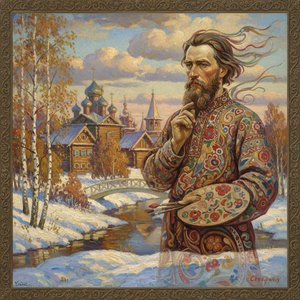
Igor Grabar: Bridging Impressionism & National Identity in Russian Modern Art
Explore the life & art of Igor Grabar, a pivotal figure in Russian Modernism. Discover his Impressionist landscapes, crucial role in art history, and legacy at the Tretyakov Gallery. A deep dive into a master painter & scholar.