

 Переглянути в інтер'єрі
 Надіслати
 Поділитися
 Деталі

 Завантажити
 Схожі експонати
 Рентгенівське дослідження
 Слайд-шоу
Scraps
 1960
1960 25.0 x 34.0 cm
 Читати далі
Гікле / Художній принт
Музейна якість друку جيкле або на полотні з оперативним виготовленням та різноманітними варіантами фінішної обробки. ( Купити картину ручної роботи Купити зображення)




































Обирайте з наших стандартних розмірів, що відповідають оригінальним пропорціям твору мистецтва.

Ви можете вказати власні розміри, щоб репродукція ідеально підійшла до конкретної рами або інтер'єру. Якщо обраний вами розмір не відповідає пропорціям оригіналу, ми або обріжемо полотно, або розширимо зображення за допомогою дзеркального відображення чи суцільної заливки країв. Перед початком виробництва вам буде надіслано цифровий макет для затвердження.
Будь ласка, зверніть увагу, що попередній перегляд на екрані не відображає фактичне обрізання або розширення. Тільки макет точно покаже фінальну композицію.
Хоча можливість замовлення індивідуальних розмірів доступна, ми рекомендуємо обирати формат із попередньо визначеного списку, щоб зберегти оригінальні пропорції.
Доставка по всьому світу () за 2 тижні замість стандартних 4/5 тижнів. (12 Серпень)

Безкоштовна експрес-доставка по всьому світу

Високоякісне лляне полотно

Повне страхове покриття доставки

Гарантія відшкодування митних зборів

Гарантія точного відтворення кольорів

Політика повернення протягом 60 днів (лише у разі виявлення дефектів)

Гарантія повернення 100% коштів

Знижка на оптові замовлення
 Скляний варіант доступний лише для розмірів до 110 см

Scraps
Гікле / Художній принт
Розмір репродукції
-


Загальна вартість
$ 80
Біографія митця
Kikuji Kawada: A Photographer's Journey Through Memory and Resilience
Kikuji Kawada (川田 喜久治, *Kawada Kikuji*; born 1933) stands as a pivotal figure in postwar Japanese photography, recognized for his distinctive approach to documentary filmmaking and his profound exploration of memory—particularly the lingering impact of Hiroshima and Nagasaki. His work transcends mere visual representation; it’s an immersive experience into the psychological landscape of Japan's turbulent past, imbued with meticulous detail and a haunting beauty that continues to resonate today.Early Life and Influences
Born in Tokyo, Kawada’s formative years were marked by the shadow of atomic devastation. Witnessing firsthand the aftermath of Hiroshima instilled within him an unwavering commitment to documenting human experience—not just as it appears on the surface but as it resides beneath the veneer of everyday life. This early exposure profoundly shaped his artistic sensibilities and fueled his desire to capture moments of vulnerability and resilience, themes that would permeate his oeuvre throughout his career. Influenced by humanist photographers like Henri Cartier-Bresson and Eugène Atget, Kawada honed his craft through rigorous observation and a dedication to capturing the essence of human emotion.The Vivo Photographic Collective and Collaborative Vision
Kawada’s artistic trajectory gained momentum in 1959 when he co-founded the Vivo photographic collective alongside Akira Sato, eikoh hosoe, ikko narahara, akira tanno and shomei tomatsu. This collaborative endeavor fostered a shared ethos of experimentation and intellectual engagement—a commitment to pushing boundaries within the medium while simultaneously confronting complex social and historical narratives. Vivo became synonymous with challenging conventional photographic conventions, prioritizing narrative depth over stylistic flourishes and striving for an honest portrayal of reality.“Chizu”: Mapping Memory and Trauma
Kawada’s magnum opus, “Chizu” (地図), published in 1964, cemented his reputation as a visionary storyteller. This ambitious project undertook a meticulous reconstruction of Hiroshima before the atomic bombing—a feat achieved through painstaking archival research and photographic documentation. More than simply recreating a bygone era, Kawada sought to excavate the collective memory of Hiroshima’s inhabitants, capturing their anxieties, hopes, and unspoken griefs with remarkable sensitivity. As Brett Rogers of the Photographers' Gallery eloquently described it, “Chizu” is "the ultimate photobook-as-object, combining a typical japanese attention to the art of refined packaging with hard-hitting photography, text and typography – a true photo-text piece." It’s considered one of four books that "constitute photography's most significant memorials to the defining event in twentieth-century japanese history," reflecting Kawada’s profound understanding of how images can convey emotional truth.Recognition and Legacy
Kawada’s artistic achievements garnered widespread acclaim, culminating in a lifetime achievement award from the Photographic Society of Japan in 2011. His work has been lauded for its intellectual rigor, stylistic innovation, and unwavering empathy—qualities that continue to inspire photographers worldwide. Furthermore, Sean O'hagan noted in The Guardian that “Chizu” is "perhaps the most intricately designed and powerfully evocative japanese photobook ever by turns impressionistic and surreal," highlighting Kawada’s mastery of visual storytelling. His enduring influence can be seen in subsequent generations of Japanese artists who embrace his commitment to confronting difficult subjects with compassion and artistic integrity.Notable Works Beyond “Chizu”
Beyond "Chizu", Kawada's photographic explorations encompassed diverse themes—from the ruins of Hiroshima to portraits of ordinary people grappling with personal challenges. Pieces like “The Japanese National Flag” and “Ruin of a Stronghold, Tokyo Bay” exemplify his ability to distill complex emotions into striking visual compositions. These works underscore Kawada’s belief that photography possesses the capacity not only to document reality but also to provoke contemplation and foster understanding—a conviction that remains central to his artistic practice today.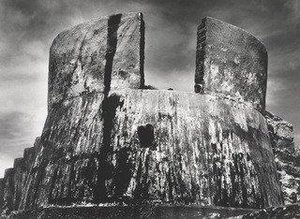
Досьє митця
- Artistic Movement Or Style: Photo-text art
- Artists Or Movements Influenced By This Artist:
- Martin Parr
- Gerry Badger
- Artists Who Influenced This Artist:
- Akira Sato
- Eikoh Hosoe
- Date Of Birth: 1933
- Full Name: Kikuji Kawada
- Nationality: Japanese
- Notable Artworks:
- Chizu
- The Japanese National Flag
- Place Of Birth: Japan

