() ·

Картина, створена вручну спеціально для вас

Blonde

Олійная репродукція ручної роботи

Написана вручну олією на полотні у вашому розмірі та рамі, виготовлена на замовлення нашими художниками. ( Перейти до друку Перейти до цифрових зображень)

Опис експоната

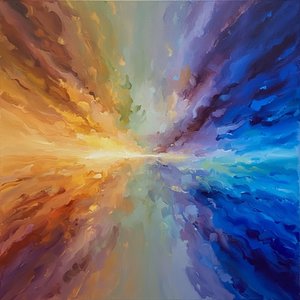
Experience Kenneth Noland's "Blonde" – a captivating 1965 color field painting featuring yellow squares and green triangles. Explore its vibrant hues & geometric design, a masterpiece of abstract art.

Біографія митця

"UkrainianMetaDescription": "Кеннет Нолан – американський художник-абстракціоніст, відомий своїми яскравими кольоровими полями та нетрадиційними формами полотен. Його роботи – ключова частина руху Washington Color School і вплинули на розвиток абстрактного мистецтва."

від ·

Розділ 1

Якого розміру вона має бути?

Гортайте, щоб змінити розмір; на зображенні ліворуч показано рамку її справжньої ширини. Пропорції оригіналу збережено.

Стандартний розмір
індивідуальний розмір
CM
INCH

Обирайте з наших стандартних розмірів, що відповідають оригінальним пропорціям твору мистецтва.

ширина
висота

Введіть необхідну ширину та висоту, щоб картина підійшла до вашої рами або стіни. Оскільки це ручний розпис, для зміни пропорцій художник може дописати трохи більше по краях або дещо обрізати композицію — вибір за вами. Перед початком роботи ми надішлемо вам цифровий макет для затвердження. Зображення, показане на цій сторінці, не є реальним результатом — лише макет відображає майбутній вигляд.

Розділ 2

Яким має бути спосіб доставки?

Оберіть тип країв натяжного полотна

Оберіть свою раму

Corner sample of the WhiteWrap canvas edge finish, stretched on масив дерева bars
Білий край ₴1
Corner sample of the BlurSideWrap canvas edge finish, stretched on масив дерева bars
Розмитий край ₴1
Corner sample of the ExtendedWrap canvas edge finish, stretched on масив дерева bars
З розширенням ₴1
Corner sample of the P118B picture frame: формований полістирол, 5 cm wide and 3 cm thick
P118B ₴10
Corner sample of the P118H picture frame: формований полістирол, 5 cm wide and 3 cm thick
P118H ₴10
Corner sample of the P118W picture frame: формований полістирол, 5 cm wide and 3 cm thick
P118W ₴10
Corner sample of the P438Z picture frame: формований полістирол, 5.5 cm wide and 3.5 cm thick
P438Z ₴10
Corner sample of the P508JH picture frame: формований полістирол, 7 cm wide and 3.5 cm thick
P508JH ₴12
Corner sample of the P508YH picture frame: формований полістирол, 7 cm wide and 3.5 cm thick
P508YH ₴12
Corner sample of the P805H picture frame: формований полістирол, 5 cm wide and 3.5 cm thick
P805H ₴10
Corner sample of the P805Z picture frame: формований полістирол, 5 cm wide and 3.5 cm thick
P805Z ₴10
Corner sample of the P919BZ picture frame: формований полістирол, 7 cm wide and 3.5 cm thick
P919BZ ₴10
Corner sample of the P919G picture frame: формований полістирол, 7 cm wide and 3.5 cm thick
P919G ₴10
Corner sample of the P919XJ picture frame: формований полістирол, 7 cm wide and 3.5 cm thick
P919XJ ₴10
Corner sample of the P959ZH picture frame: формований полістирол, 5 cm wide and 3 cm thick
P959ZH ₴10
Corner sample of the P968JZ picture frame: формований полістирол, 6 cm wide and 4 cm thick
P968JZ ₴12
Corner sample of the W106C picture frame: масив дерева, 5 cm wide and 3 cm thick
W106C ₴8
Corner sample of the W218G picture frame: масив дерева, 5 cm wide and 3 cm thick
W218G ₴10
Corner sample of the W218JH picture frame: масив дерева, 5 cm wide and 3 cm thick
W218JH ₴8
Corner sample of the W218Y picture frame: масив дерева, 5 cm wide and 3 cm thick
W218Y ₴10
Corner sample of the W307PJ picture frame: масив дерева, 6 cm wide and 3 cm thick
W307PJ ₴10
Corner sample of the W316G picture frame: масив дерева, 6 cm wide and 3 cm thick
W316G ₴10
Corner sample of the W316PJ picture frame: масив дерева, 6 cm wide and 3 cm thick
W316PJ ₴8
Corner sample of the W316Y picture frame: масив дерева, 6 cm wide and 3 cm thick
W316Y ₴10
Corner sample of the W398PJ picture frame: масив дерева, 5 cm wide and 3 cm thick
W398PJ ₴8
Corner sample of the W4111J picture frame: масив дерева, 6.5 cm wide and 3.5 cm thick
W4111J ₴10
Corner sample of the W500HY picture frame: масив дерева, 7 cm wide and 5 cm thick
W500HY ₴15
Corner sample of the W500JH picture frame: масив дерева, 7 cm wide and 5 cm thick
W500JH ₴15
Corner sample of the W692G picture frame: масив дерева, 8 cm wide and 4 cm thick
W692G ₴12
Corner sample of the W849H picture frame: масив дерева, 5 cm wide and 3 cm thick
W849H ₴8
Corner sample of the W940BG picture frame: масив дерева, 7.5 cm wide and 4.5 cm thick
W940BG ₴15
Corner sample of the W953PJ picture frame: масив дерева, 6 cm wide and 3.5 cm thick
W953PJ ₴8
Corner sample of the H24-GOLD picture frame: різьблене дерево з левкасом, 10 cm wide and 6 cm thick
H24-GOLD ₴30
Corner sample of the H24-SILVER picture frame: різьблене дерево з левкасом, 10 cm wide and 6 cm thick
H24-SILVER ₴30
Corner sample of the H36-GOLD picture frame: різьблене дерево з левкасом, 15 cm wide and 6.5 cm thick
H36-GOLD ₴45
Corner sample of the H36-SILVER picture frame: різьблене дерево з левкасом, 15 cm wide and 6.5 cm thick
H36-SILVER ₴45

Багет: . Загальний розмір із рамою: .

Розділ 3

Хто це малює, і чи має щось змінитися?

Приклади того, що можна змінити: замінити обличчя на фото клієнта; додати домашню тварину (наприклад, замінити кота на собаку); додати приховане повідомлення на фоні; змінити пейзаж або елементи фону.
Після оформлення замовлення команда OriginalUniqueArt.com надішле клієнту електронний лист із запитом інструкцій та надасть попередній макет для перегляду

Доставка по всьому світу () за 3–4 тижні замість стандартних 5 тижнів. (16 Листопад). Без жодних компромісів у якості.

Розділ 4

Останні штрихи

Табличка, як у музеї?

Деталі гравірування на бронзовій табличці

This elegant plaque features the artist's name and the title of the artwork, finely engraved for a timeless presentation.

It is made from bronze with a refined, elegant finish. The text is precisely laser-engraved for a sharp and permanent result. Measuring 9x2 cm, the plaque is compact yet easy to read. It's built to be durable and scratch-resistant, offering a professional, museum-quality look. Mounting is simple thanks to the included adhesive backing.

Деталі прозорої акрилової таблички

The plaque includes essential engraved details such as the artist's name, the title of the artwork, the date it was created, the type of media used-like oil on canvas or watercolor-a brief description of the piece, and a QR code that links to the complete artwork information.

It is crafted from clear acrylic, offering a sleek, modern appearance. The text is UV-engraved in black to ensure strong visual contrast. With a size of 10x15 cm, it ensures optimal readability. It comes equipped with two metal hooks for secure wall mounting. The plaque is designed to be weather-resistant, making it suitable for various environments, and it includes interactive features that work seamlessly with smartphone scanning.

Деталі чорної акрилової таблички

This elegant plaque includes engraved information such as the artist's name, the title of the artwork, the date it was created, the type of media used (like oil on canvas or watercolor), a short description of the artwork, and a QR code for quick access to more information.

The plaque itself is made from refined black acrylic with a premium finish. The text is laser-engraved in white for high contrast and readability. Its size is 10x15 cm, designed to be easy to read. It comes with two metal hooks for professional mounting. The design is sleek and fits any interior style. It is also weather-resistant and durable, with built-in digital integration for mobile compatibility.

Захисний лак?

Коли вам це потрібно?

Розділ 5

Ваша картина, згідно із вашим замовленням

Blonde

Матеріал репродукції

Розмір репродукції

-

Видатний майстер-художник

Більше деталізації, витонченості та додаткового часу на створення твору

-

Рама для репродукції

-

-

Для творів мистецтва або репродукцій, розмір яких перевищує 105 см (приблизно 41 дюйм) з будь-якого боку, рама доставляється у вигляді розібраного комплекту. Такий метод гарантує безпечну доставку та запобігає пошкодженням під час транспортування.

Потребує професійного збирання — це не продукт для самостійного виготовлення (DIY).
Комплект має бути зібраний, а полотно натягнуте досвідченим майстром багетних робіт із використанням клейового дерева (не входить у комплект), щипців для натягування полотна та затискачів, щоб підрамник залишався рівним під час висихання клею. Неправильне збирання або нерівномірне натягування полотна може призвести до незворотного пошкодження твору мистецтва, що не підпадає під дію нашої гарантії.

  • У комплект входять усі бруски з цільного дерева, точно вирізані за розміром.

  • Збирається за допомогою гвинтів, що входять до комплекту, а також клейового розчину для кутових з'єднань, який не входить до комплекту і має бути підготовлений вашим майстром.

  • Потрібні професійні інструменти, які не входять до комплекту: щипці для натягування полотна (натягувач) та затискачі, щоб утримувати рейки рівно під час висихання клею.

Важливо:
Для з'єднання кутів потрібен клей для дерева, перекладини необхідно затиснути струбцинами до повного висихання клею, а для натягування полотна на зібрану раму знадобляться щипці для натягування полотна. Жоден із цих інструментів не входить до комплекту. Будь ласка, проконсультуйтеся з досвідченим майстром багетного оформлення перед замовленням рами такого розміру.

Етикетка експоната

-

-

Захисний лак

Глянцевий лак (підсилює яскравість кольорів, захищає від світла та вологи)

-

Персоналізувати мій витвір

Приклади можливих змін: заміна обличчя на фото клієнта; додавання домашньої тварини (наприклад, заміна кота на собаку); додавання прихованого повідомлення на фоні; зміна пейзажу або елементів фону.

-

Прискорено

Доставка по всьому світу () за 3–4 тижні замість стандартних 5 тижнів. (16 Листопад). Без компромісів у якості.

-

Експрес-доставка

Доставка по всьому світу () протягом 5 тижнів. (23 Листопад).

Включено в ціну

Підсумкова вартість

₴ 13469

Загальна вартість ₴ 13469

Скляний варіант доступний лише для розмірів до 110 см

До кожного замовлення додається

  • Безкоштовна експрес-доставка по всьому світу
  • Високоякісне лляне полотно
  • Повне страхове покриття доставки
  • Гарантія повернення митних зборів
  • Гарантія точного відтворення кольорів
  • Політика повернення протягом 100 днів (лише у разі виявлення дефектів)
  • Гарантія повернення 100% коштів
  • Пропозиція на оптові замовлення

The Genesis of a Masterpiece: Kenneth Noland's "Blonde"

In the mid-1960s, as American art was undergoing a seismic shift, Kenneth Noland emerged as a pivotal figure, redefining abstraction through his masterful manipulation of color and form. “Blonde,” painted in 1965, isn’t merely a painting; it's an immersive experience—a carefully orchestrated dialogue between yellow and green, suggesting the quiet contemplation of a summer afternoon. This work represents a crucial moment in Noland’s trajectory, solidifying his embrace of Color Field painting and establishing him as a leading voice within the Washington Color School movement.

The genesis of “Blonde” lies in Noland's relentless pursuit of distilling art to its purest elements: color, shape, and spatial relationships. He moved away from the gestural brushstrokes characteristic of Abstract Expressionism, opting instead for a more controlled and deliberate approach. This involved applying thin layers of acrylic paint directly onto unprimed canvas, allowing the inherent texture and variations in the fabric to subtly influence the final image. The result is a surface that breathes—a delicate interplay between matte and sheen, inviting the viewer to lose themselves within its chromatic depths.

A Composition of Contrasting Harmonies

At first glance, “Blonde” presents a deceptively simple composition: a large square of vibrant yellow juxtaposed against a smaller triangle of verdant green. However, this apparent simplicity belies a profound complexity. Noland wasn’t interested in creating a representational image; rather, he sought to evoke an emotional response through the pure interaction of color. The yellow, often described as a luminous lemon hue, radiates warmth and optimism, while the green offers a grounding counterpoint—a suggestion of nature, tranquility, and perhaps even melancholy.

  • The Yellow Square: Represents energy, light, and a sense of openness.
  • The Green Triangle: Symbolizes stability, introspection, and a connection to the natural world.
  • Negative Space: The areas *between* the shapes are just as important as the shapes themselves, creating a dynamic tension and inviting the viewer’s eye to explore the painting's contours.

Technique and Process – A Revelation of Color

Noland’s technique was revolutionary for its time. He eschewed traditional brushwork, opting instead for a method he termed “staining.” He would apply thin layers of acrylic paint directly to the canvas, allowing them to soak into the fibers rather than being applied in a conventional manner. This process resulted in a remarkably matte surface, minimizing reflection and emphasizing the inherent qualities of the pigment itself. The edges of the shapes are deliberately soft and undefined, blurring the boundaries between color fields and creating a sense of fluidity and movement.

The painting’s creation was deeply influenced by Noland's exploration of color theory, particularly his interest in the psychological effects of hue. He meticulously studied the relationships between colors—how they interact with each other, how they evoke specific emotions, and how they can be used to create a sense of harmony or discord.

A Legacy of Color – “Blonde” Today

“Blonde” stands as a testament to Noland’s artistic vision—a powerful example of Color Field painting at its most refined. It invites viewers to slow down, to contemplate the subtle nuances of color and form, and to experience art not just through the eye but also through the emotions it evokes. Reproductions capture only a fraction of the original's luminous quality and textural depth, making a high-quality print or canvas reproduction an invaluable way to bring this iconic work into your home or studio. It’s a piece that continues to resonate with collectors and art enthusiasts alike, solidifying Noland’s place as one of the most important artists of the 20th century.

Питання та відповіді

Хто є автором твору "Blonde"?

«Blonde» було створено Кеннет Ноланд. Інформація на цій сторінці описує оригінальний твір Кеннет Ноланд.

Чому статус авторського права на "Blonde" саме такий?

«Blonde» роботи Кеннет Ноланд перебуває у все ще перебуває під захистом авторського права. Термін дії авторського права розраховується від року смерті митця, яка відбулася у 2010.

Чи знаходиться «Blonde» роботи Кеннет Ноланд у рідній країні митця?

Так — твір зберігається в країні походження митця. Твір "Blonde" зберігається в Сполучені Штати Америки, тоді як Кеннет Ноланд народився(-лася) в Сполучені Штати Америки.

Більше про цю картину

Переглянути в інтер'єрі Перегляд в AR Перейти до друку Перейти до цифрових зображень Надіслати як листівку
Деталі витвору Посібник Додати до улюблених Завантажити Схожі екземпляри Рентгенівське дослідження Слайд-шоу Питання та відповіді Статистика

У цифрах

  • 29доступні варіанти обрамлення
  • стандартні розміри, у власних пропорціях
  • 5тижнів на написання та доставку

Про оригінал

Розміри
218.0 x 218.0 cm
Кеннет Ноланд

Кеннет Ноланд

1924 - 2010, Сполучені Штати Америки

Короткі факти про Кеннет Ноланд

  • Artistic Movement Or Style: Кольорове поле
  • Artists Or Movements Influenced By This Artist: ['Абстрактний експресіонізм']
  • Artists Who Influenced This Artist:
    • Ілья Болотівський
    • Йозеф Альберс
  • Date Of Birth: 1924
  • Date Of Death: 2010
  • Full Name: Kenneth Clifton Noland
  • Nationality: Американський
  • Notable Artworks:
    • Beginning
    • Magic Box
  • Place Of Birth: Asheville, США

Біографія митця

Kenneth Noland: A Life Painted in Color

Kenneth Clifton Noland, a name inextricably linked to the vibrant and revolutionary world of Color Field painting, was more than just an artist; he was a pioneer who fundamentally reshaped our perception of space, form, and color. Born in Asheville, North Carolina, in 1924, his journey from a small mountain town to international acclaim is a testament to his unwavering dedication to exploring the expressive potential of pure color. Noland’s legacy extends far beyond his individual works; he remains a pivotal figure in American art history, a key architect of the Washington Color School, and an innovator whose influence continues to resonate with artists today.

Early Influences and Artistic Foundations

Noland's artistic sensibilities were nurtured from a remarkably young age. Growing up within a family that valued both music and visual arts instilled in him a deep appreciation for creative expression. This early exposure proved crucial, laying the groundwork for his lifelong pursuit of aesthetic exploration. Following service in the U.S. Air Force during World War II – an experience he later acknowledged as profoundly formative – Noland utilized the G.I. Bill to pursue formal artistic training at Black Mountain College in North Carolina. It was here, amidst a community of experimental artists and unconventional educators, that his artistic trajectory truly began to take shape.

Black Mountain College proved to be an incubator for radical ideas. Instructors like Ilya Bolotowsky introduced Noland to the principles of Neo-plasticism and the groundbreaking work of Piet Mondrian, emphasizing geometric abstraction and the reduction of art to its essential elements. Josef Albers, a towering figure in the field of color theory, imparted invaluable insights into the psychology of perception and the transformative power of hue. These foundational lessons – the rigorous study of form, the exploration of color relationships, and the understanding of visual space – became the bedrock of Noland’s artistic philosophy.

Further enriching his artistic vocabulary, Noland spent a year studying sculpture with Ossip Zadkine in Paris, an experience that broadened his perspective and introduced him to European artistic traditions. However, it was a pivotal encounter back in America that truly set him on the path toward his signature style: in 1953, Clement Greenberg, a highly influential art critic, brought Noland into contact with Helen Frankenthaler’s revolutionary “soak-stain” technique. This method—involving applying thinned paint directly onto unprimed canvas—liberated color from the constraints of traditional brushwork and allowed it to become an integral part of the very fabric of the artwork, a concept that profoundly impacted Noland's approach.

The Emergence of Distinctive Styles: Circles, Chevrons, and Shaped Canvases

Noland and Morris Louis, who he collaborated with closely during this period, enthusiastically embraced Frankenthaler’s innovative technique. Their shared exploration led to a series of groundbreaking works characterized by concentric circles – often referred to as “targets.” These weren't mere depictions of targets; they were meticulously crafted investigations into the relationship between image and canvas edge, utilizing unexpected and bold color combinations to create dynamic visual tension and optical effects. Beginning (1958) stands as a prime example of this early phase, showcasing Noland’s mastery of color interaction and spatial dynamics.

Around 1958, Noland began to diverge from Louis's artistic trajectory, embarking on a more structured exploration. He moved towards chevrons and stripes – patterns that retained the emphasis on pure color while introducing a greater sense of order and control. However, it was his pioneering use of shaped canvases that truly cemented his place in art history. Initially experimenting with diamonds or chevrons, Noland progressively evolved toward highly irregular forms, emphasizing the canvas edges not as boundaries but as integral structural elements – actively participating in the overall composition and challenging traditional notions of pictorial space. These “target paintings” gradually transformed into complex, multi-layered structures that defied conventional representation.

Recognition and a Lasting Legacy

Noland’s innovative work quickly garnered significant recognition within the art world. He was prominently featured in Clement Greenberg's influential 1964 exhibition, Post-Painterly Abstraction, which solidified Color Field painting as a major force in contemporary art. That same year, he occupied half of the American pavilion at the Venice Biennale, demonstrating international acclaim and establishing him as a leading figure on the global stage. Major retrospective exhibitions followed, including one at the Solomon R. Guggenheim Museum in New York in 1977 that traveled to other prestigious institutions like the Hirshhorn Museum and Sculpture Garden and the Toledo Museum of Art. Further exhibitions internationally, including a showing at the Tate in London in 2006, continued to celebrate his contributions.

Throughout the 1970s and 80s, Noland relentlessly refined his shaped canvas approach, creating increasingly complex structures with sophisticated color control. He remained committed to pushing the boundaries of abstraction, inspiring generations of artists who sought to explore the expressive potential of pure color and spatial relationships. Kenneth Noland passed away in 2010, leaving behind a legacy as a central figure in Color Field painting, a key architect of the Washington Color School, and an innovator whose work continues to captivate and challenge viewers today. His art serves as a powerful reminder of the transformative power of color and its ability to evoke emotion, stimulate perception, and redefine our understanding of the world around us.

A Lasting Impact

  • Noland’s influence extends beyond his immediate contemporaries, inspiring artists exploring abstraction, color theory, and spatial relationships even now.
  • His pioneering use of shaped canvases challenged conventional notions of painting, opening up new avenues for artistic expression.
  • As a key figure in the Washington Color School, he helped establish a distinct American voice within the broader context of abstract art.

Основна інформація

  • Location: Chrysler Museum
  • Year: 1965
  • Artist: Kenneth Noland
  • Influences:
    • Klee
    • Mondrian
  • Notable elements: Circles, color blocks
  • Medium: Acrylic on canvas

Квіз про мистецтво

У кожному запитанні лише одна правильна відповідь.

Запитання 1:
What is the primary subject matter of Kenneth Noland’s painting "Blonde"?
Запитання 2:
What technique is prominently used in Kenneth Noland’s "Blonde"?
Запитання 3:
In what movement was Kenneth Noland a key figure?
Запитання 4:
What year was Kenneth Noland’s painting "Blonde" created?
Запитання 5:
What is the approximate size of Kenneth Noland’s painting "Blonde"?