

 Переглянути в інтер'єрі
 Надіслати як листівку
 Поділитися
 Детальніше

 Завантажити
 Схожі експонати
 Рентгенівське дослідження
 Слайд-шоу
Accordion, two-row melody keyboard with twelve basses


 Читати далі
Гікле / Художній принт
Музейна якість друку جيкле або на полотні з оперативним виготовленням та різноманітними варіантами фінішної обробки. ( Замовити репродукцію ручної роботи Купити цифрове зображення)




P118B $10

P118H $10

P118W $10

P438Z $10

P508JH $12

P508YH $12

P805H $10

P805Z $10

P919BZ $10

P919G $10

P919XJ $10

P959ZH $10

P968JZ $12

W106C $8

W218G $10

W218JH $8

W218Y $10

W307PJ $10

W316G $10

W316PJ $8

W316Y $10

W398PJ $8

W4111J $10

W500HY $15

W500JH $15

W692G $12

W849H $8

W940BG $15

W953PJ $8




Обирайте з наших стандартних розмірів, що відповідають оригінальним пропорціям твору мистецтва.

Ви можете вказати власні розміри, щоб репродукція ідеально підійшла до конкретної рами або інтер'єру. Якщо обраний вами розмір не відповідає пропорціям оригіналу, ми або обріжемо полотно, або розширимо зображення за допомогою дзеркального відображення чи суцільної заливки країв. Перед початком виробництва вам буде надіслано цифровий макет для затвердження.
Будь ласка, зверніть увагу, що попередній перегляд на екрані не відображає фактичне обрізання або розширення. Тільки макет точно покаже фінальну композицію.
Хоча можливість замовлення індивідуальних розмірів доступна, ми рекомендуємо обирати формат із попередньо визначеного списку, щоб зберегти оригінальні пропорції.
Доставка по всьому світу () за 2 тижні замість стандартних 4/5 тижнів. (22 Серпень)

Безкоштовна експрес-доставка по всьому світу

Високоякісне лляне полотно

Повне страхове покриття доставки

Гарантія відшкодування митних зборів

Гарантія точного відтворення кольорів

Політика повернення протягом 60 днів (лише у разі виявлення дефектів)

Гарантія повернення 100% коштів

Пропозиція на оптові замовлення
 Скляний варіант доступний лише для розмірів до 110 см

Accordion, two-row melody keyboard with twelve basses
Гікле / Художній принт
Розмір репродукції
-


Підсумкова вартість
$ 80
Опис експоната
Kazimierz Ostrowski’s Reverent Portrait of a Polish Icon: The Accordion
The meticulously rendered accordion, “Accordion, two-row melody keyboard with twelve basses,” by Kazimierz Ostrowski offers more than just a depiction of a musical instrument; it's a poignant snapshot of Polish cultural heritage and the enduring power of folk tradition. Painted in 1987, this artwork transcends mere representation, capturing the essence of the harmonist’s role within Mazovian society – a vital thread woven into the fabric of weddings, celebrations, and community life. Ostrowski's skill lies not just in his technical proficiency but in his ability to imbue the accordion with a sense of character, suggesting a history of melodies played and stories told.
- Subject Matter: The central focus is undeniably the two-row accordion, a prominent instrument within Polish folk music.
- Historical Context: Following World War I, the two-row harmony gained traction as a replacement for the bass, particularly in folk bands and celebrations. This piece reflects its peak popularity in regions like Łowicz and northern Małopolska.
- Instrumentation Details: The painting accurately portrays the instrument’s mechanics – the bellows, crucial for generating sound through vibrating metal tongues, and the distinct arrangement of keys and buttons reflecting the double-row German harmony.
A Symphony of Color and Decoration
Ostrowski's artistic approach is immediately striking. The accordion itself is rendered with a rich palette of browns, golds, and blacks, meticulously layered to create depth and texture. Intricate floral motifs adorn the instrument’s body, hinting at the decorative traditions prevalent in Polish folk art – a deliberate nod to the instrument’s role within community celebrations. The use of gold adds an element of opulence, suggesting the importance of music and performance within social gatherings. The artist's attention to detail extends to the bellows, mirroring the body’s design with similar floral patterns and reinforcing them with leather-like material, acknowledging the stresses of constant movement during play.
- Technique: Ostrowski employs a detailed brushstroke technique, building up layers of paint to achieve a tactile quality. The shading is particularly effective in conveying the form and texture of the instrument’s complex construction.
- Color Palette: The warm, earthy tones evoke a sense of nostalgia and tradition, aligning with the subject matter's historical roots.
The Artist and His Vision
Kazimierz Ostrowski (1917-1999), born in Berlin and later establishing himself as a significant Polish painter, brought a unique perspective to his work. Though primarily known for landscapes, this accordion piece demonstrates his versatility and ability to capture the essence of cultural objects. His training at the Academy of Fine Arts in Sopot, coupled with his scholarship in Paris, undoubtedly shaped his artistic sensibilities – blending influences from Romanticism, Impressionism, and the vibrant artistic currents of the European capital. The painting’s watermark clearly identifies Ostrowski as the artist and credits WahoolArt.com for its creation, solidifying its provenance and value.
- Artist Biography: Ostrowski's background reflects a journey through diverse artistic influences, ultimately culminating in a distinctive style characterized by meticulous detail and an appreciation for traditional subjects.
- Provenance: The watermark confirms the artwork’s authenticity and ownership by WahoolArt.com, adding to its collector appeal.
Emotional Resonance and Artistic Value
“Accordion, two-row melody keyboard with twelve basses” is more than just a beautiful painting; it's a window into Polish cultural identity. The image evokes feelings of warmth, nostalgia, and the joy of communal music-making. This hand-painted reproduction offers an exceptional opportunity to own a piece of art that celebrates a beloved instrument and its enduring legacy. Its size (31 x 19 cm) makes it suitable for a variety of interior spaces, while the intricate details and rich colors will undoubtedly become a focal point in any room. This artwork is ideal for collectors seeking pieces with historical significance or for interior designers looking to infuse their projects with a touch of Polish charm.
Біографія митця
A Life Forged in Color and Tradition
The life of Kazimierz Ostrowski was a profound journey through the heart of twentieth-century European art, beginning in Berlin in 1917 and finding its ultimate resonance in Gdynia. His early years were marked by movement and adaptation; after his family relocated to Poznań in 1920, the young artist’s path eventually led him to the coastal vitality of Gdynia. Before he was a master of the brush, Ostrowski demonstrated a keen eye for detail through more practical endeavors, working alongside his brother Zygments to paint the names and insignias of great ships like the SS Kościuszko and MS Batory. This early exposure to the grand scale of maritime identity likely instilled in him a deep respect for form and precision that would later define his academic mastery.
Following the upheaval of World War II, Ostrowski’s dedication to the formal arts took center stage. In 1945, he began his rigorous studies at the Academy of Fine Arts in Sopot, a period of intense intellectual and creative growth. His talent was so unmistakable that it earned him a prestigious scholarship from the French government in 1949, whisking him away to the vibrant art scene of Paris. It was here, under the mentorship of the legendary Fernand Léger, that Ostrowski’s horizons expanded beyond traditional boundaries. Immersed in the avant-garde atmosphere of France, he absorbed the structural complexities of Cubism and the dreamlike depths of Surrealism, elements that would later infuse his Polish landscapes and still lifes with a sophisticated, modern sensibility.
The Mastery of Form and Spirit
Upon returning to Poland, Ostrowski did not merely practice art; he became a cornerstone of its academic foundation. Serving as a professor at the Academy of Fine Arts in Gdańsk from 1964 until 1987, he nurtured generations of artists, passing on a legacy of technical excellence and experimental courage. His teaching philosophy encouraged students to bridge the gap between classical training and contemporary innovation, much like his own evolution from the academic traditions of Sopot to the modernism of Paris.
His body of work is a breathtaking tapestry of diverse subjects, ranging from the quiet intimacy of still lifes to the sweeping narratives of landscapes. One can see his technical prowess in pieces such as “Accordion, two-row melody keyboard with twelve basses,” painted in 1987. In this work, he does more than depict an instrument; he captures a piece of Polish soul. Through a rich palette of golds, deep browns, and blacks, and the delicate application of floral motifs, he elevates a folk icon to a subject of high art, celebrating the cultural heartbeat of Mazovian society. Similarly, his “Compositions with Masks” reveals a more abstract side of his genius, utilizing intense blues and semi-abstract human and animal forms to explore the boundaries of shape and movement.
A Legacy of Excellence
The significance of Kazimierz Ostrowski extends far beyond the canvas, as evidenced by the numerous accolades that marked his illustrious career. His contributions were recognized through a multitude of prestigious honors, including:
- First prize for painting at the First Exhibition of Polish young painting, sculpture and graphics (1957).
- The Artistic Award of the City of Gdynia, recognizing his profound impact on his local community.
- The Golden Cross of Merit and various commemorative medals for his lifelong dedication to the cultural landscape of Gdynia.
- First prize from the Ministries of Culture and Arts (1982), cementing his status as a national treasure.
Today, Ostrowski’s influence continues to ripple through the art world, not only through his prolific exhibitions—numbering over sixty across Poland and abroad—but also through the Kazimierz Ostrowski Award. Established in 2002, this award honors excellence in Polish design and art, ensuring that the spirit of innovation and dedication he embodied remains a guiding light for contemporary creators. He remains a pivotal figure of mid-century European painting, a master who could capture both the grand scale of history and the delicate whisper of a folk melody.

Kazimierz Ostrowski
1917 - 1999 , Germany
Короткі факти
- Artistic Movement Or Style: Cubist
- Artists Or Movements Influenced By This Artist: ['European Painting']
- Artists Who Influenced This Artist: ['Fernand Leger']
- Date Of Birth: 1917 Berlin, Germany
- Date Of Death: 1999 Gdańsk, Poland
- Full Name: Kazimierz Ostrowski
- Nationality: Polish
- Notable Artworks: ['Compositions with Masks']
- Place Of Birth: Berlin
Пов'язані статті
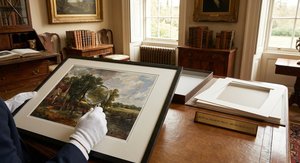
Giclée Prints: Archival Quality & Aesthetic Nuances for the Discerning Collector
Explore the world of giclée prints with OriginalUniqueArt. Learn about archival quality, aesthetic nuances & investment potential. Expert guidance for discerning art collectors seeking museum-quality reproductions and lasting value.

The Enduring Legacy of Fine Art Prints: Technique, History & Aesthetic Impact
Explore the rich history & techniques of fine art prints. Discover investment potential, assess authenticity, and learn how to preserve your collection with expert guidance. Trusted insights for discerning collectors.

Echoes of Time: Exploring the Enduring Appeal & Historical Context of Vintage Art Prints
Explore the captivating world of vintage art prints! Discover their history, collecting tips & enduring appeal. Expert insights on chromolithography and building a legacy collection with OriginalUniqueArt.
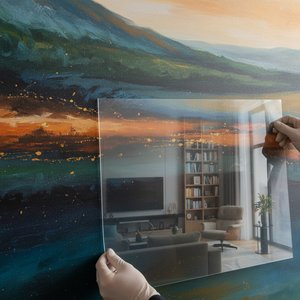
Giclée Prints Explained: The Ultimate Guide to Museum-Quality Art Reproductions
Master the nuances of Giclée printing with our expert guide. Discover how pigment-based inks and museum-grade substrates create fade-resistant, high-fidelity art reproductions designed for discerning collectors seeking unparalleled quality and longevity.
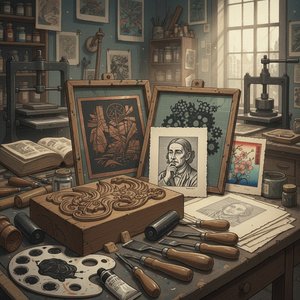
The Enduring Legacy of Printmaking: Techniques, Themes & Artistic Innovation Across Centuries
Explore the rich history of printmaking with OriginalUniqueArt. Discover techniques from intaglio to lithography, learn about collecting valuable prints & find museum-quality reproductions. Expert insights for art enthusiasts and collectors.

