

 Переглянути в інтер'єрі
 Надіслати
 Поділитися
 Деталі
 Посібник

 Завантажити
 Схожі предмети колекціонування
 Рентгенівське дослідження
 Слайд-шоу
 Статистика переглядів
Cranes on pine tree


 Читати далі
Гікле / Художній принт
Музейна якість друку جيкле або на полотні з оперативним виготовленням та різноманітними варіантами фінішної обробки. ( Купити картину ручної роботи Перейти до цифрових зображень)




P118B ₴10

P118H ₴10

P118W ₴10

P438Z ₴10

P508JH ₴12

P508YH ₴12

P805H ₴10

P805Z ₴10

P919BZ ₴10

P919G ₴10

P919XJ ₴10

P959ZH ₴10

P968JZ ₴12

W106C ₴8

W218G ₴10

W218JH ₴8

W218Y ₴10

W307PJ ₴10

W316G ₴10

W316PJ ₴8

W316Y ₴10

W398PJ ₴8

W4111J ₴10

W500HY ₴15

W500JH ₴15

W692G ₴12

W849H ₴8

W940BG ₴15

W953PJ ₴8




Обирайте з наших стандартних розмірів, що відповідають оригінальним пропорціям твору мистецтва.

Type the width and the height you need, to fit your frame or your wall. A print can only be cut, never made bigger than the picture, so a size with a different shape loses a part of the image. We send you a digital mockup to approve before we print anything. The picture shown on this page does not show the real cut — only the mockup does.
Доставка по всьому світу () за 2 тижні замість стандартних 4/5 тижнів. (15 Жовтень)

Безкоштовна експрес-доставка по всьому світу

Високоякісне лляне полотно

Повне страхове покриття доставки

Гарантія повернення митних зборів

Гарантія точного відтворення кольорів

Політика повернення протягом 100 днів (лише у разі виявлення дефектів)

Гарантія повернення 100% коштів

Знижка на оптові замовлення
 Скляний варіант доступний лише для розмірів до 110 см

Cranes on pine tree
Гікле / Художній принт
Розмір репродукції
-


Загальна вартість
₴ 3574
Katsushika Hokusai's *Cranes on Pine Tree*: A Symphony of Serenity
Katsushika Hokusai’s *Cranes on Pine Tree* is more than just a depiction of two elegant cranes amidst a wintry landscape; it’s a profound meditation on longevity, harmony, and the enduring beauty of nature – themes deeply rooted in East Asian philosophy and artistic tradition. Executed with the meticulous precision characteristic of Ukiyo-e prints, this artwork embodies Hokusai's mastery of capturing fleeting moments and imbuing them with symbolic weight. The scene unfolds with a quiet grace, inviting the viewer to contemplate the transient nature of existence while appreciating the steadfastness represented by the ancient pine tree and the revered crane.
A Window into Ukiyo-e Technique
Created around 1834, *Cranes on Pine Tree* exemplifies the core tenets of Ukiyo-e – Japanese woodblock prints that flourished during the Edo period. Hokusai’s technique relies heavily on layered washes of sumi ink applied to washi (Japanese rice) paper using delicate brushes and specialized tools. This process, known as *bokashi*, builds up tonal variations with remarkable subtlety, creating a textured surface that mimics the aged appearance of traditional Japanese paper. The bold outlines defining the cranes and foliage contrast sharply with the softer gradations in the background, drawing the eye towards the central subject while simultaneously conveying a sense of atmospheric depth. Notice how the artist skillfully utilizes negative space – the misty sky and distant trees – to enhance the composition’s dynamism and create an illusion of vastness.
- Sumi Ink: The primary pigment, providing rich blacks and allowing for nuanced shading.
- Washi Paper: A durable, absorbent paper essential for achieving the characteristic Ukiyo-e texture.
- Bokashi Technique: Layering ink washes to build depth and create a mottled effect.
Symbolism and Cultural Significance
The choice of cranes as the central motif is laden with profound symbolism. In East Asian cultures, particularly in Japan and China, the crane represents longevity, happiness, good fortune, and imperial power. The pairing of two cranes often signifies marital fidelity or a wish for prosperity. The pine tree itself is a powerful symbol of resilience, immortality, and steadfastness – its ability to thrive even in harsh winter conditions mirrors the human spirit’s capacity for endurance. Hokusai's careful placement of these elements within a serene landscape speaks volumes about the values he sought to convey: respect for nature, an appreciation for beauty, and a belief in the interconnectedness of all things.
Historical Context and Artistic Influence
*Cranes on Pine Tree* was created during a pivotal period in Hokusai’s career, following his groundbreaking work *Thirty-Six Views of Mount Fuji*. While sharing stylistic similarities with this iconic series – particularly the emphasis on atmospheric perspective and dynamic composition – this piece demonstrates a shift towards a more intimate portrayal of nature. Hokusai's influence extends far beyond Japan; his innovative techniques and compositions profoundly impacted Western artists, including Claude Monet and Edgar Degas, who were captivated by the beauty and power of Ukiyo-e prints. This artwork stands as a testament to Hokusai’s enduring legacy as one of the most influential artists in history.
Bringing *Cranes on Pine Tree* into Your Space
A hand-painted reproduction of *Cranes on Pine Tree* offers a unique opportunity to experience the profound beauty and symbolic richness of Hokusai’s masterpiece. Whether adorning your living room, study, or meditation space, this artwork will bring a sense of tranquility and inspiration into your environment. The meticulous detail and vibrant colors faithfully recreate the original's essence, making it a timeless addition to any collection. Consider its placement carefully – allowing the serene imagery to become a focal point and evoke feelings of peace and harmony.
Запитання та відповіді
Під якими ще іменами відомий Катсушіка Хōкūсай?
Катсушіка Хōкūсай також відомий/відома як Катсушіка Хōкī, Хōкūсай.
Який настрій та емоцію передає «Cranes on pine tree» Катсушіка Хōкūсай?
Переданий настрій твору «Cranes on pine tree» Катсушіка Хōкūсай — це Serene, а його емоційна тональність — Tranquil.
Який інтер'єр найкраще підкреслить кольори твору «Cranes on pine tree» Катсушіка Хōкūсай?
Завдяки своїй палітрі Earthy, роботу «Cranes on pine tree» Катсушіка Хōкūсай рекомендується розміщувати в Living Room. Саме кольори є однією з причин такої поради.
Біографія митця
A Life Etched in Ink: The World of Katsushika Hokusai
Katsushika Hokusai, a name that resonates deeply within the world of art and inextricably linked to the iconic image of *The Great Wave off Kanagawa*, was far more than simply a printmaker. Born in Edo (modern-day Tokyo) around 1760, his life unfolded as an extraordinary, restless pursuit of artistic mastery – a continuous evolution characterized by shifting names and an insatiable curiosity about the world around him. From humble beginnings as the son of a mirror maker, Hokusai’s initial inclination towards art wasn't immediately nurtured; however, he relentlessly honed his skills, reportedly beginning to draw at the tender age of six. This unwavering dedication would ultimately define a career spanning nearly nine decades, leaving behind a legacy that continues to captivate and inspire audiences globally. His father, Nakajima Ise, though not himself an artist, recognized and perhaps subtly fostered this nascent talent, providing the foundational support for a journey that would fundamentally transform Japanese visual culture. Hokusai’s early life wasn't one of privilege or ease; rather, it was a steady climb fueled by ambition, a deep-seated passion to capture the essence of the world in all its fleeting beauty and enduring strength.From Apprenticeship to Innovation: The Blossoming of a Style
Hokusai’s formal artistic training commenced at twelve when he entered the prestigious studio of Katsukawa Shunshō, a leading master of *ukiyo-e* – “pictures of the floating world.” This vibrant genre, immensely popular during the Edo period, served as a mirror reflecting the diverse facets of Japanese society: actors performing in Kabuki theaters, courtesans embodying elegance and allure, sweeping landscapes capturing the beauty of nature, and glimpses into the bustling urban life of Edo. Under Shunshō’s tutelage, Hokusai diligently mastered the intricate techniques of woodblock printing – a demanding process requiring exceptional precision, artistic skill, and an understanding of color theory. Yet, he possessed a spirit that refused to be confined by mere imitation; even in his early works, a palpable restlessness was evident, a desire to push boundaries, experiment with new subjects, and ultimately forge his own unique visual language. He began exploring various avenues of expression, venturing beyond the traditional confines of *ukiyo-e* to include book illustrations and single-sheet prints, constantly refining his skills and developing a distinctive style that would soon set him apart. This period also marked the beginning of a fascinating pattern – a series of name changes, a common practice among Japanese artists of the time, each shift signifying a new phase in his artistic development or an affiliation with different schools and styles.Mount Fuji and the Floating World: Defining Masterpieces
Hokusai’s artistic output was astonishingly prolific; tens of thousands of sketches, prints, illustrated books, and paintings bear his signature – a testament to his tireless dedication. While he explored a remarkably diverse range of subjects – from scenes of everyday life to fantastical creatures and detailed botanical studies – it was his series *Thirty-Six Views of Mount Fuji* (circa 1831) that cemented his enduring fame and established him as one of the greatest artists in Japanese history. This monumental collection wasn’t simply a straightforward depiction of a mountain; rather, it was a profound exploration of perspective, composition, and the raw power of nature. *The Great Wave off Kanagawa*, arguably the most recognizable image in the series, embodies both the breathtaking beauty and the terrifying force of the ocean – a towering wave poised to engulf tiny fishing boats, capturing a moment of sublime drama. Beyond *Fuji*, works such as *Fireworks at Ryōgoku Bridge* (1790) demonstrated his remarkable ability to capture dynamic scenes of daily life with an astonishing level of energy and detail, showcasing his mastery of color and composition. His *Hokusai Manga* – a collection of sketches and studies encompassing people, animals, landscapes, and fantastical creatures – was groundbreaking in its scope and influence, foreshadowing the development of modern manga as an art form. These works weren’t isolated achievements; they were milestones in a continuous artistic journey, each building upon the last to create a body of work that is both deeply rooted in Japanese tradition and remarkably innovative.A Legacy Beyond Borders: Hokusai's Enduring Influence
Hokusai’s impact extended far beyond the borders of Japan. As Japan cautiously opened its doors to the West during the late 19th century, *ukiyo-e* prints flooded European markets, sparking a phenomenon known as *Japonisme*. Artists like Claude Monet, Edgar Degas, and Vincent van Gogh were profoundly influenced by Hokusai’s bold compositions, vibrant colors, and unconventional perspectives. Van Gogh, in particular, was deeply moved by *The Great Wave*, even recreating it in his own paintings, demonstrating a clear understanding of its dynamic energy and emotional impact. Hokusai's influence wasn’t limited to Impressionism; it permeated various modern art movements, shaping the way artists approached composition, color, and subject matter. His emphasis on capturing fleeting moments, his masterful use of line, and his ability to find beauty in everyday life resonated with a generation of artists seeking new forms of expression. Even today, Hokusai’s work continues to inspire and challenge artists around the world, solidifying his place as one of the most important figures in art history – an artist whose vision transcends cultural boundaries and connects us to something profoundly universal.The Old Man Mad About Painting
Hokusai's life was a testament to relentless self-improvement and artistic exploration, marked by numerous name changes – over thirty throughout his career – each reflecting a new phase in his artistic development or an affiliation with different schools and styles. He often referred to himself as “Gakyō Rōjin,” or "Old Man Crazy to Paint," a fitting title for an artist who remained passionately devoted to his craft well into his eighties. This unwavering commitment to perfection, coupled with his innovative spirit and profound understanding of both Japanese tradition and the wider world, cemented Hokusai’s legacy as a true master of *ukiyo-e* and a pivotal figure in the history of art. His work continues to captivate audiences, reminding us of the power of art to transcend cultural boundaries and connect us to something larger than ourselves.- Major Influences: Ukiyo-e traditions, Chinese landscape painting, everyday life in Edo.
- Key Characteristics: Bold lines, vibrant colors, dynamic compositions, keen observation of nature.

Катсушіка Хōкūсай
1760 - 1849 , Японія
Довідкова інформація
- Artistic Movement Or Style: Укійо-е
- Artists Or Movements Influenced By This Artist:
- Імпресіонізм
- Вінсент ван Го
- Клод Моне
- Artists Who Influenced This Artist: Китайські пейзажні художники
- Date Of Birth: 31 жовтня 1760
- Date Of Death: 10 травня 1849
- Full Name: Катсушіка Хōкūсай
- Nationality: Японський
- Notable Artworks:
- «Вели хвиля біля Канаґави»
- «Тридцять шіс відам Фудзі»
- «Манґа Хōкūсай»
- Place Of Birth: Токіо, Японія
Схожі статті
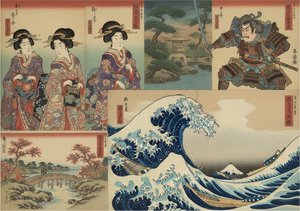
Ukiyo-e: Exploring Japan's Floating World & Enduring Artistic Legacy
Explore the captivating world of Ukiyo-e – Japan's iconic woodblock prints! Discover masters like Hokusai & Hiroshige, learn about Edo period culture, and find expert art collecting guidance at OriginalUniqueArt.

25 шедеврів Кацусіки Хокусая: мистецтво Японії для вашого дому | OriginalUniqueArt
Відкрийте 25 культових робіт Кацусіки Хокусая! Гравюри укійо-е, легендарна "Хвиля", пейзажі Фудзі та неймовірний світ японського мистецтва. Репродукції картин преміум-класу для вашого дому на OriginalUniqueArt.com.
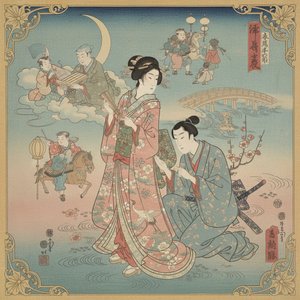
Suzuki Harunobu: Pioneering Ukiyo-e & the Refinement of Edo Period Printmaking
Discover the revolutionary world of Suzuki Harunobu, a pioneer of ukiyo-e printmaking. Explore his exquisite nishiki-e techniques, diverse subjects & lasting impact on Japanese art history. Learn more at OriginalUniqueArt.

Floating Worlds: The Captivating Magic and Timeless Legacy of Japanese Ukiyo-e Art
Explore the ephemeral beauty of Japanese Ukiyo-e art. From the dynamic warriors of Kuniyoshi to serene landscapes, discover the profound history, masterful techniques, and global influence of these iconic woodblock prints in our deep cultural retrospective.
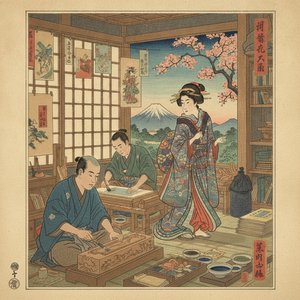
Floating World: The Captivating Art and Legacy of Japanese Ukiyo-e
Explore the profound beauty of Japanese Ukiyo-e. Discover the history, masters like Hokusai, and the enduring legacy of the 'Floating World' through an expert art-historical lens.


