

 Переглянути в інтер'єрі
 Надіслати як листівку
 Поділитися
 Детальніше

 Завантажити
 Схожі експонати
 Рентгенівське дослідження
 Слайд-шоу
 Статистика
Narcissus
 Читати далі
Гікле / Художній принт
Музейна якість друку جيкле або на полотні з оперативним виготовленням та різноманітними варіантами фінішної обробки. ( Замовити репродукцію ручної роботи Перейти до цифрових зображень)




































Обирайте з наших стандартних розмірів, що відповідають оригінальним пропорціям твору мистецтва.

Ви можете вказати власні розміри, щоб репродукція ідеально підійшла до конкретної рами або інтер'єру. Якщо обраний вами розмір не відповідає пропорціям оригіналу, ми або обріжемо полотно, або розширимо зображення за допомогою дзеркального відображення чи суцільної заливки країв. Перед початком виробництва вам буде надіслано цифровий макет для затвердження.
Будь ласка, зверніть увагу, що попередній перегляд на екрані не відображає фактичне обрізання або розширення. Тільки макет точно покаже фінальну композицію.
Хоча можливість замовлення індивідуальних розмірів доступна, ми рекомендуємо обирати формат із попередньо визначеного списку, щоб зберегти оригінальні пропорції.
Доставка по всьому світу () за 2 тижні замість стандартних 4/5 тижнів. (17 Вересень)

Безкоштовна експрес-доставка по всьому світу

Високоякісне лляне полотно

Повне страхове покриття доставки

Гарантія відшкодування митних зборів

Гарантія точного відтворення кольорів

Політика повернення протягом 100 днів (тільки у разі виявлення дефектів)

Гарантія повернення 100% коштів

Пропозиція на оптові замовлення
 Скляний варіант доступний лише для розмірів до 110 см

Narcissus
Гікле / Художній принт
Розмір репродукції
-


Підсумкова вартість
$ 80
A Captivating Glimpse into Romanticism: Karl Bryullov's "Narcissus"
Karl Pavlovich Bryullov’s “Narcissus,” a striking neoclassical painting, offers a poignant exploration of beauty, desire, and self-absorption. This evocative work depicts the mythological figure of Narcissus, condemned by Nemesis to fall in love with his own reflection. The scene portrays him reclining on the ground, utterly captivated by an unseen image – a moment frozen in time that speaks volumes about human vanity and the allure of unattainable beauty. Bryullov masterfully captures the languid grace of the human form, showcasing his exceptional skill in anatomical detail and composition, hallmarks of his artistic style. The presence of two angels adds a layer of ethereal quality to the scene, hinting at divine observation or perhaps even pity for Narcissus's tragic fate. A solitary bird perched nearby further enhances the sense of quiet contemplation and isolation that permeates the artwork.Neoclassical Technique with Romantic Sensibilities
Bryullov’s artistic training within a classical framework is evident in the painting’s meticulous attention to detail, balanced composition, and idealized figures. However, “Narcissus” transcends mere neoclassical imitation. Bryullov infuses the work with distinctly Romantic sensibilities – a dramatic use of light and shadow reminiscent of Caravaggio, an emphasis on emotional intensity, and a focus on individual experience rather than purely historical or allegorical narratives. The soft lighting highlights Narcissus’s features, drawing the viewer's eye to his expression of captivated longing. Bryullov’s technique demonstrates a mastery of oil painting, creating a luminous quality that enhances the overall beauty and impact of the piece.Historical Context and Artistic Influences
Created during the 19th century, “Narcissus” reflects the broader artistic trends of Romanticism, which emphasized emotion, individualism, and the sublime. Bryullov’s time spent in Italy significantly shaped his artistic development; he drew inspiration from Renaissance masters like Raphael, Michelangelo, and Caravaggio. This influence is particularly noticeable in the painting's dynamic composition, anatomical accuracy, and dramatic use of light to create a sense of depth and realism. The work was created during a period when Russian art was striving for recognition on the European stage, and Bryullov’s success with “The Last Day of Pompeii” paved the way for greater international acclaim.Symbolism and Emotional Resonance
Beyond its narrative depiction of the Narcissus myth, the painting is rich in symbolism. The figure's self-absorption represents a broader commentary on human vanity and the dangers of excessive pride. The angels could symbolize divine judgment or compassion for Narcissus’s plight. The overall emotional impact of “Narcissus” is one of melancholy and longing – a poignant portrayal of unrequited desire and the ultimately futile pursuit of unattainable beauty. Bryullov's ability to convey such complex emotions through his art makes "Narcissus" a timeless masterpiece that continues to resonate with viewers today.Біографія митця
Karl Pavlovich Bryullov: A Life in Romanticism
Karl Pavlovich Bryullov (born Karl Briullo) was a Russian painter who combined technical proficiency and classical academic training with a Romantic spontaneity to produce some of the liveliest examples of Russian art of the period. Bryullov descended from French Huguenots, and his father was a sculptor. (The biographical information provided by Britannica confirms this.)Early Life and Training
Bryullov’s artistic journey began under his father's guidance before he formally enrolled at the Imperial School for the Arts in St. Petersburg in 1809. Pavel Ivanovich Briullo, a respected academician, woodcarver, and engraver of Huguenot descent, instilled in young Karl a profound appreciation for the visual arts—a formative influence that would shape his entire artistic career. Bryullov’s early education focused on mastering classical techniques, preparing him for the challenges of pursuing a creative vocation within the framework of the era.Artistic Development and Influences
Despite adhering to classical principles, Bryullov possessed an innate inclination towards Italy—a passion that fueled his artistic development. He felt deeply moved by the grandeur and vibrancy of Italian Renaissance masters like Raphael, Michelangelo, and Caravaggio. These artists’ masterful use of light and shadow, coupled with their meticulous anatomical detail, served as constant inspiration for Bryullov, shaping his stylistic choices and informing his approach to portraying human figures and dramatic narratives. His work demonstrates a remarkable synthesis of tradition and innovation—a hallmark of Romanticism itself.Major Achievements and Notable Works
Bryullov’s artistic breakthrough arrived with “The Last Day of Pompeii” (1830-1833)—a monumental historical painting that catapulted him to international fame. This ambitious undertaking captured the terrifying spectacle of Mount Vesuvius erupting, unleashing pyroclastic flows and ash clouds upon the city of Pompeii. Bryullov’s depiction was lauded for its breathtaking composition, palpable emotional intensity, and unparalleled technical brilliance—a testament to his mastery of artistic skill and vision. Critics like Pushkin and Gogol recognized Bryullov's genius immediately, cementing his place as one of Russia’s foremost artists. Beyond “The Last Day of Pompeii,” Bryullov produced several other significant works, including “The Taking of the Life of a Tsar” (1827), showcasing his ability to convey historical drama with dramatic flair; “The Defense of the Sepulchre” (1846), which skillfully balanced emotional resonance and meticulous accuracy; and “Princess Yuliya Pavlovna Samoilova Leaving a Ball with Adopted Daughter Amacilia Pacini” (1832)—a portrait that exemplifies Bryullov’s refined artistic sensibilities. He also undertook the monumental task of decorating St Isaac's Cathedral, a project that demanded immense dedication and artistic prowess.Career and Later Life
Following the acclaim surrounding “The Last Day of Pompeii,” Bryullov returned to Russia in triumph, securing a prestigious professorship at the Imperial Academy of Arts in 1836. He continued to teach and inspire aspiring artists until his retirement in 1848—leaving an indelible mark on Russian artistic education. Seeking improved health conditions, Bryullov embarked on a journey abroad in 1849, settling near Rome where he remained until his death in 1852. His legacy extends beyond his paintings; he was remembered as a respected mentor and champion of artistic experimentation—a figure who profoundly influenced the trajectory of Russian art history. He is buried at the Cimitero Acattolico in Rome.
karl pavlovich bryullov
1799 - 1852 , Россия
Короткі факти
- Artistic Movement Or Style: Романтизм
- Artists Who Influenced This Artist:
- Рафаэль
- Микеланджело
- Караваджо
- Date Of Birth: 1799-12-23
- Date Of Death: 1852-06-23
- Full Name: Karl Pavlovich Bryullov
- Nationality: Російський
- Notable Artworks:
- Останній день Помпей
- Взятие жизни царя
- Захист Святилища
- Place Of Birth: Saint Petersburg, Russia
Пов'язані статті
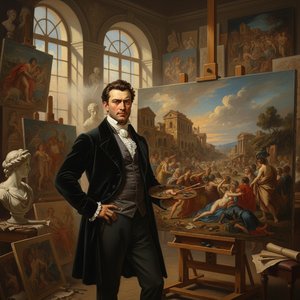
Karl Bryullov: Romanticism's Dramatic Vision & Shaping Russian Historical Painting
Explore the dramatic world of Karl Bryullov, a pivotal figure in Russian Romanticism. Discover his masterpieces like 'The Last Day of Pompeii' and learn about his lasting influence on 19th-century art history.

Ivan Bilibin: A Synthesis of Folklore, Modernism & National Identity in Russian Illustration
Explore the enchanting world of Ivan Bilibin, a master Russian illustrator who synthesized folklore, Art Nouveau & national identity. Discover his iconic fairy tale illustrations and legacy with OriginalUniqueArt.
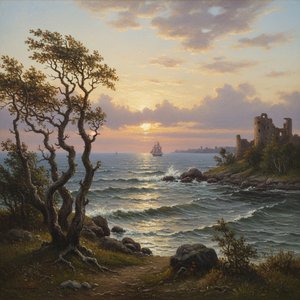
Alexei Bogolyubov: Bridging Realism & Romanticism in the Russian Landscape Tradition
Explore the captivating world of Alexei Bogolyubov, a master of Russian Realism & Romanticism. Discover his stunning landscapes, maritime scenes, and lasting influence on 19th-century art. Learn more at OriginalUniqueArt.

Victor Vasnetsov: Myth, Nationalism & the Revival of Russian Fairy Tale Painting
Explore the captivating world of Victor Vasnetsov, a co-founder of Russian folklorist painting. Discover his iconic works, influence on national identity, and lasting legacy in this expert guide.

Karl Bryullov: Romanticism's Grand Master – Life, Legacy & Artistic Innovation
Explore the life & art of Karl Bryullov, a pivotal figure in Russian Romanticism. Discover his iconic paintings like 'The Last Day of Pompeii' and delve into his lasting influence on 19th-century art history.