Переглянути в інтер'єрі
 Надіслати
 Поділитися
 Деталі
 Посібник

 Завантажити
 Схожі предмети колекціонування
 Рентгенівське дослідження
 Слайд-шоу
 Статистика переглядів
St. Jerome and the Angel


 Читати далі
Гікле / Художній принт
Музейна якість друку جيкле або на полотні з оперативним виготовленням та різноманітними варіантами фінішної обробки. ( Купити картину ручної роботи Перейти до цифрових зображень)




P118B ₴10

P118H ₴10

P118W ₴10

P438Z ₴10

P508JH ₴12

P508YH ₴12

P805H ₴10

P805Z ₴10

P919BZ ₴10

P919G ₴10

P919XJ ₴10

P959ZH ₴10

P968JZ ₴12

W106C ₴8

W218G ₴10

W218JH ₴8

W218Y ₴10

W307PJ ₴10

W316G ₴10

W316PJ ₴8

W316Y ₴10

W398PJ ₴8

W4111J ₴10

W500HY ₴15

W500JH ₴15

W692G ₴12

W849H ₴8

W940BG ₴15

W953PJ ₴8




Обирайте з наших стандартних розмірів, що відповідають оригінальним пропорціям твору мистецтва.

Введіть необхідну ширину та висоту, щоб принт ідеально підійшов до вашої рами або стіни. Принт можна лише обрізати, але не можна зробити більшим за оригінал, тому при зміні пропорцій частина зображення буде втрачена. Перед друком ми надсилаємо вам цифровий макет для затвердження. Зображення на цій сторінці не відображає реальну обрізку — її можна побачити лише на макеті.
Доставка по всьому світу () за 2 тижні замість стандартних 4/5 тижнів. (23 Жовтень)

Безкоштовна експрес-доставка по всьому світу

Високоякісне лляне полотно

Повне страхове покриття доставки

Гарантія повернення митних зборів

Гарантія точного відтворення кольорів

Політика повернення протягом 100 днів (лише у разі виявлення дефектів)

Гарантія повернення 100% коштів

Знижка на оптові замовлення
 Скляний варіант доступний лише для розмірів до 110 см

St. Jerome and the Angel
Гікле / Художній принт
Розмір репродукції
-


Загальна вартість
₴ 3589
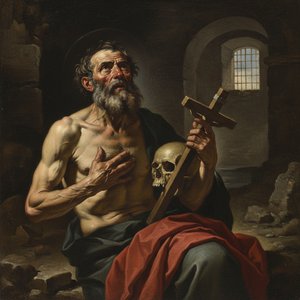
Saint Jerome and the Angel of Judgement - A Study in Dramatic Realism
Jusepe de Ribera’s *Saint Jerome and the Angel of Judgement*, completed in 1626, stands as a cornerstone of Baroque painting—a testament to Ribera's mastery of tenebrismo and his profound engagement with religious iconography. Executed for Santa Trinità delle Monache in Naples, this monumental canvas immediately commands attention through its masterful use of chiaroscuro, plunging the scene into deep shadows punctuated by brilliant highlights that sculpt the figures with breathtaking precision.
- Subject Matter: The painting depicts Saint Jerome, renowned for his ascetic devotion and biblical scholarship, confronted by an angel bearing the trumpet of divine judgment. This juxtaposition embodies a central theme of Baroque art—the confrontation between earthly mortality and eternal salvation.
- Style & Technique: Ribera’s signature tenebrist style – derived from Caravaggio – dominates the composition. Light is strategically employed to illuminate key elements, creating dramatic contrasts that heighten emotional intensity and emphasize textural detail. The artist meticulously renders every wrinkle of Jerome's face, every fold in his robe, conveying a palpable sense of physicality and psychological torment.
- Historical Context: Naples under Spanish rule during Ribera’s lifetime fostered an artistic environment characterized by patronage from the Medici family and a fervent devotion to Catholicism. The painting reflects this cultural climate, aligning with prevailing theological concerns about divine retribution and spiritual redemption.
- Symbolism: Beyond its biblical narrative, *Saint Jerome* is laden with symbolic significance. The angel’s trumpet signifies impending judgment, while Jerome's posture—seated on the ground, hands clasped together—represents humility and prayerful contemplation. The inclusion of St. Jerome’s robe draped over his leg serves as a visual reminder of the saint’s ascetic life and unwavering faith.
- Emotional Impact: Ribera succeeds in conveying profound emotional depth through his depiction of Saint Jerome's anguish. The artist captures not merely physical suffering but also psychological torment—a palpable sense of dread and despair that resonates powerfully with viewers centuries later. This masterful portrayal underscores the Baroque preoccupation with portraying human emotion as a conduit for divine grace.
The Genius of Tenebrismo: Ribera’s Innovative Approach
Ribera's innovative use of tenebrism—the dramatic interplay between light and darkness—revolutionized painting technique during the Baroque period. Unlike earlier artists who favored softer, diffused lighting, Ribera deliberately employed stark contrasts to create a theatrical effect, emphasizing sculptural form and amplifying emotional impact. This approach was not merely stylistic; it served as a powerful tool for conveying theological ideas about God’s judgment and humanity's vulnerability.
- Light & Shadow: The artist meticulously sculpts the figures using light and shadow, creating an illusion of three-dimensionality that transcends conventional representation. Ribera’s masterful manipulation of chiaroscuro draws inspiration from Caravaggio’s groundbreaking style, establishing him as a pivotal figure in Baroque art history.
- Texture & Detail: The painting's surface is covered in densely textured brushstrokes—a hallmark of Ribera’s technique—that capture the materiality of the drapery and Jerome’s flesh with astonishing realism. This meticulous attention to detail underscores Ribera’s commitment to portraying human experience with uncompromising honesty.
- Dramatic Effect: The tenebrist style generates a dramatic effect that intensifies the emotional impact of the scene, immersing viewers in a realm of psychological torment and spiritual apprehension. Ribera's technique elevates the painting beyond mere visual depiction—it becomes an embodiment of theological contemplation.
A Legacy of Spiritual Intensity: Ribera’s Influence on Baroque Art
Jusepe de Ribera’s *Saint Jerome and the Angel of Judgement* exerted a profound influence on subsequent Baroque artists, establishing him as one of the era's most celebrated masters. His uncompromising realism combined with his masterful use of tenebrismo—a technique that would become synonymous with Baroque painting—inspired generations of painters to explore similar stylistic approaches.
- Caravaggio Connection: Ribera’s debt to Caravaggio is undeniable, mirroring the artist's penchant for dramatic lighting and unflinching portrayal of human emotion. This stylistic kinship cemented Ribera’s position as a successor to Caravaggio’s artistic legacy.
- Continuing Tradition: Ribera’s influence extended beyond Caravaggio, shaping the aesthetic sensibilities of artists across Europe who embraced tenebrismo—a technique that would become a defining characteristic of Baroque art.
The Museo di Capodimonte and Its Masterpiece
Currently housed in the Museo di Capodimonte in Naples, *Saint Jerome and the Angel of Judgement* remains one of Ribera’s most iconic works—a testament to his artistic genius and a cornerstone of Neapolitan Baroque art history. Visitors can experience firsthand the breathtaking beauty and emotional depth of this monumental canvas, appreciating its masterful execution and enduring significance.
- Location: The Museo di Capodimonte offers an unparalleled opportunity to examine Ribera’s *Saint Jerome* alongside other masterpieces of Neapolitan Baroque painting.
- Conservation Efforts: Ongoing conservation efforts ensure that the painting retains its vibrancy and integrity for future generations of art enthusiasts.
Further Exploration
For those interested in delving deeper into Ribera’s artistic oeuvre, numerous scholarly resources are available—including monographs, exhibition catalogues, and critical analyses. Examining these materials provides invaluable insight into Ribera's stylistic innovations, biographical details, and broader cultural context.
Запитання та відповіді
Де я можу купити принт «St. Jerome and the Angel» Йосефе де Рібера?
Щоб замовити принт «St. Jerome and the Angel» Йосефе де Рібера, просто перейдіть на відповідну сторінку Художній принт: художній принт на бавовняному полотні або архівному канвас-папері.
Наскільки виражений контраст у «St. Jerome and the Angel» Йосефе де Рібера?
Рівень контрасту твору «St. Jerome and the Angel» Йосефе де Рібера становить Bold.
Чи є "St. Jerome and the Angel" типовим для того, що зазвичай створював Йосефе де Рібера?
Серед зафіксованих тем Йосефе де Рібера — dramatic realism, religious iconography, neapolitan patronage, caravaggisti style, moral allegory — «St. Jerome and the Angel» приділяє особливу увагу saint jerome, angel, judgement, religious art, biblical scene, renaissance painting, neapolitan baroque.
Біографія митця
A Life Forged in Shadow and Light
Jusepe de Ribera, широко відомий як Lo Spagnoletto – “Маленький Іспанець” – був величним фігурою епохи Бароко, художник, чиї полотна пульсували драматичною інтенсивністю та безкомпромісною реалістичністю. Народився в Хатіва, Іспанія, у 1591 році, його шлях відвідав далеко від його валенсійського походження, зрештою утвердившись як один із найзначніших живописців XVII століття в Неаполі, місті, під іспанським контролем. Життя Рібери було не просто хронікою розвитку мистецтва; це була розповідь, сплетена з важкощінності, амбіцій та непохильного прагнення зображувати людську сутність у всій її грубій складності. Хоча ранні біографічні деталі залишаються частково завіреними в таємниці, ми знаємо, що він прибув до Італії близько 1607 року, спочатку поселившись у Римі, а потім переїхавши до Неаполя в 1616 році – місто, яке стало як його художнім домом, так і кузницею для його унікального стилю. Його шлюб із Катеріною Азлоліно, дочкою місцевого художника, ще більше зміцнив його зв’язки з неаполітанським мистецьким світом, дозволивши йому процвітати в його динамічній, але часто турбулентній атмосфері.The Embrace of Tenebrism and Realist Vision
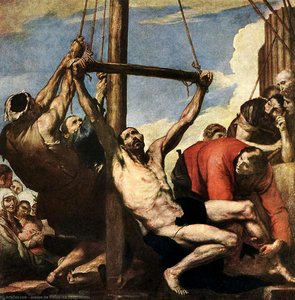
Мистецька освіта Рібери була глибоко сформована потоками італійського живопису того часу. Вплив Караваджіо неминучий; Рібера засвоїв революційний метод майстра використання тенебризму – драматичної взаємодії світла та тіні – для створення сцен, заряджених емоційною силою. Однак він не просто копіював. Він синтезував цю техніку з елементами, запозиченими у інших майстрів, таких як Гуїдо Рені, інтегруючи класичну чутність у свої композиції, зберігаючи водночас жорстокий вплив реалізму Караваджіо. Цей поєднання дало змогу створити стиль, який був унікальним для нього: характеризувався різкими контрастами, інтенсивно зосередженими фігурами та майже безжальною чесністю в зображенні людського страждання та духовної екстази. Його ранні роботи, такі як Мучеництво святого Варфоломія, демонструють цей підхід – жахливе зображення болю, виконане з безкомпромісною деталізацією. Він не соромився зображувати фізичні реалії мучеництва, викривлені тіла, напружені м’язи, саму текстуру шкіри та кісток. Цей зосереджений на реалістичності підхід поширився і за межі релігійних тем; його портрети бідняків і звичайних людей, часто зображених як філософів чи святих, були новаторськими для свого часу, підвищуючи статус маргіналів до рівня гідності та важливості, який рідко бачився в мистецтві до того.A Career Across Genres and Evolving Styles
Мистецьке видовище Рібери було надзвичайно різноманітним. Хоча він, мабуть, найкраще відомий своїми релігійними картинами – сценами мучеництва, зображеннями святих і драматичними біблійними розповідями – він також відмінно справлявся з портретами, натюрними композиціями та навіть пейзажами. Його Святий Єронім, читаючи ангела, наприклад, демонструє більш м’яку, більш рефлексивну сторону його мистецтва, зберігаючи водночас характерне драматичне освітлення, яке визначає його роботу. Протягом своєї кар'єри стиль Рібери поступово еволюціонував. Його ранні роботи характеризуються майже суворим реалізмом і жорстким використанням тенебризму. З віком, особливо після того, як він міцно утвердився в Неаполі, його палітра стала більш насиченою, а композиції – складнішими, а освітлення – трохи м’якшим. Однак основні елементи його барокового естетичного стилю – емоційна інтенсивність, драматичні розповіді та непохильний зосередженість на зображенні людського досвіду з чесністю – залишалися постійними. Він був майстром ремесла, здатним з великою точністю відтворювати текстури – від грубої тканини шатуна до гладкої шкіри молодого святого.Key Works and Historical Significance
Найбільш відомі твори Рібери включають: *Мучеництво святого Варфоломія*, *Святий Єронім, читаючи ангела*, *Покарання Каїна* та *Смерть святого Мартіна*. Ці полотна демонструють його майстерність у передачі емоційного драматизму, фізичної болі та духовної глибини. Його роботи часто характеризуються жорстким реалізмом і використанням тенебризму для створення атмосфери напруги та тривоги. Рібера був важливим художником в епоху Бароко, який вплинув на наступні покоління митців у Європі. Його новаторський підхід до тенебризму та безкомпромісна реалістичність сприяли розвитку мистецтва в 17 столітті.Legacy and Lasting Influence
Наслідування Рібери продовжує захоплювати глядачів і сьогодні завдяки здатності його творів перетинати часові та культурні межі. Його картини не є просто історичними артефактами; це потужні заяви про людську природу – про страждання, віру, надію та відчай. Його безкомпромісна реалістичність змушує нас зіткнутися з неприємними істинами, а його драматичні композиції та майстерне використання світла та тіні створюють атмосферу сильної емоційної резонантності. Lo Spagnoletto, як він був ласкаво прозваний, залишив після себе велику кількість робіт, які є одночасно глибоко зворушливими та інтелектуально стимулюючими – спадок, який гарантує його місце серед найвидатніших майстрів Бароко. Його картини не просто варто оцінювати; їх слід пережити – відчути у глибині свого буття.
Йосефе де Рібера
1591 - 1652 , Іспанія
Довідкова інформація
- Artistic Movement Or Style: Бароко
- Artists Or Movements Influenced By This Artist: ['Іспанські майстри']
- Artists Who Influenced This Artist:
- Караваджо
- Гуїдо Рені
- Date Of Birth: 1591
- Date Of Death: 1652
- Full Name: Jusepe de Ribera
- Nationality: Іспанець
- Notable Artworks:
- Богохульство святого Варфоломія
- Святий Єромус і ангел
- Place Of Birth: Хавіта, Іспанія
Схожі статті

Giclée Prints: Archival Quality & Aesthetic Nuances for the Discerning Collector
Explore the world of giclée prints with OriginalUniqueArt. Learn about archival quality, aesthetic nuances & investment potential. Expert guidance for discerning art collectors seeking museum-quality reproductions and lasting value.
Jusepe de Ribera: Dramatic Realism & Spiritual Intensity in the Spanish Golden Age
Explore the powerful Baroque paintings of Jusepe de Ribera, master of tenebrism and dramatic realism. Discover his spiritual intensity, influence on Spanish art, and considerations for collectors. Expert insights at OriginalUniqueArt.

Echoes of Time: Exploring the Enduring Appeal & Historical Context of Vintage Art Prints
Explore the captivating world of vintage art prints! Discover their history, collecting tips & enduring appeal. Expert insights on chromolithography and building a legacy collection with OriginalUniqueArt.

The Visceral Stage: Exploring Dramatic Narratives & Emotional Intensity in Baroque Art
Explore the dramatic world of Baroque art! Discover iconic masters like Caravaggio & Rembrandt, their techniques, and the movement's lasting impact. Expert insights for collectors & enthusiasts at OriginalUniqueArt.

Топ-10 шедеврів бароко: картини, що змінили мистецтво | OriginalUniqueArt.com
Відкрийте для себе 10 шедеврів бароко від Караваджо, Рембрандта та Рубенса! Історія мистецтва, техніки живопису та натхнення для вашого інтер'єру. Репродукції картин високої якості – OriginalUniqueArt.com