Меню
БЕЗКОШТОВНА КОНСУЛЬТАЦІЯ З МИСТЕЦТВА
Переглянути в інтер'єріПереглянути в інтер'єрі Перегляд в ARПерегляд в AR Замовити принт Замовити принтКупити цифрове зображення Купити цифрове зображення Надіслати як листівкуНадіслати як листівку
ДетальнішеДетальніше Додати до улюблених Додати до улюблених ЗавантажитиЗавантажити Схожі експонатиСхожі експонати Рентгенівське дослідженняРентгенівське дослідження Слайд-шоуСлайд-шоу

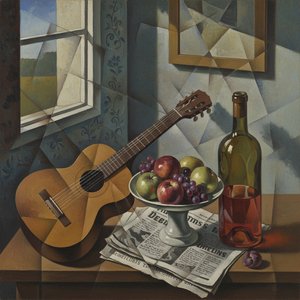
Still Life with a Guitar

Inspired by Fantômas and Pablo Picasso’s approach to art, Gris utilized mathematical concepts to inform his compositions. This painting reflects the broader 'return to order' movement following World War I and solidified Gris's position as a pivotal figure in early 20th-century artistic expression.

Хуан Гріс – видатний іспанський кубіст! Його геометричний стиль, синтетична кубізм та вплив на сучасне мистецтво вражають. Відкрийте для себе світ його яскравих творів!

Олійная репродукція ручної роботи

Написана вручну олією на полотні у вашому розмірі та рамі, виготовлена на замовлення нашими художниками. (Замовити принт Замовити принтКупити цифрове зображення Купити цифрове зображення)

P118B $10
P118H $10
P118W $10
P438Z $10
P508JH $12
P508YH $12
P805H $10
P805Z $10
P919BZ $10
P919G $10
P919XJ $10
P959ZH $10
P968JZ $12
W106C $8
W218G $10
W218JH $8
W218Y $10
W307PJ $10
W316G $10
W316PJ $8
W316Y $10
W398PJ $8
W4111J $10
W500HY $15
W500JH $15
W692G $12
W849H $8
W940BG $15
W953PJ $8

Standard
custom
CM
INCH

Обирайте з наших стандартних розмірів, що відповідають оригінальним пропорціям твору мистецтва.

ширина
висота

Ви можете вказати власні розміри, щоб репродукція ідеально підійшла до конкретної рами або інтер'єру. Якщо вибраний вами розмір не відповідає пропорціям оригіналу, ми або обріжемо полотно, або доповнимо картину додатковими елементами, промальованими вручну. Цифровий макет буде надіслано вам на затвердження перед початком виробництва.
Зверніть увагу, що попередній перегляд на екрані не відображає фактичне обрізання або розширення зображення. Тільки макет точно покаже остаточну композицію.
Хоча ми можемо виготовити виріб у нестандартному розмірі, для збереження оригінальних пропорцій рекомендуємо обирати варіанти зі встановленого списку.

Приклади можливих змін: замінити обличчя на фото клієнта; додати домашню тварину (наприклад, замінити кота на собаку); додати приховане повідомлення на фоні; змінити ландшафт або елементи фону.
Після оформлення замовлення команда OriginalUniqueArt.com зв'яжеться з клієнтом електронною поштою для отримання інструкцій та надасть попередній макет

Доставка по всьому світу () за 3–4 тижні замість стандартних 5 тижнів. (22 Серпень). Без жодних компромісів у якості.

why_choose_icon
Безкоштовна експрес-доставка по всьому світу
why_choose_icon
Високоякісне лляне полотно
why_choose_icon
Повне страхове покриття доставки
why_choose_icon
Гарантія відшкодування митних зборів
why_choose_icon
Гарантія точного відтворення кольорів
why_choose_icon
Політика повернення протягом 60 днів (лише у разі виявлення дефектів)
why_choose_icon
Гарантія повернення 100% коштів
why_choose_icon
Пропозиція на оптові замовлення

Загальна вартість

$ 300

reproduction

Still Life with a Guitar

Матеріал репродукції

Розмір репродукції

-

Підсумкова вартість

$ 300

Основна інформація

  • Medium: Oil on canvas
  • Notable elements or techniques: Collage, Geometric shapes
  • Title: Still Life with Guitar
  • Movement: Cubism
  • Year: 1913
  • Influences:
    • Fantômas
    • Pablo Picasso
  • Dimensions: 66 x 100 cm

Квіз про мистецтво

У кожному запитанні лише одна правильна відповідь.

Запитання 1:
What artistic movement is Juan Gris’s ‘Still Life with Guitar’ primarily associated with?
Запитання 2:
The description mentions that Gris was inspired by Fantômas and its film versions. What is Fantômas known for?
Запитання 3:
According to the description, what distinguishes Gris’s guitar shadow from other shadows in the painting?
Запитання 4:
The image description highlights the composition of the painting. What creates a sense of depth and complexity?
Запитання 5:
What is the primary technique employed by Gris in this artwork?

Опис твору

Still Life with Guitar – A Symphony of Fragmentation

The painting “Still Life with Guitar,” executed in 1913 by Juan Gris, transcends mere representation; it embodies the core tenets of Cubism and invites contemplation on perception itself. Created during Céret’s artistic zenith—a period marked by collaboration between Picasso and Matisse—the artwork stands as a testament to the movement's radical departure from traditional artistic conventions. Gris’s meticulous approach—characterized by analytical dissection followed by synthetic reconstruction—is immediately apparent upon observation. The scene depicts a guitar alongside a wineglass, pipe, and bottle, arranged against a backdrop of muted hues that serve to heighten the impact of geometric forms dominating the composition.

Deconstructing Reality: Analytical Cubism's Influence

Gris’s initial foray into Cubism aligns closely with the principles championed by Picasso and Braque—namely, the fragmentation of objects into interlocking planes and the simultaneous depiction of multiple viewpoints. This technique, exemplified in “Still Life,” seeks to capture not just what is visible but also how it is perceived. The guitar itself is meticulously broken down into angular shards, mirroring the fractured reality presented on canvas. Shadows cast upon these fragments are equally fragmented, defying conventional notions of illumination and adding a layer of complexity to the visual experience. This deliberate distortion underscores Cubism’s ambition to challenge viewers' assumptions about spatial relationships.

Synthetic Harmony: Embracing Collage and Color

As Gris progressed in his artistic development, he embraced Synthetic Cubism—a stylistic evolution that prioritized color and textural richness over strict geometric precision. The incorporation of papier collé—decorative paper fragments adhered to the canvas—introduces an element of spontaneity and visual surprise. These collaged elements disrupt the rigid grid structure characteristic of Analytical Cubism, injecting organic textures and vibrant hues into the overall palette. The bold reds and yellows employed in “Still Life” contribute to a sense of dynamism and emotional intensity, mirroring the influence of Matisse’s expressive style.

A Reflection of Artistic Zeitgeist: Fantômas and Pulp Fiction

The painting's genesis is inextricably linked to the cultural milieu of its time—specifically, the pervasive fascination with pulp fiction series like Fantômas and their cinematic adaptations. Gris drew inspiration from Fantômas’s stealthy maneuvers and theatrical disguises, mirroring the artist’s penchant for stylistic experimentation and subversive commentary. This influence manifests in the painting's deliberate mock deviousness—a playful nod to the genre’s conventions of suspense and illusion. The fractured perspective and fragmented forms serve as visual metaphors for the disorientation experienced by characters navigating the shadowy underworld depicted in Fantômas films.

Emotional Resonance: Beyond Representation

Ultimately, “Still Life with Guitar” transcends mere depiction; it communicates an emotional resonance that lingers long after viewing. The painting’s unsettling juxtaposition of geometric shapes and muted colors evokes a sense of unease—a deliberate provocation designed to unsettle the viewer's expectations. Yet, amidst this apparent dissonance lies a profound harmony—a testament to Gris’s masterful command of artistic technique and his unwavering commitment to exploring the complexities of human perception. It remains an enduring emblem of Cubism’s transformative legacy—a celebration of fragmentation as a pathway toward aesthetic enlightenment.

Біографія митця

A Spanish Visionary of Cubism: The Life and Art of Juan Gris

José Victoriano González-Pérez, a name that would become synonymous with artistic innovation, was born in Madrid in 1887 – a city steeped in history and tradition. Yet, this young man harbored an unconventional spirit, one that led him far from the familiar landscapes of his homeland to the vibrant, pulsating heart of Paris. Initially pursuing a path in engineering at the School of Arts and Sciences, he demonstrated a keen analytical mind, a trait that would later profoundly shape his artistic approach. Even during these early years, however, a creative spark flickered within him – evidenced by his contributions to local periodicals with captivating drawings, hinting at a burgeoning talent waiting to be unleashed. It was in 1905 that he adopted the pseudonym Juan Gris, a name resonating with newfound identity and purpose as he embarked on formal painting studies under José Moreno Carbonero, marking a pivotal shift towards artistic expression.

Parisian Awakening and the Embrace of Cubism

The year 1906 witnessed a transformative relocation to Paris – a city then brimming with an unparalleled energy that captivated artists from across Europe. Gris immersed himself completely in this vibrant milieu, forging enduring friendships with luminaries such as Henri Matisse, Georges Braque, and Fernand Léger. Initially engaged in satirical illustration for publications like *L'Assiette au Beurre*, he honed his observational skills and developed a remarkable sense of visual wit, capturing the essence of Parisian life with sharp commentary and playful exaggeration. However, the magnetic pull of Pablo Picasso proved particularly influential. Around 1910, Gris began to seriously dedicate himself to painting, moving away from caricature towards the burgeoning language of Cubism – a movement that would define his artistic legacy. This wasn’t merely imitation; it was a deliberate quest to distill the very essence of form and space, seeking a new visual order, a way to represent reality not as it appears but as it *is* perceived. His early explorations were marked by a bold departure from traditional representation, embracing abstraction as a powerful tool for capturing the underlying structure of objects and experiences.

The Geometry of Perception: Style and Key Works

Juan Gris’s artistic output is characterized by an extraordinary clarity and intellectual rigor. He didn't simply deconstruct objects; he meticulously reconstructed them, emphasizing geometric forms and a carefully considered palette. This approach led to what became known as his “crystal period,” exemplified in masterpieces such as *Still Life Before an Open Window* (1912) and *Place Ravignan* (1915). These works showcase a remarkable interplay of planes and angles, creating a sense of depth and solidity while simultaneously challenging conventional notions of perspective. The influence of Picasso is undeniable here, yet Gris developed his own distinct voice within the Cubist framework – one characterized by a precise logic and an almost mathematical precision. He moved beyond mere fragmentation, striving for a new visual harmony. Following this period, he embraced Synthetic Cubism, pioneering the innovative use of *papier collé* – collage – incorporating real-world materials like newspaper clippings, fabric scraps, and wood grain into his compositions. This technique added another layer of complexity and tactility to his work, blurring the boundaries between painting and sculpture, inviting viewers to engage with the artwork on a more visceral level. Notable examples include *Guitar in front of the sea* (1925), a testament to his simplified forms and adherence to cubist principles, and *Homage à Pablo Picasso* (1912), which signaled his growing recognition within the avant-garde art world as a truly original voice.

Influences and Legacy

Juan Gris’s artistic journey was shaped by a confluence of influences – from the analytical rigor of Cézanne to the vibrant color palettes of Matisse, and crucially, the revolutionary ideas of Picasso and Braque. However, he wasn't simply a follower; he synthesized these influences into a uniquely personal style. His emphasis on geometric forms, harmonious color palettes, and the integration of everyday objects into his art established him as a pivotal figure in 20th-century art. He moved beyond the analytical phase, towards a more organized and synthetic approach, advocating for order and precision. His work profoundly influenced the Purist style championed by Amédée Ozenfant and Charles Edouard Jeanneret (Le Corbusier), who sought to return to classical principles of form and composition after the perceived chaos of modernism. Gris’s legacy extends far beyond his individual creations; he fundamentally reshaped our understanding of perception and representation, leaving an indelible mark on the course of art history. His paintings continue to resonate with viewers today, offering a glimpse into a brilliant mind grappling with the complexities of the modern world.
Хуан Гріс

Хуан Гріс

1887 - 1927 , Іспанія

Короткі факти

  • Artistic Movement Or Style: Кубізм, Синтетичний кубізм
  • Artists Or Movements Influenced By This Artist:
    • Пуризм
    • Озенфан
    • Ле Корбюзьє
  • Artists Who Influenced This Artist:
    • Пабло Пікассо
    • Енрік Матіс
    • Жорж Брак
  • Date Of Birth: 23 березня 1887
  • Date Of Death: 11 травня 1927
  • Full Name: José Victoriano González-Pérez
  • Nationality: Іспанець
  • Notable Artworks:
    • Гітара перед морем
    • Подяка Пабло Пікассо
    • Фермер
  • Place Of Birth: Мадрид, Іспанія
Досліджуйте твори мистецтва, впорядковані за темами, стилями та характеристиками.