

 Переглянути в інтер'єрі
 Надіслати
 Поділитися
 Деталі
 Посібник

 Завантажити
 Схожі предмети колекціонування
 Рентгенівське дослідження
 Слайд-шоу
 Статистика переглядів
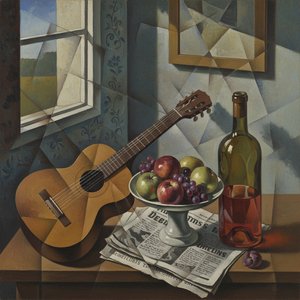
Guitar on a table
 Oil On Canvas
- WallArt
- Cubism
 1915
1915- Modern
 92.0 x 73.0 cm
 Кройлер-Мюллер Музей
 Читати далі
Гікле / Художній принт
Музейна якість друку جيкле або на полотні з оперативним виготовленням та різноманітними варіантами фінішної обробки. ( Купити картину ручної роботи Перейти до цифрових зображень)




P118B ₴10

P118H ₴10

P118W ₴10

P438Z ₴10

P508JH ₴12

P508YH ₴12

P805H ₴10

P805Z ₴10

P919BZ ₴10

P919G ₴10

P919XJ ₴10

P959ZH ₴10

P968JZ ₴12

W106C ₴8

W218G ₴10

W218JH ₴8

W218Y ₴10

W307PJ ₴10

W316G ₴10

W316PJ ₴8

W316Y ₴10

W398PJ ₴8

W4111J ₴10

W500HY ₴15

W500JH ₴15

W692G ₴12

W849H ₴8

W940BG ₴15

W953PJ ₴8




Обирайте з наших стандартних розмірів, що відповідають оригінальним пропорціям твору мистецтва.

Введіть необхідну ширину та висоту, щоб принт ідеально підійшов до вашої рами або стіни. Принт можна лише обрізати, але не можна зробити більшим за оригінал, тому при зміні пропорцій частина зображення буде втрачена. Перед друком ми надсилаємо вам цифровий макет для затвердження. Зображення на цій сторінці не відображає реальну обрізку — її можна побачити лише на макеті.
Доставка по всьому світу () за 2 тижні замість стандартних 4/5 тижнів. (24 Жовтень)

Безкоштовна експрес-доставка по всьому світу

Високоякісне лляне полотно

Повне страхове покриття доставки

Гарантія повернення митних зборів

Гарантія точного відтворення кольорів

Політика повернення протягом 100 днів (лише у разі виявлення дефектів)

Гарантія повернення 100% коштів

Знижка на оптові замовлення
 Скляний варіант доступний лише для розмірів до 110 см

Guitar on a table
Гікле / Художній принт
Розмір репродукції
-


Загальна вартість
₴ 3590
A Symphony of Geometric Forms: The Visionary World of Juan Gris
To stand before Juan Gris’s “Guitar on a Table” is to witness the precise moment where reality begins to dance with abstraction. Painted in 1915, this masterpiece serves as a profound testament to the era of Synthetic Cubism, a period when the art world was being radically redefined by the dismantling of traditional perspective. The painting presents a meticulously constructed still life, where a central guitar rests upon a table, surrounded by the quiet presence of stacked books and a subtle bowl. Yet, this is no mere imitation of life; it is a deliberate reconstruction of it. Gris, who brought the analytical rigor of his early engineering studies to the canvas, does not simply show us objects—he invites us to perceive the underlying architecture of existence through a rhythmic interplay of planes and shadows.
The composition functions like a visual musical score, where every line and edge contributes to a larger, harmonious movement. Unlike the more fragmented and analytical approach of his contemporaries, Gris utilized what he termed Deductive Painting. Rather than breaking an object down into pieces, he began with abstract geometric shapes—triangles, rectangles, and arcs—and gradually infused them with recognizable form. In this work, the guitar is not just an instrument; it is a focal point of structural elegance that anchors the surrounding elements. The way the books overlap and the table surfaces intersect creates a sense of depth that feels both intellectually complex and visually soothing, making it an ideal centerpiece for any sophisticated interior seeking a balance of modern edge and classical grace.
The Soul of Synthetic Cubism: Technique and Texture
The technical brilliance of “Guitar on a Table” lies in its masterful use of color and light to define space without the need for traditional shading. Gris employs a palette that is both earthy and vibrant, using tonal shifts to suggest the weight of the books and the hollow resonance of the guitar's body. The artist’s ability to blend different textures—the smooth surface of the wood, the matte quality of paper, and the hard edges of geometric intersections—creates a tactile experience for the viewer. This technique allows the painting to transcend its two-dimensional plane, offering a sense of physical presence that is both captivating and intellectually stimulating.
For the discerning collector or interior designer, this piece offers more than just aesthetic beauty; it offers a conversation. The symbolism of the musical instrument—a recurring motif in Gris’s oeuvre—speaks to the harmony between the visual and the auditory, suggesting that art, like music, is a language of pure form and emotion. Bringing a high-quality reproduction of this work into a living space introduces an atmosphere of cultured contemplation. It provides a window into the early 20th-century avant-garde, lending a sense of historical depth and intellectual prestige to a room. Whether placed in a minimalist modern gallery or a richly textured traditional study, “Guitar on a Table” remains a timeless exploration of how we perceive the world around us.
Запитання та відповіді
Як я можу придбати принт «Guitar on a table» Хуан Гріс?
Принт роботи «Guitar on a table» Хуан Гріс можна замовити безпосередньо на її сторінці Художній принт: художній принт на бавовняному полотні або архівному канвас-папері.
З яких матеріалів створено "Guitar on a table" та в якому стилі?
У творі "Guitar on a table" техніка Oil On Canvas поєднується з напрямом Cubism.
Як у «Guitar on a table» Хуан Гріс переплітаються художній стиль та епоха?
У «Guitar on a table» Хуан Гріс напрям Cubism поєднується з епохою — Модерн.
Біографія митця
A Spanish Visionary of Cubism: The Life and Art of Juan Gris
José Victoriano González-Pérez, a name that would become synonymous with artistic innovation, was born in Madrid in 1887 – a city steeped in history and tradition. Yet, this young man harbored an unconventional spirit, one that led him far from the familiar landscapes of his homeland to the vibrant, pulsating heart of Paris. Initially pursuing a path in engineering at the School of Arts and Sciences, he demonstrated a keen analytical mind, a trait that would later profoundly shape his artistic approach. Even during these early years, however, a creative spark flickered within him – evidenced by his contributions to local periodicals with captivating drawings, hinting at a burgeoning talent waiting to be unleashed. It was in 1905 that he adopted the pseudonym Juan Gris, a name resonating with newfound identity and purpose as he embarked on formal painting studies under José Moreno Carbonero, marking a pivotal shift towards artistic expression.Parisian Awakening and the Embrace of Cubism
The year 1906 witnessed a transformative relocation to Paris – a city then brimming with an unparalleled energy that captivated artists from across Europe. Gris immersed himself completely in this vibrant milieu, forging enduring friendships with luminaries such as Henri Matisse, Georges Braque, and Fernand Léger. Initially engaged in satirical illustration for publications like *L'Assiette au Beurre*, he honed his observational skills and developed a remarkable sense of visual wit, capturing the essence of Parisian life with sharp commentary and playful exaggeration. However, the magnetic pull of Pablo Picasso proved particularly influential. Around 1910, Gris began to seriously dedicate himself to painting, moving away from caricature towards the burgeoning language of Cubism – a movement that would define his artistic legacy. This wasn’t merely imitation; it was a deliberate quest to distill the very essence of form and space, seeking a new visual order, a way to represent reality not as it appears but as it *is* perceived. His early explorations were marked by a bold departure from traditional representation, embracing abstraction as a powerful tool for capturing the underlying structure of objects and experiences.The Geometry of Perception: Style and Key Works
Juan Gris’s artistic output is characterized by an extraordinary clarity and intellectual rigor. He didn't simply deconstruct objects; he meticulously reconstructed them, emphasizing geometric forms and a carefully considered palette. This approach led to what became known as his “crystal period,” exemplified in masterpieces such as *Still Life Before an Open Window* (1912) and *Place Ravignan* (1915). These works showcase a remarkable interplay of planes and angles, creating a sense of depth and solidity while simultaneously challenging conventional notions of perspective. The influence of Picasso is undeniable here, yet Gris developed his own distinct voice within the Cubist framework – one characterized by a precise logic and an almost mathematical precision. He moved beyond mere fragmentation, striving for a new visual harmony. Following this period, he embraced Synthetic Cubism, pioneering the innovative use of *papier collé* – collage – incorporating real-world materials like newspaper clippings, fabric scraps, and wood grain into his compositions. This technique added another layer of complexity and tactility to his work, blurring the boundaries between painting and sculpture, inviting viewers to engage with the artwork on a more visceral level. Notable examples include *Guitar in front of the sea* (1925), a testament to his simplified forms and adherence to cubist principles, and *Homage à Pablo Picasso* (1912), which signaled his growing recognition within the avant-garde art world as a truly original voice.Influences and Legacy
Juan Gris’s artistic journey was shaped by a confluence of influences – from the analytical rigor of Cézanne to the vibrant color palettes of Matisse, and crucially, the revolutionary ideas of Picasso and Braque. However, he wasn't simply a follower; he synthesized these influences into a uniquely personal style. His emphasis on geometric forms, harmonious color palettes, and the integration of everyday objects into his art established him as a pivotal figure in 20th-century art. He moved beyond the analytical phase, towards a more organized and synthetic approach, advocating for order and precision. His work profoundly influenced the Purist style championed by Amédée Ozenfant and Charles Edouard Jeanneret (Le Corbusier), who sought to return to classical principles of form and composition after the perceived chaos of modernism. Gris’s legacy extends far beyond his individual creations; he fundamentally reshaped our understanding of perception and representation, leaving an indelible mark on the course of art history. His paintings continue to resonate with viewers today, offering a glimpse into a brilliant mind grappling with the complexities of the modern world.
Хуан Гріс
1887 - 1927 , Іспанія
Довідкова інформація
- Artistic Movement Or Style: Кубізм, Синтетичний кубізм
- Artists Or Movements Influenced By This Artist:
- Пуризм
- Озенфан
- Ле Корбюзьє
- Artists Who Influenced This Artist:
- Пабло Пікассо
- Енрік Матіс
- Жорж Брак
- Date Of Birth: 23 березня 1887
- Date Of Death: 11 травня 1927
- Full Name: José Victoriano González-Pérez
- Nationality: Іспанець
- Notable Artworks:
- Гітара перед морем
- Подяка Пабло Пікассо
- Фермер
- Place Of Birth: Мадрид, Іспанія
Схожі статті
Deconstructing Identity: A Comprehensive Exploration of Cubist Portraiture
Explore the revolutionary world of Cubist portraiture with our comprehensive guide. Discover Picasso, Braque, Gris & the movement's impact on modern art. Expert analysis for collectors and enthusiasts.
Deconstructing Reality: A Comprehensive Exploration of Synthetic Cubism's Evolution & Impact
Explore the revolutionary world of Synthetic Cubism! Discover its origins, key artists like Picasso & Braque, techniques, and lasting impact on modern art. A comprehensive guide for enthusiasts.
Deconstructing Reality: Cubism's Revolutionary Impact on 20th-Century Art
Explore the revolutionary world of Cubism with OriginalUniqueArt. Discover Picasso & Braque's groundbreaking techniques, its philosophical roots, and lasting impact on modern art. Expert insights for collectors.
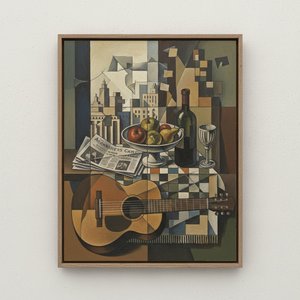
Juan Gris: Cubist Deconstruction & Synthesis – A Comprehensive Exploration
Explore the revolutionary art of Juan Gris – a master of Cubism. Discover his unique approach to deconstruction, vibrant Synthetic Cubist works, and lasting influence on modern art. Expert analysis for collectors.
Deconstructing Reality: A Comprehensive Exploration of Cubist Still Life
Explore the revolutionary world of Cubist Still Life with OriginalUniqueArt. Discover Picasso & Braque's groundbreaking techniques, its philosophical roots, and lasting impact on modern art. Expert insights for collectors.


