
 Переглянути в інтер'єрі
 Надіслати
 Поділитися
 Деталі
 Посібник

 Завантажити
 Схожі предмети колекціонування
 Рентгенівське дослідження
 Слайд-шоу
 Статистика переглядів
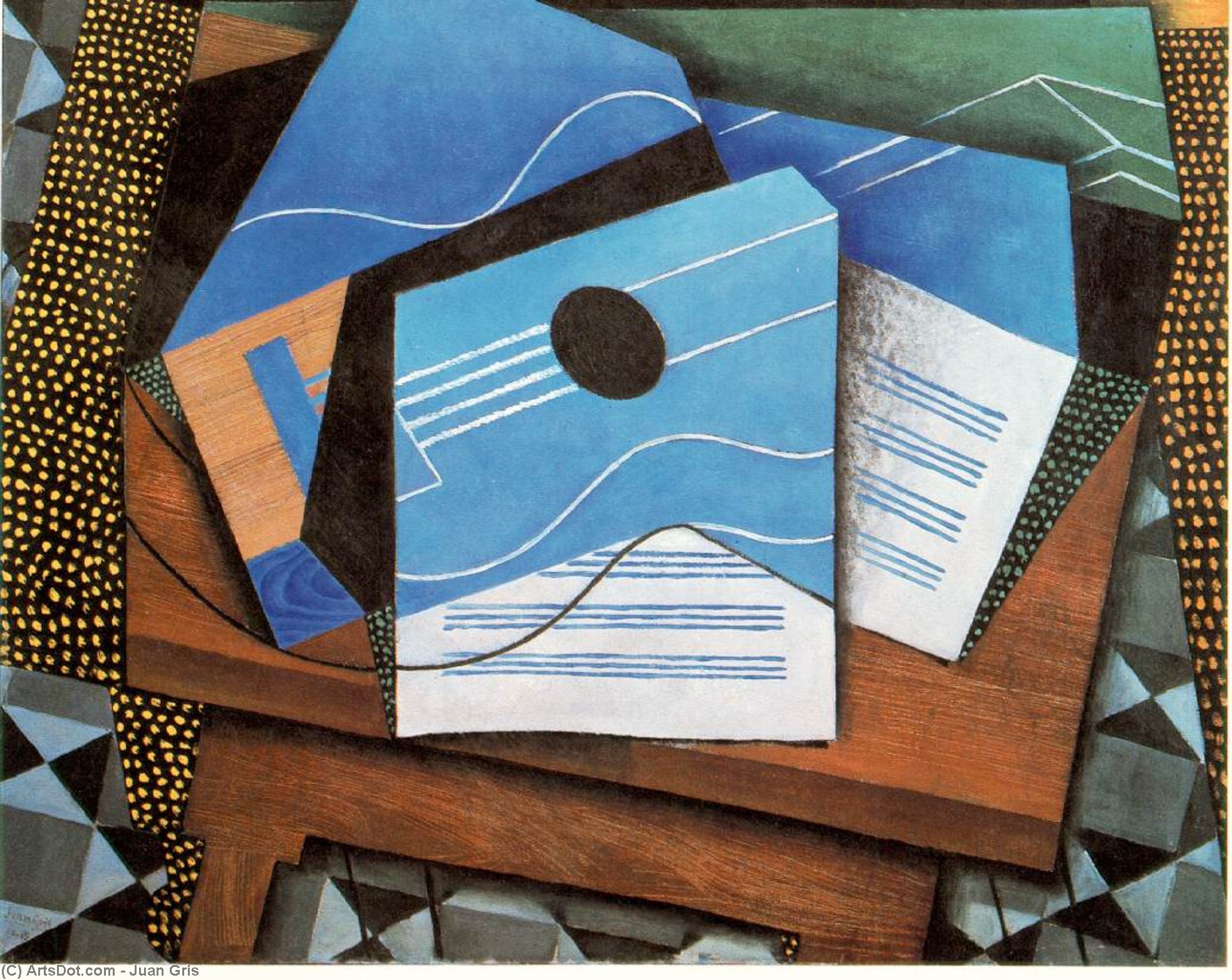
Guitar on a table - -
 Олія на полотні
- Настінне мистецтво
- Synthetic Cubism
 1915
1915 73.0 x 92.0 cm
 Читати далі
Придбайте цифрову копію високої роздільної здатності з покращеною якістю, що значно перевершує онлайн-перегляд.
Кожен файл ретельно підготовлений нашими фахівцями за допомогою сучасних інструментів та професійної ручної ретуші. Ми гарантуємо виняткову чіткість, точну передачу кольору та високу деталізацію кожного зображення.
Фінальний файл надсилається електронною поштою протягом 72 годин і оптимізований для негайного використання у професійних виданнях та друкованих матеріалах. Таку якість обирають провідні дизайнерські студії, видавництва та галереї.
Цифрове зображення
Завантажте файл високої роздільної здатності для особистого використання, друку та творчих проєктів. ( Перейти до друку Купити картину ручної роботи)
Що входить у кожне замовлення цифрових зображень
Експертна цифрова доставка з гарантією якості
Обираючи OriginalUniqueArt.com, ви отримуєте не просто зображення — ви отримуєте професійно вдосконалений цифровий витвір мистецтва, створений з надзвичайною точністю та підкріплений гарантією задоволення. Ось усе, що автоматично додається до вашого замовлення:

Швидка доставка на email
Ваш цифровий файл із зображенням високої роздільної здатності буде надісланий вам електронною поштою протягом 72 годин після оформлення замовлення — він буде готовий до негайного використання.

Цифровий файл із покращенням ШІ
Ваш витвір мистецтва професійно оптимізовано за допомогою передових інструментів штучного інтелекту та ручної корекції, що забезпечує максимальну деталізацію, чіткість і точність передачі кольорів.

Безкоштовне повторне завантаження назавжди
Випадково видалили або втратили файл? Не хвилюйтеся — ми надішлемо його вам повторно в будь-який час безкоштовно.

Без митних зборів — завжди
Насолоджуйтесь вашим витвором мистецтва миттєво без жодних мит, зборів або плати за доставку — цифрові завантаження завжди не оподатковуються.

Гарантія точності кольорів
Ми гарантуємо максимально точне відтворення оригінальних кольорів на вашому цифровому зображенні завдяки використанню професійних інструментів та систем управління кольором.

100-денна гарантія задоволення клієнта
Якщо ви не задоволені придбаним цифровим зображенням, ми внесемо правки або повернемо 100% вартості протягом 100 днів — без зайвих запитань.

Гарантія повернення 100% коштів
Незадоволені покупкою? Отримайте повне повернення коштів протягом 100 днів після отримання цифрового файлу — без зайвих запитань.

Знижки на оптові замовлення
Купуйте 3 зображення — заощаджуйте 10% — Купуйте 5 — заощаджуйте 15% — Купуйте 10+ — заощаджуйте 20%. Чудово підходить для творчих проєктів, галерей та агентств.
The Geometry of Harmony: Exploring Juan Gris's "Guitar on a Table"
To stand before Juan Gris’s Guitar on a Table is to step directly into the intellectual fervor of the early twentieth century, a moment when art dared to dismantle and reassemble reality. This seminal work from 1915 is not merely a depiction of musical instruments and scattered books; it is a meticulously constructed meditation on form, perspective, and the very nature of representation itself. Gris, ever the analytical mind, approaches his subject matter with the precision of an engineer, yet imbues it with the lyrical grace one expects from a master painter. The composition immediately draws the eye to the central guitar, its curves and planes rendered through the rigorous lens of Synthetic Cubism.
Mastery in Synthetic Cubist Technique
The defining characteristic of this piece is Gris’s masterful handling of overlapping geometric planes. Unlike earlier explorations of fragmentation, Synthetic Cubism, as seen here, builds up reality from recognizable, yet fractured, components. Observe how the guitar itself seems to be composed of interlocking facets—a systematic deconstruction that forces the viewer's eye to trace multiple viewpoints simultaneously. The surrounding books and tabletop elements are treated with equal geometric rigor; they do not simply rest upon a surface but rather emerge from it through calculated overlaps. This technique creates an astonishing illusion of depth while maintaining an undeniable flatness, a hallmark of the movement that challenged centuries of single-point perspective.
Symbolism: Music, Literature, and Intellect
The arrangement of objects—the musical instrument juxtaposed with volumes of literature—suggests a rich dialogue between art forms. The guitar, an object steeped in cultural resonance, becomes the focal point around which intellectual pursuits gather. Gris seems to be suggesting that true creativity is found at the intersection of different disciplines: the passion of music meeting the structure of knowledge contained within books. The subdued earth tones and muted hues employed by Gris lend a sense of quiet contemplation to this gathering of objects, transforming what could be a mere still life into a profound allegory for the cultured mind.
Bringing Cubist Depth Home
For those seeking to integrate such intellectual depth and artistic history into a living space, a reproduction of Guitar on a Table offers an unparalleled opportunity. Its sophisticated balance and harmonious structure allow it to function beautifully in both formal drawing rooms and modern, thoughtfully curated interiors. Owning this piece is not just acquiring art; it is inviting a conversation about perception, structure, and the enduring relationship between beauty and intellect into your home. It remains a vibrant testament to how an artist can find profound harmony even within the most fragmented reality.
Запитання та відповіді
Скільки років було Хуан Гріс, коли було створено «Guitar on a table - -»?
Хуан Гріс створив(ла) «Guitar on a table - -» у віці 28 років. Митець народився(лася) у 1887, а дата створення твору — 1915.
Який емоційний тон супроводжує стиль Synthetic Cubism у творі "Guitar on a table - -"?
Рефлексивний емоційність твору "Guitar on a table - -" супроводжує його стиль Synthetic Cubism.
Який це вид твору мистецтва: «Guitar on a table - -» Хуан Гріс?
«Guitar on a table - -» — це твір у техніці Настінне мистецтво.
Біографія митця
A Spanish Visionary of Cubism: The Life and Art of Juan Gris
José Victoriano González-Pérez, a name that would become synonymous with artistic innovation, was born in Madrid in 1887 – a city steeped in history and tradition. Yet, this young man harbored an unconventional spirit, one that led him far from the familiar landscapes of his homeland to the vibrant, pulsating heart of Paris. Initially pursuing a path in engineering at the School of Arts and Sciences, he demonstrated a keen analytical mind, a trait that would later profoundly shape his artistic approach. Even during these early years, however, a creative spark flickered within him – evidenced by his contributions to local periodicals with captivating drawings, hinting at a burgeoning talent waiting to be unleashed. It was in 1905 that he adopted the pseudonym Juan Gris, a name resonating with newfound identity and purpose as he embarked on formal painting studies under José Moreno Carbonero, marking a pivotal shift towards artistic expression.Parisian Awakening and the Embrace of Cubism
The year 1906 witnessed a transformative relocation to Paris – a city then brimming with an unparalleled energy that captivated artists from across Europe. Gris immersed himself completely in this vibrant milieu, forging enduring friendships with luminaries such as Henri Matisse, Georges Braque, and Fernand Léger. Initially engaged in satirical illustration for publications like *L'Assiette au Beurre*, he honed his observational skills and developed a remarkable sense of visual wit, capturing the essence of Parisian life with sharp commentary and playful exaggeration. However, the magnetic pull of Pablo Picasso proved particularly influential. Around 1910, Gris began to seriously dedicate himself to painting, moving away from caricature towards the burgeoning language of Cubism – a movement that would define his artistic legacy. This wasn’t merely imitation; it was a deliberate quest to distill the very essence of form and space, seeking a new visual order, a way to represent reality not as it appears but as it *is* perceived. His early explorations were marked by a bold departure from traditional representation, embracing abstraction as a powerful tool for capturing the underlying structure of objects and experiences.The Geometry of Perception: Style and Key Works
Juan Gris’s artistic output is characterized by an extraordinary clarity and intellectual rigor. He didn't simply deconstruct objects; he meticulously reconstructed them, emphasizing geometric forms and a carefully considered palette. This approach led to what became known as his “crystal period,” exemplified in masterpieces such as *Still Life Before an Open Window* (1912) and *Place Ravignan* (1915). These works showcase a remarkable interplay of planes and angles, creating a sense of depth and solidity while simultaneously challenging conventional notions of perspective. The influence of Picasso is undeniable here, yet Gris developed his own distinct voice within the Cubist framework – one characterized by a precise logic and an almost mathematical precision. He moved beyond mere fragmentation, striving for a new visual harmony. Following this period, he embraced Synthetic Cubism, pioneering the innovative use of *papier collé* – collage – incorporating real-world materials like newspaper clippings, fabric scraps, and wood grain into his compositions. This technique added another layer of complexity and tactility to his work, blurring the boundaries between painting and sculpture, inviting viewers to engage with the artwork on a more visceral level. Notable examples include *Guitar in front of the sea* (1925), a testament to his simplified forms and adherence to cubist principles, and *Homage à Pablo Picasso* (1912), which signaled his growing recognition within the avant-garde art world as a truly original voice.Influences and Legacy
Juan Gris’s artistic journey was shaped by a confluence of influences – from the analytical rigor of Cézanne to the vibrant color palettes of Matisse, and crucially, the revolutionary ideas of Picasso and Braque. However, he wasn't simply a follower; he synthesized these influences into a uniquely personal style. His emphasis on geometric forms, harmonious color palettes, and the integration of everyday objects into his art established him as a pivotal figure in 20th-century art. He moved beyond the analytical phase, towards a more organized and synthetic approach, advocating for order and precision. His work profoundly influenced the Purist style championed by Amédée Ozenfant and Charles Edouard Jeanneret (Le Corbusier), who sought to return to classical principles of form and composition after the perceived chaos of modernism. Gris’s legacy extends far beyond his individual creations; he fundamentally reshaped our understanding of perception and representation, leaving an indelible mark on the course of art history. His paintings continue to resonate with viewers today, offering a glimpse into a brilliant mind grappling with the complexities of the modern world.
Хуан Гріс
1887 - 1927 , Іспанія
Коротко про автора
- Artistic Movement Or Style: Кубізм, Синтетичний кубізм
- Artists Or Movements Influenced By This Artist:
- Пуризм
- Озенфан
- Ле Корбюзьє
- Artists Who Influenced This Artist:
- Пабло Пікассо
- Енрік Матіс
- Жорж Брак
- Date Of Birth: 23 березня 1887
- Date Of Death: 11 травня 1927
- Full Name: José Victoriano González-Pérez
- Nationality: Іспанець
- Notable Artworks:
- Гітара перед морем
- Подяка Пабло Пікассо
- Фермер
- Place Of Birth: Мадрид, Іспанія