() ·

Картина, створена вручну спеціально для вас

St Damian

Олійная репродукція ручної роботи

Написана вручну олією на полотні у вашому розмірі та рамі, виготовлена на замовлення нашими художниками. ( Перейти до друку Перейти до цифрових зображень)

Опис експоната

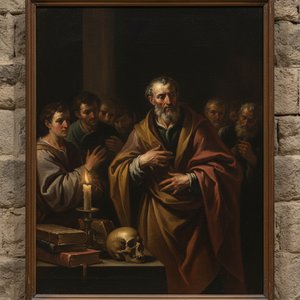
Explore Juan Carreño de Miranda’s ‘St Damian’ (1670). A stunning Baroque oil painting featuring a contemplative saint & angelic visitation. Rich textures, dramatic lighting & masterful technique – a captivating piece of Spanish art history.

Біографія митця

"UkrainianMetaDescription": "Художник Хуан Кареньо де Міранда – видатний іспанський бароко, відомий своїми розкішними портретами королівської родини та впливом Дієго Веласкеса. Його роботи – унікальне свідчення епохи."

від ·

Розділ 1

Якого розміру вона має бути?

Гортайте, щоб змінити розмір; на зображенні ліворуч показано рамку її справжньої ширини. Пропорції оригіналу збережено.

Стандартний розмір
індивідуальний розмір
CM
INCH

Обирайте з наших стандартних розмірів, що відповідають оригінальним пропорціям твору мистецтва.

ширина
висота

Введіть необхідну ширину та висоту, щоб картина підійшла до вашої рами або стіни. Оскільки це ручний розпис, для зміни пропорцій художник може дописати трохи більше по краях або дещо обрізати композицію — вибір за вами. Перед початком роботи ми надішлемо вам цифровий макет для затвердження. Зображення, показане на цій сторінці, не є реальним результатом — лише макет відображає майбутній вигляд.

Розділ 2

Яким має бути спосіб доставки?

Оберіть тип країв натяжного полотна

Оберіть свою раму

Corner sample of the WhiteWrap canvas edge finish, stretched on масив дерева bars
Білий край ₴1
Corner sample of the BlurSideWrap canvas edge finish, stretched on масив дерева bars
Розмитий край ₴1
Corner sample of the ExtendedWrap canvas edge finish, stretched on масив дерева bars
З розширенням ₴1
Corner sample of the P118B picture frame: формований полістирол, 5 cm wide and 3 cm thick
P118B ₴10
Corner sample of the P118H picture frame: формований полістирол, 5 cm wide and 3 cm thick
P118H ₴10
Corner sample of the P118W picture frame: формований полістирол, 5 cm wide and 3 cm thick
P118W ₴10
Corner sample of the P438Z picture frame: формований полістирол, 5.5 cm wide and 3.5 cm thick
P438Z ₴10
Corner sample of the P508JH picture frame: формований полістирол, 7 cm wide and 3.5 cm thick
P508JH ₴12
Corner sample of the P508YH picture frame: формований полістирол, 7 cm wide and 3.5 cm thick
P508YH ₴12
Corner sample of the P805H picture frame: формований полістирол, 5 cm wide and 3.5 cm thick
P805H ₴10
Corner sample of the P805Z picture frame: формований полістирол, 5 cm wide and 3.5 cm thick
P805Z ₴10
Corner sample of the P919BZ picture frame: формований полістирол, 7 cm wide and 3.5 cm thick
P919BZ ₴10
Corner sample of the P919G picture frame: формований полістирол, 7 cm wide and 3.5 cm thick
P919G ₴10
Corner sample of the P919XJ picture frame: формований полістирол, 7 cm wide and 3.5 cm thick
P919XJ ₴10
Corner sample of the P959ZH picture frame: формований полістирол, 5 cm wide and 3 cm thick
P959ZH ₴10
Corner sample of the P968JZ picture frame: формований полістирол, 6 cm wide and 4 cm thick
P968JZ ₴12
Corner sample of the W106C picture frame: масив дерева, 5 cm wide and 3 cm thick
W106C ₴8
Corner sample of the W218G picture frame: масив дерева, 5 cm wide and 3 cm thick
W218G ₴10
Corner sample of the W218JH picture frame: масив дерева, 5 cm wide and 3 cm thick
W218JH ₴8
Corner sample of the W218Y picture frame: масив дерева, 5 cm wide and 3 cm thick
W218Y ₴10
Corner sample of the W307PJ picture frame: масив дерева, 6 cm wide and 3 cm thick
W307PJ ₴10
Corner sample of the W316G picture frame: масив дерева, 6 cm wide and 3 cm thick
W316G ₴10
Corner sample of the W316PJ picture frame: масив дерева, 6 cm wide and 3 cm thick
W316PJ ₴8
Corner sample of the W316Y picture frame: масив дерева, 6 cm wide and 3 cm thick
W316Y ₴10
Corner sample of the W398PJ picture frame: масив дерева, 5 cm wide and 3 cm thick
W398PJ ₴8
Corner sample of the W4111J picture frame: масив дерева, 6.5 cm wide and 3.5 cm thick
W4111J ₴10
Corner sample of the W500HY picture frame: масив дерева, 7 cm wide and 5 cm thick
W500HY ₴15
Corner sample of the W500JH picture frame: масив дерева, 7 cm wide and 5 cm thick
W500JH ₴15
Corner sample of the W692G picture frame: масив дерева, 8 cm wide and 4 cm thick
W692G ₴12
Corner sample of the W849H picture frame: масив дерева, 5 cm wide and 3 cm thick
W849H ₴8
Corner sample of the W940BG picture frame: масив дерева, 7.5 cm wide and 4.5 cm thick
W940BG ₴15
Corner sample of the W953PJ picture frame: масив дерева, 6 cm wide and 3.5 cm thick
W953PJ ₴8
Corner sample of the H24-GOLD picture frame: різьблене дерево з левкасом, 10 cm wide and 6 cm thick
H24-GOLD ₴30
Corner sample of the H24-SILVER picture frame: різьблене дерево з левкасом, 10 cm wide and 6 cm thick
H24-SILVER ₴30
Corner sample of the H36-GOLD picture frame: різьблене дерево з левкасом, 15 cm wide and 6.5 cm thick
H36-GOLD ₴45
Corner sample of the H36-SILVER picture frame: різьблене дерево з левкасом, 15 cm wide and 6.5 cm thick
H36-SILVER ₴45

Багет: . Загальний розмір із рамою: .

Розділ 3

Хто це малює, і чи має щось змінитися?

Приклади того, що можна змінити: замінити обличчя на фото клієнта; додати домашню тварину (наприклад, замінити кота на собаку); додати приховане повідомлення на фоні; змінити пейзаж або елементи фону.
Після оформлення замовлення команда OriginalUniqueArt.com надішле клієнту електронний лист із запитом інструкцій та надасть попередній макет для перегляду

Доставка по всьому світу () за 3–4 тижні замість стандартних 5 тижнів. (8 Листопад). Без жодних компромісів у якості.

Розділ 4

Останні штрихи

Табличка, як у музеї?

Деталі гравірування на бронзовій табличці

This elegant plaque features the artist's name and the title of the artwork, finely engraved for a timeless presentation.

It is made from bronze with a refined, elegant finish. The text is precisely laser-engraved for a sharp and permanent result. Measuring 9x2 cm, the plaque is compact yet easy to read. It's built to be durable and scratch-resistant, offering a professional, museum-quality look. Mounting is simple thanks to the included adhesive backing.

Деталі прозорої акрилової таблички

The plaque includes essential engraved details such as the artist's name, the title of the artwork, the date it was created, the type of media used-like oil on canvas or watercolor-a brief description of the piece, and a QR code that links to the complete artwork information.

It is crafted from clear acrylic, offering a sleek, modern appearance. The text is UV-engraved in black to ensure strong visual contrast. With a size of 10x15 cm, it ensures optimal readability. It comes equipped with two metal hooks for secure wall mounting. The plaque is designed to be weather-resistant, making it suitable for various environments, and it includes interactive features that work seamlessly with smartphone scanning.

Деталі чорної акрилової таблички

This elegant plaque includes engraved information such as the artist's name, the title of the artwork, the date it was created, the type of media used (like oil on canvas or watercolor), a short description of the artwork, and a QR code for quick access to more information.

The plaque itself is made from refined black acrylic with a premium finish. The text is laser-engraved in white for high contrast and readability. Its size is 10x15 cm, designed to be easy to read. It comes with two metal hooks for professional mounting. The design is sleek and fits any interior style. It is also weather-resistant and durable, with built-in digital integration for mobile compatibility.

Захисний лак?

Коли вам це потрібно?

Розділ 5

Ваша картина, згідно із вашим замовленням

St Damian

Матеріал репродукції

Розмір репродукції

-

Видатний майстер-художник

Більше деталізації, витонченості та додаткового часу на створення твору

-

Рама для репродукції

-

-

Для творів мистецтва або репродукцій, розмір яких перевищує 105 см (приблизно 41 дюйм) з будь-якого боку, рама доставляється у вигляді розібраного комплекту. Такий метод гарантує безпечну доставку та запобігає пошкодженням під час транспортування.

Потребує професійного збирання — це не продукт для самостійного виготовлення (DIY).
Комплект має бути зібраний, а полотно натягнуте досвідченим майстром багетних робіт із використанням клейового дерева (не входить у комплект), щипців для натягування полотна та затискачів, щоб підрамник залишався рівним під час висихання клею. Неправильне збирання або нерівномірне натягування полотна може призвести до незворотного пошкодження твору мистецтва, що не підпадає під дію нашої гарантії.

  • У комплект входять усі бруски з цільного дерева, точно вирізані за розміром.

  • Збирається за допомогою гвинтів, що входять до комплекту, а також клейового розчину для кутових з'єднань, який не входить до комплекту і має бути підготовлений вашим майстром.

  • Потрібні професійні інструменти, які не входять до комплекту: щипці для натягування полотна (натягувач) та затискачі, щоб утримувати рейки рівно під час висихання клею.

Важливо:
Для з'єднання кутів потрібен клей для дерева, перекладини необхідно затиснути струбцинами до повного висихання клею, а для натягування полотна на зібрану раму знадобляться щипці для натягування полотна. Жоден із цих інструментів не входить до комплекту. Будь ласка, проконсультуйтеся з досвідченим майстром багетного оформлення перед замовленням рами такого розміру.

Етикетка експоната

-

-

Захисний лак

Глянцевий лак (підсилює яскравість кольорів, захищає від світла та вологи)

-

Персоналізувати мій витвір

Приклади можливих змін: заміна обличчя на фото клієнта; додавання домашньої тварини (наприклад, заміна кота на собаку); додавання прихованого повідомлення на фоні; зміна пейзажу або елементів фону.

-

Прискорено

Доставка по всьому світу () за 3–4 тижні замість стандартних 5 тижнів. (8 Листопад). Без компромісів у якості.

-

Експрес-доставка

Доставка по всьому світу () протягом 5 тижнів. (15 Листопад).

Включено в ціну

Підсумкова вартість

₴ 13469

Загальна вартість ₴ 13469

Скляний варіант доступний лише для розмірів до 110 см

До кожного замовлення додається

  • Безкоштовна експрес-доставка по всьому світу
  • Високоякісне лляне полотно
  • Повне страхове покриття доставки
  • Гарантія повернення митних зборів
  • Гарантія точного відтворення кольорів
  • Політика повернення протягом 100 днів (лише у разі виявлення дефектів)
  • Гарантія повернення 100% коштів
  • Пропозиція на оптові замовлення

A Moment of Grace: Unveiling Juan Carreño de Miranda’s ‘St Damian’

Juan Carreño de Miranda's “St Damian,” painted in 1670, is more than just a portrait; it’s a carefully constructed tableau of faith, piety, and divine intervention. This vertical oil painting transports the viewer to a serene yet profoundly moving scene, capturing a pivotal moment between a young man – traditionally identified as Saint Sebastian – and an angelic visitation. The work, executed in the heart of the Spanish Baroque period, exemplifies the era’s dramatic use of light, rich textures, and emotional intensity, offering a glimpse into the spiritual life of 17th-century Spain.

Carreño's skill lies not merely in his technical mastery but in his ability to imbue the scene with palpable emotion. The central figure, rendered with remarkable detail, embodies quiet contemplation and vulnerability. His posture, slightly bowed, suggests a deep inner struggle – perhaps reflecting the suffering associated with Saint Sebastian’s martyrdom. The angel hovering above, bathed in ethereal light, represents grace and protection, its outstretched hand offering solace and reassurance. The inclusion of the book held by the saint is symbolic, representing knowledge, faith, and the pursuit of spiritual understanding.

Baroque Drama: Light, Composition, and Technique

The painting’s Baroque style is immediately evident in its dramatic use of light – a powerful beam originating from above and behind the figure, casting long shadows that sculpt his form and create a halo effect around his head. This chiaroscuro technique, borrowed from Caravaggio, intensifies the scene's emotional impact, drawing attention to the saint’s face and highlighting the angel’s radiant presence. The composition is carefully balanced, with the central figure dominating the canvas while maintaining a sense of spaciousness through the arched celestial background. Carreño masterfully employs layering techniques – glazing—to build up rich colors and textures, creating a sense of depth and volume that invites the viewer to step into the scene.

The artist’s attention to detail is remarkable. The folds of the drapery are rendered with meticulous precision, conveying both weight and movement. The subtle modeling of the face, combined with the delicate brushstrokes in the hair, imbue the figure with a sense of realism and humanity. Even the background foliage—lush and vibrant—is painted with an almost photographic accuracy, contributing to the overall impression of authenticity.

Symbolism and Historical Context

Beyond its aesthetic beauty, “St Damian” is rich in symbolism. The arrows piercing Saint Sebastian’s body are a potent reminder of his martyrdom, representing suffering and sacrifice for faith. The angel, a common motif in religious art, symbolizes divine grace and the promise of salvation. The book held by the saint speaks to the importance of knowledge and spiritual contemplation within the Christian tradition. Painted in 1670, during a period of intense religious fervor in Spain, the work reflects the deep piety and devotion that characterized the era.

Juan Carreño de Miranda was a leading figure in the Spanish Baroque movement, known for his elegant royal portraits and his ability to capture the psychological depth of his subjects. His works often explored themes of faith, morality, and human experience, reflecting the intellectual and spiritual currents of his time. The rediscovery of Caravaggio’s techniques during this period profoundly influenced Carreño's style, contributing to the dramatic lighting and emotional intensity that define “St Damian.”

A Timeless Masterpiece: Reproduction and Beyond

Reproductions of “St Damian” offer a remarkable opportunity to bring this captivating work into your home or office. The meticulous detail and rich colors of the original are faithfully reproduced, capturing the essence of Carreño’s artistic vision. Whether displayed as a statement piece in a grand salon or as a subtle accent in a more intimate setting, “St Damian” continues to inspire contemplation and evoke a sense of serenity and spiritual grace.

Питання та відповіді

Під якими ще іменами відомий Juan De Miranda?

Juan De Miranda також відомий/відома під іменами Іван Кареньо де Міранда, Juan Carreño de Miranda.

Як можна використати «St Damian» роботи Juan De Miranda в інтер'єрі дому?

«St Damian» чудово підійде для Statement, а найкращим місцем для його розміщення стане Living Room.

Які розміри оригінального твору «St Damian» роботи Juan De Miranda?

«St Damian» має розмір 110 x 83 cm в оригіналі. Оригінальні розміри є корисним орієнтиром під час вибору розміру репродукції.

Більше про цю картину

Переглянути в інтер'єрі Перегляд в AR Перейти до друку Перейти до цифрових зображень Надіслати як листівку
Деталі витвору Посібник Додати до улюблених Завантажити Схожі екземпляри Рентгенівське дослідження Слайд-шоу Питання та відповіді Статистика

У цифрах

  • 1670рік написання
  • 29доступні варіанти обрамлення
  • стандартні розміри, у власних пропорціях
  • 5тижнів на написання та доставку
Juan De Miranda

Juan De Miranda

1614 - 1685, Іспанія

Короткі факти про Juan De Miranda

  • Artistic Movement Or Style: Іспанський бароко
  • Artists Or Movements Influenced By This Artist: ['Матео Черезо']
  • Artists Who Influenced This Artist: ['Дієго Веласкес']
  • Date Of Birth: 1614
  • Date Of Death: 1685
  • Full Name: Juan Carreño de Miranda
  • Nationality: Іспанець
  • Notable Artworks:
    • Портрет Карла II
    • Портрет Маріани Австрійської
  • Place Of Birth: Авілес, Іспанія

Біографія митця

A Legacy of Royal Likenesses: The Life and Art of Juan Carreño de Miranda

Juan Carreño de Miranda, a name synonymous with the height of Spanish Baroque portraiture, was born in Avilés, Asturias, Spain, on March 25th, 1614. His early life was steeped in artistic tradition; his father, also named Juan Carreño, was himself a painter, providing young Juan with an invaluable foundation from the very beginning. This familial connection to art wasn’t merely a circumstance—it was a lineage, a heritage that shaped his destiny and ultimately propelled him to become one of Spain's most celebrated court painters. In 1623, the family relocated to Madrid, a pivotal move that irrevocably altered the course of his career, placing him squarely at the heart of Spanish royal life and providing access to the finest artistic training available.

Early Training and Artistic Influences

Carreño’s formal artistic education began in the late 1620s, under the tutelage of two masters: Pedro de las Cuevas and Bartolomé Román. These were not simply instructors; they were pillars of the Madrid art scene, imparting to young Juan not only technical proficiency – the mastery of brushstrokes, color mixing, and perspective – but also a profound understanding of aesthetic principles that would inform his entire artistic vision. De las Cuevas instilled in him the fundamentals of drawing and composition, while Román guided him through the intricacies of colour theory and the art of capturing light. Crucially, these early influences laid the groundwork for his later development, shaping his approach to portraiture and establishing a foundation upon which he would build his unique style. Early commissions, such as those depicting the cloister of Doña María de Aragón and the Iglesia de la Virgen del Rosario in Marlofa (La Joyosa), showcased a burgeoning talent – a confident handling of detail, an appreciation for elegance, and a nascent ability to capture the essence of his subjects.

Ascension to Court Painter: A Royal Appointment

Carreño’s rise through the ranks of Madrid's artistic circles was marked by both skill and fortunate circumstance. The death of Sebastián de Herrera in 1671 proved to be a watershed moment, opening the door to his most prestigious role – *pintor de cámara*, or court painter to the Queen. This appointment wasn’t merely a title; it represented an immersion into the very heart of Spanish power and prestige. He became intimately acquainted with the personalities, intrigues, and subtle nuances of the royal family and their courtiers—knowledge he masterfully translated onto canvas. His early work for the Alcázar of Madrid, though tragically lost in the devastating fire of 1734, provided invaluable experience working within the grand scale and demanding expectations of royal patronage. The subsequent appointment as *pintor de cámara* solidified his position, granting him unparalleled access to the royal family and shaping his artistic focus towards capturing their likenesses with remarkable accuracy and psychological insight. He famously refused knighthood in the Order of Santiago, stating that painting itself bestowed honor upon the world—a testament to his unwavering dedication to his craft.

The Art of Character: Style and Influences

Carreño de Miranda’s style is deeply rooted in the Spanish Baroque tradition, yet it possesses a unique character all its own. He wasn't simply mimicking Velázquez; he was building upon that foundation, infusing his work with a distinct sensibility. His portraits are characterized by an unwavering commitment to realism – a meticulous depiction of physical features and opulent clothing. But beyond mere likeness, Carreño possessed the remarkable ability to capture the *inner* character of his subjects, their status, and even their psychological state. This wasn’t achieved through dramatic gestures or exaggerated expressions but rather through subtle details: a carefully rendered hand, a knowing glance, the precise fall of light across a face. The influence of Velázquez is undeniable – particularly in Carreño’s masterful use of *chiaroscuro*, the interplay of light and shadow that lends depth and drama to his compositions. However, he also drew inspiration from Flemish masters like Anthony van Dyck, incorporating elements of aristocratic elegance and refined detail into his portraits. His work embodies a Baroque drama through dramatic lighting and composition, enhancing visual impact while maintaining an air of dignified restraint.

Masterworks and Enduring Significance

While Carreño produced religious altarpieces early in his career, it is for his portraits that he is most celebrated today. Among his most renowned works are *Charles II as Grandmaster of the Golden Fleece*, a striking depiction of the young king embodying regal authority; *Portrait of Queen Mariana of Austria*, capturing her austere grace and political power; and *Portrait of the Duke of Pastrana*, showcasing the nobleman’s wealth and status. These paintings, along with countless others depicting members of the Spanish royal family and court, offer an invaluable glimpse into a pivotal period in Spanish history. They are not merely portraits but historical documents—testaments to the lives, personalities, and power dynamics of those who shaped Spain's destiny. Carreño’s legacy extends beyond his own artistic achievements; he was also a dedicated teacher, nurturing a generation of talented pupils including Mateo Cerezo, Cabezalero, Donoso, Ledesma, and Sotomayor, ensuring the continuation of his style and influence long after his death in 1685. His ability to document the royal family with such unprecedented realism cemented his place as a key figure in Spanish Baroque art—a master of likeness who captured not just *what* they looked like, but *who* they were.

Основна інформація

  • Dimensions: 110 x 83 cm
  • Movement: Baroque
  • Title: St Damian
  • Medium: Oil on canvas
  • Notable elements: Angelic visitation