
 Переглянути в інтер'єрі
 Надіслати як листівку
 Поділитися
 Детальніше

 Завантажити
 Схожі експонати
 Рентгенівське дослідження
 Слайд-шоу
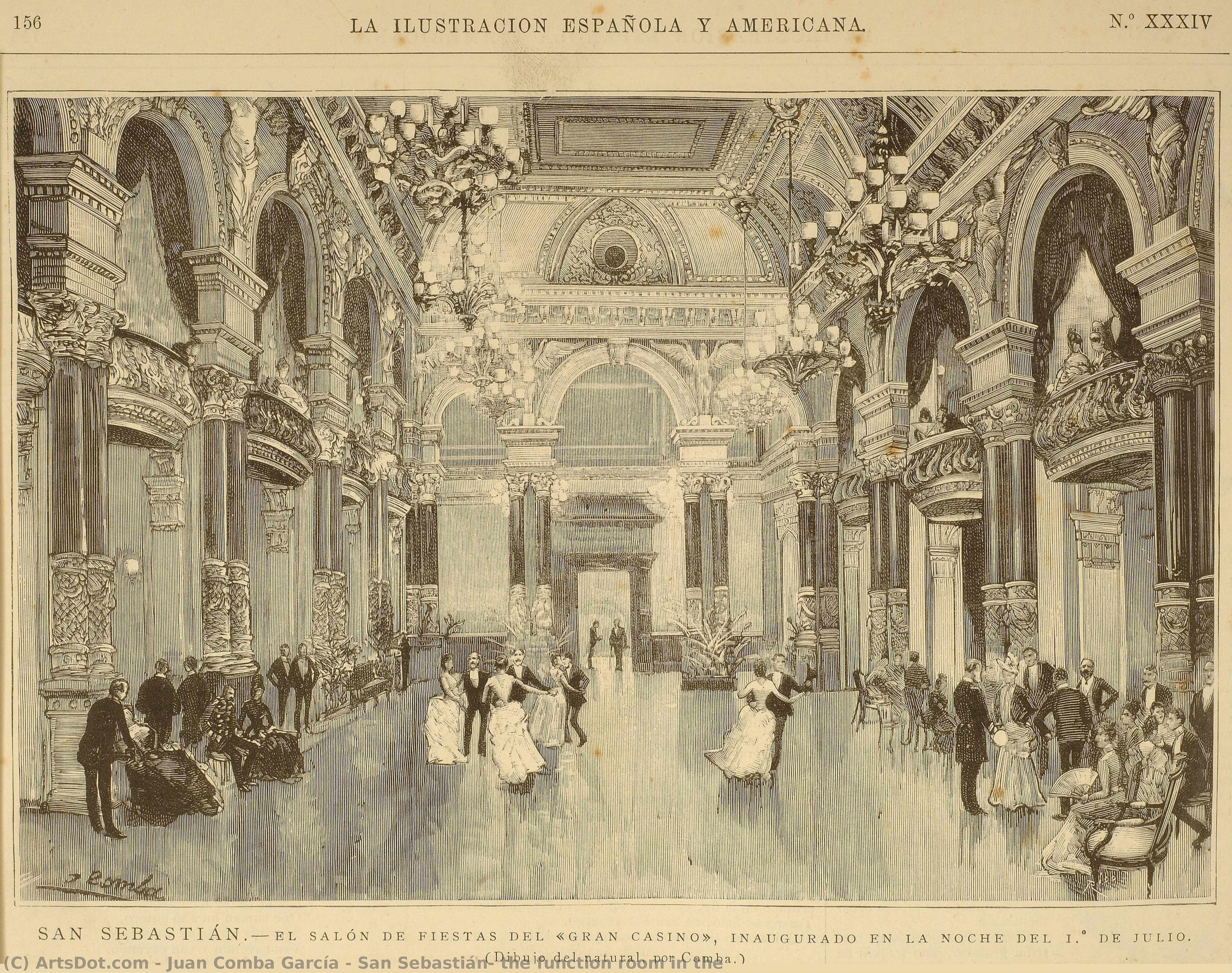
San Sebastián: the function room in the
 17.0 x 23.0 cm
 Gipuzkoa Heritage Collection Centre
 Читати далі
Гікле / Художній принт
Музейна якість друку جيкле або на полотні з оперативним виготовленням та різноманітними варіантами фінішної обробки. ( Замовити репродукцію ручної роботи Купити цифрове зображення)




































Обирайте з наших стандартних розмірів, що відповідають оригінальним пропорціям твору мистецтва.

Ви можете вказати власні розміри, щоб репродукція ідеально підійшла до конкретної рами або інтер'єру. Якщо обраний вами розмір не відповідає пропорціям оригіналу, ми або обріжемо полотно, або розширимо зображення за допомогою дзеркального відображення чи суцільної заливки країв. Перед початком виробництва вам буде надіслано цифровий макет для затвердження.
Будь ласка, зверніть увагу, що попередній перегляд на екрані не відображає фактичне обрізання або розширення. Тільки макет точно покаже фінальну композицію.
Хоча можливість замовлення індивідуальних розмірів доступна, ми рекомендуємо обирати формат із попередньо визначеного списку, щоб зберегти оригінальні пропорції.
Доставка по всьому світу () за 2 тижні замість стандартних 4/5 тижнів. (21 Серпень)

Безкоштовна експрес-доставка по всьому світу

Високоякісне лляне полотно

Повне страхове покриття доставки

Гарантія відшкодування митних зборів

Гарантія точного відтворення кольорів

Політика повернення протягом 60 днів (лише у разі виявлення дефектів)

Гарантія повернення 100% коштів

Пропозиція на оптові замовлення
 Скляний варіант доступний лише для розмірів до 110 см

San Sebastián: the function room in the
Гікле / Художній принт
Розмір репродукції
-


Підсумкова вартість
$ 80
Біографія митця
The Visionary Lens of Juan Comba García
In the vibrant tapestry of late nineteenth-century Spanish art, few figures possessed a gaze as multifaceted as Juan Comba García. Born in the sun-drenched landscape of Jerez de la Frontera in 1852, Comba emerged not merely as a painter, but as a profound chronicler of an era caught between tradition and the rapid pulse of industrial modernity. His artistic soul was forged in the rigorous academic traditions of Madrid, where he studied under the legendary Eduardo Rosales at the Escuela Especial de Pintura, Escultura y Grabado. This classical foundation provided him with a mastery of form and light that would later allow him to navigate seamlessly between the delicate precision of illustration and the emerging, transformative medium of photography.
Comba’s early career was defined by a remarkable versatility that saw him becoming one of the most respected illustrators of his generation. Through his prolific contributions to prestigious publications such as La Ilustlamación Española y Americana, he developed a signature draughtsmanship characterized by intricate linework and a sophisticated use of shading. His ability to translate complex narratives into single, evocative images made him a vital journalistic voice, capturing the essence of Spanish life for a wide audience. This period of his life was marked by an intense observational skill, as he learned to find beauty in both the grand historical moments and the quiet, overlooked corners of daily existence.
A Royal Chronicler and Industrial Observer
Perhaps the most distinguished chapter of Comba’s life was his intimate connection to the Spanish monarchy. Serving as a photographer for Alfonso XII and subsequent sovereigns, he occupied a unique position at the intersection of art and statecraft. His photographic portraits were far more than mere documentation; they were works of artistic elegance that captured the dignity and scholarly rigor of the royal court. Yet, while his lens often focused on the heights of power, his heart remained deeply connected to the burgeoning industrial spirit of the Basque region. He possessed a rare ability to bridge these two worlds, documenting the majesty of the throne with the same meticulous care he applied to the rhythmic machinery of progress.
This fascination with industry is most vibrantly expressed in his masterful woodcut prints. His depictions of the Guipuzcoana paper mill during the 1890s serve as hauntingly beautiful windows into a world of smoke, steel, and craftsmanship. Through the technique of linocut, Comba utilized deep contrasts and textured details to convey the atmospheric weight of the industrial landscape. He did not merely record these scenes; he imbued them with a sense of narrative complexity, celebrating the labor and the technological evolution that were reshaping Spain. His work during this period stands as a testament to his role as a visual historian, preserving the fleeting moments of the Industrial Revolution for posterity.
Legacy of a Master Craftsman
As his career progressed, Comba continued to explore themes of popular art and cultural identity, notably through his involvement in the Fifth Congress of Basque Studies. His ability to find profound meaning in simple subjects—such as a man spinning at an exhibition—demonstrated a lifelong commitment to the human element within the broader historical movement. Even as he moved between the roles of painter, photographer, journalist, and engraver, a consistent thread of realism and empathy remained woven through his entire body of work.
The historical significance of Juan Comba García lies in his unique ability to synthesize disparate artistic disciplines into a cohesive vision of Spanish identity. He was a bridge between the classical past and the modern future, capturing the transition from the romanticized landscapes of the old world to the gritty, energetic reality of the new. Today, his contributions are preserved in esteemed institutions like the Museo Nacional del Prado, ensuring that his meticulous eye for detail and his profound respect for both the royal and the common continues to inspire those who seek to understand the true spirit of nineteenth-century Spain.

juan comba garcía
1852 - 1924 , Spain
Короткі факти
- Artistic Movement Or Style: Illustrator; Draftsman
- Artists Or Movements Influenced By This Artist: ['Realism']
- Artists Who Influenced This Artist: ['Eduardo Rosales']
- Date Of Birth: November 30, 1852
- Date Of Death: 1924
- Full Name: Juan Comba García
- Nationality: Spanish
- Notable Artworks:
- ʺLa Guipuzcoanaʺ paper mill print
- Man spinning at Bergara Exhibition
- San Sebastián function room
- Place Of Birth: Jerez de la Frontera, Spain

