Меню
БЕЗКОШТОВНА КОНСУЛЬТАЦІЯ З МИСТЕЦТВА
Замовити друк Замовити друкКупити цифрове зображення Купити цифрове зображення НадіслатиНадіслати
Деталі витворуДеталі витвору Додати до улюблених Додати до улюблених ЗавантажитиЗавантажити Схожі виробиСхожі вироби Рентгенівське дослідженняРентгенівське дослідження Слайд-шоуСлайд-шоу

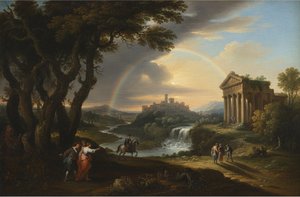
Landscape

Joos de Momper's "Landscape" captures a dramatic Alpine scene with towering pines, a village, and a serene waterway – a stunning example of Flemish Baroque landscape painting.

Мета опис: Йос де Момпер (1564–1635) був фламандським бароковим пейзажистом, відомим своїми гірськими краєвидами та перехідним стилем між маньєризмом і раннім реалізмом. Дослідіть його альпійські сцени, співпрацю з Брюгелем та Франкен ІІ.

Олійная репродукція ручної роботи

Написана вручну олією на полотні у вашому розмірі та рамі, виготовлена на замовлення нашими художниками.

P118B $10
P118H $10
P118W $10
P438Z $10
P508JH $12
P508YH $12
P805H $10
P805Z $10
P919BZ $10
P919G $10
P919XJ $10
P959ZH $10
P968JZ $12
W106C $8
W218G $10
W218JH $8
W218Y $10
W307PJ $10
W316G $10
W316PJ $8
W316Y $10
W398PJ $8
W4111J $10
W500HY $15
W500JH $15
W692G $12
W849H $8
W940BG $15
W953PJ $8

Standard
custom
CM
INCH

Обирайте з наших стандартних розмірів, що відповідають оригінальним пропорціям твору мистецтва.

ширина
висота

Ви можете вказати власні розміри, щоб репродукція підійшла до конкретної рами або інтер'єру. Якщо вибраний вами розмір не відповідає пропорціям оригіналу, ми або обріжемо полотно, або доповнимо картину додатковими елементами, промальованими вручну. Цифровий макет буде надіслано вам на затвердження перед початком виробництва.
Зверніть увагу, що попередній перегляд на екрані не відображає фактичне обрізання або розширення зображення. Тільки макет точно покаже остаточну композицію.
Хоча ми можемо виготовити виріб у нестандартному розмірі, для збереження оригінальних пропорцій рекомендуємо обирати варіанти зі встановленого списку.

Приклади можливих змін: замінити обличчя на фото клієнта; додати домашню тварину (наприклад, замінити кота на собаку); додати приховане повідомлення на фоні; змінити ландшафт або елементи фону.
Після оформлення замовлення команда OriginalUniqueArt.com зв'яжеться з клієнтом електронною поштою для отримання інструкцій та надасть попередній макет

Доставка по всьому світу () за 3–4 тижні замість стандартних 5 тижнів. (23 Липень). Без жодних компромісів у якості.

why_choose_icon
Безкоштовна експрес-доставка по всьому світу
why_choose_icon
Високоякісне лляне полотно
why_choose_icon
Повне страхове покриття доставки
why_choose_icon
Гарантія відшкодування митних зборів
why_choose_icon
Гарантія точного відтворення кольорів
why_choose_icon
Політика повернення протягом 60 днів (лише у разі виявлення дефектів)
why_choose_icon
Гарантія повернення 100% коштів
why_choose_icon
Знижка на багатоелементні замовлення

Загальна вартість

-

reproduction

Landscape

Матеріал репродукції

Розмір репродукції

-

Підсумкова ціна

-

Основні факти

  • Dimensions: 174 x 256 cm
  • Notable elements or techniques: Light & shadow, detail
  • Movement: Flemish Baroque
  • Artist: Joos de Momper
  • Medium: Oil on canvas
  • Influences:
    • Bruegel
    • Flemish
  • Artistic style: Realism, Atmospheric

Вікторина з мистецтва

Для кожного питання є лише одна правильна відповідь.

Запитання 1:
What is the primary subject matter of Joos de Momper’s ‘Landscape with a Road Leading Towards a Settlement on a Hill’?
Запитання 2:
The painting ‘Landscape with the Fall of Icarus’ by Joos de Momper is primarily inspired by which other artist's work?
Запитання 3:
What historical period does ‘Landscape with a Road Leading Towards a Settlement on a Hill’ most closely resemble in its style?
Запитання 4:
Which technique is prominently used by Joos de Momper in ‘Landscape with the Fall of Icarus’ to create a sense of depth?
Запитання 5:
According to the description, what is a key characteristic of Joos de Momper’s landscapes?

Опис твору

Joos de Momper’s Alpine Majesty: A Window into the Flemish Baroque

The world of Joos de Momper the Younger, often overshadowed by his more flamboyant contemporaries like Brueghel and Rubens, reveals itself through works like “Landscape with a Road Leading Towards a Settlement on a Hill,” a captivating example of early 17th-century Flemish landscape painting. More than simply a depiction of scenery, this piece is a carefully constructed illusion—a meticulously rendered panorama designed to evoke both the grandeur of nature and a subtle sense of human presence within it. De Momper’s genius lies not in hyperrealism, but in his masterful manipulation of perspective, light, and color to create an atmosphere of serene contemplation and distant drama.

Born in Antwerp in 1564 into a family steeped in artistic tradition—his grandfather a landscape painter himself—de Momper inherited a deep understanding of visual representation. He quickly established himself as a skilled artist, gaining recognition at a remarkably young age for his ability to capture the essence of mountainous regions, drawing inspiration from his travels through the Alps and Italy. Unlike many of his peers who focused on bustling village scenes or dramatic storms, de Momper favored quieter, more contemplative landscapes—a deliberate choice that reflects a shift in artistic sensibilities towards a greater appreciation for the sublime beauty of nature.

A Symphony of Light and Shadow: Technique and Composition

The painting’s strength resides in its sophisticated technique. De Momper employs a layered approach, beginning with a detailed pen-and-ink underdrawing that establishes the basic structure of the composition. This is then built upon with washes of blue, brown, and red watercolor—a palette carefully chosen to mimic the muted tones of a distant mountain range. Notice how he utilizes *hatching* – closely spaced parallel lines – to create texture and depth in the trees and rocks, while broader strokes suggest the vastness of the sky. The use of *atmospheric perspective*, where objects recede into the distance appearing paler and less distinct, is particularly effective in conveying the immense scale of the landscape.

The composition itself is carefully balanced. A winding road snakes its way through the scene, drawing the viewer’s eye towards a small settlement nestled amongst the hills. The placement of figures—a shepherd tending his flock, a ploughman working the land, and a fisherman casting his line—adds a subtle layer of human activity without disrupting the overall sense of tranquility. These figures are rendered with minimal detail, almost as if they are merely fleeting glimpses into a timeless scene.

Symbolism and the Pursuit of the Sublime

Beyond its technical brilliance, “Landscape with a Road Leading Towards a Settlement on a Hill” is rich in symbolic meaning. The towering mountains evoke a sense of awe and humility—a reminder of humanity’s place within the vastness of nature. The inclusion of figures engaged in simple, everyday tasks suggests a harmony between humans and their environment. The painting can be interpreted as an allegory for the pursuit of *the sublime* – that feeling of wonder and reverence experienced when confronted with something grand and overwhelming. It's a concept central to Baroque art, emphasizing the power and majesty of God’s creation.

Interestingly, de Momper’s work aligns with the broader artistic trends of his time—a transition from the Mannerist style of the late 16th century towards a greater emphasis on realism and naturalism. Yet, he retains a distinctly Baroque sensibility through his masterful use of light, shadow, and dramatic composition. The painting's influence can be seen in works by later landscape painters who sought to capture the beauty and grandeur of the natural world.

A Timeless Vision: Emotional Impact and Reproduction

“Landscape with a Road Leading Towards a Settlement on a Hill” is more than just a pretty picture; it’s an invitation to escape—to lose oneself in the tranquility of the mountains and contemplate the beauty of the natural world. The painting's muted colors, balanced composition, and subtle symbolism create a sense of peace and serenity that continues to resonate with viewers today. A high-quality reproduction captures much of this atmosphere, offering a window into a bygone era and a testament to de Momper’s artistic skill.

OriginalUniqueArt offers meticulously crafted reproductions of this masterpiece, ensuring that you can bring the beauty of de Momper's landscape into your home or office. Each reproduction is printed on archival-quality canvas using giclee printing technology, guaranteeing long-lasting color and detail. Consider it a timeless addition to any collection—a reminder of the enduring power of art to inspire and uplift.


Біографія митця

Joos de Momper (1564–1635) – A Pioneer of the Flemish Landscape

Joos de Momper the Younger, a name perhaps less instantly recognizable than those of his contemporaries like Bruegel or Rubens, nevertheless occupies a crucial position in the evolution of Flemish landscape painting. Born in Antwerp in 1564 into an artistic family—his grandfather was also a landscape painter and his father, Bartholomeus de Momper, a painter, print publisher, and art dealer—the younger de Momper inherited not just a lineage but a deep immersion in the visual world. He became a master within the Antwerp Guild of St. Luke remarkably early, at only seventeen years old in 1581, signaling an immediate recognition of his talent. While documented details of his formal training remain somewhat scarce, it’s clear he benefited from the vibrant artistic atmosphere of Antwerp, a city then grappling with religious and political upheaval but still a powerhouse of creative energy.

The assumption that de Momper traveled to Italy in the 1580s, though not definitively proven, speaks volumes about his ambition and the prevailing artistic currents of the time. The influence of Italianate landscapes—particularly those depicting dramatic Alpine scenery—is undeniably present in his work. However, it was Pieter Bruegel the Elder who cast the longest shadow over de Momper’s artistic development. Bruegel's panoramic vistas, populated with bustling figures and imbued with a sense of narrative detail, served as a foundational inspiration. De Momper didn’t merely copy Bruegel; he absorbed his spirit, adapting it to his own vision and forging a style that bridged the gap between the Mannerist conventions of the late 16th century and the burgeoning realism of the 17th.

A Master Collaborator and Prolific Creator

De Momper’s career flourished during a period when landscape painting was gaining increasing prominence, moving beyond its traditional role as a backdrop for religious or historical scenes. He quickly established himself as a sought-after artist, even attracting the attention of Archduchess Isabella Clara Eugenia, the governor of Flanders, who in 1616 petitioned on his behalf for tax exemptions—a testament to his standing and importance. His productivity was astonishing; it’s estimated that around 500 paintings are attributed to him, though relatively few bear his signature or a date. This high output suggests a substantial workshop operation, with assistants contributing to various stages of the painting process.

A defining characteristic of de Momper's practice was collaboration. He frequently partnered with other prominent artists, most notably Frans Francken II, Peter Snayers, and both Jan Brueghel the Elder and his son. These collaborations typically involved de Momper creating the expansive landscape—often mountainous and dramatic—while his colleagues populated it with figures engaged in various activities, adding narrative depth and human interest. These joint efforts were not simply a division of labor; they represented a synergistic exchange of skills, resulting in richly detailed and visually compelling compositions that graced the collections of discerning patrons.

Stylistic Evolution and Artistic Legacy

De Momper’s landscapes can be broadly categorized into two distinct types. The first features fantastical vistas viewed from elevated vantage points, employing a Mannerist color scheme—dark browns in the foreground gradually transitioning to greens and blues in the distance. These compositions often evoke a sense of grandeur and otherworldliness. The second type demonstrates a more naturalistic approach, with lower viewpoints, more realistic coloration, and a greater emphasis on atmospheric perspective. Regardless of style, his panoramas are consistently populated with small figures, adding scale and inviting the viewer to explore the depicted world.

While highly regarded during his lifetime, de Momper’s reputation suffered a decline in subsequent centuries. Critics often dismissed his work as formulaic and repetitive, lacking the innovative spirit of artists like those emerging from the Dutch Republic. Some viewed his large-scale landscapes as mere imitations of Joachim Patinir's earlier world landscapes. However, modern scholarship has begun to reassess de Momper’s contribution, recognizing him as a pivotal figure in the development of Flemish landscape painting—a crucial link between Bruegel’s visionary panoramas and the more refined naturalism of later artists. He represents not necessarily an innovator but a masterful interpreter and synthesizer of existing traditions, creating works that continue to captivate with their dramatic beauty and intricate detail.

Beyond the Canvas: Recognition and Influence

De Momper’s influence extended beyond his paintings. He was acknowledged by Karel van Mander in his influential Schilder-boeck (Book of Painters), a key source for understanding 17th-century Flemish art, and his portrait was even engraved by Anthony van Dyck—a rare honor that underscores his status within the artistic community. He also trained several pupils, including Louis de Caullery and his son Philippe de Momper, ensuring the continuation of his artistic legacy.

Today, Joos de Momper’s paintings can be found in museums and private collections around the world, offering a glimpse into the rich visual culture of 17th-century Flanders. His work serves as a reminder that artistic progress is not always about radical innovation but often involves skillful adaptation, collaboration, and a deep understanding of existing traditions. He was a master craftsman who brought to life breathtaking landscapes, inviting viewers to lose themselves in their beauty and contemplate the wonders of the natural world.

Йоос де Мёмпер

Йоос де Мёмпер

1564 - 1635 , Бельгия

Короткі факти

  • Artistic Movement Or Style: Бароко пейзаж
  • Artists Or Movements Influenced By This Artist: ['Ян Брюгель Старший']
  • Artists Who Influenced This Artist:
    • Пітер Брюгель Старший
    • Лодовик Тоепут
  • Date Of Birth: c. 1564
  • Date Of Death: 5 February 1635
  • Full Name: Joos de Momper the Younger
  • Nationality: Фламандський
  • Notable Artworks:
    • Місто під місячним сяйвом
    • Жінки на краю
    • Подорож Томаса
  • Place Of Birth: Antwerp, Belgium
Досліджуйте твори мистецтва, відсортовані за темами, стилями та характеристиками.