

 Переглянути в інтер'єрі
 Надіслати як листівку
 Поділитися
 Деталі витвору
 Посібник

 Завантажити
 Схожі екземпляри
 Рентгенівське дослідження
 Слайд-шоу
 Статистика
Sugar Tongs


 Розгорнути текст
Гікле / Художній принт
Друк جيкле або на полотні музейної якості з оперативним виготовленням та різноманітними варіантами фінішної обробки. ( Замовити картину ручної роботи Перейти до цифрових зображень)




P118B ₴10

P118H ₴10

P118W ₴10

P438Z ₴10

P508JH ₴12

P508YH ₴12

P805H ₴10

P805Z ₴10

P919BZ ₴10

P919G ₴10

P919XJ ₴10

P959ZH ₴10

P968JZ ₴12

W106C ₴8

W218G ₴10

W218JH ₴8

W218Y ₴10

W307PJ ₴10

W316G ₴10

W316PJ ₴8

W316Y ₴10

W398PJ ₴8

W4111J ₴10

W500HY ₴15

W500JH ₴15

W692G ₴12

W849H ₴8

W940BG ₴15

W953PJ ₴8




Обирайте з наших стандартних розмірів, що відповідають оригінальним пропорціям твору мистецтва.

Введіть необхідну ширину та висоту, щоб принт ідеально підійшов до вашої рами або стіни. Принт можна лише обрізати, але не можна зробити більшим за оригінал, тому при зміні пропорцій частина зображення буде втрачена. Перед друком ми надсилаємо вам цифровий макет для затвердження. Зображення на цій сторінці не відображає реальну обрізку — її можна побачити лише на макеті.
Доставка по всьому світу () за 2 тижні замість стандартних 4/5 тижнів. (26 Жовтень)

Безкоштовна експрес-доставка по всьому світу

Високоякісне лляне полотно

Повне страхове покриття доставки

Гарантія повернення митних зборів

Гарантія точного відтворення кольорів

Політика повернення протягом 100 днів (лише у разі виявлення дефектів)

Гарантія повернення 100% коштів

Пропозиція на оптові замовлення
 Скляний варіант доступний лише для розмірів до 110 см

Sugar Tongs
Гікле / Художній принт
Розмір репродукції
-


Підсумкова вартість
₴ 3588
Sugar Tongs - John Steuart Curry: A Study in Detail and Midwestern Spirit
The artwork "Sugar Tongs" by John Steuart Curry stands as a testament to the American Regionalist movement’s dedication to capturing the essence of rural life—specifically, Kansas—with unflinching honesty and remarkable artistic precision. More than just a depiction of silverware, it embodies a profound exploration of craftsmanship, labor, and the quiet dignity inherent in everyday existence.- Subject Matter: The centerpiece is undeniably a pair of antique silver sugar tongs. Their unassuming appearance belies their significance as symbols of domestic comfort and refinement—a subtle counterpoint to the turbulent socio-political landscape of Curry’s era.
- Composition: Curry employs a central perspective, angling the tongs slightly to maximize visual impact. The background is deliberately muted, allowing the silvery sheen of the metalwork to dominate and creating an atmosphere of understated elegance. There's no illusionistic depth; instead, Curry prioritizes clarity and focused observation.
- Color Palette: Dominantly silver/gray, punctuated by subtle tonal variations reflecting ambient light. Hints of darker gray and brown appear within the engraved details—a deliberate choice that adds textural richness and reinforces the connection to the earth. The stark contrast with the dark background amplifies the visual drama.
- Use of Lines & Shapes: Curved lines dominate the handles, mirroring the organic forms found in nature – vines and leaves – reflecting Curry’s deep appreciation for the landscape. Angular lines define the grasping ends resembling claws, conveying a sense of purposeful action and resilience.
- Texture: The photograph captures the tactile quality of silver—smooth surfaces punctuated by subtle polishing marks and delicate engraved patterns. These textures contribute to the overall impression of solidity and permanence, mirroring the enduring values championed by Curry’s artistic vision.
Stylistic Considerations & Technique
Curry's approach aligns squarely with the tenets of Regionalism, rejecting European academic conventions in favor of a direct engagement with American subjects and experiences. He meticulously renders the silver tongs in a realistic style—a technique honed through extensive study of Old Masters like Rubens and Doré—capturing not merely form but also surface texture and reflectivity. The painting’s execution demonstrates an unwavering commitment to accuracy, mirroring Curry's belief that art should serve as a truthful reflection of reality.- Medium: Likely oil paints on canvas or panel, chosen for their ability to convey nuanced tonal gradations and textural detail—essential elements in conveying the materiality of the silver.
- Brushwork: Curry’s brushstrokes are deliberate and controlled, emphasizing contours and highlighting surface irregularities. This technique underscores his desire to communicate not just what is seen but also how it feels—the quiet dignity of labor and the beauty of simple forms.
Historical Context & Symbolism
Created in 1932, “Sugar Tongs” emerged during a period marked by economic hardship and social unrest—the Great Depression—yet Curry’s artwork transcends immediate circumstance to explore universal themes of perseverance and resilience. The inclusion of the claw-like ends adds an element of whimsical fantasy, subtly elevating the mundane object into something imbued with symbolic significance. It speaks to the enduring spirit of the American Midwest—a region defined by its connection to the land and its unwavering commitment to hard work and honest living.Emotional Impact & Artistic Legacy
Ultimately, “Sugar Tongs” succeeds in evoking a profound sense of contemplation and appreciation for craftsmanship. Curry’s masterful depiction invites viewers to consider not just what is represented but also how it communicates—a testament to his belief that art possesses the power to illuminate the human condition. As a cornerstone of American Regionalism, Curry's work continues to inspire artists and collectors alike, reminding us of the enduring value of capturing authentic moments in time with unwavering artistic integrity.Питання та відповіді
Яка кольорова гама використана у творі "Sugar Tongs"?
У творі «Sugar Tongs» роботи Джон Стьюарт Керрі використана Earthy палітра кольорів, що визначає загальний колорит роботи.
Які сюжети зображені у «Sugar Tongs» роботи Джон Стьюарт Керрі?
Тематика, представлена у «Sugar Tongs» роботи Джон Стьюарт Керрі, включає rural landscape, midwestern life, farm imagery, silverware design, craftsmanship detail, decorative patterns, claw mechanism. Разом вони підсумовують зміст твору.
Яка техніка виконання у «Sugar Tongs» роботи Джон Стьюарт Керрі?
«Sugar Tongs» виконано в техніці Oil On Canvas.
Біографія митця
A Midwestern Visionary: The Life and Art of John Steuart Curry
John Steuart Curry, a name inextricably linked to the American Regionalist movement, emerged from the fertile plains of Kansas to become one of the most compelling visual storytellers of the 20th century. His life was profoundly shaped by the rhythms of rural existence—the cycles of planting and harvest, the drama of storms, and the enduring spirit of its people. Born in 1897 in Dunavant, a small community nestled amidst the vast expanse of the Kansas prairie, Curry’s upbringing instilled within him a deep connection to the land and an unwavering appreciation for its inhabitants. Though his parents, both educated individuals who had traveled extensively throughout Europe, provided him with a worldly perspective, it was the stark beauty and unyielding challenges of the Midwestern landscape that ultimately formed the bedrock of his artistic vision. From a young age, Curry demonstrated a remarkable aptitude for capturing the essence of animals—a talent nurtured by his family’s farm and further honed through early art lessons. This formative period laid the foundation for his distinctive style, characterized by dynamic movement, expressive brushwork, and an intimate understanding of the human condition within its natural setting.Forging a Style: From Illustration to Regionalism
Curry's artistic journey was not immediately defined by grand canvases or monumental murals. His formal training began with brief stints at the Kansas City Art Institute and later the Art Institute of Chicago, followed by studies at Geneva College in Pennsylvania. However, it was his years as an illustrator—from 1921 to 1926—that proved unexpectedly transformative. Working for publications such as *Boys’ Life*, *St. Nicholas*, and *The Saturday Evening Post* provided him with invaluable experience in observation, narrative storytelling, and the art of capturing fleeting moments with precision. This period instilled within him a rigorous discipline and a keen eye for detail – qualities that would later inform his paintings. A pivotal moment arrived in 1926 when he spent a year studying in Paris, immersing himself in the works of European masters like Gustave Courbet and Honoré Daumier. While absorbing their techniques for rendering color, form, and realism, Curry consciously resisted simply imitating these artists. Instead, he sought to synthesize their lessons with his own uniquely American sensibility—a desire to capture the essence of his homeland through a distinctly regional lens. Upon returning to the United States, Curry deliberately rejected the prevailing artistic trends of abstraction and European modernism, choosing instead to focus on the scenes and subjects that resonated most deeply within him: the lives of Midwesterners, their struggles, and their triumphs. This commitment marked his full embrace of American Regionalism—a movement dedicated to celebrating rural America during a period of profound social and economic transformation.Iconic Images of the Heartland
Curry’s paintings are instantly recognizable for their dynamic energy, dramatic compositions, and unflinching portrayal of Midwestern life. Unlike the more static and precise style of Grant Wood, Curry infused his canvases with a sense of movement and emotional intensity. Swirling lines, bold perspectives, and expressive brushwork convey the power of nature and the resilience of those who inhabit it. Baptism in Kansas (1928) remains arguably his most iconic work—a powerful depiction of an open-air baptism that captures both the spiritual fervor and the rugged practicality of rural life. The painting’s success propelled Curry to national prominence, establishing him as a leading voice of American Regionalism. Tornado Over Kansas (c. 1937) is another striking example of his ability to convey raw emotion and dramatic tension; it serves as a potent reminder of the vulnerability of rural communities in the face of natural disasters. Perhaps his most ambitious—and controversial—work is the monumental mural cycle Tragic Prelude (1938-40), commissioned for the Kansas State Capitol. This sprawling depiction of John Brown’s crusade against slavery sparked considerable debate due to its unflinching portrayal of violence and its complex interpretation of a divisive historical figure. Beyond these celebrated works, Curry also undertook significant mural projects for federal buildings in Washington D.C., further solidifying his reputation as a major American artist.Themes and Influences
Curry’s artistic vision was deeply rooted in the traditions and values of the Midwest—a region he knew intimately through his upbringing on a farm. His paintings often depict scenes of rural life: farmers tending their fields, cowboys rounding up cattle, families gathered around the hearth, and communities grappling with the challenges of drought, flood, and economic hardship. Animals – particularly horses, bulls, and hogs – frequently feature prominently in his work, symbolizing both the bounty of the land and the struggles of those who depend on it. The influence of Old Masters like Peter Paul Rubens and Gustave Doré is evident in Curry’s dramatic compositions, dynamic brushwork, and use of light and shadow. However, he skillfully blended these influences with a distinctly American sensibility—a focus on the everyday lives of ordinary people and an appreciation for the beauty of the Midwestern landscape. The themes explored in his work often reflect the social and political tensions of the era: the struggle between progress and tradition, the impact of industrialization on rural communities, and the legacy of slavery and racial injustice.Legacy and Lasting Influence
John Steuart Curry’s artistic legacy extends far beyond the canvases he created. As one of the “Big Three” of American Regionalism—alongside Thomas Hart Benton and Grant Wood—he played a pivotal role in shaping a distinctly American visual identity during a period of national self-examination. His work offered a powerful counterpoint to European modernism, celebrating the values of hard work, community, and connection to the land. Despite facing criticism during his lifetime for perceived technical shortcomings and controversial subject matter, Curry is now widely recognized as a significant figure in 20th-century American art. His untimely death from a heart attack in 1946 at the age of 48 cut short a promising career, but his paintings continue to resonate with audiences today, offering valuable insights into the lives and experiences of people living in the Midwest during a pivotal era. He served as an artist-in-residence at the University of Wisconsin–Madison from 1936 until his death, fostering artistic talent within farming communities. His contributions were also acknowledged through his election to both associate (1937) and full academician (1943) status in the National Academy of Design—a testament to his enduring impact on American art. *Curry’s work remains a powerful reminder of the beauty, resilience, and complexity of the American heartland.*
Джон Стьюарт Керрі
1897 - 1946 , США
Короткі факти
- Artistic Movement Or Style: Американський регіоналізм
- Artists Or Movements Influenced By This Artist:
- Бентон
- Вуд
- Artists Who Influenced This Artist:
- Рубенс
- Доре
- Коурб
- Date Of Birth: 14 кв. 1897
- Date Of Death: 29 сер. 1946
- Full Name: John Steuart Curry
- Nationality: Американський
- Notable Artworks:
- Христина в Канзасі
- Торнадо в Канзасі
- Трагічний прелюд
- Place Of Birth: Дунаван, США
Пов'язані статті

Grant Wood & American Regionalism: Identity, Myth & the Rural Landscape
Explore the world of Grant Wood & American Regionalism with OriginalUniqueArt. Discover the symbolism behind 'American Gothic', recurring themes, and the movement's lasting impact on art history. High-quality reproductions available.

Джон Сінґер Са́рджент: 25 шедеврів американського імпресіонізму для вашого дому | OriginalUniqueArt
Відкрийте 25 найкращих картин Джона Сінґера Са́рджента – американського імпресіоніста, майстра портретів та елегантного живопису. Історія мистецтва, техніки та натхнення для вашого дому від OriginalUniqueArt.com! Дослідіть повну колекцію онлайн.
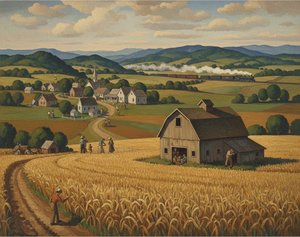
American Regionalism: Capturing the Soul of the Heartland through the Lens of Art History
Explore the profound beauty of American Regionalism. Delve into the art history of Grant Wood and John Steuart Curry, uncovering how these masters captured the soul of the American Heartland through iconic landscapes and rural identity.
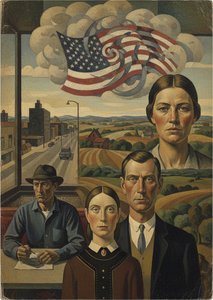
Echoes of Place: Regionalism & American Identity in Interwar Art
Explore the rise of American Regionalism in interwar art! Discover Grant Wood, Thomas Hart Benton & the movement's impact on American identity. Expert analysis & historical context.
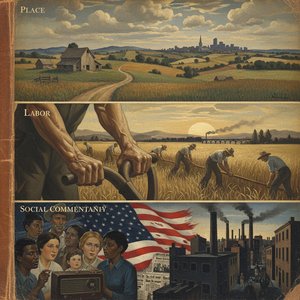
American Regionalism: A Crucible of Identity – Exploring Themes of Place, Labor & Social Commentary
Explore American Regionalism's powerful depiction of the American heartland during the Great Depression. Discover Grant Wood, Thomas Hart Benton & more. Expert analysis & high-quality art reproductions at OriginalUniqueArt.