

 Переглянути в інтер'єрі
 Надіслати
 Поділитися
 Деталі
 Посібник

 Завантажити
 Схожі предмети колекціонування
 Рентгенівське дослідження
 Слайд-шоу
 Статистика переглядів
Hilltop


 Читати далі
Олійная репродукція ручної роботи
Написана вручну олією на полотні у вашому розмірі та рамі, виготовлена на замовлення нашими художниками. ( Перейти до друку Перейти до цифрових зображень)




P118B ₴10

P118H ₴10

P118W ₴10

P438Z ₴10

P508JH ₴12

P508YH ₴12

P805H ₴10

P805Z ₴10

P919BZ ₴10

P919G ₴10

P919XJ ₴10

P959ZH ₴10

P968JZ ₴12

W106C ₴8

W218G ₴10

W218JH ₴8

W218Y ₴10

W307PJ ₴10

W316G ₴10

W316PJ ₴8

W316Y ₴10

W398PJ ₴8

W4111J ₴10

W500HY ₴15

W500JH ₴15

W692G ₴12

W849H ₴8

W940BG ₴15

W953PJ ₴8




Обирайте з наших стандартних розмірів, що відповідають оригінальним пропорціям твору мистецтва.

Введіть необхідну ширину та висоту, щоб картина підійшла до вашої рами або стіни. Оскільки це ручний розпис, для розміру іншої форми художник може написати трохи більше навколо картини або трохи обрізати її — вибір за вами. Перед початком роботи ми надішлемо вам цифровий макет для затвердження. Зображення, показане на цій сторінці, не є реальним результатом — лише макет відображає майбутній вигляд.
Після оформлення замовлення команда OriginalUniqueArt.com зв'яжеться з клієнтом електронною поштою для отримання інструкцій та надасть попередній макет
Доставка по всьому світу () за 3–4 тижні замість стандартних 5 тижнів. (23 Жовтень). Без жодних компромісів у якості.

Безкоштовна експрес-доставка по всьому світу

Високоякісне лляне полотно

Повне страхове покриття доставки

Гарантія повернення митних зборів

Гарантія точного відтворення кольорів

Політика повернення протягом 100 днів (лише у разі виявлення дефектів)

Гарантія повернення 100% коштів

Знижка на оптові замовлення
 Скляний варіант доступний лише для розмірів до 110 см

Hilltop
Техніка репродукції
Розмір репродукції
-


Загальна вартість
₴ 13486
The Essence of a Moment – John La Farge’s Hilltop
John La Farge's “Hilltop,” painted in 1862, isn’t merely a depiction of a woodland scene; it’s a carefully constructed evocation of the American spirit—a blend of Romantic idealism and burgeoning realism. The painting captures a fleeting moment within a verdant landscape, centered around two figures standing beneath a canopy of trees. The composition immediately draws the eye to this intimate tableau, suggesting a shared experience of quiet contemplation amidst nature’s grandeur. La Farge masterfully employs light and shadow to create a sense of depth and atmosphere, imbuing the scene with a palpable warmth that belies the cool tones of the palette.

Image: John La Farge, portrait by an unknown artist
A Symphony of Color and Technique
La Farge’s distinctive approach to color is immediately apparent in “Hilltop.” He eschews the stark realism favored by some contemporary artists, instead opting for a rich, luminous palette—a hallmark of his style. The greens are not uniform; they range from deep forest hues to lighter, almost ethereal shades, suggesting varying depths and textures within the foliage. The figures themselves are rendered with subtle gradations of tone, conveying a sense of volume and form without resorting to sharp outlines. La Farge’s technique is characterized by loose brushstrokes and a delicate layering of paint—a method that contributes significantly to the painting's atmospheric quality. He was particularly known for his innovative use of glass in stained-glass windows, which informed his approach to color mixing and light manipulation.
Historical Context: Japonisme and American Pastoral
“Hilltop” is deeply rooted in the artistic currents of its time—particularly the influence of Japanese art, or “Japonisme,” which was sweeping through Europe and America during the mid-19th century. La Farge’s fascination with Japan led him to incorporate elements of Japanese composition and color theory into his work. The flattened perspective, simplified forms, and emphasis on decorative patterns—all characteristic of Japanese prints—are subtly reflected in “Hilltop.” Simultaneously, the painting embodies a romanticized vision of American pastoral life—a nostalgic yearning for an idealized past rooted in rural simplicity and connection to nature. This theme resonated strongly with artists seeking to define a distinctly American artistic identity.
Symbolism and Emotional Resonance
Beyond its aesthetic qualities, “Hilltop” is rich in symbolic meaning. The two figures, seemingly engaged in conversation, represent the potential for human connection and shared experience within the natural world. Their placement beneath the trees suggests a sense of humility and reverence—a recognition of nature’s power and beauty. The dappled sunlight filtering through the foliage creates an atmosphere of tranquility and serenity, inviting the viewer to step into the scene and share in this moment of quiet contemplation. La Farge's work evokes a feeling of peacefulness and nostalgia, reminding us of the enduring appeal of simple pleasures and the restorative power of nature.
Collecting “Hilltop” – A Legacy of American Art
Reproductions of John La Farge’s “Hilltop” offer a beautiful way to bring this evocative painting into your home or office. Whether you choose a fine art print on canvas, archival paper, or a meticulously crafted hand-painted reproduction, you'll be acquiring a piece of American art history—a testament to La Farge’s artistic vision and his profound understanding of color, composition, and the human spirit. Consider framing your chosen reproduction in a style that complements its timeless appeal, allowing this captivating scene to continue inspiring for generations to come.
Запитання та відповіді
Яке розміщення найкраще підходить для формату «Hilltop» Джон Ла Фарж?
Формат (Tall) та рекомендоване приміщення (Living Room) — це два факти щодо розміщення, зафіксовані для «Hilltop» Джон Ла Фарж.
Чи є «Hilltop» Джон Ла Фарж живописом, малюнком чи друком?
«Hilltop» — це твір у техніці WallArt.
Яка дата створення «Hilltop» Джон Ла Фарж?
«Hilltop» датована 1862 роком. Ця дата дозволяє визначити місце твору в творчому шляху Джон Ла Фарж та відповідну епоху.
Біографія митця
A Luminary of American Art: The Life and Legacy of John La Farge
John La Farge, born in New York City in 1835 to wealthy French parents, emerged as a pivotal figure in the evolution of late 19th and early 20th-century American art. His journey was one of constant exploration and innovation, spanning painting, mural design, stained glass artistry, interior decoration, and insightful writing on his travels—particularly those to Asia. Raised bilingually, La Farge’s upbringing instilled in him a cosmopolitan sensibility that would profoundly shape his artistic vision. He initially pursued legal studies but soon gravitated towards the world of art, studying first at Mount St. Mary's University and then at St. John's College (now Fordham University). A formative period followed with training under Thomas Couture in Paris, where he absorbed European artistic traditions while simultaneously developing a uniquely American aesthetic. This early exposure to both Old World mastery and his own burgeoning originality laid the foundation for a career marked by groundbreaking techniques and a distinctive style. La Farge’s artistic output was remarkably diverse, yet consistently characterized by an intense focus on color and light. He began to gain recognition with his illustrations and landscapes, but it was in the realm of mural painting that he first made a significant impact. Commissions for churches like Trinity Church in Boston (1873) and the Church of the Ascension in New York showcased his ability to create luminous, spiritually evocative spaces. These murals weren’t merely decorative; they were intended to transport viewers into realms of faith and beauty, utilizing rich color palettes and dynamic compositions. However, La Farge’s most enduring legacy lies in his revolutionary work with stained glass. Dissatisfied with the conventional methods of the time—often relying on mass-produced designs and limited color ranges—he pioneered a technique involving superimposing multiple layers of colored glass—a process for which he received a patent in 1880. This innovation allowed him to achieve an unprecedented richness and depth of color, transforming stained glass from a merely decorative element into a powerful medium for artistic expression. His windows weren’t simply representations; they were immersive experiences of light and hue, capturing the essence of biblical scenes or natural landscapes with breathtaking realism and emotional resonance. The influence of Japanese art and culture played a crucial role in shaping La Farge's aesthetic sensibilities during this period. Inspired by his travels to Asia—particularly Japan—he became fascinated by the principles of asymmetry, flattened perspectives, and a refined sense of color that characterized traditional Japanese design. He meticulously documented his observations in writings and incorporated elements of Japanese aesthetics into his own work, moving away from the rigid formality of Western art towards a more fluid and expressive style. This embrace of Eastern influences wasn’t merely imitative; La Farge synthesized these influences with his existing artistic vocabulary to create something entirely new—a uniquely American interpretation of beauty informed by both European tradition and Asian wisdom. His studio at 51 West 10th Street in Greenwich Village became a hub for artists interested in exploring non-Western art forms, fostering a spirit of experimentation and cross-cultural exchange. He wasn’t alone in this pursuit—artists like James McNeill Whistler were also captivated by Japanese aesthetics—but La Farge distinguished himself through his ability to seamlessly integrate these influences into his diverse artistic practice. The sacred grove, a forested area in Rhode Island where he painted many mythological scenes, became a personal sanctuary reflecting his spiritual and artistic explorations. Beyond his technical innovations and aesthetic influences, La Farge was also a dedicated advocate for the arts and a vocal critic of academic conservatism. He challenged the established norms of the art world by championing artistic freedom and innovation. In 1877, he co-founded the Society of American Artists as an alternative to the perceived rigidity of the National Academy of Design, advocating for a more open and inclusive approach to artmaking. This commitment to artistic experimentation extended beyond his own work; La Farge actively mentored young artists, encouraging them to push boundaries and explore new possibilities. His influence can be seen in the work of subsequent generations of artists, particularly those associated with the Arts and Crafts movement and Symbolism—artists who shared his belief in the importance of craftsmanship, spiritual expression, and a rejection of purely decorative art. He served as an instructor at the Metropolitan Museum of Art Schools, imparting his knowledge and passion for art to countless students. La Farge’s legacy extends far beyond his individual artworks; he was a significant cultural figure who helped shape the development of American art in the late 19th and early 20th centuries. His contributions to stained glass, mural painting, and interior design—combined with his insightful writings and his commitment to artistic innovation—solidify his place as one of the most influential artists of his time. His final years were marked by continued creativity and a deep appreciation for the beauty he had brought into the world. His interment is at Green-Wood Cemetery in Brooklyn, New York.Beyond the Canvas: Writings and Family
- Literary Contributions: La Farge was not only a visual artist but also a gifted writer. His travelogues, particularly *An Artist’s Letters from Japan* (1897), offered insightful observations on Japanese culture and art, contributing to a growing Western appreciation for Eastern aesthetics.
- Family Legacy: The La Farge family continued to contribute to the arts and humanities. His son, Oliver Hazard Perry La Farge II, became a renowned anthropologist and writer, focusing on Native American cultures and winning a Pulitzer Prize for his novel *Laughing Boy* (1929).
- Final Years: In his later years, La Farge continued to work prolifically, creating murals even into his seventies. He died at Butler Hospital in Providence, Rhode Island, leaving behind a body of work that continues to inspire and captivate audiences today.

Джон Ла Фарж
1835 - 1910 , США
Довідкова інформація
- Artistic Movement Or Style: Символізм, Arts & Crafts
- Artists Or Movements Influenced By This Artist: ['М. Окей Девінг']
- Artists Who Influenced This Artist: ['Т. Кутурье']
- Date Of Birth: 31 квiтня 1835
- Date Of Death: 14 липн 1910
- Full Name: John La Farge
- Nationality: Американський
- Notable Artworks:
- Трініті-церква
- Масла
- Вітраж
- Place Of Birth: Нью-Йорк, США
Схожі статті
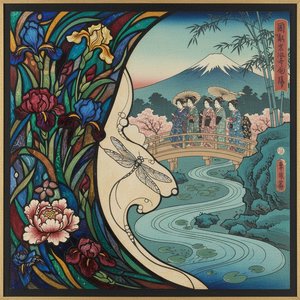
John La Farge: Pioneering American Colorism & Japonisme's Influence
Explore the groundbreaking work of John La Farge, a pioneer of American colorism and stained glass. Discover his captivating Japonisme-inspired murals & lasting legacy in 19th-century art. Expert insights for collectors.

Топ-25 шедеврів Джона Констебла: пейзажі Англії для вашого дому | OriginalUniqueArt
Відкрийте для себе 25 найкращих шедеврів Джона Констебла! Англійські пейзажі, романтизм та емоційне світло в живописі. Репродукції картин високої якості для вашого дому від OriginalUniqueArt.com. Дослідіть повну колекцію онлайн!

Топ-10 шедеврів живопису в чорних тонах: історія, мистецтво та декор від OriginalUniqueArt
Відкрийте для себе 10 найвідоміших картин у чорних тонах! Історія, техніка та емоції від OriginalUniqueArt. Романтизм, готика, експресіонізм – шедеври живопису онлайн. Купіть репродукцію мрії на OriginalUniqueArt.com!

Джон Сінґер Са́рджент: 25 шедеврів американського імпресіонізму для вашого дому | OriginalUniqueArt
Відкрийте 25 найкращих картин Джона Сінґера Са́рджента – американського імпресіоніста, майстра портретів та елегантного живопису. Історія мистецтва, техніки та натхнення для вашого дому від OriginalUniqueArt.com! Дослідіть повну колекцію онлайн.

Топ-10 шедеврів романтичного пейзажу: мистецтво, що захоплює дух | OriginalUniqueArt
Відкрийте для себе 10 шедеврів романтичного пейзажу! Каспар Давид Фрідріх, Тернер та інші майстри. Історія мистецтва, емоційні кольори природи та ідеї декору з OriginalUniqueArt.com. Дослідіть колекцію онлайн!