
 Переглянути в інтер'єрі
 Надіслати як листівку
 Поділитися
 Деталі витвору
 Посібник

 Завантажити
 Схожі екземпляри
 Рентгенівське дослідження
 Слайд-шоу
 Питання та відповіді
 Статистика
Welsh Black Bull

- 71.0 x 91.0 cm


 Розгорнути текст
Мистецький твір, представлений на цій сторінці, захищений законом про авторське право, що унеможливлює легальне створення або продаж його ідентичної репродукції. Цей захист забезпечується відповідно до міжнародних угод, таких як Бернська конвенція та національним законодавством, зокрема положеннями, що викладені в Законодавство США про авторське право — Розділ 17. Всі права захищені. Будь-яке використання без дозволу заборонено.
Цей метод повністю відповідає нормам авторського права, оскільки він не передбачає копіювання чи дублювання захищеного твору мистецтва. Натомість це творче переосмислення — створення нового малюнка під впливом оригіналу, який не є його точним відтворенням.
Гікле / Художній принт
Друк جيкле або на полотні музейної якості з оперативним виготовленням та різноманітними варіантами фінішної обробки. ( Замовити картину ручної роботи Перейти до цифрових зображень)




P118B ₴10

P118H ₴10

P118W ₴10

P438Z ₴10

P508JH ₴12

P508YH ₴12

P805H ₴10

P805Z ₴10

P919BZ ₴10

P919G ₴10

P919XJ ₴10

P959ZH ₴10

P968JZ ₴12

W106C ₴8

W218G ₴10

W218JH ₴8

W218Y ₴10

W307PJ ₴10

W316G ₴10

W316PJ ₴8

W316Y ₴10

W398PJ ₴8

W4111J ₴10

W500HY ₴15

W500JH ₴15

W692G ₴12

W849H ₴8

W940BG ₴15

W953PJ ₴8




Обирайте з наших стандартних розмірів, що відповідають оригінальним пропорціям твору мистецтва.

Введіть необхідну ширину та висоту, щоб принт ідеально підійшов до вашої рами або стіни. Принт можна лише обрізати, але не можна зробити більшим за оригінал, тому при зміні пропорцій частина зображення буде втрачена. Перед друком ми надсилаємо вам цифровий макет для затвердження. Зображення на цій сторінці не відображає реальну обрізку — її можна побачити лише на макеті.
Доставка по всьому світу () за 2 тижні замість стандартних 4/5 тижнів. (5 Листопад)

Безкоштовна експрес-доставка по всьому світу

Високоякісне лляне полотно

Повне страхове покриття доставки

Гарантія повернення митних зборів

Гарантія точного відтворення кольорів

Політика повернення протягом 100 днів (лише у разі виявлення дефектів)

Гарантія повернення 100% коштів

Пропозиція на оптові замовлення
 Скляний варіант доступний лише для розмірів до 110 см

Welsh Black Bull
Гікле / Художній принт
Розмір репродукції
-


Підсумкова вартість
₴ 3644
A Soul Forged in Stone and Sky
In the evocative masterpiece “Welsh Black Bull,” Sir John Kyffin Williams invites us into a realm where the landscape is not merely a setting, but a living, breathing protagonist. Created during the twilight of his prolific career, this work serves as a profound testament to the artist’s lifelong devotion to the rugged spirit of Wales. The painting presents a solitary Welsh Black Bull, standing with an unwavering gaze amidst a windswept expanse of grass. Beneath a brooding, heavy sky, the bull emerges not just as livestock, but as a symbol of ancestral resilience. There is a quiet defiance in its posture—a strength that mirrors the very terrain it inhabits—capturing a sense of endurance that has defined the Welsh identity for generations.
The emotional resonance of the piece lies in its stark, almost monochromatic intensity. By utilizing a limited palette of deep blacks, brilliant whites, and varying shades of somber grey, Williams strips away the distractions of vibrant color to reveal the raw, skeletal beauty of the natural world. This tonal restraint evokes a sense of profound solitude and a touch of melancholy, making the artwork an ideal centerpiece for those seeking to introduce a sense of contemplative drama into a sophisticated interior. For the collector, the painting offers more than visual appeal; it offers a window into a landscape shaped by wind, rain, and time.
The Tactile Poetry of Impasto
To behold “Welsh Black Bull” is to experience the physical weight of paint itself. Williams was a master of expressive realism, a style that eschews polished perfection in favor of a visceral, tactile truth. His signature technique—the heavy application of oil paint via a palette knife—creates a thick impasto surface that transforms the canvas into a sculptural relief. Each stroke is visible, contributing to a textured topography that mimics the craggy rocks and undulating grasses of the Welsh countryside. This deliberate layering does more than just represent texture; it creates a dynamic interplay of light and shadow across the painting’s surface.
This rugged technique serves a vital narrative purpose. The thick, agitated brushwork captures the movement of the wind and the heavy atmosphere of a storm brewing on the horizon. As light hits the raised ridges of paint, the artwork gains a sense of luminosity and depth that shifts depending on the viewer's perspective. For interior designers, this quality makes the piece exceptionally versatile; it possesses a commanding presence in a minimalist gallery-style room, yet its organic textures provide a grounding, earthy warmth to more traditional or rustic settings. It is a work that demands to be felt as much as seen, offering a sensory experience that elevates any curated space.
A Legacy of Cultural Devotion
Understanding the depth of this work requires a glimpse into the heart of the artist himself. Born in Llangefni, Anglesey, Kyffin Williams lived a life defined by a complex relationship with his heritage. Despite early societal pressures to distance himself from Welsh traditions, his art became the ultimate vessel for celebrating them. “Welsh Black Bull” is an extension of this cultural custodianship. The bull, much like the artist’s connection to his homeland, stands firm against the elements, rooted deeply in the earth.
Owning a high-quality reproduction of such a significant work allows one to bring a piece of British art history into the home. It is an opportunity to possess a fragment of a legacy that celebrates strength, identity, and the sublime beauty of the wild. Whether placed in a private study, a grand living area, or a professional design project, this painting serves as a powerful conversation piece—a tribute to the enduring spirit of the land and the masterful hand of one of Wales' greatest visionaries.
Питання та відповіді
Який настрій та емоцію передає «Welsh Black Bull» роботи Киффин Уильямс?
У творі "Welsh Black Bull" Calm настрій супроводжується Melancholic емоцією.
Які права на відтворення твору "Welsh Black Bull" у Llyfrgell Genedlaethol Cymru / The National Library of Wales?
«Welsh Black Bull» роботи Киффин Уильямс, що зберігається в Llyfrgell Genedlaethol Cymru / The National Library of Wales, є все ще перебуває під захистом авторського права. Цей статус визначає можливість створення репродукцій зображення.
«Welsh Black Bull» роботи Киффин Уильямс — це світлий чи темний твір мистецтва?
Відчутна яскравість твору «Welsh Black Bull» роботи Киффин Уильямс становить balanced. Її можна підібрати відповідно до освітлення в запланованому інтер'єрі.
Біографія митця
A Defining Voice of Welsh Landscape
Sir John “Kyffin” Williams, a name synonymous with the very spirit of Wales, stands as a monumental figure in 20th-century British art. More than just a painter, he was a cultural ambassador, a storyteller who translated the rugged beauty and emotional depth of his homeland onto canvas with unparalleled skill. Born in Llangefni, Anglesey, in 1918, Williams’s life journey was as textured and compelling as the impasto surfaces that became his signature. His connection to Wales wasn't merely geographical; it was woven into the fabric of his being, a heritage both cherished and complicated by a mother who seemingly distanced herself from Welsh language and culture. This early tension perhaps fueled a lifelong dedication to visually capturing and celebrating the land she subtly discouraged him from embracing.From Military Service to Artistic Awakening
Williams’s path to becoming Wales' foremost artist wasn’t straightforward. Educated at Moreton Hall School and Shrewsbury, his life took an unexpected turn with a bout of polio encephalitis that led to epilepsy. Ironically, this health challenge proved pivotal. Advised by doctors to pursue art as therapy, he discovered a profound connection within himself—a creative impulse ignited by the emotional resonance found in the works of Piero della Francesca. This encounter sparked a lifelong devotion to artistic expression. A brief stint in the 6th Battalion Royal Welch Fusiliers was cut short due to his medical condition, but it wasn’t a detour; rather, it freed him to enroll at London's Slade School of Fine Art during its wartime relocation to Oxford. There, he honed his skills and earned the prestigious Slade Portrait Prize, laying the foundation for a remarkable career. The influence of Piero della Francesca, with his masterful use of light and shadow, became a cornerstone of Williams’s artistic approach—a desire to capture not just form but also mood and atmosphere.A Life Dedicated to Teaching and Exploration
For many years, Williams balanced his artistic pursuits with a dedicated teaching career, serving as senior art master at Highgate School in London from 1944 until 1973. He nurtured generations of young artists, among them Sir Martin Gilbert, Anthony Green, Patrick Procktor, John Tavener and John Rutter—a testament to his influence and mentorship. However, it was a Winston Churchill Fellowship in 1968 that dramatically altered his artistic trajectory. This opportunity allowed him to travel to Y Wladfa, the Welsh settlement in Patagonia, an experience that profoundly impacted his palette and subject matter. The vast landscapes of Patagonia, so different yet echoing the spirit of Wales, infused his work with a new vibrancy and emotional intensity. He documented this journey not only through paintings but also in his engagingly anecdotal book, “Across the Straits.” This period marked a shift from primarily depicting Welsh landscapes to exploring broader themes of isolation, resilience, and the human connection to nature—themes that would continue to resonate throughout his career.Technique, Themes, and Lasting Legacy
Kyffin Williams developed a distinctive technique characterized by thick oil paint applied with a palette knife—a method that created textured surfaces and bold impasto effects. This wasn’t merely a stylistic choice; it was a way to convey the ruggedness of the Welsh countryside, the weight of its history, and the emotional resonance of its landscapes. His subjects were broad, encompassing evocative depictions of Wales, striking scenes from Patagonia, and atmospheric studies of Venice. But it was his portrayal of Wales—its farms, mountains, and people—that truly defined him. He captured not just what he saw but *how* it felt to be Welsh, imbuing his paintings with a sense of place and belonging. The use of color was particularly significant; Williams favored muted tones – greys, browns, and blues – that reflected the often-dramatic light and weather conditions of the Welsh mountains. He wasn’t interested in creating idyllic scenes but rather in conveying the raw beauty and inherent challenges of the landscape. His work is frequently described as melancholic, reflecting a deep understanding of the complexities of life and the enduring spirit of his homeland.Recognition and Influence
Throughout his career, Williams received numerous accolades, including an OBE in 1982 and a KBE in 1999 for services to the arts in Wales. The establishment of the Kyffin Williams Drawing Prize in 2009 further cemented his legacy by supporting emerging talent. Today, Oriel Ynys Môn on Anglesey houses a permanent exhibition dedicated to his work, ensuring that future generations can experience the power and beauty of his vision. Sir John Kyffin Williams wasn’t simply a painter; he was Wales' visual poet, a master who captured the soul of a nation with every brushstroke. His paintings continue to inspire awe and appreciation for the enduring spirit of the Welsh landscape and its people—a legacy that will undoubtedly endure for centuries to come.- Key Influences: Piero della Francesca, Welsh Landscape Tradition
- Signature Technique: Thick impasto with a palette knife
- Notable Achievements: Slade Portrait Prize, Winston Churchill Fellowship, Kyffin Williams Drawing Prize

Киффин Уильямс
1918 - 2006 , Уельс
Короткі факти
- Artistic Movement Or Style: Ландшафтний живопис
- Artists Or Movements Influenced By This Artist: ['Уельські митці']
- Artists Who Influenced This Artist: ['Piero della Francesca']
- Date Of Birth: 1918
- Date Of Death: 2006
- Full Name: John Kyffin Williams
- Nationality: Уельський
- Notable Artworks:
- Storm Approaching
- View from Pwllfanogl
- Place Of Birth: Llangefni, UK
Пов'язані статті

Beyond the Horizon: 10 Masterpieces That Redefine Landscape Art
Journey through history with 10 iconic landscape paintings that capture the soul of nature. From Impressionist light to dramatic vistas, explore the stories behind these timeless masterpieces and find museum-quality reproductions for your decor. Discover all masterpieces on OriginalUniqueArt.com.
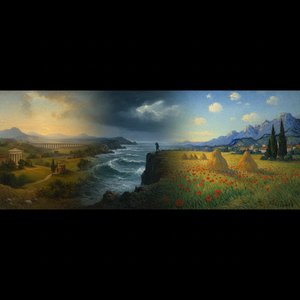
10 Breathtaking Masterpieces That Redefine the Landscape Genre
Journey through history with 10 iconic landscape paintings that capture the soul of nature. From Impressionist light to dramatic vistas, explore the stories behind these timeless masterpieces and find museum-quality reproductions for your decor. Discover all masterpieces on OriginalUniqueArt.com

10 Breathtaking Masterpieces That Redefine the Landscape Genre
Journey through history with 10 iconic landscape paintings that capture the soul of nature. From Impressionist light to Romantic vistas, explore the stories behind these timeless masterpieces and find museum-quality art reproductions for your home. Discover all masterpieces on OriginalUniqueArt.com

Beyond the Horizon: 10 Masterpieces That Redefine Landscape Art
Journey through history with 10 iconic landscape paintings that capture the soul of nature. From Impressionist light to Romantic vistas, explore the stories behind these timeless masterpieces and find museum-quality reproductions for your decor. Discover all masterpieces on OriginalUniqueArt.com
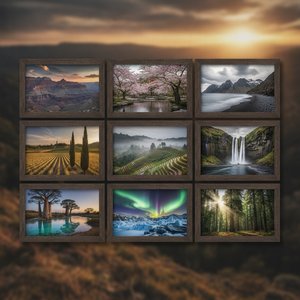
10 Masterpiece Landscape Paintings That Will Transform Your Perspective
Journey through history with 10 iconic landscape paintings. From Impressionist light to Romantic vistas, explore the stories behind these timeless masterpieces. Find museum-quality art reproductions and decor inspiration. Discover all masterpieces on OriginalUniqueArt.com.


