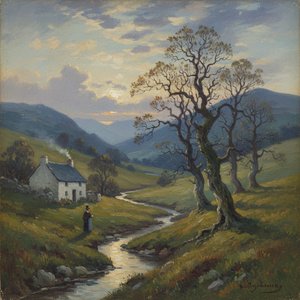
Chapel at Dinorwic
Oil On Canvas
WallArt
Impasto Landscape
2000
Contemporary
111.0 x 111.0 cm
Llyfrgell Genedlaethol Cymru / The National Library of Wales
Олійная репродукція ручної роботи
Написана вручну олією на полотні у вашому розмірі та рамі, виготовлена на замовлення нашими художниками. ( Замовити принт
Купити цифрове зображення)
P118B $10
P118H $10
P118W $10
P438Z $10
P508JH $12
P508YH $12
P805H $10
P805Z $10
P919BZ $10
P919G $10
P919XJ $10
P959ZH $10
P968JZ $12
W106C $8
W218G $10
W218JH $8
W218Y $10
W307PJ $10
W316G $10
W316PJ $8
W316Y $10
W398PJ $8
W4111J $10
W500HY $15
W500JH $15
W692G $12
W849H $8
W940BG $15
W953PJ $8
Обирайте з наших стандартних розмірів, що відповідають оригінальним пропорціям твору мистецтва.
Ви можете вказати власні розміри, щоб репродукція ідеально підійшла до конкретної рами або інтер'єру. Якщо вибраний вами розмір не відповідає пропорціям оригіналу, ми або обріжемо полотно, або доповнимо картину додатковими елементами, промальованими вручну. Цифровий макет буде надіслано вам на затвердження перед початком виробництва.
Зверніть увагу, що попередній перегляд на екрані не відображає фактичне обрізання або розширення зображення. Тільки макет точно покаже остаточну композицію.
Хоча ми можемо виготовити виріб у нестандартному розмірі, для збереження оригінальних пропорцій рекомендуємо обирати варіанти зі встановленого списку.
Після оформлення замовлення команда OriginalUniqueArt.com зв'яжеться з клієнтом електронною поштою для отримання інструкцій та надасть попередній макет
Доставка по всьому світу () за 3–4 тижні замість стандартних 5 тижнів. (20 Серпень). Без жодних компромісів у якості.
Безкоштовна експрес-доставка по всьому світу
Високоякісне лляне полотно
Повне страхове покриття доставки
Гарантія відшкодування митних зборів
Гарантія точного відтворення кольорів
Політика повернення протягом 60 днів (лише у разі виявлення дефектів)
Гарантія повернення 100% коштів
Пропозиція на оптові замовлення
Chapel at Dinorwic
Матеріал репродукції
Розмір репродукції
-
Підсумкова вартість
$ 300
Опис твору
A Vision of Welsh Tranquility
In the heart of the rugged Snowdonia landscape, where the mountains meet the sky in a silent dialogue of stone and cloud, lies the soul of John Kyffin Williams’s “Chapel at Dinorwic.” Completed around the year 2000, this masterpiece serves as much more than a mere depiction of a Welsh landmark; it is a profound distillation of national identity and spiritual stillness. The painting captures a moment of quietude near the historic Dinorwic Slate Quarry, a UNESCO World Heritage Site that stands as a testament to human industry and the enduring resilience of the Welsh spirit. Through Williams's eyes, the chapel becomes a focal point of peace, nestled within the vast, commanding presence of the Gwynedd mountains, inviting the viewer into a state of deep contemplation.
The emotional resonance of the piece is found in its delicate balance between vulnerability and strength. The small, central structure of the chapel, with its spire reaching toward the heavens, acts as a symbol of faith and tradition amidst the overwhelming grandeur of nature. There is an ethereal quality to the atmosphere, as if time itself has slowed down. As diffuse sunlight filters through a heavy, textured sky, it casts soft shadows across the undulating hillsides, illuminating the architecture in a way that evokes feelings of reverence and sanctuary. For the collector or designer, this work offers a sense of grounded serenity, making it an ideal centerpiece for spaces intended to inspire calm and reflection.
The Mastery of Texture and Light
To encounter “Chapel at Dinorwic” is to experience the tactile power of the impasto technique. Sir John Kyffin Williams was a master of the palette knife, applying thick, rhythmic layers of oil paint that transform the canvas into a three-dimensional landscape. This heavy application of pigment does not merely represent the terrain; it mimics the very materiality of the Welsh earth. The ruggedness of the mountains and the jagged edges of the slate formations are felt through the physical ridges of the paint, creating an illusionistic depth that draws the eye deep into the composition. This technique allows the painting to interact dynamically with light, as the raised surfaces catch highlights and cast miniature shadows, breathing life into the muted palette.
The color story of the work is one of sophisticated harmony, dominated by a palette of earthy browns, deep slate blues, and mossy greens. These tones are not merely decorative but are deeply rooted in the actual hues of the Snowdonia National Park. By eschewing bright, jarring colors in favor of these organic, muted shades, Williams achieves a sense of atmospheric unity. The interplay between the heavy, textured clouds and the soft light hitting the chapel’s spire creates a breathtaking contrast, ensuring that the artwork remains visually captivating from every angle. For those seeking to adorn a sophisticated interior, this painting provides a rich, textural element that adds both historical weight and artistic prestige to any room.
Біографія митця
A Defining Voice of Welsh Landscape
Sir John “Kyffin” Williams, a name synonymous with the very spirit of Wales, stands as a monumental figure in 20th-century British art. More than just a painter, he was a cultural ambassador, a storyteller who translated the rugged beauty and emotional depth of his homeland onto canvas with unparalleled skill. Born in Llangefni, Anglesey, in 1918, Williams’s life journey was as textured and compelling as the impasto surfaces that became his signature. His connection to Wales wasn't merely geographical; it was woven into the fabric of his being, a heritage both cherished and complicated by a mother who seemingly distanced herself from Welsh language and culture. This early tension perhaps fueled a lifelong dedication to visually capturing and celebrating the land she subtly discouraged him from embracing.From Military Service to Artistic Awakening
Williams’s path to becoming Wales' foremost artist wasn’t straightforward. Educated at Moreton Hall School and Shrewsbury, his life took an unexpected turn with a bout of polio encephalitis that led to epilepsy. Ironically, this health challenge proved pivotal. Advised by doctors to pursue art as therapy, he discovered a profound connection within himself—a creative impulse ignited by the emotional resonance found in the works of Piero della Francesca. This encounter sparked a lifelong devotion to artistic expression. A brief stint in the 6th Battalion Royal Welch Fusiliers was cut short due to his medical condition, but it wasn’t a detour; rather, it freed him to enroll at London's Slade School of Fine Art during its wartime relocation to Oxford. There, he honed his skills and earned the prestigious Slade Portrait Prize, laying the foundation for a remarkable career. The influence of Piero della Francesca, with his masterful use of light and shadow, became a cornerstone of Williams’s artistic approach—a desire to capture not just form but also mood and atmosphere.A Life Dedicated to Teaching and Exploration
For many years, Williams balanced his artistic pursuits with a dedicated teaching career, serving as senior art master at Highgate School in London from 1944 until 1973. He nurtured generations of young artists, among them Sir Martin Gilbert, Anthony Green, Patrick Procktor, John Tavener and John Rutter—a testament to his influence and mentorship. However, it was a Winston Churchill Fellowship in 1968 that dramatically altered his artistic trajectory. This opportunity allowed him to travel to Y Wladfa, the Welsh settlement in Patagonia, an experience that profoundly impacted his palette and subject matter. The vast landscapes of Patagonia, so different yet echoing the spirit of Wales, infused his work with a new vibrancy and emotional intensity. He documented this journey not only through paintings but also in his engagingly anecdotal book, “Across the Straits.” This period marked a shift from primarily depicting Welsh landscapes to exploring broader themes of isolation, resilience, and the human connection to nature—themes that would continue to resonate throughout his career.Technique, Themes, and Lasting Legacy
Kyffin Williams developed a distinctive technique characterized by thick oil paint applied with a palette knife—a method that created textured surfaces and bold impasto effects. This wasn’t merely a stylistic choice; it was a way to convey the ruggedness of the Welsh countryside, the weight of its history, and the emotional resonance of its landscapes. His subjects were broad, encompassing evocative depictions of Wales, striking scenes from Patagonia, and atmospheric studies of Venice. But it was his portrayal of Wales—its farms, mountains, and people—that truly defined him. He captured not just what he saw but *how* it felt to be Welsh, imbuing his paintings with a sense of place and belonging. The use of color was particularly significant; Williams favored muted tones – greys, browns, and blues – that reflected the often-dramatic light and weather conditions of the Welsh mountains. He wasn’t interested in creating idyllic scenes but rather in conveying the raw beauty and inherent challenges of the landscape. His work is frequently described as melancholic, reflecting a deep understanding of the complexities of life and the enduring spirit of his homeland.Recognition and Influence
Throughout his career, Williams received numerous accolades, including an OBE in 1982 and a KBE in 1999 for services to the arts in Wales. The establishment of the Kyffin Williams Drawing Prize in 2009 further cemented his legacy by supporting emerging talent. Today, Oriel Ynys Môn on Anglesey houses a permanent exhibition dedicated to his work, ensuring that future generations can experience the power and beauty of his vision. Sir John Kyffin Williams wasn’t simply a painter; he was Wales' visual poet, a master who captured the soul of a nation with every brushstroke. His paintings continue to inspire awe and appreciation for the enduring spirit of the Welsh landscape and its people—a legacy that will undoubtedly endure for centuries to come.- Key Influences: Piero della Francesca, Welsh Landscape Tradition
- Signature Technique: Thick impasto with a palette knife
- Notable Achievements: Slade Portrait Prize, Winston Churchill Fellowship, Kyffin Williams Drawing Prize
Киффин Уильямс
1918 - 2006 , Уельс
Короткі факти
- Artistic Movement Or Style: Ландшафтний живопис
- Artists Or Movements Influenced By This Artist: ['Уельські митці']
- Artists Who Influenced This Artist: ['Piero della Francesca']
- Date Of Birth: 1918
- Date Of Death: 2006
- Full Name: John Kyffin Williams
- Nationality: Уельський
- Notable Artworks:
- Storm Approaching
- View from Pwllfanogl
- Place Of Birth: Llangefni, UK

Скляний варіант доступний лише для розмірів до 110 см