

 Переглянути в інтер'єрі
 Надіслати
 Поділитися
 Деталі
 Посібник

 Завантажити
 Схожі предмети колекціонування
 Рентгенівське дослідження
 Слайд-шоу
 Статистика переглядів
The Walking Tour


 Читати далі
Олійная репродукція ручної роботи
Написана вручну олією на полотні у вашому розмірі та рамі, виготовлена на замовлення нашими художниками. ( Перейти до друку Перейти до цифрових зображень)




P118B $10

P118H $10

P118W $10

P438Z $10

P508JH $12

P508YH $12

P805H $10

P805Z $10

P919BZ $10

P919G $10

P919XJ $10

P959ZH $10

P968JZ $12

W106C $8

W218G $10

W218JH $8

W218Y $10

W307PJ $10

W316G $10

W316PJ $8

W316Y $10

W398PJ $8

W4111J $10

W500HY $15

W500JH $15

W692G $12

W849H $8

W940BG $15

W953PJ $8




Обирайте з наших стандартних розмірів, що відповідають оригінальним пропорціям твору мистецтва.

Ви можете вказати власні розміри, щоб репродукція ідеально підійшла до конкретної рами або інтер'єру. Якщо вибраний вами розмір не відповідає пропорціям оригіналу, ми або обріжемо полотно, або доповнимо картину додатковими елементами, промальованими вручну. Цифровий макет буде надіслано вам на затвердження перед початком виробництва.
Зверніть увагу, що попередній перегляд на екрані не відображає фактичне обрізання або розширення зображення. Тільки макет точно покаже остаточну композицію.
Хоча ми можемо виготовити виріб у нестандартному розмірі, для збереження оригінальних пропорцій рекомендуємо обирати варіанти зі встановленого списку.
Після оформлення замовлення команда OriginalUniqueArt.com зв'яжеться з клієнтом електронною поштою для отримання інструкцій та надасть попередній макет
Доставка по всьому світу () за 3–4 тижні замість стандартних 5 тижнів. (21 Вересень). Без жодних компромісів у якості.

Безкоштовна експрес-доставка по всьому світу

Високоякісне лляне полотно

Повне страхове покриття доставки

Гарантія повернення митних зборів

Гарантія точного відтворення кольорів

Політика повернення протягом 100 днів (лише у разі виявлення дефектів)

Гарантія повернення 100% коштів

Знижка на оптові замовлення
 Скляний варіант доступний лише для розмірів до 110 см

The Walking Tour
Техніка репродукції
Розмір репродукції
-


Загальна вартість
$ 300
The Walking Tour – A Luminist Embrace of American Landscape
John Frederick Kensett’s “The Walking Tour,” painted in 1847, isn't merely a depiction of a picturesque landscape; it’s an invitation to contemplate the sublime beauty of nature and the quiet joy of exploration. This masterful work, now housed within the Metropolitan Museum of Art, exemplifies the Luminist movement – a distinctly American style that emerged in the mid-19th century, characterized by its emphasis on light, atmosphere, and serene observation. Kensett, a key figure in this artistic circle, eschewed dramatic narratives or heroic subjects, instead focusing on capturing the subtle nuances of the natural world with an almost meditative intensity.
The scene unfolds along a gently sloping path that winds through a vibrant, verdant valley. A meandering river, reflecting the soft hues of the sky, snakes its way through the foreground, drawing the viewer’s eye into the heart of the composition. Scattered amongst the trees and foliage are figures – likely members of a walking party – rendered with remarkable delicacy and suggesting an intimate connection to their surroundings. These aren't grand portraits; rather, they serve as anchors for our own imaginative journey, inviting us to share in the experience of quiet contemplation.
Kensett’s technique is remarkably understated yet profoundly effective. He employs a delicate layering of brushstrokes, creating an almost luminous effect – hence the term “Luminist.” The colors are muted and harmonious, dominated by shades of green, blue, and brown, all rendered with remarkable subtlety. Light plays a crucial role; it filters through the trees, dappling the landscape in shifting patterns, and bathing the scene in a soft, ethereal glow. This masterful manipulation of light isn’t about dramatic illumination but rather about capturing the subtle shifts in atmosphere that define a tranquil afternoon.
A Reflection of Transcendentalist Ideals
“The Walking Tour” is deeply rooted in the philosophical currents of its time – specifically, the Transcendentalist movement. Figures like Ralph Waldo Emerson and Henry David Thoreau were advocating for a closer connection with nature as a means of spiritual enlightenment. Kensett’s painting embodies this philosophy by presenting nature not as something to be conquered or exploited but as a source of profound beauty and inner peace. The figures in the scene aren't actively engaged in any particular activity; they are simply *present* within the landscape, absorbing its serenity and finding solace in its quiet grandeur.
The choice of subject matter – a leisurely walk through nature – is itself significant. It speaks to a growing appreciation for the outdoors during an era increasingly dominated by industrialization and urban life. The painting offers a respite from the hustle and bustle, inviting viewers to slow down, breathe deeply, and reconnect with the natural world.
Symbolism of Path and Perspective
The winding path that dominates the composition is more than just a physical element; it represents a journey – both literal and metaphorical. It symbolizes the exploration of nature, but also the exploration of one’s own inner landscape. The perspective subtly draws the viewer into the scene, creating a sense of immersion and inviting us to step into the painting ourselves.
The placement of the figures along the path suggests a shared experience – a collective appreciation for beauty and tranquility. They are not isolated individuals but rather participants in a larger narrative of connection with nature. The river, flowing towards the horizon, can be interpreted as a symbol of time and continuity, suggesting that this moment of serenity is part of an ongoing cycle.
Capturing American Identity
“The Walking Tour” is often considered a quintessential example of American landscape painting because it captures a uniquely American sensibility. Unlike European artists who frequently depicted grand historical scenes or mythological narratives, Kensett focused on the beauty and character of his native land. He sought to portray an idealized vision of America – one that was both beautiful and accessible, reflecting the nation’s burgeoning sense of identity.
Today, this painting continues to resonate with viewers who appreciate its quiet beauty, its subtle symbolism, and its profound connection to nature. It serves as a reminder of the importance of slowing down, appreciating the simple pleasures of life, and seeking solace in the natural world – values that remain remarkably relevant in our increasingly complex and fast-paced society.
Біографія митця
A Life Dedicated to Capturing Serene Landscapes
John Frederick Kensett, an American artist and engraver, was born on March 22, 1816, in Cheshire, Connecticut. As a member of the second generation of the Hudson River School of artists, his signature works are characterized by their serene and luminous qualities, celebrating the transcendental aspects of nature. His art sought to capture not just the visual appearance of landscapes but also the feeling of being immersed within them—a profound connection with the natural world that resonated deeply with the artistic sensibilities of his time.Early Life and Artistic Foundations
Kensett’s early life was steeped in the craft of engraving. He attended Cheshire Academy and, under the tutelage of his father, Thomas Kensett – a skilled banknote engraver – and his uncle, Alfred Daggett, he honed his technical skills in this meticulous art form. Initially, he worked as an engraver in New Haven until 1838, mastering intricate detail and precise line work. However, a growing desire to express himself through painting eventually led him to move to New York City, where he found employment engraving banknotes. This period of commercial artistry provided valuable experience but ultimately fueled his yearning for a more creative outlet. A pivotal moment in his artistic development came in 1840 when he embarked on a journey to Europe, seeking inspiration and refinement alongside fellow artists like Benjamin Champney.European Influences and the Development of Luminism
His time in England and France proved transformative. He studied the works of masters at the National Gallery and the Dulwich College collection, absorbing techniques and perspectives that would later inform his own style. Crucially, he connected with a vibrant artistic community, including Thomas Cole, who shared a similar vision for American landscape painting. This exposure to European art, combined with the influence of Transcendentalist philosophy—emphasizing intuition and connection with nature—led Kensett to develop what is now recognized as “luminism.” Luminism wasn’t simply about depicting light; it was about capturing its *quality* – the subtle gradations, atmospheric effects, and almost ethereal glow that define a landscape. His brushstrokes became looser, more suggestive, conveying an impression of light rather than meticulously rendering every detail.Establishing a Studio and Major Works
Upon returning to New York in 1847, Kensett established his own studio and began extensively traveling throughout the Northeast and even venturing into the Colorado Rockies, documenting these diverse landscapes with remarkable sensitivity. His work quickly gained recognition, culminating in the purchase of “Mount Washington from the Valley of Conway” (1851) by the American Art Union, which was then distributed to 13,000 subscribers—a testament to its popularity and artistic merit. Other notable works include "Eaton's Neck, Long Island" (1872), now housed in the collection of the Metropolitan Museum of Art in New York, and “Three Mile Harbor” (ca. 1860) at the Museum of Fine Arts in Tallahassee. These paintings exemplify his ability to capture both the grandeur and intimacy of American landscapes.Legacy and Historical Significance
John Frederick Kensett’s legacy extends far beyond his individual works. He was a founder of the Metropolitan Museum of Art and a full member of the National Academy of Design, playing a significant role in shaping the artistic landscape of 19th-century America. His paintings continue to be admired for their serene beauty, atmospheric effects, and profound connection with nature—qualities that resonate deeply with viewers today. He stands as a key figure not only within the Hudson River School but also as a pioneer of Luminism, influencing generations of landscape artists who followed in his footsteps. His life’s work serves as a powerful reminder of the enduring appeal of capturing the sublime beauty of the American wilderness.
Джон Фредерік Кенсетт
1816 - 1872 , США
Довідкова інформація
- Artistic Movement Or Style: Художній кмілок Hudson River & Luminism
- Artists Or Movements Influenced By This Artist: ['Luminism']
- Artists Who Influenced This Artist:
- Thomas Cole
- Benjamin Champney
- Date Of Birth: 22 березня 1816
- Date Of Death: 14 грудня 1872
- Full Name: John Frederick Kensett
- Nationality: Американський
- Notable Artworks:
- Mount Washington
- Eaton's Neck
- Place Of Birth: Ширч, США
Схожі статті

John Frederick Kensett: Luminosity, Landscape & the American Identity
Explore the luminous landscapes of John Frederick Kensett, a master of Luminism and key figure in the Hudson River School. Discover his serene paintings & enduring legacy with OriginalUniqueArt.
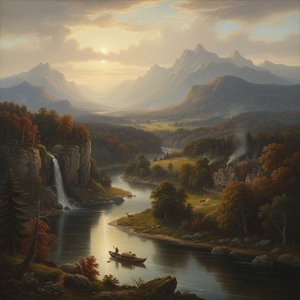
Capturing the American Spirit: A Journey Through Iconic Landscapes and the Legacy of the Hudson River School
Explore the profound beauty of American art history. From the Hudson River School to iconic landscapes, discover a curated journey through the masterpieces that defined a nation's spirit and the enduring legacy of American Romanticism.
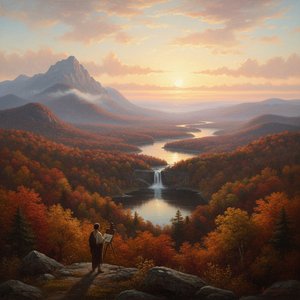
The Sublime Landscape: Exploring the Hudson River School Movement
Explore the captivating world of the Hudson River School! Discover the history, artists, and defining characteristics of this iconic American art movement. Learn about Romanticism's influence & find inspiration for your collection.
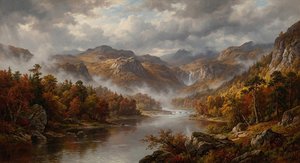
10 шедеврів школи Гудзона: пейзажі, що змінили американське мистецтво | OriginalUniqueArt
Відкрийте для себе 10 шедеврів школи Гудзона – Томаса Коула, Фредеріка Черча та інших. Романтичні пейзажі Америки, що захоплюють дух! Репродукції картин преміум-класу для вашого інтер'єру на OriginalUniqueArt.com
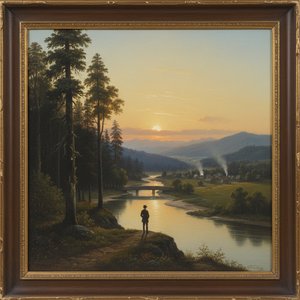
Robert Spencer: Luminism, Narrative & the American Landscape Tradition
Explore the captivating world of Luminism & the Hudson River School with our expert analysis. Discover the history, artists, and enduring beauty of 19th-century American landscape painting. Find museum-quality reproductions at OriginalUniqueArt.


