
 Переглянути в інтер'єрі
 Надіслати як листівку
 Поділитися
 Деталі витвору
 Посібник

 Завантажити
 Схожі екземпляри
 Рентгенівське дослідження
 Слайд-шоу
 Питання та відповіді
 Статистика
Sunset on the Sea

- 71.0 x 105.0 cm


 Розгорнути текст
Гікле / Художній принт
Друк جيкле або на полотні музейної якості з оперативним виготовленням та різноманітними варіантами фінішної обробки. ( Замовити картину ручної роботи Перейти до цифрових зображень)




P118B ₴10

P118H ₴10

P118W ₴10

P438Z ₴10

P508JH ₴12

P508YH ₴12

P805H ₴10

P805Z ₴10

P919BZ ₴10

P919G ₴10

P919XJ ₴10

P959ZH ₴10

P968JZ ₴12

W106C ₴8

W218G ₴10

W218JH ₴8

W218Y ₴10

W307PJ ₴10

W316G ₴10

W316PJ ₴8

W316Y ₴10

W398PJ ₴8

W4111J ₴10

W500HY ₴15

W500JH ₴15

W692G ₴12

W849H ₴8

W940BG ₴15

W953PJ ₴8




Обирайте з наших стандартних розмірів, що відповідають оригінальним пропорціям твору мистецтва.

Введіть необхідну ширину та висоту, щоб принт ідеально підійшов до вашої рами або стіни. Принт можна лише обрізати, але не можна зробити більшим за оригінал, тому при зміні пропорцій частина зображення буде втрачена. Перед друком ми надсилаємо вам цифровий макет для затвердження. Зображення на цій сторінці не відображає реальну обрізку — її можна побачити лише на макеті.
Доставка по всьому світу () за 2 тижні замість стандартних 4/5 тижнів. (7 Листопад)

Безкоштовна експрес-доставка по всьому світу

Високоякісне лляне полотно

Повне страхове покриття доставки

Гарантія повернення митних зборів

Гарантія точного відтворення кольорів

Політика повернення протягом 100 днів (лише у разі виявлення дефектів)

Гарантія повернення 100% коштів

Пропозиція на оптові замовлення
 Скляний варіант доступний лише для розмірів до 110 см

Sunset on the Sea
Гікле / Художній принт
Розмір репродукції
-


Підсумкова вартість
₴ 3637
A Symphony of Light and Stillness
In the quiet transition between day and night, John Frederick Kensett’s “Sunset on the Sea” captures a moment that feels less like a mere observation and more like a profound spiritual encounter. Completed in 1872, this masterpiece serves as a cornerstone of American Luminism, a movement that sought to find the divine within the natural world. As the sun descends toward the horizon of the Long Island Sound, the canvas erupts in a delicate dance of warm oranges, radiant yellows, and deep, tranquil blues. There is an undeniable magic in how Kensett renders the atmosphere; the sky does not simply sit above the water but seems to breathe, heavy with the golden humidity of a summer twilight. A solitary sailboat drifts across the expanse, its presence a gentle reminder of the human connection to the vast, untamed beauty of the sea, providing a sense of scale that emphasizes the infinite nature of the horizon.
To gaze upon this work is to experience the very essence of tranquility. Kensett was a master of the subtle, eschewing the dramatic, jagged compositions of his predecessors in favor of a serene, glass-like surface. The technique employed here is nothing short of miraculous; through the use of thin, translucent glazes and meticulously blended washes, he achieves a luminosity that appears to emanate from within the paint itself. There are no harsh, distracting brushstrokes to break the illusion of stillness. Instead, the viewer is met with a seamless transition of light, where the reflection of the fiery sun on the gentle waves creates a rhythmic, hypnotic effect. This soft-focus approach, heavily influenced by the visionary light of J.M.W. Turner, allows the eye to wander through the atmospheric perspective, feeling the immense depth and the cooling air of the approaching dusk.
The Soul of Luminism and Modern Elegance
Historically, “Sunset on the Sea” emerged during a period of intense industrial transformation in America. As factories rose and cities expanded, artists like Kensett turned their gaze back to the untouched landscapes of New England, seeking refuge in the idealized purity of nature. This painting is more than a landscape; it is a symbol of spiritual renewal and the enduring power of the natural order. The sun, positioned as a central icon of light, serves as a metaphor for eternal life and divine presence, casting a glow that suggests even as the day ends, a profound peace remains. For the discerning collector or interior designer, this piece offers much more than aesthetic beauty; it provides an emotional anchor. Its muted yet warm palette possesses a unique versatility, capable of bringing a sense of calm sophistication to a contemporary living space or adding a layer of historical depth to a classic study.
Integrating a high-quality reproduction of this work into a curated environment allows one to invite the meditative qualities of the Hudson River School into the modern home. Whether placed as a focal point in a sunlit gallery or used to soften the lines of a minimalist room, “Sunset on the Sea” commands attention through its quietude rather than through noise. It is an invitation to pause, to breathe, and to reconnect with the sublime beauty that exists in the fleeting moments of our world. Owning such a piece is an investment in atmosphere, offering a permanent window into a moment of perfect, golden peace.
Питання та відповіді
Де найкраще повісити репродукцію «Sunset on the Sea» роботи Джон Фредерік Кенсетт?
Формат (Landscape) та рекомендоване приміщення (Living Room) — це два ключові параметри розміщення для «Sunset on the Sea» роботи Джон Фредерік Кенсетт.
Який формат і орієнтацію друку рекомендується для «Sunset on the Sea» роботи Джон Фредерік Кенсетт?
Для репродукції «Sunset on the Sea» роботи Джон Фредерік Кенсетт рекомендується розмір Large з орієнтацією Landscape.
Чи можу я скористатися доповненою реальністю, щоб побачити «Sunset on the Sea» роботи Джон Фредерік Кенсетт у своїй кімнаті?
Ви можете приміряти «Sunset on the Sea» роботи Джон Фредерік Кенсетт на власну стіну за допомогою сторінки Перегляд в AR з використанням технології доповненої реальності на сумісному пристрої.
Біографія митця
A Life Dedicated to Capturing Serene Landscapes
John Frederick Kensett, an American artist and engraver, was born on March 22, 1816, in Cheshire, Connecticut. As a member of the second generation of the Hudson River School of artists, his signature works are characterized by their serene and luminous qualities, celebrating the transcendental aspects of nature. His art sought to capture not just the visual appearance of landscapes but also the feeling of being immersed within them—a profound connection with the natural world that resonated deeply with the artistic sensibilities of his time.Early Life and Artistic Foundations
Kensett’s early life was steeped in the craft of engraving. He attended Cheshire Academy and, under the tutelage of his father, Thomas Kensett – a skilled banknote engraver – and his uncle, Alfred Daggett, he honed his technical skills in this meticulous art form. Initially, he worked as an engraver in New Haven until 1838, mastering intricate detail and precise line work. However, a growing desire to express himself through painting eventually led him to move to New York City, where he found employment engraving banknotes. This period of commercial artistry provided valuable experience but ultimately fueled his yearning for a more creative outlet. A pivotal moment in his artistic development came in 1840 when he embarked on a journey to Europe, seeking inspiration and refinement alongside fellow artists like Benjamin Champney.European Influences and the Development of Luminism
His time in England and France proved transformative. He studied the works of masters at the National Gallery and the Dulwich College collection, absorbing techniques and perspectives that would later inform his own style. Crucially, he connected with a vibrant artistic community, including Thomas Cole, who shared a similar vision for American landscape painting. This exposure to European art, combined with the influence of Transcendentalist philosophy—emphasizing intuition and connection with nature—led Kensett to develop what is now recognized as “luminism.” Luminism wasn’t simply about depicting light; it was about capturing its *quality* – the subtle gradations, atmospheric effects, and almost ethereal glow that define a landscape. His brushstrokes became looser, more suggestive, conveying an impression of light rather than meticulously rendering every detail.Establishing a Studio and Major Works
Upon returning to New York in 1847, Kensett established his own studio and began extensively traveling throughout the Northeast and even venturing into the Colorado Rockies, documenting these diverse landscapes with remarkable sensitivity. His work quickly gained recognition, culminating in the purchase of “Mount Washington from the Valley of Conway” (1851) by the American Art Union, which was then distributed to 13,000 subscribers—a testament to its popularity and artistic merit. Other notable works include "Eaton's Neck, Long Island" (1872), now housed in the collection of the Metropolitan Museum of Art in New York, and “Three Mile Harbor” (ca. 1860) at the Museum of Fine Arts in Tallahassee. These paintings exemplify his ability to capture both the grandeur and intimacy of American landscapes.Legacy and Historical Significance
John Frederick Kensett’s legacy extends far beyond his individual works. He was a founder of the Metropolitan Museum of Art and a full member of the National Academy of Design, playing a significant role in shaping the artistic landscape of 19th-century America. His paintings continue to be admired for their serene beauty, atmospheric effects, and profound connection with nature—qualities that resonate deeply with viewers today. He stands as a key figure not only within the Hudson River School but also as a pioneer of Luminism, influencing generations of landscape artists who followed in his footsteps. His life’s work serves as a powerful reminder of the enduring appeal of capturing the sublime beauty of the American wilderness.
Джон Фредерік Кенсетт
1816 - 1872 , США
Короткі факти
- Artistic Movement Or Style: Художній кмілок Hudson River & Luminism
- Artists Or Movements Influenced By This Artist: ['Luminism']
- Artists Who Influenced This Artist:
- Thomas Cole
- Benjamin Champney
- Date Of Birth: 22 березня 1816
- Date Of Death: 14 грудня 1872
- Full Name: John Frederick Kensett
- Nationality: Американський
- Notable Artworks:
- Mount Washington
- Eaton's Neck
- Place Of Birth: Ширч, США
Пов'язані статті
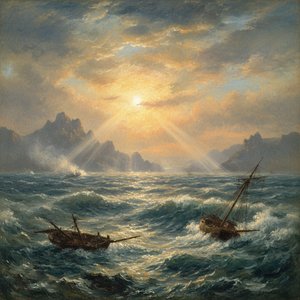
J.M.W. Turner: Light, Atmosphere & the Romantic Sublime
Explore the life & art of J.M.W. Turner, a master of Romantic landscape painting. Discover his innovative techniques, key works, and lasting influence on Impressionism. Find high-quality reproductions at OriginalUniqueArt.

Топ-25 шедеврів Джона Констебла: пейзажі Англії для вашого дому | OriginalUniqueArt
Відкрийте для себе 25 найкращих шедеврів Джона Констебла! Англійські пейзажі, романтизм та емоційне світло в живописі. Репродукції картин високої якості для вашого дому від OriginalUniqueArt.com. Дослідіть повну колекцію онлайн!

Джон Сінґер Са́рджент: 25 шедеврів американського імпресіонізму для вашого дому | OriginalUniqueArt
Відкрийте 25 найкращих картин Джона Сінґера Са́рджента – американського імпресіоніста, майстра портретів та елегантного живопису. Історія мистецтва, техніки та натхнення для вашого дому від OriginalUniqueArt.com! Дослідіть повну колекцію онлайн.

John Frederick Kensett: Luminosity, Landscape & the American Identity
Explore the luminous landscapes of John Frederick Kensett, a master of Luminism and key figure in the Hudson River School. Discover his serene paintings & enduring legacy with OriginalUniqueArt.
Golden Hours: Sunset Motifs in Western Art History
Explore the captivating history of sunset motifs in Western art! Discover iconic paintings by Monet, Van Gogh & Kuindzhi. Learn about Romanticism, Impressionism & collecting these timeless masterpieces. Expert insights at OriginalUniqueArt.


