On the Scent
Олійная репродукція ручної роботи
Написана вручну олією на полотні у вашому розмірі та рамі, виготовлена на замовлення нашими художниками. ( Замовити принт
Купити цифрове зображення)
Обирайте з наших стандартних розмірів, що відповідають оригінальним пропорціям твору мистецтва.
Ви можете вказати власні розміри, щоб репродукція ідеально підійшла до конкретної рами або інтер'єру. Якщо вибраний вами розмір не відповідає пропорціям оригіналу, ми або обріжемо полотно, або доповнимо картину додатковими елементами, промальованими вручну. Цифровий макет буде надіслано вам на затвердження перед початком виробництва.
Зверніть увагу, що попередній перегляд на екрані не відображає фактичне обрізання або розширення зображення. Тільки макет точно покаже остаточну композицію.
Хоча ми можемо виготовити виріб у нестандартному розмірі, для збереження оригінальних пропорцій рекомендуємо обирати варіанти зі встановленого списку.
Після оформлення замовлення команда OriginalUniqueArt.com зв'яжеться з клієнтом електронною поштою для отримання інструкцій та надасть попередній макет
Доставка по всьому світу () за 3–4 тижні замість стандартних 5 тижнів. (20 Серпень). Без жодних компромісів у якості.
Безкоштовна експрес-доставка по всьому світу
Високоякісне лляне полотно
Повне страхове покриття доставки
Гарантія відшкодування митних зборів
Гарантія точного відтворення кольорів
Політика повернення протягом 60 днів (лише у разі виявлення дефектів)
Гарантія повернення 100% коштів
Пропозиція на оптові замовлення
On the Scent
Матеріал репродукції
Розмір репродукції
-
Підсумкова вартість
$ 325
Опис твору
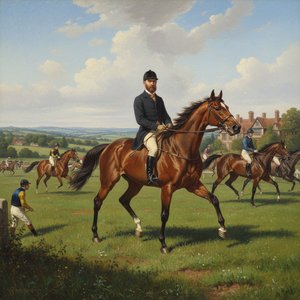
On the Scent: A Dynamic Hunting Scene by John Frederick Herring Senior
- Artist: John Frederick Herring Senior
- Date: Unknown
- Medium: Oil on Canvas
A Lively Depiction of 19th-Century Sporting Life
“On the Scent” by John Frederick Herring Senior captures a vibrant moment during a fox hunt, a popular pastime in 19th-century England. The artwork pulsates with energy as a mounted huntsman, distinguished by his striking red coat, leads a pack of hounds across an open field. The composition is skillfully arranged to draw the viewer's eye directly to the rider and his horse, while the surrounding landscape provides a naturalistic backdrop. Two additional figures on horseback are visible in the distance, hinting at the larger group participating in the chase. Herring’s keen observation of animal anatomy and movement brings this scene to life with remarkable realism.
Style and Technique: British Sporting Art at its Finest
Herring Senior was a leading figure in British sporting art, known for his realistic depictions of animals and landscapes. This painting exemplifies the style of the era, characterized by meticulous detail and an emphasis on capturing the excitement of outdoor pursuits. The artist’s technique involves visible brushstrokes that contribute to a textured appearance, adding depth and dynamism to the scene. The use of oil paints allows for rich color saturation and subtle gradations in tone, enhancing the overall visual impact. Notice how Herring uses strong vertical lines in the trees to contrast with the diagonal movement of the horse and hounds, creating a sense of forward momentum.
Symbolism and Emotional Impact
Beyond its depiction of a sporting event, "On the Scent" carries symbolic weight. The bright red coat worn by the huntsman signifies authority and leadership within the hunting party – he is the one guiding the chase. The hounds themselves represent loyalty and determination in pursuit of their quarry. The painting evokes feelings of energy, movement, and the thrill of the hunt—a reflection of the Victorian era’s fascination with outdoor activities and displays of skill. The natural lighting, with highlights on the horse and rider, further enhances the sense of immediacy and excitement.
Historical Context and the Herring Family Legacy
John Frederick Herring Senior (1795-1865) was born in London and later moved to Doncaster, where he established himself as a prominent artist. He is particularly celebrated for his depictions of horses and hunting scenes, often capturing the essence of rural life in 19th-century England. Remarkably, Herring Senior’s sons – John Frederick Herring Jr., Charles Herring, and Benjamin Herring – also became artists, contributing to a family legacy within the art world. His daughter Ann married Harrison Weir, further cementing the family's connection to artistic circles. This painting offers a glimpse into a period of significant social and cultural change in England, where sporting events like fox hunting were both a recreational pursuit and a symbol of status.
Біографія митця
John Frederick Herring Sr.: A Life in Art and Sport
John Frederick Herring Senior (1795 – 1865) stands as a pivotal figure in Victorian British art, celebrated primarily for his masterful depictions of horses—a passion that permeated every facet of his life. Born September 12th, 1795, in London, he descended from Dutch merchant lineage, inheriting an innate fascination with the natural world and particularly equine subjects from his father. This early inclination steered him away from the bustling city center, fostering a contemplative spirit ideal for artistic pursuits.Early Life and Career: The Coachman's Eye
From a young age, Herring displayed a palpable aversion to urban life—a preference that would profoundly shape his formative years. Simultaneously, he cultivated an unwavering devotion to drawing and horses, skills honed during his childhood explorations of Doncaster, England. Recognizing the importance of observation, he initially secured employment as a night coachman, a role that afforded him unparalleled access to the world of horse racing and provided invaluable experience in capturing movement and texture—techniques that would become hallmarks of his artistic style. Commissions for portraits of hunters and racehorses swiftly followed, establishing Herring’s reputation within the aristocratic circles of Yorkshire and cementing his position as one of Doncaster's most prominent artists.Development as an Artist: Cooper's Influence & Royal Recognition
Herring’s talent attracted considerable attention, prompting him to seek instruction from Abraham Cooper—a respected animal painter whose meticulous realism served as a guiding influence. Around 1836, he formally added “Sr.” to his signature, differentiating himself from his son, John Frederick Herring Jr., who was embarking on his own artistic journey. This distinction underscored the family’s commitment to artistic excellence and ensured that Herring Sr.’s legacy would endure beyond his son's accomplishments. Notably, Herring’s work gained royal patronage—receiving commissions from both the Duchess of Kent and Queen Victoria—a testament to his artistic merit and securing his place within the highest echelons of Victorian society. His visits to Paris in 1840-41, at the invitation of the Duc d’Orléans, further broadened his horizons and resulted in captivating paintings that captured the spirit of the era.Major Achievements and Style: Sporting Art Iconography
Herring's artistic output was prolific—he exhibited extensively at prestigious institutions such as the Royal Academy (1818–1865), the British Institution (1830–1865), and the Society of British Artists (1836-1852). The widespread dissemination of his paintings through engravings dramatically amplified their popularity among the public, transforming Herring into one of the most celebrated equine and sporting artists of the 19th century. His style—characterized by breathtaking realism, painstaking attention to detail, and dynamic portrayals of horses in motion—was distinguished by its sensitivity to light and color. He skillfully rendered the musculature of animals with remarkable precision, conveying both their power and grace—a feat that cemented his reputation as a visionary artist. Herring’s subjects transcended equestrian themes, encompassing agricultural landscapes and narrative paintings that resonated deeply with Victorian sensibilities.Historical Significance: A Legacy Enduring Through Time
John Frederick Herring Sr.’s contribution to British art extends beyond mere aesthetic beauty; he served as a chronicler of his time—capturing the essence of Victorian sporting culture through evocative depictions of horse racing and hunting expeditions. His paintings offer invaluable insights into social customs, technological advancements, and the prevailing attitudes toward nature during the reign of Queen Victoria. Herring’s enduring influence can be seen in subsequent generations of animal artists who admired his mastery of technique and embraced his unwavering dedication to portraying the natural world with uncompromising honesty. Today, his works reside in esteemed collections—including those of the Tate Gallery in London and the Watford Museum Collection of Fine Art—ensuring that John Frederick Herring Sr.’s artistic legacy continues to inspire admiration and scholarly study for years to come.Джон Фредерік Льюїс
1795 - 1865 , Великобританія
Короткі факти
- Artistic Movement Or Style: Викторианизм
- Artists Who Influenced This Artist: ['Абрахам Купер']
- Date Of Birth: Сьогодні 12 вересня 1795
- Date Of Death: Сегодня 23 сентября 1865
- Full Name: John Frederick Herring Sr.
- Nationality: Британский
- Notable Artworks:
- Мазепа и волки
- Старт Дерби
- Мэрк Вуд и его филли
- Сытый кон в стойле с утками
- Place Of Birth: Лондон, Великобритания


Скляний варіант доступний лише для розмірів до 110 см