
 Переглянути в інтер'єрі
 Надіслати як листівку
 Поділитися
 Деталі витвору
 Посібник

 Завантажити
 Схожі екземпляри
 Рентгенівське дослідження
 Слайд-шоу
 Q&A
Q&A Статистика
Self Portrait

- 33.0 x 31.0 cm


 Розгорнути текст
Гікле / Художній принт
Друк جيкле або на полотні музейної якості з оперативним виготовленням та різноманітними варіантами фінішної обробки. ( Замовити картину ручної роботи Перейти до цифрових зображень)




P118B ₴10

P118H ₴10

P118W ₴10

P438Z ₴10

P508JH ₴12

P508YH ₴12

P805H ₴10

P805Z ₴10

P919BZ ₴10

P919G ₴10

P919XJ ₴10

P959ZH ₴10

P968JZ ₴12

W106C ₴8

W218G ₴10

W218JH ₴8

W218Y ₴10

W307PJ ₴10

W316G ₴10

W316PJ ₴8

W316Y ₴10

W398PJ ₴8

W4111J ₴10

W500HY ₴15

W500JH ₴15

W692G ₴12

W849H ₴8

W940BG ₴15

W953PJ ₴8




Обирайте з наших стандартних розмірів, що відповідають оригінальним пропорціям твору мистецтва.

Введіть необхідну ширину та висоту, щоб принт ідеально підійшов до вашої рами або стіни. Принт можна лише обрізати, але не можна зробити більшим за оригінал, тому при зміні пропорцій частина зображення буде втрачена. Перед друком ми надсилаємо вам цифровий макет для затвердження. Зображення на цій сторінці не відображає реальну обрізку — її можна побачити лише на макеті.
Доставка по всьому світу () за 2 тижні замість стандартних 4/5 тижнів. (2 Листопад)

Безкоштовна експрес-доставка по всьому світу

Високоякісне лляне полотно

Повне страхове покриття доставки

Гарантія повернення митних зборів

Гарантія точного відтворення кольорів

Політика повернення протягом 100 днів (лише у разі виявлення дефектів)

Гарантія повернення 100% коштів

Пропозиція на оптові замовлення
 Скляний варіант доступний лише для розмірів до 110 см

Self Portrait
Гікле / Художній принт
Розмір репродукції
-


Підсумкова вартість
₴ 3596
A Window into the Soul: Johann Zoffany’s “Self Portrait as David with the Head of Goliath”
Johann Zoffany's "Self Portrait as David with the Head of Goliath," painted in 1805, is far more than a simple depiction of an artist contemplating his own likeness. It’s a meticulously constructed tableau vivant—a staged scene brimming with classical allusion, theatricality, and a subtle, almost unsettling, exploration of identity and artistic ambition. This remarkable work, housed within the Google Art Project, offers a captivating glimpse into the mind of a master portraitist navigating the complex social landscape of 18th-century England.
Zoffany’s genius lay in his ability to seamlessly blend historical references with contemporary life. The painting immediately draws the eye to the central figure, a man strikingly resembling Zoffany himself, posed dramatically as David, victorious over Goliath. However, this isn't a straightforward homage to Michelangelo’s iconic sculpture; rather, it’s a carefully orchestrated layering of symbolism. The head of Goliath, prominently displayed on a table beside him, is not merely a prop but a deliberate reference to the biblical narrative—a potent emblem of triumph and artistic skill. The inclusion of this severed head speaks volumes about Zoffany's own aspirations: he sought recognition as a master craftsman, capable of capturing both the physical likeness and the spirit of his subjects.
The Stage is Set: Context and Composition
Beyond the central figure, the composition unfolds like a miniature theatrical scene. Two statues—one depicting Venus and the other Diana—stand sentinel on either side, adding an element of classical grace and subtly elevating the entire arrangement. These figures, reminiscent of Roman sculptures, serve as silent witnesses to Zoffany’s self-portrait, grounding the scene in antiquity while simultaneously suggesting a dialogue between past and present. The carefully chosen setting – a richly furnished room with a vibrant tapestry and a collection of intriguing objects—further enhances this sense of layered meaning. The inclusion of a violoncello, a symbol of musical refinement and intellectualism, hints at Zoffany’s own appreciation for the arts and his desire to be associated with the elite circles of London society.
Zoffany's meticulous attention to detail is evident in every aspect of the painting. The lighting, expertly rendered, creates a sense of depth and drama, drawing the viewer into the scene. The textures—the velvet upholstery, the polished wood of the furniture, the rough surface of the stone statues—are all depicted with remarkable realism. This commitment to accuracy reflects Zoffany’s training as a decorative painter and his understanding of how to create convincing illusions of space and form.
A Reflection on Identity: The Artist's Gaze
Perhaps the most compelling aspect of “Self Portrait as David with the Head of Goliath” is its subtle exploration of identity. Zoffany isn’t simply portraying himself; he’s presenting a carefully constructed image of himself—an artist, a scholar, and a man of refined taste. The direct gaze of his self-portrait invites the viewer to engage in a silent dialogue, questioning the nature of representation and the relationship between art and reality. The inclusion of the severed head of Goliath can be interpreted as a symbolic challenge – a reminder that artistic success often requires confronting difficult truths and overcoming formidable obstacles.
Furthermore, the painting’s creation occurred during a period of significant social and political change in England. The rise of the middle class, the burgeoning interest in classical art and literature, and the expansion of the British Empire all contributed to a climate of intellectual ferment. Zoffany's work reflects these shifting values, capturing the spirit of an era defined by ambition, innovation, and a fascination with the past.
Collecting the Echoes: Reproduction and Legacy
Reproductions of “Self Portrait as David with the Head of Goliath” offer a remarkable opportunity to experience the richness and complexity of Zoffany’s masterpiece. Whether displayed in a grand salon or a smaller study, this painting continues to captivate viewers with its intricate details, evocative symbolism, and profound insights into the human condition. It serves as a testament to the enduring power of art to illuminate our understanding of ourselves and the world around us.
Питання та відповіді
Чи можна переглянути «Self Portrait» роботи Йоган Зофаньї у форматі слайд-шоу?
Слайд-шоу до твору «Self Portrait» можна переглянути на сторінці Слайд-шоу цього витвору.
Який колір домінує в композиції «Self Portrait» роботи Йоган Зофаньї?
Black (#0d0d0b) — це провідний колір твору «Self Portrait» роботи Йоган Зофаньї.
Чи не захищений твір "Self Portrait" авторським правом?
«Self Portrait» роботи Йоган Зофаньї перебуває у є суспільним надбанням — термін дії авторського права закінчився. Цей статус визначає правила відтворення зображення твору.
Біографія митця
Johann Zoffany: Мистець, що вловив дух епохи
Йоганн Зоффані, народився Йозеф Йосипус Зауфаллі у 1733 році у Фрайбурзі, Німеччина, був живописцем, чия слава здобула особливе визнання в Англії та Італії. Деталі його раннього життя залишаються маловідомими, але відомо, що він отримав мистецьку освіту ще з юних років. Спочатку він проходив навчання як скульптор, можливо, Мельхіора Паулуса в Ельвангені, а потім вивчав у Мартіна Спієра в Регенсбурзі. Цей фундамент заклав основу для його подальшої кар’єри.
У 1750 році Зоффані вирушив до Риму, де вступив до студії Агостіно Массучі, опанувавши італійську художню традицію. У 1760 році він переїхав до Англії, спочатку заробляючи на життя, створюючи декоративні дизайни для годинників Стівена Рімбаульта. Цей період став поворотним моментом, оскільки він почав встановлювати зв’язки та здобувати визнання в лондонському мистецькому середовищі.
Королівська покровительство та розвиток мистецтва
Зоффані швидко привернув увагу короля Георга III та королеви Шарлотти, ставши улюбленим портретистом королівської родини. Його здатність вловлювати невимушені моменти – такі як Королева Шарлотта та її двоє старших дітей (1765) – відрізняла його від більш офіційних придворних художників. Він також користувався популярністю серед австрійської імператорської родини і був нагороджений баронеєю Священної Римської імперії у 1776 році імператрицею Марією Терезій.
Майстер “розмовних портретів”
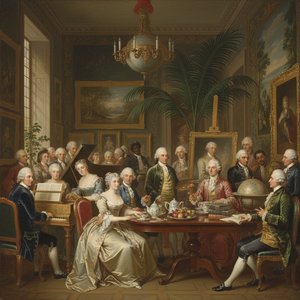
Зоффані став відомим завдяки своїм “розмовним портретам”, або *conversazione* – неформальним групам портретів, що зображують соціальні зібрання. Він виділявся у зйомці особистостей та взаємодій всередині цих сцен, часто включаючи провідних осіб із суспільства, театру та літератури. Його роботи, такі як Сім’я Коупа (1775), демонструють цей стиль, даючи можливість зазирнути в життя його патронів.
Видатні досягнення та знакові твори
- Трибуна Уффіцій (1772-1778): Його найвідоміша робота, ретельно зображена Трибуна Уффіцій у Флоренції.
- Др. Вільям Гант, який викладає анатомію в Королівській академії (1779): Захоплюючий портрет медичної освіти та наукового дослідження.
- Король Георг III (1771): Величний портрет, що демонструє владу та елегантність короля.
- Колорельний матч полковника Морданта (1784-1786): Яскраве зображення колоніального життя в Індії, яке захоплює унікальну культурну подію.
Роки в Індії та пізніше життя
З 1783 по 1789 роки Зоффані жив в Індії, де написав портрети провідних осіб, таких як Уоррен Гастінгс і Асаф-уд-Даула. Його досвід там вплинув на його художній стиль та тематику. Захоплююча історія з цього періоду розповідає про корабельну аварію біля островів Андаманських морів, де вижилі шукали екстремальних заходів для виживання.
Впливи та спадщина
Роботи Зоффані відображають вплив як німецької точності, так і італійського мистецтва. Він був під впливом художників, таких як Агостіно Массучі, і черпав натхнення з барокової традиції. Його стиль, у свою чергу, вплинув на сучасників та пізніших митців, зацікавлених портретом та соціальним коментарем. Він залишив помітний слід в історії мистецтва 18-го століття, відомий своєю технічною майстерністю, проникливими спостереженнями та унікальним художнім баченням.
Історичне значення
Живописи Йоганна Зоффані надають цінні відомості про соціальні звичаї, інтелектуальне життя та культурні цінності його часу. Його “розмовні портрети” пропонують ближчі портрети видатних осіб і їхнього світу, а його зображення Індії сприяють нашому розумінню колоніальної історії. Він залишається значущою фігурою в історії мистецтва, визнаний за свою технічну майстерність, проникливі спостереження та унікальне художнє бачення.

Йоган Зофаньї
1733 - 1810 , Німеччина
Короткі факти
- Artistic Movement Or Style: Неокласицизм, Реалізм
- Artists Or Movements Influenced By This Artist: ['Роза Барбюс']
- Artists Who Influenced This Artist:
- Маскуччі
- Шпір
- Date Of Birth: 1733
- Date Of Death: 1810
- Full Name: Johann Zoffany
- Nationality: Німецький
- Notable Artworks:
- Трибуна Уффіці
- Др. Вільям Гантер
- Король Георг III
- Place Of Birth: Фрайбург, Німеччина
Пов'язані статті
Топ-10 шедеврів неокласицизму: мистецтво, що визначало епоху | OriginalUniqueArt.com
Відкрийте для себе 10 шедеврів неокласицизму від Давида, Енгр та Канови! Історія мистецтва, техніка живопису та скульптури. Купіть репродукції картин неокласицизму преміум-якості на OriginalUniqueArt.com. Натхнення для вашого інтер'єру.
The Enduring Legacy of Classicism: Principles, Evolution & Influence in Western Art
Explore the enduring legacy of Classicism in Western art! Discover its historical context, key principles, iconic masterpieces & lasting influence. Learn about Renaissance and Neoclassical movements with OriginalUniqueArt.
Reflecting the Self: A History of Portraiture & Psychological Insight
Explore the fascinating history of self-portraiture from Renaissance masters like Dürer & Rembrandt to modern interpretations. Discover the psychological insights and artistic techniques behind these iconic works. Expert analysis for art enthusiasts.
Timeless Resonance: Exploring Classic Vibe in Art – A Historical & Aesthetic Analysis
Explore the rich history & enduring aesthetic of Classicism art! Discover key movements, iconic artists like Raphael & David, and its lasting influence on Western art. Deepen your appreciation today.
Johann Zoffany: Capturing Georgian Society with Brushstrokes of Cosmopolitan Flair
Explore the captivating world of Johann Zoffany, master portraitist of Georgian society. Discover his unique 'conversation pieces,' imperial commissions & lasting legacy. A guide for discerning collectors.


