Меню
БЕЗКОШТОВНА КОНСУЛЬТАЦІЯ З МИСТЕЦТВА
Переглянути в інтер'єріПереглянути в інтер'єрі Примірка в ARПримірка в AR Перейти до друку Перейти до друкуПерейти до зображення Перейти до зображення НадіслатиНадіслати
ДеталіДеталі Додати до улюблених Додати до улюблених ЗавантажитиЗавантажити Схожі експонатиСхожі експонати Рентгенівське дослідженняРентгенівське дослідження Слайд-шоуСлайд-шоу

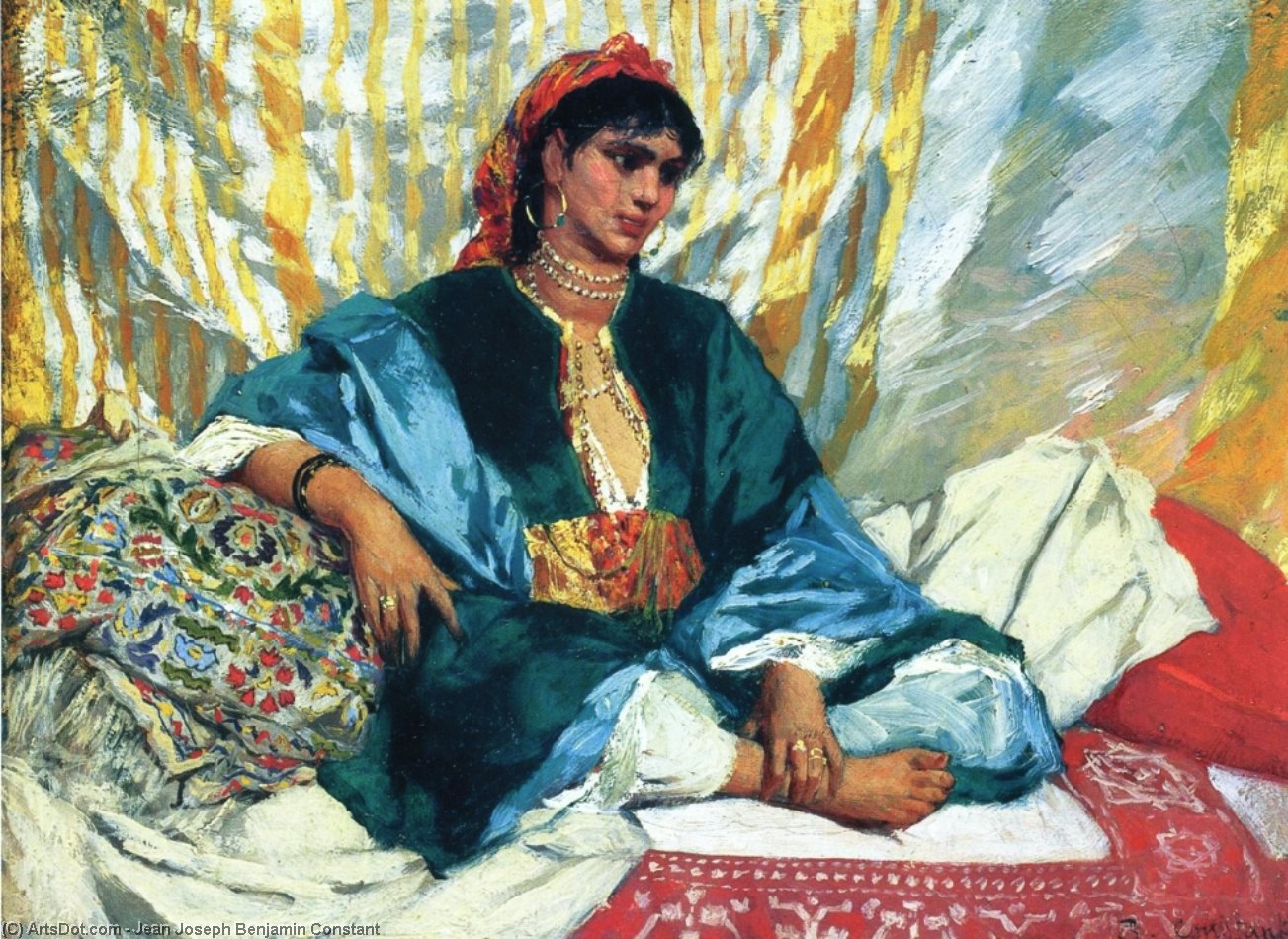
Odalisque

Experience Jean-Joseph Benjamin-Constant’s ‘Odalisque,’ a captivating 1880 Orientalist painting featuring a reclining woman in opulent blue and red. This Romantic masterpiece, inspired by Morocco, offers an exquisite glimpse into a world of sensual beauty – discover or own this timeless artwork.

Жан-Жозеф Бенджамін-Констант – видатний французький художник, що зробив внесок у розвиток орієнталізму та академічної живопису. Його картини, натхненні Марокко, поєднують деталізацію, романтизм та історичну глибину, відображаючи красу та таємниці східного світу.

Олійная репродукція ручної роботи

Написана вручну олією на полотні у вашому розмірі та рамі, виготовлена на замовлення нашими художниками. (Перейти до друку Перейти до друкуПерейти до зображення Перейти до зображення)

P118B $10
P118H $10
P118W $10
P438Z $10
P508JH $12
P508YH $12
P805H $10
P805Z $10
P919BZ $10
P919G $10
P919XJ $10
P959ZH $10
P968JZ $12
W106C $8
W218G $10
W218JH $8
W218Y $10
W307PJ $10
W316G $10
W316PJ $8
W316Y $10
W398PJ $8
W4111J $10
W500HY $15
W500JH $15
W692G $12
W849H $8
W940BG $15
W953PJ $8

Standard
custom
CM
INCH

Обирайте з наших стандартних розмірів, що відповідають оригінальним пропорціям твору мистецтва.

ширина
висота

Ви можете вказати власні розміри, щоб репродукція ідеально підійшла до конкретної рами або інтер'єру. Якщо вибраний вами розмір не відповідає пропорціям оригіналу, ми або обріжемо полотно, або доповнимо картину додатковими елементами, промальованими вручну. Цифровий макет буде надіслано вам на затвердження перед початком виробництва.
Зверніть увагу, що попередній перегляд на екрані не відображає фактичне обрізання або розширення зображення. Тільки макет точно покаже остаточну композицію.
Хоча ми можемо виготовити виріб у нестандартному розмірі, для збереження оригінальних пропорцій рекомендуємо обирати варіанти зі встановленого списку.

Приклади можливих змін: замінити обличчя на фото клієнта; додати домашню тварину (наприклад, замінити кота на собаку); додати приховане повідомлення на фоні; змінити ландшафт або елементи фону.
Після оформлення замовлення команда OriginalUniqueArt.com зв'яжеться з клієнтом електронною поштою для отримання інструкцій та надасть попередній макет

Доставка по всьому світу () за 3–4 тижні замість стандартних 5 тижнів. (5 Серпень). Без жодних компромісів у якості.

why_choose_icon
Безкоштовна експрес-доставка по всьому світу
why_choose_icon
Високоякісне лляне полотно
why_choose_icon
Повне страхове покриття доставки
why_choose_icon
Гарантія відшкодування митних зборів
why_choose_icon
Гарантія точного відтворення кольорів
why_choose_icon
Політика повернення протягом 60 днів (лише у разі виявлення дефектів)
why_choose_icon
Гарантія повернення 100% коштів
why_choose_icon
Знижка на оптові замовлення

Загальна вартість

$ 300

reproduction

Odalisque

Техніка репродукції

Розмір репродукції

-

Загальна вартість

$ 300

Короткі факти

  • Subject or theme: Female nude
  • Artist: Jean-Joseph Benjamin-Constant
  • Year: 1880
  • Medium: Oil on Canvas
  • Influences: Classical Painting
  • Notable elements or techniques: Detailed rendering, Color blending
  • Title: Odalisque

Тест зі знань мистецтва

У кожному запитанні лише одна правильна відповідь.

Запитання 1:
What artistic style is prominently used in the reproduction of "Odalisque"?
Запитання 2:
Where is Jean-Joseph Benjamin Constant's "Odalisque" currently housed?
Запитання 3:
What nationality was Jean-Joseph Benjamin Constant?
Запитання 4:
The painting depicts a woman in what attire?
Запитання 5:
What is the primary focus of Jean-Joseph Benjamin Constant's artistic vision as reflected in "Odalisque"?

Опис твору

A Vision of Exotic Grace: Jean-Joseph Benjamin Constant’s Odalisque

The painting “Odalisque” by Jean-Joseph Benjamin-Constant stands as a quintessential emblem of Orientalism—a movement that captivated European artists and intellectuals throughout the late 19th century. More than just a depiction of beauty, it embodies a complex interplay of artistic convention and Romantic fascination with the sensual allure of Ottoman culture. Created in 1880, this masterpiece resides within the Baltimore Museum of Art’s collection, offering visitors an opportunity to immerse themselves in Constant's masterful execution and profound artistic vision.
  • Artist’s Background: Jean-Joseph Benjamin-Constant (1845–1902) emerged from the École des Beaux-Arts in Toulouse, where he honed his skills under Alexandre Cabanel—a lineage steeped in classical tradition. However, Constant's artistic trajectory took an extraordinary turn during his voyage to Morocco in 1872, sparking a lifelong devotion to capturing the exotic splendor of the Orient.
  • Style and Technique: Employing oil on canvas, Constant skillfully blended academic precision with Romantic sensibilities. His brushstrokes are deliberate yet fluid, conveying both textural detail and an ethereal quality that elevates the scene beyond mere representation. The artist’s meticulous attention to light and shadow creates a palpable atmosphere of intimacy and contemplation.
  • Subject Matter: At its core, “Odalisque” portrays a woman reclining gracefully on a bed or couch—a motif prevalent in Orientalist art. This pose harkens back to depictions of Venus and Aphrodite in classical sculpture, symbolizing feminine beauty and idealized repose. The woman is adorned in a sumptuous blue dress accented by a vibrant red scarf, reflecting the opulent fabrics favored in Ottoman harems.
  • Symbolism: Beyond its aesthetic appeal, “Odalisque” carries symbolic weight. The gold necklace encircling her neck represents wealth and status—a visual shorthand for the privileged lifestyle enjoyed by women within the harem. Furthermore, the subtle gaze of the woman suggests a quiet confidence and awareness, hinting at themes of desire and contemplation.
  • Historical Context: Produced during a period of intense European interest in Ottoman culture, “Odalisque” reflects broader anxieties about sexuality and exoticism. It exemplifies the Romantic movement’s preoccupation with emotion and imagination—transforming historical observation into evocative artistic expression.

OriginalUniqueArt.’s Reproduction Expertise

Recognizing the enduring allure of Constant's “Odalisque,” OriginalUniqueArt.com specializes in crafting exceptional handmade oil paintings that faithfully reproduce this iconic artwork. Utilizing premium pigments and meticulous techniques—inherited from a tradition spanning centuries—our artisans meticulously recreate the painting’s luminous colors and intricate details, ensuring that collectors and enthusiasts alike experience its original splendor.

Discover More About Jean-Joseph Benjamin Constant

To delve deeper into the life and artistic legacy of Jean-Joseph Benjamin-Constant, visit OriginalUniqueArt.com. Explore his broader oeuvre—spanning portraits, landscapes, and genre scenes—to appreciate the breadth of his creative vision. Furthermore, explore the Baltimore Museum of Art’s collection on OriginalUniqueArt.com to gain invaluable insight into “Odalisque” within its artistic context.

A Timeless Masterpiece

“Odalisque” transcends mere visual representation; it embodies a profound exploration of beauty, desire, and the transformative power of art. Its captivating composition—combined with Constant’s masterful command of technique—continues to inspire admiration and provoke contemplation decades after its creation. Experience the artistry of Jean-Joseph Benjamin Constant through OriginalUniqueArt.’s exquisite reproductions—a testament to enduring artistic excellence.

Біографія митця

A Life Immersed in Color and Light: The World of Jean-Joseph Benjamin-Constant

Jean-Joseph Benjamin-Constant, a name that resonates with the allure of the Orient and the precision of academic training, stands as a pivotal figure in 19th-century French art. Born in Paris in 1845, his artistic journey began within the hallowed halls of the École des Beaux-Arts in Toulouse, under the tutelage of Alexandre Cabanel – an experience that instilled within him a deep respect for classical techniques and a mastery of meticulous detail. This foundational period wasn’t merely about learning to draw; it was about absorbing the very essence of artistic tradition, shaping his approach to composition and rendering. Early works reflected this influence, demonstrating an aptitude for dramatic narratives rooted in historical painting – scenes brimming with heroic figures and grand events. However, a transformative voyage to Morocco in 1872 irrevocably altered the course of Benjamin-Constant’s artistic vision, igniting a passion for the exotic and setting him on a path toward becoming one of the most celebrated Orientalist painters of his time. This journey wasn't simply a change of scenery; it was an immersion into a world pulsating with vibrant colors, unfamiliar customs, and captivating light – elements that would forever shape his artistic expression and become the defining characteristic of his oeuvre.

The Allure of the Orient: Capturing Moroccan Life

Upon returning from Morocco, Benjamin-Constant’s artistic sensibilities underwent a profound shift. The sensory richness of North Africa—the scent of spices hanging heavy in the air, the warmth of the sun on ancient stone, the intricate patterns woven into textiles – all became potent sources of inspiration. He began to produce a series of paintings that weren't mere depictions of Morocco; they were evocative interpretations, capturing not just what he *saw*, but how it *felt* to be immersed in this new world. Paintings like “Last Rebels,” “Justice in the Harem,” and “Moroccan Prisoners” quickly garnered attention, showcasing his remarkable talent for atmospheric detail and a genuine fascination with the exotic locales of North Africa. He possessed an uncanny ability to translate the sensory experience of Morocco onto canvas – transforming fleeting moments into enduring images filled with life and emotion. Beyond these intimate scenes of daily Moroccan life, Benjamin-Constant also demonstrated his capacity for grand historical narratives, as evidenced by his monumental canvas “The Entrance of Mahomet II into Constantinople,” a work that earned him significant recognition within the Parisian art world and solidified his reputation as a master of dramatic composition. His Orientalist works weren’t simply about portraying a different culture; they were about exploring universal themes – power, justice, faith, and the human condition – against a backdrop of breathtaking beauty and profound mystery.

A Versatile Hand: From Murals to Portraiture

Around 1880, Benjamin-Constant's artistic focus underwent a significant evolution. While his Orientalist paintings had established him as a rising star, he began to dedicate himself increasingly to mural decorations and portraiture, demonstrating an impressive versatility and adaptability. This transition wasn’t a departure from his core artistic principles but rather an expansion of them – applying the same meticulous attention to detail and dramatic flair that characterized his earlier work to these new mediums. He brought the same level of technical skill and compositional mastery to large-scale murals as he did to intimate portraits, creating works that were both visually stunning and emotionally resonant. His monumental paintings, such as “Paris Convening the World,” exhibited at the Musée de la Ville, showcased his ability to depict complex scenes with numerous figures – creating dynamic compositions that drew viewers into a world of bustling activity and civic pride. This remarkable versatility led to commissions from some of the most prominent figures of the era, including Pope Leo XIII, Queen Alexandra of the United Kingdom, and Lord John Lumley-Savile, further cementing his reputation as a skilled portraitist capable of capturing not just physical likeness but also the essence of his subjects’ personalities.

Recognition and Legacy: A Lasting Impression

Throughout his career, Benjamin-Constant received numerous accolades for his artistic achievements. He was awarded a medal of honor at the Salon in 1896 for “Mons Fils André,” a testament to his enduring skill and innovation. His election to the Institute in 1893 and subsequent appointment as a Commander of the Legion of Honor further underscored his standing within the French art establishment – a recognition of his contributions to both artistic excellence and national pride. Today, Benjamin-Constant’s work is represented in prestigious collections worldwide, including the Metropolitan Museum of Art (where “Justinian in Council” commands attention), the Musée des Augustins in Toulouse, and the U.S. National Gallery of Art in Washington D.C., ensuring that his artistic vision continues to inspire and captivate audiences for generations to come. Benjamin-Constant’s legacy lies not only in his technical mastery but also in his ability to synthesize academic training with a romantic sensibility. He created compelling works that captured both the grandeur of historical narratives and the alluring mystique of distant lands, establishing himself as an important figure in 19th-century French art. **He remains celebrated for his evocative depictions of Orientalist themes and his remarkable versatility as an artist.**

Influences and Techniques

Benjamin-Constant’s artistic development was shaped by a confluence of influences. His early training under Alexandre Cabanel instilled within him a deep appreciation for classical composition, anatomical accuracy, and the meticulous rendering of detail – hallmarks of academic art. However, he deliberately moved beyond this rigid framework, drawing inspiration from a diverse range of sources. The works of Eugène Delacroix, with his dramatic use of color and dynamic compositions, profoundly influenced his approach to historical painting. Furthermore, the influence of Rubens and Watteau—masters of Baroque and Rococo painting respectively—can be detected in his skillful handling of light, atmosphere, and decorative elements. His travels through Morocco provided a direct source of inspiration, exposing him to vibrant colors, exotic patterns, and unfamiliar customs that infused his paintings with a sense of authenticity and immediacy. He was also influenced by the works of other Orientalist painters such as Jean-Léon Gérôme, though he ultimately developed a distinct style characterized by its romanticism, emotional intensity, and meticulous attention to detail. Benjamin-Constant’s technique involved layering thin glazes of oil paint to achieve luminous colors and subtle gradations of tone. He employed a careful study of light and shadow to create a sense of depth and atmosphere, and he paid close attention to the rendering of textures – from the rough fabric of Moroccan robes to the polished surfaces of Byzantine architecture.

Досьє митця

  • Artistic Movement Or Style:
    • Орієнталізм
    • Академічний стиль
  • Artists Or Movements Influenced By This Artist:
    • Рубенс
    • Ватто
  • Artists Who Influenced This Artist:
    • Делакруа
    • Кабандель
  • Date Of Birth: 10 черв 1845
  • Date Of Death: 26 трав 1902
  • Full Name: Jean-Joseph Benjamin-Constant
  • Nationality: Француз
  • Notable Artworks:
    • Останні повстанці
    • Справедливість у харемі
    • Марокканські в’язні
    • Вхід Магомета II
  • Place Of Birth: Париж, Франція
Досліджуйте твори мистецтва, впорядковані за темами, стилями та характеристиками.