

 Переглянути в інтер'єрі
 Надіслати
 Поділитися
 Деталі
 Посібник

 Завантажити
 Схожі предмети колекціонування
 Рентгенівське дослідження
 Слайд-шоу
 Статистика переглядів
The Studio on the Rue de Furstenberg


 Читати далі
Гікле / Художній принт
Музейна якість друку جيкле або на полотні з оперативним виготовленням та різноманітними варіантами фінішної обробки. ( Купити картину ручної роботи Перейти до цифрових зображень)




P118B $10

P118H $10

P118W $10

P438Z $10

P508JH $12

P508YH $12

P805H $10

P805Z $10

P919BZ $10

P919G $10

P919XJ $10

P959ZH $10

P968JZ $12

W106C $8

W218G $10

W218JH $8

W218Y $10

W307PJ $10

W316G $10

W316PJ $8

W316Y $10

W398PJ $8

W4111J $10

W500HY $15

W500JH $15

W692G $12

W849H $8

W940BG $15

W953PJ $8




Обирайте з наших стандартних розмірів, що відповідають оригінальним пропорціям твору мистецтва.

Ви можете вказати власні розміри, щоб репродукція ідеально підійшла до конкретної рами або інтер'єру. Якщо обраний вами розмір не відповідає пропорціям оригіналу, ми або обріжемо полотно, або розширимо зображення за допомогою дзеркального відображення чи суцільної заливки країв. Перед початком виробництва вам буде надіслано цифровий макет для затвердження.
Будь ласка, зверніть увагу, що попередній перегляд на екрані не відображає фактичне обрізання або розширення. Тільки макет точно покаже фінальну композицію.
Хоча можливість замовлення індивідуальних розмірів доступна, ми рекомендуємо обирати формат із попередньо визначеного списку, щоб зберегти оригінальні пропорції.
Доставка по всьому світу () за 2 тижні замість стандартних 4/5 тижнів. (27 Вересень)

Безкоштовна експрес-доставка по всьому світу

Високоякісне лляне полотно

Повне страхове покриття доставки

Гарантія повернення митних зборів

Гарантія точного відтворення кольорів

Політика повернення протягом 100 днів (лише у разі виявлення дефектів)

Гарантія повернення 100% коштів

Знижка на оптові замовлення
 Скляний варіант доступний лише для розмірів до 110 см

The Studio on the Rue de Furstenberg
Гікле / Художній принт
Розмір репродукції
-


Загальна вартість
$ 80
Jean Frédéric Bazille’s Intimate Portrait of Artistic Life
Studio on the Rue de Furstenberg, painted in 1865 by Jean Frédéric Bazille, is more than just a depiction of a Parisian studio; it's a poignant snapshot of a burgeoning artistic spirit and the quiet contemplation that fuels creative endeavor. This intimate scene, rendered with remarkable sensitivity to light and atmosphere, captures a moment frozen in time – a woman immersed within her workspace, surrounded by the tools and treasures of her passion. The painting’s immediate appeal lies in its ability to evoke a sense of calm and intellectual curiosity, inviting the viewer into a world where art and personal reflection intertwine seamlessly.
A Window into Impressionism's Early Days
Created during a pivotal moment in the development of Impressionism, Studio on the Rue de Furstenberg reflects Bazille’s own evolving artistic sensibilities. Born in Montpellier in 1841, he was part of a generation of artists challenging academic conventions and embracing a new approach to capturing fleeting moments and subjective experiences. The painting's loose brushwork, emphasis on color, and focus on the effects of light – hallmarks of the Impressionist style – demonstrate Bazille’s growing confidence in this revolutionary movement. The work was completed in 1866, marking a significant step in Bazille’s artistic trajectory.
Technical Mastery and Atmospheric Detail
Bazille's technique is characterized by a delicate handling of paint, achieved through meticulous layering and subtle gradations of color. The red wall, a bold statement against the muted tones of the room, serves not only as a backdrop but also as a focal point, drawing the eye towards the central figure. The artist skillfully employs broken brushstrokes to convey the play of light on the various objects within the studio – the books, the chairs, and the fireplace – creating an illusion of depth and volume. The use of warm tones in the fireplace and the overall composition suggests a desire to create a sense of warmth and comfort within the space.
Symbolism and Emotional Resonance
The woman depicted is not merely a subject; she embodies the spirit of artistic creation itself. Her posture, absorbed in her work, speaks volumes about dedication and focus. The scattered books suggest intellectual pursuits alongside artistic endeavors, while the carefully arranged objects hint at a cultivated aesthetic sensibility. Bazille’s ability to capture this quiet intensity elevates the painting beyond a simple portrait, transforming it into a meditation on the artist's life and the profound connection between art and human experience. The painting resonates with a sense of melancholy, reflecting Bazille’s own tragically short life – he died in 1870 at the age of 29.
Біографія митця
Jean Frédéric Bazille: A Fleeting Radiance of Impressionism
Jean Frédéric Bazille’s life, though tragically short, casts a remarkable glow upon the early days of Impressionism. Born in Montpellier, France, on December 6, 1841, into a family deeply rooted in the region's prosperous wine trade – a lineage stretching back generations – he initially seemed destined for a path far removed from the vibrant world of art. His parents, recognizing his artistic inclinations alongside his medical studies (a compromise reflecting the societal norms of the time), sought to balance his passions, hoping to secure both intellectual and financial stability. This duality shaped his formative years, dividing his attention between the meticulous dissection of anatomy and the irresistible allure of capturing fleeting moments of light and color – a fundamental shift that would ultimately define his artistic legacy.The Crucible of Paris: Friendship and Artistic Awakening
Paris in the 1860s was a magnetic force for young artists seeking to break free from the constraints of academic tradition. It was here, amidst the bustling studios and fervent debates, that Bazille’s artistic journey truly ignited. He quickly found himself immersed in a circle of kindred spirits – Claude Monet, Pierre-Auguste Renoir, Alfred Sisley, and others – all united by a shared desire to revolutionize painting. Studying under Charles Gleyre provided him with the foundational skills of formal training, but it was the unbridled camaraderie and radical ideas exchanged amongst these friends that truly fueled his artistic vision. Bazille’s family's financial security, a fortunate contrast to the often precarious existence of his companions, allowed him to generously support them, providing studio space, materials, and unwavering encouragement – a testament to their deep bond and mutual belief in their collective potential. He became a central hub for this burgeoning movement, fostering an environment of experimentation, innovation, and fearless exploration. Early works like *The Pink Dress* (c. 1864), housed today at the Musée d'Orsay, already reveal his keen eye for capturing ephemeral light and atmosphere – hallmarks that would become synonymous with Impressionism.A Distinctive Style: Light, Color, and Human Connection
Bazille’s artistic style, while firmly rooted in the principles of Impressionism, possessed a unique character that distinguished him from his contemporaries. He embraced *plein air* painting – working directly outdoors to capture the nuances of natural light – yet his compositions often retained a more structured quality than Monet's or Renoir's sometimes seemingly spontaneous approach. Frequently blending figure painting with landscape, he masterfully placed his subjects within their environment, creating scenes that resonated with both visual beauty and emotional depth. *Family Reunion* (1867-1868), a masterpiece showcasing this skill, is not merely a depiction of a familial gathering; it’s an evocative exploration of light filtering through the trees, animating the scene with warmth and intimacy – a testament to Bazille's ability to imbue his paintings with profound emotional resonance. He was profoundly influenced by Eugène Delacroix, whose vibrant use of color and dramatic compositions resonated deeply within him, yet he skillfully transcended academic conventions, forging a distinctly modern sensibility.A Tragic Interruption: War and Legacy
The blossoming career of Jean Frédéric Bazille was tragically cut short by the Franco-Prussian War in 1870. Driven by a deep sense of patriotic duty, he enlisted in a Zouave regiment just months before the conflict erupted. On November 28th, 1870, near Beaune-la-Rolande, he fell in action at the young age of 28 – a devastating loss that robbed the art world of a brilliant talent and a generous friend. His premature death cast a long shadow over his contemporaries, leaving many works unfinished and his artistic recognition delayed. Despite this, Bazille’s legacy has experienced a remarkable resurgence in recent decades. Today, his paintings are celebrated in prestigious museums across Europe and beyond, and reproductions allow art lovers worldwide to appreciate the beauty and innovation of his vision. More than just an artist, Bazille embodies the spirit of youthful idealism, unwavering dedication, and the enduring power of friendship – qualities that continue to resonate with audiences today.The Family Roots: A Foundation for Artistic Pursuit
Bazille’s upbringing within a prominent Protestant family in Montpellier profoundly shaped his artistic sensibilities. Born into a lineage steeped in tradition and prosperity—his parents were involved in the wine trade, tracing their roots back centuries—he benefited from a privileged environment that fostered both intellectual curiosity and an appreciation for beauty. The Bazilles' influence extended beyond their immediate family; they were intertwined with numerous other influential families in Montpellier, creating a rich social network that provided opportunities for cultural enrichment and artistic inspiration. This familial connection instilled in him a sense of belonging and a deep understanding of the region’s history and culture – elements that would later inform his artistic choices and subject matter. The legacy of his father, Gaston Bazille, an agronomist and senator, further emphasized the importance of civic engagement and social responsibility—values that likely contributed to Bazille's own commitment to supporting his fellow artists.Key Works
* **The Pink Dress (c. 1864):** A quintessential Impressionistic work showcasing Bazille’s mastery of capturing fleeting light and atmosphere. * **Family Reunion (1867-1868):** Demonstrates his ability to integrate figure painting with landscape, creating scenes imbued with warmth and intimacy. * **Studio in Rue de Furstenberg (c. 1867):** A glimpse into the vibrant social life of Parisian artists, capturing a moment of camaraderie and shared passion.
Жан-Фредерик Базіль
1841 - 1870 , Франція
Довідкова інформація
- Artistic Movement Or Style: імпресіонізм
- Artists Or Movements Influenced By This Artist:
- Моне
- Ренуар
- Artists Who Influenced This Artist:
- Дюрер
- Моне
- Date Of Birth: 6 груд., 1841
- Date Of Death: 28 нов., 1870
- Full Name: Jean Frédéric Bazille
- Nationality: Француз
- Notable Artworks:
- Рожеве плаття
- Сімейна зустріч
- Place Of Birth: Монпелье, Франція
Схожі статті

Giclée Prints: Archival Quality & Aesthetic Nuances for the Discerning Collector
Explore the world of giclée prints with OriginalUniqueArt. Learn about archival quality, aesthetic nuances & investment potential. Expert guidance for discerning art collectors seeking museum-quality reproductions and lasting value.
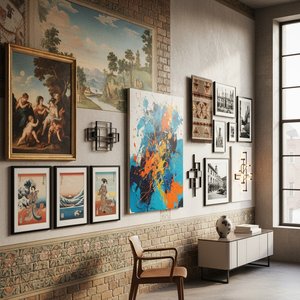
Transforming Spaces: A Comprehensive Exploration of Wall Decor Through Art History & Contemporary Practice
Explore the art of transforming spaces with our comprehensive guide to wall decor. From historical movements to contemporary trends, discover how to curate impactful interiors and commission bespoke artwork for a truly personalized aesthetic.

The Magic of Giclée: Bringing Impressionist Masterpieces to Your Walls with Vivid Detail
Discover the breathtaking beauty of Impressionist masterpieces with our museum-quality Giclée prints. Experience vivid detail, archival pigments, and the luminous light of Monet and Van Gogh, expertly preserved to bring timeless elegance and sophisticated artistry into your home.

Echoes of Time: Exploring the Enduring Appeal & Historical Context of Vintage Art Prints
Explore the captivating world of vintage art prints! Discover their history, collecting tips & enduring appeal. Expert insights on chromolithography and building a legacy collection with OriginalUniqueArt.

Топ-10 шедеврів імпресіонізму: пейзажі, що змінили світ мистецтва | OriginalUniqueArt
Відкрийте для себе 10 шедеврів імпресіонізму, що змінили пейзажне мистецтво! Дізнайтесь історії Моне, Ренуара та інших майстрів. Купіть репродукції картин високої якості на OriginalUniqueArt.com – музейне мистецтво для вашого дому.

