

 Переглянути в інтер'єрі
 Надіслати як листівку
 Поділитися
 Детальніше

 Завантажити
 Схожі експонати
 Рентгенівське дослідження
 Слайд-шоу
untitled (5896)

 Читати далі
Гікле / Художній принт
Музейна якість друку جيкле або на полотні з оперативним виготовленням та різноманітними варіантами фінішної обробки. ( Замовити репродукцію ручної роботи Купити цифрове зображення)




P118B $10

P118H $10

P118W $10

P438Z $10

P508JH $12

P508YH $12

P805H $10

P805Z $10

P919BZ $10

P919G $10

P919XJ $10

P959ZH $10

P968JZ $12

W106C $8

W218G $10

W218JH $8

W218Y $10

W307PJ $10

W316G $10

W316PJ $8

W316Y $10

W398PJ $8

W4111J $10

W500HY $15

W500JH $15

W692G $12

W849H $8

W940BG $15

W953PJ $8




Обирайте з наших стандартних розмірів, що відповідають оригінальним пропорціям твору мистецтва.

Ви можете вказати власні розміри, щоб репродукція ідеально підійшла до конкретної рами або інтер'єру. Якщо обраний вами розмір не відповідає пропорціям оригіналу, ми або обріжемо полотно, або розширимо зображення за допомогою дзеркального відображення чи суцільної заливки країв. Перед початком виробництва вам буде надіслано цифровий макет для затвердження.
Будь ласка, зверніть увагу, що попередній перегляд на екрані не відображає фактичне обрізання або розширення. Тільки макет точно покаже фінальну композицію.
Хоча можливість замовлення індивідуальних розмірів доступна, ми рекомендуємо обирати формат із попередньо визначеного списку, щоб зберегти оригінальні пропорції.
Доставка по всьому світу () за 2 тижні замість стандартних 4/5 тижнів. (29 Серпень)

Безкоштовна експрес-доставка по всьому світу

Високоякісне лляне полотно

Повне страхове покриття доставки

Гарантія відшкодування митних зборів

Гарантія точного відтворення кольорів

Політика повернення протягом 60 днів (лише у разі виявлення дефектів)

Гарантія повернення 100% коштів

Пропозиція на оптові замовлення
 Скляний варіант доступний лише для розмірів до 110 см

untitled (5896)
Гікле / Художній принт
Розмір репродукції
-


Підсумкова вартість
$ 80
An Intimate Exchange: Unveiling a Scene of Rococo Life
This captivating oil painting by Jean-Antoine Watteau presents a dynamic and richly detailed scene of aristocratic interaction within a lush garden setting. The artwork draws the viewer into a world of subtle intrigue, where an exchange – likely financial or involving valuable goods – unfolds amidst observing onlookers and the gentle strains of music.Style & Historical Context
Executed in Watteau’s signature style, this piece bridges the gap between the Baroque and the emerging Rococo movements. Watteau, a pivotal figure in 18th-century French art (1684-1721), moved away from the grandeur of the Baroque towards a more intimate, playful, and delicately rendered aesthetic. He is celebrated for his *fêtes galantes* – paintings depicting elegant outdoor gatherings – and theatrical scenes. This work shares characteristics with those celebrated compositions, though it focuses on a more private transaction rather than overt festivity. The flattened perspective and emphasis on graceful poses are hallmarks of the Rococo style that would soon dominate French art.Subject & Composition
The composition is deliberately crowded, creating a sense of bustling life and drawing the eye across the canvas. Two women are central to the narrative; their interaction forms the focal point of the scene. Several figures surround them, some appearing as curious spectators, others perhaps involved in related negotiations. A musician in the foreground adds an element of atmosphere and suggests a leisurely, refined setting. The overgrown garden itself is not merely a backdrop but an active participant in the scene, hinting at both abundance and a touch of wildness.Technique & Materials
Watteau’s masterful technique is evident in the detailed rendering of textures – from the sumptuous fabrics of the figures' clothing to the lush foliage surrounding them. He employed oil paints with a delicate touch, building up layers to create volume and luminosity. The brushwork is visible yet refined, contributing to the painting’s overall sense of vibrancy. The artist’s use of light and shadow is particularly striking, highlighting key figures and creating a theatrical quality reminiscent of stage lighting.Symbolism & Emotional Impact
Beyond its surface depiction of an exchange, the artwork invites deeper interpretation. The overgrown garden could symbolize hidden desires or the complexities of social life. The statue within the garden adds a classical element, perhaps alluding to timeless themes of beauty and morality. Intrigue is the dominant emotion evoked by the painting; there’s a sense that something clandestine might be occurring beneath the veneer of polite society. The overall effect is one of sophisticated decadence and subtle drama. The work speaks to the complexities of human interaction, social maneuvering, and the allure of hidden transactions.For Collectors & Designers
This painting would be a stunning addition to any collection focused on 18th-century French art or Rococo aesthetics. Its rich color palette – dominated by warm earth tones with accents of brighter hues in the costumes – and dynamic composition make it a visually captivating piece. In an interior design context, this artwork would lend an air of elegance, sophistication, and historical depth to any space. A high-quality reproduction would serve as a focal point, sparking conversation and adding a touch of timeless beauty.- Artist: Jean-Antoine Watteau
- Period: Early 18th Century (Rococo)
- Medium: Oil on Canvas
- Subject: Aristocratic Exchange, Garden Scene
Біографія митця
A Delicate Brushstroke: The Life and Art of Jean-Antoine Watteau
Jean-Antoine Watteau, a name synonymous with the blossoming Rococo style, emerged from the northern French city of Valenciennes in 1684. His brief but incandescent career irrevocably altered the course of eighteenth-century painting, shifting its focus from the grandeur and drama of the Baroque to an intimate world of elegance, leisure, and subtle emotion. Unlike many artists who followed a clearly defined path, Watteau’s journey was marked by initial struggles for recognition within the established art institutions of Paris. Born into a family of modest means—his father a master roofer—young Jean-Antoine displayed an early aptitude for drawing, initially sketching the colorful characters and bustling scenes of his hometown streets. This formative experience instilled in him a keen eye for observation and a fascination with everyday life, themes that would permeate his later work. His initial training under local artists Jacques-Albert Gérin and Julien provided a foundation, but it was his move to Paris around 1702 that truly ignited his artistic development.From Theatrical Scenes to *Fêtes Galantes*
In the vibrant heart of Paris, Watteau entered the workshop of Claude Gillot, a painter specializing in theatrical designs and the popular genre of *fêtes galantes*—depictions of aristocratic outdoor entertainments. This apprenticeship proved pivotal. Gillot’s influence exposed Watteau to the world of commedia dell'arte, with its masked characters and playful narratives, which would become a recurring motif throughout his oeuvre. The theatricality of these scenes – elaborate costumes, masks, and choreographed movements – resonated deeply with Watteau, shaping his approach to composition and characterization. However, Watteau’s artistic sensibilities didn’t neatly align with the rigid categories favored by the Académie Royale de Peinture et de Sculpture. His genre paintings were deemed unsuitable for official recognition, leading to initial rejection when he attempted to compete for the prestigious Prix de Rome. Undeterred, and demonstrating a remarkable resilience, Watteau persevered, eventually gaining acceptance as a *maître amateur* in 1717—a status that allowed him to exhibit his work independently. This period marked a crucial turning point, allowing him to fully develop his unique style characterized by luminous colors, delicate brushwork, and an air of wistful melancholy. He began to move away from direct theatrical representation towards more poetic and evocative scenes, inventing the *fête galante* as a distinct genre—idyllic gatherings in park-like settings where aristocratic figures engaged in flirtatious pursuits and refined pastimes.The Essence of Rococo: Style and Masterpieces
Watteau’s paintings are instantly recognizable for their distinctive qualities. He possessed an unparalleled ability to capture the elegance and refinement of aristocratic life, not through bombastic displays of power or wealth, but through subtle gestures, nuanced expressions, and a masterful use of light and color. His figures exude a poetic grace and a delicate emotional depth that sets them apart from the more formal portraits of his predecessors. The Country Dance (1718-1721), perhaps one of his most celebrated works, exemplifies this perfectly—a vibrant scene depicting carefree rustic life with exquisite detail and an underlying sense of longing. The painting captures a moment of joyful abandon, yet there’s a subtle melancholy woven into the fabric of the scene, reflecting Watteau's own contemplative nature. Other masterpieces such as Ceres (Summer) (1705) demonstrate his skill in portraying the beauty of nature and the human form, while The Embarkation for Cythera (1717) and its companion piece, Pilgrimage to Cythera, are iconic depictions of mythological journeys to the island of love, imbued with a sense of mystery and romantic yearning. Even his theatrical portraits, like Gilles (1719), possess an enigmatic quality that invites contemplation – a fleeting glimpse into the inner lives of his subjects. Watteau’s technique was equally innovative; he employed a feathery brushstroke and a delicate layering of colors to create a shimmering effect, capturing the fleeting beauty of light and atmosphere. The use of *sfumato*, borrowed from Venetian masters, added an ethereal quality to his landscapes and portraits alike.Influences and Artistic Roots
Watteau’s artistic development was shaped by a diverse range of influences. He deeply admired Venetian Renaissance masters like Titian and Veronese, particularly their rich color palettes and dynamic compositions. The influence of Flemish artists such as Rubens is also evident in his energetic brushwork and sensuous figures. Watteau wasn't simply imitating these predecessors; he synthesized their techniques and sensibilities into something entirely new and uniquely his own—a style that became the hallmark of Rococo painting. He was particularly drawn to the works of Nicolas Poussin, whose use of light and color informed his own approach to landscape painting. The delicate handling of form and atmosphere in Poussin’s compositions resonated with Watteau's desire to capture fleeting moments of beauty and emotion. Furthermore, Watteau’s interest in theatrical design—rooted in the world of commedia dell’arte—provided a crucial element for his *fêtes galantes*, imbuing them with an air of playful sophistication.Legacy and Enduring Influence
Watteau's artistic lineage is complex, drawing inspiration from diverse sources. Despite a tragically short life—he succumbed to tuberculosis in 1721 at the age of just thirty-seven—Watteau left an indelible mark on art history. His work profoundly influenced generations of artists, including Fragonard and Boucher, who further developed the themes and techniques he pioneered. He redefined genre painting, elevating it to a level of artistic sophistication previously reserved for historical or religious subjects. Today, his paintings are treasured in major museums worldwide—from the National Gallery of Art in Washington D.C. to the Museo del Prado in Madrid—continuing to captivate audiences with their beauty, grace, and enduring appeal, solidifying his place as one of the most important and beloved artists of the Rococo period. His legacy lies not only in his stunning visual creations but also in his ability to evoke a sense of longing, nostalgia, and the ephemeral nature of beauty—qualities that continue to resonate with viewers centuries later.
Жан-Антуан Ватто
1684 - 1721 , Франція
Короткі факти
- Artistic Movement Or Style: Рококо
- Artists Or Movements Influenced By This Artist:
- Фрagonard
- Буше
- Artists Who Influenced This Artist:
- Тіццо
- Верронезе
- Рубенс
- Date Of Birth: 1684
- Date Of Death: 1721
- Full Name: Jean-Antoine Watteau
- Nationality: Француз
- Notable Artworks:
- Танці в країні
- Церера (Літо)
- Шлюбний контракт
- Place Of Birth: Валенсієни, Франція
Пов'язані статті

The Fête Galante & Beyond: Exploring the Artistic World of Jean-Antoine Watteau
Discover the captivating world of Jean-Antoine Watteau, master of the Fête Galante! Explore his iconic paintings, symbolism, and lasting influence on Rococo art. A deep dive for classic art enthusiasts.

Топ-10 шедеврів рококо: мистецтво для вашого інтер'єру від OriginalUniqueArt.com
Відкрийте для себе 10 шедеврів рококо від Буше, Фрагонара та Ватто! Історія мистецтва, вишукані техніки та натхнення для декору вашого дому. Репродукції картин високої якості – OriginalUniqueArt.com.

The Rococo Aesthetic: Opulence, Rebellion & the Pursuit of Pleasure in 18th-Century Art
Explore the opulent world of Rococo art! Discover its origins, key artists like Watteau & Boucher, and lasting influence on design. Expert insights for collectors & enthusiasts.
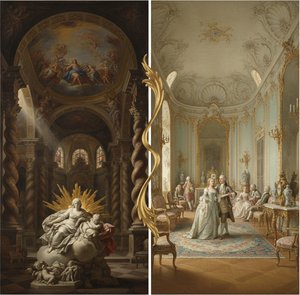
From Grandeur to Grace: Exploring the Evolution of Baroque & Rococo Art
Explore the captivating evolution from Baroque's drama to Rococo's grace! Discover key artists, characteristics & lasting influence of these art movements with expert insights at OriginalUniqueArt.

The Allure of Elegance in Art: A Historical & Aesthetic Exploration of Refinement & Grace
Explore the exquisite world of Rococo art! Discover its history, masters (Watteau, Boucher & more), and defining elegance. Expert insights for collectors seeking museum-quality reproductions & custom portraits.



