

 Переглянути в інтер'єрі
 Надіслати
 Поділитися
 Деталі
 Посібник

 Завантажити
 Схожі предмети колекціонування
 Рентгенівське дослідження
 Слайд-шоу
 Статистика переглядів
Number and Alphabet

 Читати далі
Мистецький твір, представлений на цій сторінці, захищений законом про авторське право, що унеможливлює легальне створення або продаж його ідентичної репродукції. Цей захист забезпечується відповідно до міжнародних угод, таких як Бернська конвенція та національним законодавством, зокрема положеннями, що викладені в Законодавство США про авторське право — Розділ 17. Всі права захищені. Будь-яке використання без дозволу заборонено.
Як шанобливу та законну альтернативу, ми пропонуємо унікальні картини ручної роботи, створені натхненням від оригіналу. Наші досвідчені професійні художники ретельно вивчають стиль, настрій та художню сутність оригіналу, щоб створити новий, неповторний твір, який викликає ті ж почуття, — залишаючись при цьому самобутнім творінням.
Цей метод повністю відповідає нормам авторського права, оскільки він не передбачає копіювання чи дублювання захищеного твору мистецтва. Натомість це творче переосмислення — створення нового малюнка під впливом оригіналу, який не є його точним відтворенням.
Олійная репродукція ручної роботи
Написана вручну олією на полотні у вашому розмірі та рамі, виготовлена на замовлення нашими художниками. ( Перейти до друку Перейти до цифрових зображень)




P118B ₴10

P118H ₴10

P118W ₴10

P438Z ₴10

P508JH ₴12

P508YH ₴12

P805H ₴10

P805Z ₴10

P919BZ ₴10

P919G ₴10

P919XJ ₴10

P959ZH ₴10

P968JZ ₴12

W106C ₴8

W218G ₴10

W218JH ₴8

W218Y ₴10

W307PJ ₴10

W316G ₴10

W316PJ ₴8

W316Y ₴10

W398PJ ₴8

W4111J ₴10

W500HY ₴15

W500JH ₴15

W692G ₴12

W849H ₴8

W940BG ₴15

W953PJ ₴8




Обирайте з наших стандартних розмірів, що відповідають оригінальним пропорціям твору мистецтва.

Введіть необхідну ширину та висоту, щоб картина підійшла до вашої рами або стіни. Оскільки це ручний розпис, для розміру іншої форми художник може написати трохи більше навколо картини або трохи обрізати її — вибір за вами. Перед початком роботи ми надішлемо вам цифровий макет для затвердження. Зображення, показане на цій сторінці, не є реальним результатом — лише макет відображає майбутній вигляд.
Після оформлення замовлення команда OriginalUniqueArt.com зв'яжеться з клієнтом електронною поштою для отримання інструкцій та надасть попередній макет
Доставка по всьому світу () за 3–4 тижні замість стандартних 5 тижнів. (23 Жовтень). Без жодних компромісів у якості.

Безкоштовна експрес-доставка по всьому світу

Високоякісне лляне полотно

Повне страхове покриття доставки

Гарантія повернення митних зборів

Гарантія точного відтворення кольорів

Політика повернення протягом 100 днів (лише у разі виявлення дефектів)

Гарантія повернення 100% коштів

Знижка на оптові замовлення
 Скляний варіант доступний лише для розмірів до 110 см

Number and Alphabet
Техніка репродукції
Розмір репродукції
-


Загальна вартість
₴ 13459
A Symphony of Symbols: Unpacking Jasper Johns’ “Number and Alphabet”
Jasper Johns' "Number and Alphabet," a vibrant explosion of color and form, isn’t merely a depiction of the alphabet; it’s an invitation to delve into the core tenets of Pop Art and the artist’s deeply personal exploration of American identity. Created during a period of significant artistic upheaval – the late 1950s and early 60s – this painting embodies Johns' radical departure from the abstract expressionism that preceded him, embracing instead a direct engagement with recognizable imagery and everyday symbols. The work immediately draws the eye with its audacious palette: bold reds, blues, yellows, greens, and oranges collide across the canvas, creating an energetic visual dance that feels both playful and subtly unsettling.
The technique employed is deceptively simple yet remarkably effective. Johns utilizes a collage-like approach, layering individual letters – some overlapping, others distinct – to construct a dynamic composition. This fragmentation mirrors the breakdown of traditional narratives in post-war America, reflecting a society grappling with rapid change and a shifting sense of self. The deliberate roughness of the application, hinting at both hand-painting and perhaps even stencil techniques, adds another layer of complexity, grounding the work within a tangible reality while simultaneously questioning its representational value.
Decoding the Language of Pop Art
“Number and Alphabet” is a quintessential example of Pop Art’s core principles. Johns wasn't interested in conveying abstract emotions or philosophical ideas; instead, he chose to confront viewers with familiar symbols – the alphabet itself – stripping them of their conventional meaning and presenting them in a new, deliberately jarring context. This act of appropriation was revolutionary at the time, challenging the established hierarchy between “high” art and “low” culture. The inclusion of color is equally significant, echoing the bright, commercial imagery prevalent in advertising and mass media—another hallmark of the Pop Art movement.
The overlapping letters create a sense of visual ambiguity, inviting the viewer to actively participate in deciphering the composition. Is it simply an arrangement of letters? Or does it represent a fragmented language, a distorted alphabet reflecting a fractured American identity? Johns deliberately avoids providing easy answers, forcing us to confront our own assumptions about meaning and representation.
The Artist’s Context: Identity and Iconography
Jasper Johns' artistic journey is inextricably linked to his personal experiences. Born in Augusta, Georgia, in 1930, he carried with him a sense of displacement stemming from his parents’ divorce – an experience that undoubtedly informed his later explorations of identity and belonging within the context of American iconography. His early years were marked by a restless spirit, moving frequently before settling in New York City in 1949, a pivotal moment that propelled him into the heart of the burgeoning art scene. His service during the Korean War further broadened his perspective, exposing him to a world far removed from the artistic circles he sought to join upon his return.
Works like “Number and Alphabet” can be understood as a response to this shifting landscape – a visual meditation on American culture, its symbols, and the complexities of individual identity. Johns’ fascination with everyday objects and familiar imagery—maps, targets, flags—became a recurring theme throughout his career, reflecting a desire to capture the essence of American experience in all its contradictory facets.
A Timeless Reflection: Reproduction and Beyond
OriginalUniqueArt offers exceptional high-quality reproductions of “Number and Alphabet,” allowing you to bring this iconic work into your home or office. The vibrant colors and dynamic composition translate beautifully to a faithful reproduction, capturing the energy and intellectual depth of Johns’ original vision. Whether you're an art enthusiast, a collector seeking to expand your collection, or an interior designer looking for a striking statement piece, this painting offers both aesthetic appeal and profound artistic significance. Consider it not just a decoration, but a window into the mind of one of America’s most influential artists – a testament to the power of symbols and the enduring legacy of Pop Art.
Запитання та відповіді
Чи можу я замовити олійну репродукцію «Number and Alphabet»?
«Number and Alphabet» доступна як репродукція олією ручного розпису на лляному полотні. Замовлення можна оформити на сторінці Репродукція ручного письма, вибравши відповідний розмір.
Чи використовує «Number and Alphabet» Джеспер Джонс сильні контрасти чи м'які гармонії?
Колірна композиція «Number and Alphabet» Джеспер Джонс поєднує в собі Помірний контраст із Balanced Harmony гармонією.
Як я можу переглянути репродукцію твору «Number and Alphabet» Джеспер Джонс?
Попередній перегляд «Number and Alphabet» Джеспер Джонс доступний на сторінці Попередній перегляд твору.
Біографія митця
A Life Painted in Symbols: The World of Jasper Johns
Jasper Johns emerged as a pivotal figure in the landscape of American art, bridging the emotive intensity of Abstract Expressionism with the burgeoning Pop Art movement that would soon redefine artistic boundaries. Born in Augusta, Georgia, in 1930, his early life was marked by a sense of displacement following his parents’ divorce, an experience that perhaps subtly informed his later explorations of identity and belonging within the context of American iconography. His formative years unfolded across various schools before he briefly attended the University of South Carolina, but it wasn't until his move to New York City in 1949 that Johns truly began to forge his artistic path. A period of service during the Korean War further shaped his perspective, exposing him to a world far removed from the burgeoning art scene he was eager to embrace upon his return.Breaking with Abstraction: The Dawn of a New Visual Language
The post-war American art world was dominated by Abstract Expressionism—a style characterized by spontaneous gesture and deeply personal emotional expression. While initially influenced by this movement, Johns felt compelled to move beyond its purely non-representational approach. He sought a new visual language, one that incorporated recognizable imagery not as illustrations but as vehicles for deeper contemplation. This wasn’t simply about *depicting* the world; it was about questioning how we perceive and interpret symbols within it. Key influences guided his departure: Marcel Duchamp's radical readymades challenged conventional notions of art-making, forcing a redefinition of what constituted “art,” while the emphasis on materiality in Abstract Expressionism informed Johns’ early techniques. However, it was the everyday objects and potent symbols of American culture—flags, targets, maps, numbers—that truly became central to his artistic vocabulary. He wasn’t interested in escaping representation; he wanted to dissect it, layer it with meaning, and ultimately reveal its inherent ambiguities. This deliberate shift away from pure abstraction signaled a profound change in the way art was conceived and experienced.Iconic Images: Flags, Targets, and the Language of Symbols
Johns' breakthrough works arrived in the mid-1950s, instantly establishing him as a force to be reckoned with. His paintings of flags, most notably *Flag* (1954–55), were not patriotic declarations but rather investigations into the very nature of representation. Rendered in a semi-abstract style, using encaustic—pigment mixed with hot wax—and collage techniques, these flags weren’t simply images; they were textured surfaces laden with symbolic weight. The *Flag* wasn't just a depiction of an American symbol; it was a meditation on the act of seeing, the nature of memory, and the complexities of national identity. The target series, beginning in 1958, further explored this fascination with recognizable forms, questioning perception and meaning through the seemingly straightforward image of a bullseye. *Map* (1961), with its fragmented and layered depictions of the United States, delved into themes of geography, identity, and the complexities of national representation. Works like *False Start* (1959) demonstrated his experimentation with language and visual codes, creating complex compositions that challenged viewers to decipher their underlying meanings. Even *White Flag* (1955), a seemingly simple monochrome canvas, prompted profound questions about absence, surrender, and the very act of seeing. These recurring motifs weren’t presented as straightforward symbols but rather as starting points for deeper inquiry.Influences and Techniques: A Hybrid Approach
Johns' artistic development was shaped by a diverse range of influences. He deeply admired the work of Marcel Duchamp, whose readymades challenged traditional notions of art and authorship. The emphasis on materiality in Abstract Expressionism—particularly the use of texture and surface—also played a crucial role in his early techniques. However, Johns’ approach went beyond simply incorporating these elements; he actively manipulated them to create layered meanings. He frequently employed encaustic, a technique involving pigment mixed with hot wax, which allowed him to build up complex textures and surfaces that seemed to shift and change depending on the viewer's perspective. Collage was another key element of his practice, often used to juxtapose recognizable imagery with abstract forms. Johns’ work can be seen as a synthesis of these diverse influences—a deliberate blending of abstraction, representation, and symbolism.Recognition and Enduring Impact
Jasper Johns has received numerous accolades throughout his illustrious career. He was awarded the Golden Lion at the Venice Biennale in 1988, the National Medal of Arts in 1990, and the Presidential Medal of Freedom in 2011—recognizing his profound contribution to American art. His works are held in major museum collections around the world, including the Museum of Modern Art, the Whitney Museum of American Art, the Metropolitan Museum of Art in New York, and Tate Modern in London. Beyond his paintings, Johns’ contributions extend to sculpture and printmaking, demonstrating his versatility and unwavering commitment to artistic innovation. His enduring legacy lies not only in the iconic images he created but also in the profound questions he raised about the nature of representation, symbolism, and the very essence of what it means to be an artist in a rapidly changing world. He remains an active artist, constantly evolving his approach and solidifying his position as one of the most important figures in 20th and 21st-century art.
Джеспер Джонс
1930 - , США
Довідкова інформація
- Artistic Movement Or Style: Поп-арт, Абстрактний експресіонізм
- Artists Or Movements Influenced By This Artist:
- Andy Warhol
- Roy Lichtenstein
- Artists Who Influenced This Artist: ['Marcel Duchamp']
- Date Of Birth: 15 травня 1930
- Full Name: Jasper Johns
- Nationality: Американський
- Notable Artworks:
- Flag
- Target
- Map
- Place Of Birth: А Augusta, США
Схожі статті

Топ-25 шедеврів Джона Констебла: пейзажі Англії для вашого дому | OriginalUniqueArt
Відкрийте для себе 25 найкращих шедеврів Джона Констебла! Англійські пейзажі, романтизм та емоційне світло в живописі. Репродукції картин високої якості для вашого дому від OriginalUniqueArt.com. Дослідіть повну колекцію онлайн!

Джон Сінґер Са́рджент: 25 шедеврів американського імпресіонізму для вашого дому | OriginalUniqueArt
Відкрийте 25 найкращих картин Джона Сінґера Са́рджента – американського імпресіоніста, майстра портретів та елегантного живопису. Історія мистецтва, техніки та натхнення для вашого дому від OriginalUniqueArt.com! Дослідіть повну колекцію онлайн.

Crimson Threads of Narrative: Exploring Symbolism & Representation in Artworks Featuring the Red Dress
Explore the rich symbolism of the red dress in art history! From ancient power displays to iconic portraits like Cézanne’s 'Madame Cezanne', discover the cultural and artistic significance behind this captivating color. Expert analysis & insights.
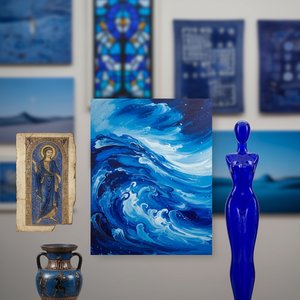
The Allure of Azure: Exploring the Symbolic & Aesthetic Depths of Blue in Art History
Explore the rich history of blue in art! Discover its symbolism, from ancient pigments to modern masterpieces by Kandinsky & Seurat. Uncover the psychological impact and cultural meanings behind this captivating hue.

Топ-10 знаменитих картин у відтінках сіро-блакитного: мистецтво для вашого дому
Пориньте у світ сіро-блакитного кольору! Від Моне до Ренуара – топ-10 знаменитих картин, що зачаровують глибиною відтінків. Історія мистецтва, техніки та натхнення для вашого дому. Знайдіть репродукцію мрії на OriginalUniqueArt.com!


